press freedom across
| |

Press freedom across South Asia

Press freedom across South Asia faces significant structural constraints. Media environments throughout the region share a common historical legacy often relying on inherited colonial-era penal codes alongside modern cybersecurity legislation. However, the legal frameworks and regulatory instruments used to govern the press vary across neighboring countries.

Comparative Analysis by Country

 Pakistan

Pakistan Electronic Media Regulatory Authority (PEMRA), Prevention of Electronic Crimes Act (PECA), and administrative policy frameworks like the Foreign Media Facilitation Guidelines. Media regulation in Pakistan relies heavily on administrative controls, licensing restrictions, and broad content advisories prohibiting coverage of sensitive political or national security subjects. While constitutional protections exist under Article 19, exceptions based on glory of Islam, national defense, and public order give authorities broad latitude to issue blackout orders, manage foreign correspondents’ mobility through No Objection Certificates (NOCs), and impose structural pressure on broadcast networks.

 India

Information Technology Rules (2021), Digital Personal Data Protection (DPDP) Act, and the Unlawful Activities Prevention Act (UAPA). While India possesses a large and diverse private media market, journalists increasingly face legal scrutiny under broad national security and anti-terror legislation. Amendments to digital media laws allow central authorities to demand the takedown of online content deemed harmful to state interests. Furthermore, criminal defamation suits and restrictions on access to conflict areas (such as Jammu & Kashmir) remain common mechanisms of regulatory pressure.

Bangladesh

Cyber Security Act (CSA)—which replaced the controversial Digital Security Act (DSA) and state information ministry directives. For years, non-bailable clauses in cybersecurity statutes were widely criticized by media watchdogs for chilling investigative reporting on corruption or state officials. Following recent political transitions, draft media reform policies have been introduced, though press operations remain tightly monitored during periods of political volatility and public unrest.

 Sri Lanka

Online Safety Act, Prevention of Terrorism Act (PTA), and Official Secrets Act. Sri Lanka’s regulatory framework expanded significantly with the passage of the Online Safety Act, which created a government-appointed commission with sweeping powers to classify online content as false statements and order its removal. Critical reporting regarding state response to economic crises or wartime history continues to face legal and physical friction in sensitive provinces.

Nepal:

Press Council Act and National Mass Communications Policy. Nepal consistently ranks highest in South Asia on global press freedom indices, supported by a constitution that explicitly guarantees press rights without prior restraint. However, challenges persist regarding local government transparency, criminal defamation provisions, and proposed social media regulation bills that civil society groups fear could introduce licensing hurdles for digital outlets.

 Afghanistan

Direct directives issued by the Ministry for the Propagation of Virtue and the Prevention of Vice and the Ministry of Information and Culture. Following the political shift in 2021, independent journalism in Afghanistan has faced near-total suppression. Women journalists are largely banned from broadcasting, international news services face widespread blocking, and all local reporting is subject to strict pre-publication censorship.

Common Trends Across the Region

Across South Asia, governments are increasingly shifting control from traditional print/broadcast regulators toward cybersecurity, online safety, and data protection laws to monitor digital newsrooms and independent creators.

Constitutional guarantees of free speech throughout South Asia uniformly contain broad public order and national defense exceptions, which states routinely cite to enforce reporting restrictions during regional crises.

Beyond direct legal action, states across the region frequently utilize non-judicial levers such as withholding state advertising funds, slow-walking accreditation, or requiring special travel permits to shape editorial stances.
Similar Posts

  • | | |

    Senior journalists unite under new leadership to p…

    LONDON: Senior Pakistani journalists based in the United Kingdom have elected a new leadership for Pakistan Press Club UK International (PPCUK International), pledging to strengthen professional journalism, project Pakistan’s positive image abroad and work closely with the British Pakistani diaspora. Senior journalist Azhar Javaid, has been elected as Chairman of the organisation, which represents Pakistani journalists working for leading television channels, newspapers and digital media platforms across the UK. The newly elected office bearers include Haseeb Arsalan (Vice Chairman), Shaukat Dar (President), Irfan ul Haq (Senior Vice President), Nasim Siddiqi (Vice President), Safina Khan (General Secretary), Syed Sibtain Ali (Information Secretary), Amna Chaudhry (Joint Secretary), Zulfiqar Ali (Additional Secretary) and Pervez Iqbal (Finance Secretary). Senior official and Press Minister at the Pakistan High Commission in London, Ali Nawaz Malik, congratulated the newly elected office bearers and praised UK-based Pakistani journalists for promoting Pakistan’s soft image internationally. He said Pakistani journalists serving in Britain were ambassadors of Pakistan and had made valuable contributions by highlighting the country’s achievements and keeping the diaspora informed. Ali Nawaz Malik assured the Pakistan High Commission’s full cooperation in facilitating journalists in the discharge of their professional responsibilities. He said the mission looked forward to working closely with the new leadership of PPCUK International. Chairman Azhar Javaid said the organisation would uphold the highest standards of journalism, promote professional ethics and strengthen unity among Pakistani journalists in Britain. He said the club would continue to serve as a credible platform for journalists while highlighting Pakistan’s achievements and promoting the country’s soft image internationally through responsible and balanced reporting. Vice Chairman Haseeb Arsalan said Pakistan needed a stronger and more positive international image at a crucial time. “At this moment, Pakistan needs a stronger positive image across the world. Our organisation will work closely with the Pakistani diaspora overseas to promote the country’s achievements and present a balanced and constructive narrative about Pakistan.” President Shaukat Dar welcomed the unity shown by the media community, saying it was encouraging to see senior and working journalists from different organisations coming together on one platform. “The strength of this organisation lies in the fact that experienced and working journalists are united under one umbrella for the collective benefit of the profession and the community.” General Secretary Safina Khan said the newly elected team was committed to serving both Pakistan and the Pakistani community in Britain. “We will work for Pakistan and act as a bridge between Pakistan, the Pakistani diaspora and media institutions, while promoting professional journalism and positive engagement.” Founded more than a decade ago, Pakistan Press Club UK International represents Pakistani journalists across the United Kingdom and provides a platform for professional collaboration, networking and advocacy on issues affecting the media fraternity.

  • | | |

    Petrol, Diesel prices rise as govt announces fresh…

    ISLAMABAD: The federal government has increased prices of both petrol and high-speed diesel (HSD), citing adjustments under the country’s petroleum pricing mechanism. According to a notification issued by the Petroleum Division of the Ministry of Energy, the price of petrol has gone up by 45 paisa per litre, while high-speed diesel has become Rs1.16 more expensive per litre. Following the latest revision, petrol will now cost Rs325.43 per litre, compared with the previous rate of Rs324.98. The price of high-speed diesel has risen from Rs382.79 to Rs383.95 per litre. The revised rates were determined after the Oil and Gas Regulatory Authority (OGRA) reviewed petroleum product prices in line with the government’s pricing framework, which takes international oil market movements and other relevant costs into account. The latest increase comes shortly after the previous price review, when the government raised the HSD rate by 54 paisa per litre while reducing petrol prices by 94 paisa per litre. The new prices will apply from Friday, August 14, as the government continues its periodic adjustments to petroleum rates in response to changes in global energy markets and domestic cost factors.

  • | |

    Federal minister for energy meets Iranian ambassad…

      Islamabad – Federal Minister for Energy Awais Leghari held a meeting with Iranian Ambassador to Pakistan, Reza Amiri Moghaddam, in Islamabad to discuss energy cooperation, trade expansion, and regional stability. The talks marked another step in the growing partnership between the two neighbors. Ambassador Amiri Moghaddam announced that work on the second Pakistan-Iran transmission line will begin soon, a project long awaited by both sides. He also revealed that both countries are considering expanding the existing 100-megawatt electricity supply agreement, which currently powers parts of Balochistan. “Energy security is a shared goal. The second line will boost our capacity and open doors for deeper cooperation,” he said. He further invited Pakistani companies to attend the upcoming joint commission meeting in Tehran, aimed at exploring new business and investment opportunities. Federal Minister Awais Leghari emphasized that regional peace and stability are in the mutual interest of both nations. He stressed that uninterrupted electricity supply is critical for Gwadar’s development, which serves as a key hub for the China-Pakistan Economic Corridor. “Gwadar cannot progress without stable power. Any disruption affects local communities and our broader economic vision,” he stated. He also highlighted that electricity trade with Iran will become even more significant in the future, given Pakistan’s rising energy demands and limited domestic resources. Ambassador Amiri Moghaddam praised the current state of Pakistan-Iran relations, describing them as having reached new heights. He commended Prime Minister Shehbaz Sharif and Pakistan’s military leadership for their peace efforts in the region, calling them commendable and constructive. “The vision shown by both sides is remarkable. We are committed to turning this goodwill into tangible outcomes,” he added. He also expressed Iran’s interest in expanding cooperation beyond energy into agriculture, pharmaceuticals, and border trade. Both sides agreed to fast-track procedural formalities for the second transmission line and explore long-term energy purchase agreements. They also discussed barter trade mechanisms to overcome financial challenges. The upcoming joint commission meeting in Tehran is expected to produce concrete results, benefiting businesses and communities on both sides. With work on the new transmission line nearing start and expanded electricity trade under consideration, Pakistan and Iran appear set to enter a new phase of cooperation built on shared interests, mutual trust, and a vision for regional connectivity. The meeting concluded with a renewed commitment to transform political goodwill into practical economic gains for both nations.

  • | | |

    5 terrorists killed in Panjgur operation

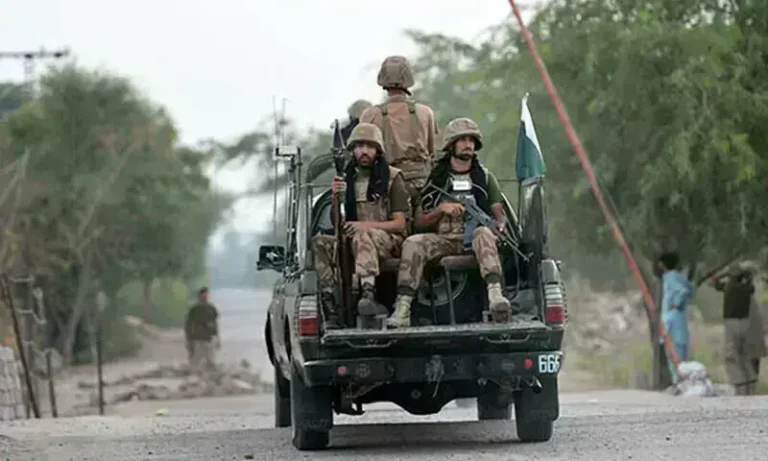
    Security forces have killed five suspected terrorists, including a key commander of Fitna al-Hindustan, during an intelligence-based operation in Balochistan’s Panjgur district, according to security sources. The operation took place in the Sarkini and Chhedgi areas of Panjgur under Operation Radd-ul-Fitna 3. Security forces conducted the raid after receiving intelligence about the presence of armed militants in the area. According to the sources, the operation resulted in the death of Fitna al-Hindustan commander Wazir, son of Jamal, along with four other militants. The security forces also recovered four motorcycles, machine guns, other heavy weapons and a large quantity of ammunition from the militants’ possession. Security sources said the militants had allegedly been involved in a range of criminal and terrorist activities, including extortion, kidnapping, robbery and attacks against traders and local residents. Their activities had created fear and insecurity among people in the area. Following the successful operation, security forces have launched a clearance operation in the surrounding areas to locate and eliminate other members of the militant network. Officials said the security operation would continue until the area was fully cleared of remaining threats. Interior Minister Mohsin Naqvi praised the security forces for their successful intelligence-based operation in Panjgur and commended their professional capabilities. Naqvi said the country’s security personnel remained a source of pride for the nation and were working to eliminate terrorism from Balochistan. He said the entire nation stood united against terrorism and supported the security forces in their efforts to restore peace and stability. The latest operation comes as security forces continue intelligence-led actions against militant groups across Balochistan as part of broader counterterrorism efforts.

  • | |

    Mir Raza case deepens as guest house probe expands

    A major development has emerged in the investigation into the death of Karachi businessman Mir Raza Ali. Investigators have obtained further details about the guest house linked to the case. The premises is located near the place where Mir Raza’s body was recovered. According to investigation findings, the guest house was registered in the name of a man identified as Liaquat Ali. The property itself is reportedly owned by a woman. Police verification of the property was carried out on June 1, 2026. Investigators also found that the guest house was not registered on the Hotel Eye application. Police had made registration on the system mandatory for hotels and guest houses. After the discovery of Mir Raza’s body, police sealed the guest house. Six people working at the premises were taken into custody for questioning. Their statements are being recorded as investigators try to determine whether the guest house has any connection with the case. So far, police have detained 21 people in connection with the investigation. The detainees include Mir Raza’s friends and business partners. Investigators are examining their statements and movements. A five-member investigation committee also held a meeting under the leadership of DIG Crime Branch Amir Farooqi. The committee is reviewing the case in light of new medical and forensic evidence. Police have also expanded the charges in the case. Sections 365 and 302 were already included in the FIR. Section 201 has now been added. The provision relates to concealing, removing or destroying evidence connected to an offence. The development follows a second post-mortem conducted after Mir Raza’s grave was exhumed on August 8. The preliminary medical findings reportedly showed several injuries on his body. The report indicated a gunshot injury to the back. The entry wound was smaller, while the wound on the front side was larger. Medical findings suggest that the bullet entered from the rear and passed through the body. The examination also found fractured ribs. Several injuries were observed on Mir Raza’s head and face. A wound and fracture measuring about 12 centimetres were found on his right thigh. Blood marks were also detected in tissues in the lower part of his body. Further examination revealed a deep injury and fracture in his jaw. Injuries were also found on his nose and other parts of his face. Investigators collected 17 samples during the exhumation. Samples from Mir Raza’s parents were also obtained for DNA comparison. The samples are expected to be examined at the forensic laboratory of the University of Karachi. After the samples were collected, Mir Raza’s body was reburied on the same day. Mir Raza Ali Khan had gone missing from the PECHS area on July 28. Police said he left his home at around 4:09am in an online taxi. His body was found two days later in Gulistan-e-Johar. Police officials said the body was in a badly damaged condition. A gunshot wound was also found on his chest. Investigators also found that Mir Raza’s social media accounts had been deactivated a day before his body was recovered. His family has consistently maintained that he was murdered. His father said Mir Raza was preparing for his marriage and was excited about starting a new phase of his life. His nikah had been scheduled for August 30 at Baitul Mukarram Mosque in Gulshan-e-Iqbal. The latest investigation has brought renewed attention to the guest house and the people associated with it. Police are now examining medical evidence, forensic samples, CCTV footage, statements and other available material.

Leave a Reply

Your email address will not be published. Required fields are marked *