senate seeks 16year

Senate seeks 16-year oil and gas profit record

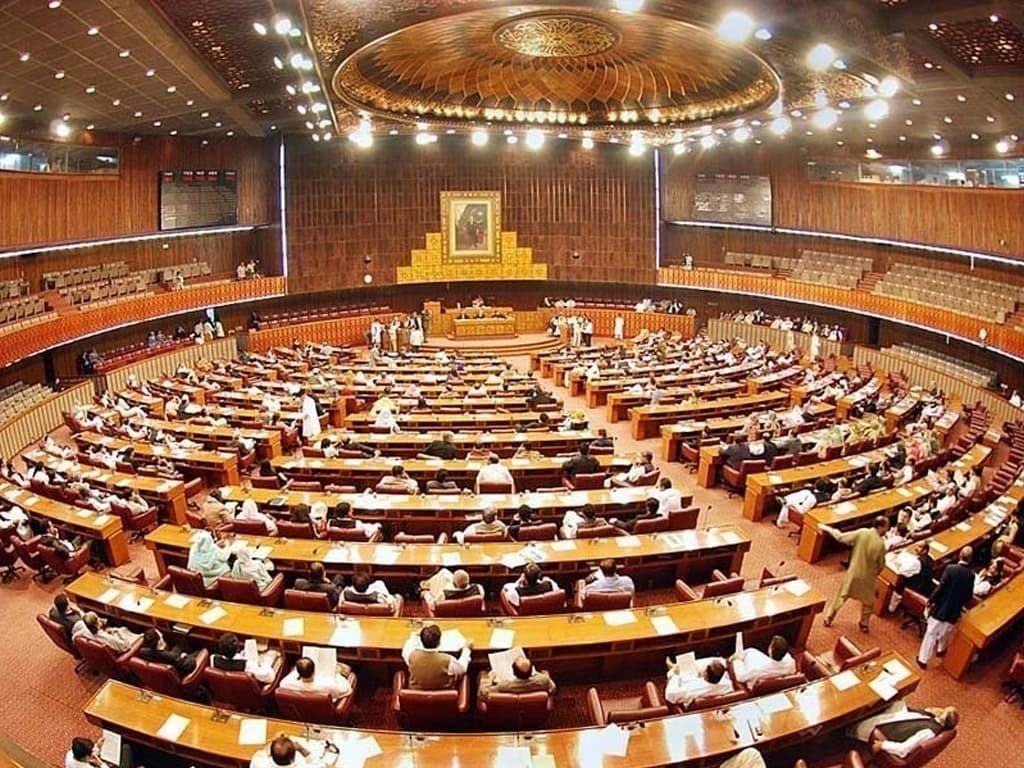
Islamabad: A Senate committee has raised serious questions over the distribution of billions of rupees generated from Pakistan’s oil and gas resources, demanding a complete financial breakdown of profits earned by oil and gas companies over the last 16 years.

The Sub Committee of the Senate Functional Committee on Devolution directed authorities to provide a clear record of revenues and prepare a plan to ensure provinces receive their constitutional share from natural resources.

The committee reviewed the implementation of Article 38(g) of the Constitution and examined whether provinces were receiving proper representation in federal institutions and a fair share from national resources.

During the discussion on oil and gas revenues, the committee sought details of profits earned by oil and gas companies during the past 16 years. Officials were directed to verify and finalize the figures and prepare a proposal for the distribution of funds.

Officials from the Petroleum Division informed the committee about the existing 50:50 revenue sharing system between the federal government and provinces. They explained that revenues generated from natural resources contribute to the national treasury through non tax income.

However, the committee stressed that natural resources belong to the people and called for stronger transparency mechanisms to ensure that provinces receive their rightful share without unnecessary delays.

Chairman Senator Zamir Hussain Ghumro directed authorities to introduce necessary legal and administrative improvements to strengthen the system of revenue distribution and prevent unequal treatment of provinces.

The committee also focused on provincial employment representation in federal ministries and government linked corporate boards.

The chairman expressed concern that constitutional provincial quotas were not being implemented effectively in some areas. He directed the Establishment Division to remove gaps in recruitment procedures and ensure that people from less developed and rural areas receive their due opportunities.

The committee ordered officials to identify provinces facing representation shortages and take immediate steps to correct the imbalance.

Officials were directed to submit a detailed compliance report in the next meeting, showing progress on both employment representation and natural resource revenue distribution.
Similar Posts

  • | |

    LHC rejects PTI plea for Minar-e-Pakistan rally

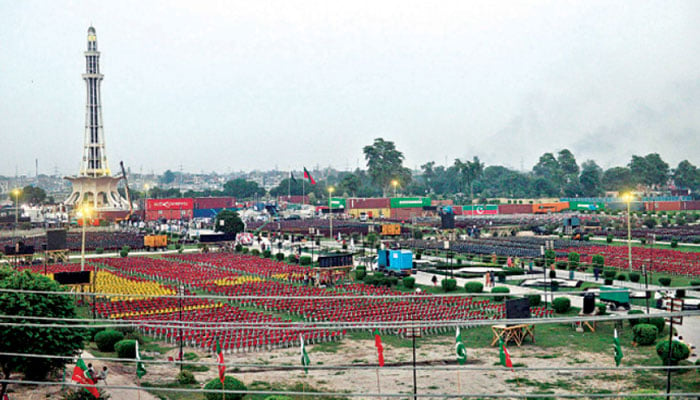
    The Lahore High Court has dismissed a petition filed by Pakistan Tehreek-e-Insaf (PTI) seeking permission to hold a public gathering at Minar-e-Pakistan. Justice Mirza Waqas Rauf announced the written decision on a petition filed by Mian Usman Akram. The petitioner had asked the court to allow the party to hold a rally at Minar-e-Pakistan. He argued that refusing permission for the gathering violated the constitutional right to peaceful assembly. The petition referred to Article 16 of the Constitution. The article protects the right of citizens to assemble peacefully and without arms, subject to reasonable restrictions imposed by law. The court, however, noted that the right to peaceful assembly does not mean that every gathering can be held without following the relevant legal procedure. Under the applicable law, permission for a public gathering is granted through the relevant administrative authorities. The deputy commissioner is responsible for considering such requests and issuing an NOC where required. During the proceedings, the government’s lawyer informed the court that a meeting had already been held under the deputy commissioner to consider the PTI’s request. The meeting reviewed the security and law and order situation in the area. Officials recommended that the proposed rally should not be allowed because of security concerns. The written judgment also noted the nature of Minar-e-Pakistan as a public place. The court observed that the site is regularly visited by citizens for recreational and other public activities. According to the government’s submission, the deputy commissioner had already taken a decision on the PTI’s application. The request for permission to hold the rally was rejected on August 3. The court observed that the administrative authority had already decided the matter. Therefore, the petition could not be entertained as a request for permission that was still pending before the deputy commissioner. The Lahore High Court consequently dismissed the petition.

  • | | |

    Pakistan’s solar capacity reaches 38,000MW: …

    ISLAMABAD: Federal Minister for Power Awais Leghari has said Pakistan’s solar energy capacity has reached 38,000 megawatts (MW), highlighting the country’s growing shift toward renewable energy and its commitment to reducing dependence on imported fuels. Speaking at the Battery Storage Flexibility 2026 Conference, the minister said the government aims to increase the share of clean energy in Pakistan’s electricity mix to 90% by 2035. He said expanding renewable energy and developing battery storage solutions are key to strengthening the country’s energy security and lowering the import bill for conventional fuels. Leghari said the government is promoting the development of a local battery energy storage industry, encouraging domestic engineering, system integration and battery management software. He added that the Ministry of Industries is finalizing a national policy to support local battery manufacturing. The minister announced that the government is also preparing a National Battery Energy Storage Framework, which will include safety standards, grid connection guidelines and investment regulations to support the growth of the sector. According to Leghari, clean energy now accounts for 55% of Pakistan’s total electricity generation, reflecting significant progress in the country’s transition toward sustainable energy sources. He said a National Steering Committee for Battery Energy Storage Systems has already been established, while technical and regulatory working groups have also been formed to guide policy development and implementation. Leghari further revealed that pilot battery energy storage projects have been approved for electricity distribution companies. The data collected from these projects will help shape future regulatory policies and improve the country’s energy planning. The minister said Pakistan has emerged as one of the world’s fastest-growing distributed energy markets and assured investors that the government will provide a clear, transparent and long-term regulatory framework to encourage investment.

  • | |

    Justice Babar Sattar vacates government residence …

      Justice Babar Sattar, who has been transferred to the Peshawar High Court, has vacated his official government residence in Islamabad following a notice issued by the registrar of the Islamabad High Court. According to sources, Justice Babar Sattar vacated the government residence two days ago after returning from his judicial holidays. The development came after the relevant authorities formally cancelled the allotment of the residence and directed him to vacate the property within the specified period. The Estate Office had cancelled the allotment of the house on July 3. Subsequently, the registrar of the Islamabad High Court issued a notice instructing Justice Babar Sattar to vacate the official residence within 30 days. Sources said that Justice Babar Sattar complied with the notice and vacated the residence after completing his judicial holidays. The house has now been cleared following the cancellation of its allotment. Justice Babar Sattar had been serving at the Islamabad High Court before being transferred to the Peshawar High Court. His transfer meant that the official residence allotted to him in Islamabad was no longer required under the same arrangement. The cancellation of the residence was carried out by the Estate Office on July 3. The subsequent notice from the Islamabad High Court registrar formally communicated the requirement to vacate the property within 30 days. According to sources familiar with the matter, Justice Babar Sattar left the government residence after his return from judicial leave. He reportedly vacated the house two days before the latest development was reported. Government residences are allotted to public officials according to applicable rules and are generally linked to their official postings and responsibilities. When an officer or judge is transferred to another jurisdiction, the relevant authorities may review or cancel the allotment of the official residence in accordance with the applicable regulations. In this case, the cancellation by the Estate Office was followed by the registrar’s notice, giving Justice Babar Sattar a 30-day period to vacate the premises. The residence has now been vacated, bringing the matter concerning the Islamabad government house to a close. Justice Babar Sattar’s transfer to the Peshawar High Court forms part of the judicial changes involving judges of the superior courts. Following the transfer, his official responsibilities are now associated with the Peshawar High Court rather than the Islamabad High Court. The latest development is limited to the vacation of the government residence and follows the formal cancellation of its allotment. According to sources, Justice Babar Sattar complied with the directions and vacated the property without waiting for the full 30-day period to expire. The sequence of events began with the Estate Office cancelling the house allotment on July 3. The Islamabad High Court registrar subsequently issued a notice requiring the residence to be vacated within 30 days. Justice Babar Sattar then vacated the house shortly after returning from judicial holidays. The development highlights the administrative consequences that can follow the transfer of a judge from one high court to another, particularly regarding official facilities and government accommodations. With the residence now vacated, the government property can be dealt with by the relevant authorities according to the applicable rules and future allotment requirements.

  • | |

    Six non-local workers killed in Kech

    Six non-local workers have been killed by militants linked to Fitna al-Hindustan in the Nasirabad area of Kech district, Balochistan, according to security sources. The sources said militants initially abducted six workers and killed another worker, identified as Javed, on July 27. The attackers later killed all six abducted workers, bringing the total number of victims in the incident to seven. The deceased workers have been identified as Muhammad Arshad, Muhammad Taimur, Muhammad Parvez, Muhammad Wazir, Muhammad Amjad and Muhammad Yahya. According to security officials, four of the victims came from Punjab, while two belonged to Khyber Pakhtunkhwa. The workers had reportedly been employed on development projects in Balochistan. Their deaths have raised fresh concerns about the security of workers from outside the province who travel to Balochistan for employment and infrastructure projects. Security sources also recalled a separate incident in Mashkel, Balochistan, where militants recently killed five non-local workers. The victims in that attack were also reportedly working on development-related projects. The latest killings come amid continued security challenges in parts of Balochistan, where militants have repeatedly targeted civilians, security personnel and workers involved in development activities. Security forces have been conducting operations against militant groups in various parts of the province.

  • | |

    LHC judge steps aside from bail hearing in Libya b…

    LAHORE: Lahore High Court ( LHC) Justice Ghulam Sarwar Nihang has recused himself from hearing the post-arrest bail petition of a suspect allegedly linked to the Libyan boat tragedy. The case involving accused Shafaqat Ali was taken up by the Lahore High Court, where Justice Nihang informed the court that he had previously served as a member of the commission formed to investigate the Libya shipwreck. Given his previous involvement with the commission, the judge said he did not consider it appropriate to hear the bail petition concerning the same matter. The case record was subsequently referred to the Chief Justice of the Lahore High Court for further proceedings. During the hearing, the defence counsel argued that bail had already been granted to suspects in several similar cases and requested that Shafaqat Ali also be released on bail until the trial court reaches a decision. The case is part of investigations launched following the Libyan boat accident. The Federal Investigation Agency’s Mandi Bahauddin office has registered cases against suspects allegedly connected to the incident. In a related development, another accused, Muhammad Tahir, has also been granted post-arrest bail in the Libya boat tragedy case.

  • | | |

    Daily petrol prices trigger Senate debate over tra…

    Islamabad: Pakistan’s new daily petroleum pricing system came under serious discussion in the Senate as lawmakers questioned whether the mechanism is providing relief to consumers or creating new challenges for the public and fuel dealers. The Senate Standing Committee on Petroleum reviewed the daily petrol price determination system and demanded clarity over why the government replaced the previous fortnightly price revision system with daily changes. The committee questioned the reasons behind the new policy and asked whether frequent price adjustments were helping ordinary citizens or increasing uncertainty in the fuel market. Federal Minister for Petroleum informed the committee that the government had removed political influence from the petroleum pricing process by giving the responsibility of setting prices to the Oil and Gas Regulatory Authority (OGRA), an independent regulator. He said the new system was introduced to make petroleum price decisions more transparent and based on market conditions. OGRA Chairman informed the committee that petrol prices are calculated through a seven day average of international Platts benchmark prices. He explained that instead of directly passing sudden changes in international oil markets to consumers, the seven day average spreads the impact over time. According to OGRA, the system helps reduce sudden price shocks, especially during international tensions and market uncertainty. Officials said the daily pricing mechanism also aims to discourage people from creating artificial shortages or making unfair profits through speculation. However, senators raised concerns about the effect of frequent price changes on citizens and businesses. The committee expressed concern over the high tax burden on petroleum products and questioned how increasing fuel costs affect the daily lives of ordinary people. Representatives of the Petroleum Dealers Association informed the committee that frequent price revisions were creating operational difficulties for fuel dealers. They said continuous price changes make business planning more difficult and require better coordination between authorities and dealers. The committee directed OGRA to consult all stakeholders, including petroleum dealers, and prepare practical recommendations to address their concerns. Members also stressed the need for greater use of technology in the petroleum supply chain to prevent fuel smuggling, adulteration and illegal storage. The committee said a stronger digital monitoring system could improve transparency and ensure consumers receive better quality fuel. Senator Umer Farooq chaired the meeting of the Senate Standing Committee on Petroleum, where members reviewed the new pricing system and related petroleum sector issues. The committee emphasized that petroleum pricing directly affects every citizen because fuel costs influence transportation, business expenses and prices of daily goods. Members said the government and regulators must ensure that any pricing system protects consumers while maintaining stability in the petroleum market. The committee directed OGRA to continue reviewing the mechanism and ensure that the interests of consumers remain the top priority.

Leave a Reply

Your email address will not be published. Required fields are marked *