justice babar sattar
| |

Justice Babar Sattar vacates government residence …


Justice Babar Sattar, who has been transferred to the Peshawar High Court, has vacated his official government residence in Islamabad following a notice issued by the registrar of the Islamabad High Court.

According to sources, Justice Babar Sattar vacated the government residence two days ago after returning from his judicial holidays. The development came after the relevant authorities formally cancelled the allotment of the residence and directed him to vacate the property within the specified period.

The Estate Office had cancelled the allotment of the house on July 3. Subsequently, the registrar of the Islamabad High Court issued a notice instructing Justice Babar Sattar to vacate the official residence within 30 days.

Sources said that Justice Babar Sattar complied with the notice and vacated the residence after completing his judicial holidays. The house has now been cleared following the cancellation of its allotment.

Justice Babar Sattar had been serving at the Islamabad High Court before being transferred to the Peshawar High Court. His transfer meant that the official residence allotted to him in Islamabad was no longer required under the same arrangement.

The cancellation of the residence was carried out by the Estate Office on July 3. The subsequent notice from the Islamabad High Court registrar formally communicated the requirement to vacate the property within 30 days.

According to sources familiar with the matter, Justice Babar Sattar left the government residence after his return from judicial leave. He reportedly vacated the house two days before the latest development was reported.

Government residences are allotted to public officials according to applicable rules and are generally linked to their official postings and responsibilities. When an officer or judge is transferred to another jurisdiction, the relevant authorities may review or cancel the allotment of the official residence in accordance with the applicable regulations.

In this case, the cancellation by the Estate Office was followed by the registrar’s notice, giving Justice Babar Sattar a 30-day period to vacate the premises.

The residence has now been vacated, bringing the matter concerning the Islamabad government house to a close.

Justice Babar Sattar’s transfer to the Peshawar High Court forms part of the judicial changes involving judges of the superior courts. Following the transfer, his official responsibilities are now associated with the Peshawar High Court rather than the Islamabad High Court.

The latest development is limited to the vacation of the government residence and follows the formal cancellation of its allotment. According to sources, Justice Babar Sattar complied with the directions and vacated the property without waiting for the full 30-day period to expire.

The sequence of events began with the Estate Office cancelling the house allotment on July 3. The Islamabad High Court registrar subsequently issued a notice requiring the residence to be vacated within 30 days. Justice Babar Sattar then vacated the house shortly after returning from judicial holidays.

The development highlights the administrative consequences that can follow the transfer of a judge from one high court to another, particularly regarding official facilities and government accommodations.

With the residence now vacated, the government property can be dealt with by the relevant authorities according to the applicable rules and future allotment requirements.
Similar Posts

  • | |

    Six members of one family killed in Israeli strike…

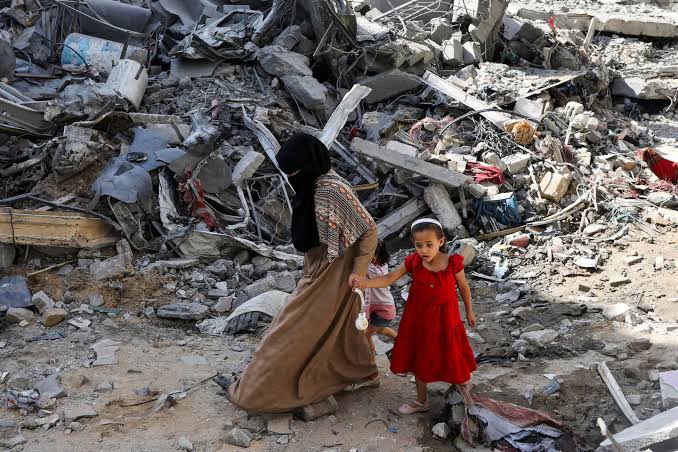
    An Israeli airstrike killed a father, his wife and their four children in Gaza City on Tuesday, setting their home on fire, according to health officials, in the latest deadly incident since a US backed ceasefire took hold more than nine months ago. Medics said the strike hit the family’s house in the Sabra neighborhood, killing Firas Al Masri, his wife Salsabeel, their three daughters and their son. The Israeli military confirmed carrying out the strike, saying it had targeted a Hamas militant and that it was still assessing the outcome of the attack. A video obtained by a news agency showed rescue workers battling fires inside the house and carrying out bodies wrapped in white shrouds. Masri’s father, Abu Yusuf Al Masri, said the explosion occurred while the family slept, describing his grief over the loss of his son, daughter in law and grandchildren. He said rescuers could not save the children and grandchildren from the flames and destruction, and that around five or six people died, most of them women and children, without warning and without mercy. Standing outside the family home, he said no place in Gaza offers relative calm or safety anymore. Heavy toll since October The Israeli military said it carried out four separate strikes since Friday that killed four militants from Hamas and Islamic Jihad, three of whom it said had taken part in the October 7, 2023, attack on Israel that triggered the war and involved the seizure of Israeli hostages. Later Tuesday, two additional Israeli airstrikes hit a vehicle in central Gaza and an association building in Gaza City, killing at least six more people and wounding others, according to Palestinian medics, bringing Tuesday’s overall death toll to 12. The Israeli military did not immediately comment on either of these later strikes. These latest deaths add to a toll exceeding 1,160 Palestinians, most of them civilians, killed in Israeli attacks since the ceasefire between Israel and Hamas took effect in October, according to health officials in Gaza. Hamas typically does not disclose its own casualty figures. The truce halted large scale fighting but has not stopped near daily Israeli strikes across the territory. Israel says these operations target militants. Four Israeli soldiers have died at the hands of militants in Gaza during the same period. Mediators including Egypt, Qatar, Turkey and the United States have continued working to advance a plan put forward by President Donald Trump aimed at ending the conflict in Gaza, which calls for Hamas to disarm and for Israeli forces to withdraw, though little progress has emerged so far. The war began when Hamas led fighters attacked communities in southern Israel, killing 1,200 people and taking roughly 250 hostages, according to Israeli figures. Israel’s subsequent military campaign has killed more than 73,000 Palestinians, according to Gaza health officials. Nearly all of Gaza’s population of about two million people now lives crowded along a narrow strip of coastal land, largely in makeshift tents or damaged buildings, enduring severe conditions under continued Hamas control. The continued strikes highlight how the ceasefire, despite formally ending large scale combat, has failed to bring lasting safety to civilians in Gaza, with families like the Al Masris bearing the human cost of attacks that Israel says are aimed at militants but that have repeatedly killed women and children in residential areas. International mediators continue pressing for progress on disarmament and withdrawal terms, though the persistent violence has raised doubts about how quickly, if at all, conditions on the ground might meaningfully improve for Gaza’s remaining population.

  • | |

    Hafiz Naeem targets IPP deals, fuel prices

    Jamaat-e-Islami Emir Hafiz Naeemur Rehman has strongly criticised the government over rising fuel prices, heavy taxation and electricity costs. Addressing participants at the party’s sit-in in Lahore, Hafiz Naeemur Rehman said the government was putting an increasing financial burden on ordinary citizens. He demanded the immediate withdrawal of the recent increase in petrol and diesel prices. He said the petroleum levy had no direct connection with the actual price of petrol. He questioned the justification for repeatedly increasing fuel prices and said the government was making life more difficult for the public. “The government drops a petrol bomb on us every day,” he said. Hafiz Naeemur Rehman also criticised the government’s policies regarding independent power producers (IPPs). He alleged that successive governments had entered into unfair agreements with IPPs in the name of ending load-shedding. According to him, the government was now passing the cost of its own shortcomings on to the people through higher taxes. He said citizens were already struggling with expensive electricity and gas bills. The Jamaat-e-Islami leader said heavy taxes were being imposed on electricity and gas bills. He argued that such charges were increasing household expenses and adding to the difficulties faced by ordinary consumers. Hafiz Naeemur Rehman further said the government had shut down five of the 27 IPPs. He referred to the government’s own claim that the move would provide a benefit of Rs3,360 billion to the national exchequer. He questioned why similar measures could not be taken to provide lasting relief to consumers. He said the government should focus on reducing electricity costs instead of continuously increasing taxes and other charges. The Jamaat-e-Islami emir also criticised the Federal Board of Revenue (FBR). He alleged that corruption within the tax collection system remained widespread. He called for greater transparency and accountability in government institutions. He said economic policies should be designed to provide relief to the public rather than increase their financial difficulties.

  • |

    Tanzania opens government debt market to all overseas investors

    Tanzania has relaxed its foreign exchange regulations to permit all international investors to purchase government-issued Treasury bills and bonds. The Bank of Tanzania announced that the policy change aims to deepen domestic financial markets and position the country as an attractive investment destination. Participation in government securities was previously restricted to residents of the East African Community, the Southern African Development Community, and the Tanzanian diaspora. President Samia Suluhu Hassan’s administration is seeking fresh revenue options following recent reductions in aid from international partners.

  • | |

    Pakistani Mountaineer Sohail Sakhi’s body shifte…

    The body of Pakistani mountaineer Sohail Sakhi, who lost his life in a tragic avalanche accident on Broad Peak, has been transported to Skardu by an Army Aviation helicopter. Sohail Sakhi was among the climbers caught in a devastating avalanche that struck Broad Peak in the early hours of July 31. The incident occurred during the night between July 30 and 31, when a massive avalanche swept across the mountain, leaving 10 mountaineers missing, including nine foreign climbers. Following the accident, rescue and recovery efforts were launched in the difficult and dangerous conditions of the Broad Peak region. The mountain, located in the Karakoram range of Gilgit-Baltistan, is one of the world’s highest peaks and is known for its challenging terrain, extreme weather and unpredictable climbing conditions. Sohail Sakhi was among the climbers who could not survive the disaster. His body was recovered from the mountain and later transported to Skardu, an important hub for mountaineering expeditions in the region. The use of an Army Aviation helicopter helped facilitate the transfer of the body from the remote mountainous area. The tragedy has caused grief among the mountaineering community in Pakistan and abroad. Broad Peak attracts climbers from different parts of the world every year, but the extreme environment can make rescue operations extremely challenging. Avalanches, sudden changes in weather, freezing temperatures and difficult terrain pose serious risks even to experienced mountaineers. The July 31 incident involved 10 missing climbers, nine of whom were foreign nationals. Rescue teams and authorities continued efforts to locate and recover those affected by the avalanche. The recovery operation was complicated by the harsh weather and the dangerous conditions at high altitude. The bodies of seven climbers who died in the accident had already been transported to their respective countries. Their repatriation was carried out after recovery operations and the completion of necessary procedures. The transfer of Sohail Sakhi’s body to Skardu marks an important step in the process of returning the deceased Pakistani climber to his family. Further arrangements will be made for the transportation of his body to his hometown, where his family and friends are expected to receive him. The incident once again highlights the risks associated with high-altitude mountaineering in the Karakoram. Despite advances in climbing equipment, communication systems and rescue technology, climbers continue to face life-threatening dangers when attempting some of the world’s highest and most difficult peaks. Sohail Sakhi’s death is a significant loss for Pakistan’s mountaineering community. His passing has drawn attention to the courage and determination of climbers who undertake expeditions in some of the most challenging environments on Earth. Authorities and rescue teams remain focused on recovery and repatriation efforts following the Broad Peak avalanche. The tragedy serves as a reminder of the unpredictable nature of high-altitude expeditions and the importance of safety, weather monitoring and coordinated rescue operations in mountainous regions.

  • |

    North Korea battles heatwave with dog soup

    North Korea is highlighting traditional foods, health advice and leisure activities as an intense heatwave sweeps across the Korean Peninsula. State media reported that temperatures in the country reached 36.7°C, the highest recorded since modern weather observations began. The extreme heat has also brought a series of unusually warm nights. With the hottest period of summer underway, North Korean media has focused heavily on ways for people to stay cool and maintain their health. One of the recommendations receiving particular attention is dog-meat soup. State media described the dish as a traditional summer food and promoted a long-standing belief that it can help people cope with extreme heat. Other foods recommended by state media include watermelon, cucumbers, mung beans, fish porridge and red-bean porridge. Chicken soup prepared with ginseng, sticky rice and dates has also been promoted as a popular summer meal. Health programmes on North Korean television have urged people to remain hydrated and take precautions while swimming or exercising outdoors. The country has not released figures on deaths linked to the current heatwave. South Korea, meanwhile, has reported more than 20 heat-related deaths. North Korean state media has also used the extreme weather to highlight leader Kim Jong Un’s image as a leader who shares difficult conditions with ordinary citizens. A recent report recalled a 2013 visit by Kim to a construction site during hot weather. The report said his clothes became soaked with sweat during the inspection. According to the account, Kim insisted that important work for the people should continue despite the heat. State media also highlighted other past inspections in difficult weather conditions. These included a trip through mountainous terrain during heavy rain and a visit to a seafood factory where temperatures were reportedly around 39°C. There has been no detailed report on Kim’s activities during the current heatwave. Meanwhile, state television has shown large crowds visiting beaches, swimming pools and water parks to escape the extreme temperatures. Thousands of people have reportedly visited the Wonsan Kalma Coastal Tourist Zone, one of Kim’s major tourism projects on the country’s eastern coast.

  • |

    Meta faces major trial over alleged harmful impact

      Meta Platforms is facing a major legal battle in a California federal court, where a group of state attorneys general is accusing the company of deliberately designing Facebook and Instagram in ways that can make children and teenagers addicted to social media. The trial, beginning Wednesday in Oakland, could result in huge financial penalties and force Meta to make major changes to how its platforms operate. The seven-week trial will examine allegations from Colorado, Kentucky, California and New Jersey that Meta designed its platforms to keep young users engaged for extended periods while misleading the public about their safety. The case also involves claims from 29 states that Meta illegally collected and used children’s personal information, allegedly violating federal law. Jury selection is scheduled to begin on Wednesday, with opening statements expected on August 18. Meta founder and CEO Mark Zuckerberg is expected to testify during the proceedings, along with Instagram chief Adam Mosseri. The case is considered one of the biggest legal challenges yet faced by Meta over the effects of social media on young people. The company has estimated that potential damages could reach $1.4 trillion, a figure close to its market value of around $1.5 trillion. However, the states involved have not publicly revealed how much compensation they intend to seek. The attorneys general are also asking the court to order Meta to introduce stronger age restrictions and remove features such as infinite scrolling. They want the company to make additional changes aimed at reducing the potential negative effects of social media on children. Meta has strongly rejected the allegations and said it expects evidence presented during the trial to demonstrate its efforts to protect young users. The company said it has listened to parents, worked with experts and law enforcement agencies, and conducted extensive research into issues affecting children and teenagers. The lawsuit, filed in 2023, followed a multistate investigation into the impact of Facebook and Instagram on young users. The investigation gained momentum after former Meta employee and whistleblower Frances Haugen testified before a US Senate committee in 2021. Haugen alleged that Meta was aware of potential harm to young users and had information about ways to make its platforms safer but chose not to make certain changes. New Jersey Attorney General Jennifer Davenport has accused Meta of continuing to prioritise user engagement and profits despite allegedly knowing that its platforms could negatively affect children. Public concern over social media use among young people is also growing. A recent Reuters/Ipsos poll found that 85% of Americans believe social media can be addictive for children, while 61% said social media companies need stronger government oversight. Meta and other technology companies are facing thousands of similar lawsuits from states, school districts, local governments and individuals. Two cases that have already reached juries resulted in verdicts against Meta. Last week, a New Mexico judge ordered the company to pay $567 million and make changes to its platforms after finding Meta responsible for contributing to a children’s mental health crisis in the state. Meta continues to deny wrongdoing and has argued that social media addiction is not officially recognised as a psychiatric condition. Legal experts believe the latest trial could become a crucial test for the company, particularly following recent courtroom losses. The case will be overseen by US District Judge Yvonne Gonzalez Rogers, who has taken the unusual step of using an advisory jury to provide findings on specific questions. Rogers will consider the jury’s conclusions but will have the final authority over the case. The states are seeking financial damages as well as nationwide changes to Meta’s platforms. Their demands include stronger age restrictions, deletion of systems created using children’s data, limits on notifications and infinite scrolling, and changes to algorithms so that the well-being of young users is given greater importance than simply maximising engagement.

Leave a Reply

Your email address will not be published. Required fields are marked *