pakistani mountaineer sohail
| |

Pakistani Mountaineer Sohail Sakhi’s body shifte…

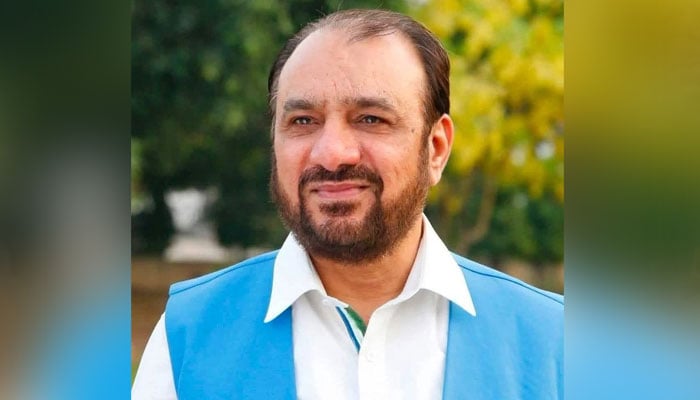
The body of Pakistani mountaineer Sohail Sakhi, who lost his life in a tragic avalanche accident on Broad Peak, has been transported to Skardu by an Army Aviation helicopter.

Sohail Sakhi was among the climbers caught in a devastating avalanche that struck Broad Peak in the early hours of July 31. The incident occurred during the night between July 30 and 31, when a massive avalanche swept across the mountain, leaving 10 mountaineers missing, including nine foreign climbers.

Following the accident, rescue and recovery efforts were launched in the difficult and dangerous conditions of the Broad Peak region. The mountain, located in the Karakoram range of Gilgit-Baltistan, is one of the world’s highest peaks and is known for its challenging terrain, extreme weather and unpredictable climbing conditions.

Sohail Sakhi was among the climbers who could not survive the disaster. His body was recovered from the mountain and later transported to Skardu, an important hub for mountaineering expeditions in the region. The use of an Army Aviation helicopter helped facilitate the transfer of the body from the remote mountainous area.

The tragedy has caused grief among the mountaineering community in Pakistan and abroad. Broad Peak attracts climbers from different parts of the world every year, but the extreme environment can make rescue operations extremely challenging. Avalanches, sudden changes in weather, freezing temperatures and difficult terrain pose serious risks even to experienced mountaineers.

The July 31 incident involved 10 missing climbers, nine of whom were foreign nationals. Rescue teams and authorities continued efforts to locate and recover those affected by the avalanche. The recovery operation was complicated by the harsh weather and the dangerous conditions at high altitude.

The bodies of seven climbers who died in the accident had already been transported to their respective countries. Their repatriation was carried out after recovery operations and the completion of necessary procedures.

The transfer of Sohail Sakhi’s body to Skardu marks an important step in the process of returning the deceased Pakistani climber to his family. Further arrangements will be made for the transportation of his body to his hometown, where his family and friends are expected to receive him.

The incident once again highlights the risks associated with high-altitude mountaineering in the Karakoram. Despite advances in climbing equipment, communication systems and rescue technology, climbers continue to face life-threatening dangers when attempting some of the world’s highest and most difficult peaks.

Sohail Sakhi’s death is a significant loss for Pakistan’s mountaineering community. His passing has drawn attention to the courage and determination of climbers who undertake expeditions in some of the most challenging environments on Earth.

Authorities and rescue teams remain focused on recovery and repatriation efforts following the Broad Peak avalanche. The tragedy serves as a reminder of the unpredictable nature of high-altitude expeditions and the importance of safety, weather monitoring and coordinated rescue operations in mountainous regions.

Similar Posts

  • | | |

    Kuwait welcomes Pakistan-Saudi-Türkiye Makkah def…

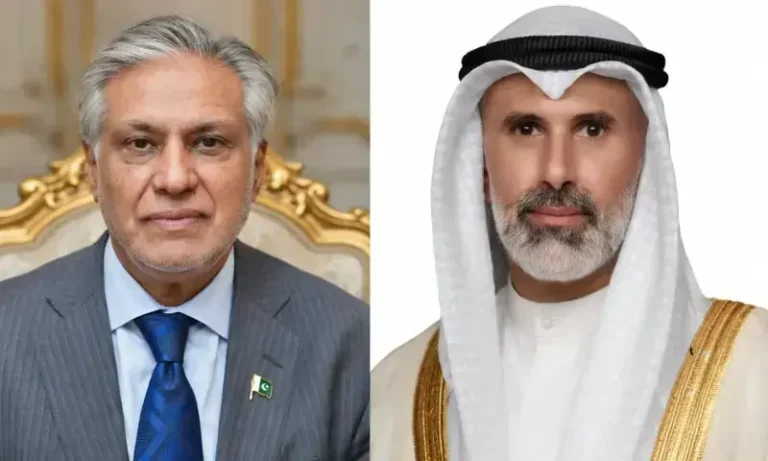
    ISLAMABAD: Kuwait has congratulated Pakistan on the signing of the Makkah Joint Defence Agreement with Saudi Arabia and Türkiye, signalling growing regional interest in the new security arrangement. Pakistan’s Deputy Prime Minister and Foreign Minister Ishaq Dar received a telephone call from Kuwaiti Foreign Minister Sheikh Jarrah Jaber Al-Ahmad Al-Sabah late on Sunday, during which the two officials discussed the agreement as well as the wider regional situation. According to Pakistan’s Foreign Office, the Kuwaiti foreign minister felicitated Dar on the agreement signed in Makkah on Friday. The two ministers also exchanged views on developments in the region, including the situation in occupied East Jerusalem. Their conversation also covered bilateral relations and ways to expand cooperation between Pakistan and Kuwait, particularly in investment and other key sectors. The officials also discussed follow-up to Sheikh Jarrah’s recent visit to Pakistan. “The two sides agreed to remain closely engaged,” the Foreign Office said. The development comes as Pakistan continues to explain the objectives and scope of the landmark defence pact, which brings Pakistan, Saudi Arabia and Türkiye closer together on security matters. Dar has stressed that the agreement is defensive in nature and is not directed against any particular country. Under the pact, an armed attack against any one of the three signatories would be treated as an attack against all three. The foreign minister said the arrangement was designed to strengthen collective deterrence while supporting regional peace, stability and security. He also maintained that the agreement was consistent with the right of individual and collective self-defence recognised under Article 51 of the United Nations Charter. Importantly, Dar clarified that the Makkah agreement does not replace or cancel existing bilateral or multilateral defence arrangements involving the three countries. The pact could also have a broader regional dimension. Dar said the agreement remains open to other countries in the region that are willing to respect its principles and resolve differences through dialogue, cooperation and peaceful means. His comments came amid reports that Egypt could potentially join the arrangement. Earlier, Dar also spoke with Canadian Foreign Minister Anita Anand, with the two officials discussing regional developments and the newly signed agreement. Pakistan has presented the Makkah accord as part of its broader foreign-policy objective of promoting regional stability and peaceful conflict resolution. With Kuwait now extending its congratulations, attention is increasingly turning to how the new defence framework could influence cooperation and security across the wider region.

  • | | |

    IHC asked to frame rules for social media use by c…

    ISLAMABAD: The Islamabad High Court has been petitioned to direct the federal government to introduce legislation and a comprehensive regulatory framework governing social media access by children below the age of 16. The petition, filed by advocates Muhammad Jalal Haider and Yahya Farid Khawaja, calls for a reliable age-verification system to prevent minors from creating or operating social media accounts without appropriate safeguards. The petitioners argue that children face growing risks online, including cyberbullying, harassment, exposure to inappropriate material and other forms of digital harm. They have urged the government to establish clear policies covering children’s digital rights, privacy and physical and psychological safety. They have also sought specific legal responsibilities for social media companies, including stronger safeguards for minors and the creation of an institutional mechanism dedicated to protecting children in the digital environment. The petition refers to measures adopted or proposed in countries including Australia, France, Britain, New Zealand and Spain, where authorities have considered age limits, parental consent and age-verification requirements for children’s social media use. Citing the United Nations Convention on the Rights of the Child and General Comment No. 25, the petitioners maintain that protecting children’s best interests is a legal responsibility of the state rather than merely a policy choice. They argue that the absence of an effective age-verification mechanism leaves minors exposed to online dangers and makes it difficult to enforce protections designed specifically for children. The Ministry of Information Technology and Telecommunication, Ministry of Information and Broadcasting, Ministry of Interior, Ministry of Law and Justice, Pakistan Telecommunication Authority and Pakistan Electronic Media Regulatory Authority have been named as respondents. Punjab Assembly Resolution The development follows a resolution submitted to the Punjab Assembly last month calling for restrictions on social media accounts operated by children under 16 without parental consent. The resolution, moved by Punjab lawmaker Sarah Ahmad, urged the provincial government to recommend federal legislation aimed at regulating minors’ access to social media and strengthening online protection. It highlighted concerns over cyberbullying, online exploitation, inappropriate content, digital addiction and psychological distress among children, stressing that safeguarding their physical, mental and moral development is a responsibility of the state. The resolution proposed prohibiting children below 16 from creating or maintaining social media accounts without verified parental or legal guardian consent. It also called on the PTA to develop and enforce effective age-verification mechanisms across platforms operating in Pakistan. It further recommended holding social media companies accountable for child-safety standards, including the timely removal of harmful content and measures to provide a safer online environment for minors.

  • | |

    Mahira Khan faces backlash over Gaza fundraiser appearance

    LONDON: Pakistani actor Mahira Khan has faced criticism on social media after attending a fundraising event in London in support of Palestinians affected by the Gaza crisis. Khan appeared at the event in a peach outfit by designer Saniya Maskatiya. Videos and pictures from the gathering quickly circulated online. Many people praised the actor’s appearance and her interaction with attendees. However, some social media users questioned her participation in the event. Critics focused on Khan’s previous associations with international brands. Some users referred to her work with L’Oréal and Pepsi while discussing her public support for Palestine. They questioned whether her commercial endorsements were consistent with her stance on the Gaza crisis. The format of the event also attracted criticism. Some users felt that the gathering appeared to focus partly on Khan’s career and public image rather than concentrating entirely on humanitarian fundraising. Videos from the event showed Khan engaging with guests and discussing different aspects of her professional life. She also participated in activities on stage. These moments prompted mixed reactions online. Some users argued that a humanitarian event should remain focused on the suffering of Palestinians and efforts to support those affected by the conflict. Others defended Khan’s participation. They said celebrities can use their public platforms to raise awareness and support humanitarian causes. The debate has also highlighted wider questions about celebrity activism. Many public figures support humanitarian campaigns while maintaining commercial partnerships with major international companies. Social media users often scrutinise these relationships. The discussion can become particularly intense when the causes involve politically sensitive international conflicts. Khan has remained an influential figure in Pakistan’s entertainment industry. She has built a large following through her television and film projects. Her public appearances also regularly attract significant attention. Her fashion choices, professional projects and social activities frequently become topics of discussion online. The latest controversy is therefore not limited to her appearance at the London fundraiser. It has also sparked a broader debate about the responsibilities of celebrities who publicly support humanitarian causes. Supporters believe Khan’s presence can help draw attention to the Palestinian cause. Critics, meanwhile, want greater consistency between celebrity activism and commercial endorsements.

  • |

    Coalitional fallout as violence and electoral fraud claims mar Azad Kashmir elections

    A bitter clash between federal coalition partners has erupted over the Azad Jammu and Kashmir Legislative Assembly elections, following the death of a political worker and mutual allegations of voter fraud. The Pakistan Peoples Party (PPP) condemned the killing of 35-year-old party worker Mukhtar Younus during polling in Nikyal, Kotli. Addressing a joint press conference, Sindh Local Governments Minister Saeed Ghani directly blamed the Pakistan Muslim League-Nawaz (PML-N) candidate and supporters for the shooting, stating, “The way this election campaign was conducted, the result is that bullets are being fired today… Our workers are dying.” Ghani heavily criticised the Election Commission for failing to enforce code of conduct rules and accused the Punjab government of attempting to influence voters by promising public buses during the campaign. He also took aim at PML-N President Nawaz Sharif’s comparative statements regarding Sindh and Kashmir, asserting: “When you say ‘this is Kashmir, not Kashmore’ or ‘this is Mirpur, not Mirpur Khas’, you hurt the people of Sindh… Perhaps that is why people say the PML-N is not a national party but a Punjabi party.” Rejecting the accusations, Punjab Information Minister Azma Bokhari presented video footage alleging that a PML-N candidate discovered bags of pre-stamped ballot papers at the home of a PPP candidate in Kotli. Pointing out the contradiction, Bokhari remarked, “Yesterday they said they would not let rigging happen. Today they are rigging.” Defending her party’s track record, Bokhari argued that public transit is a basic necessity and noted that the promised buses for AJK had not yet begun operating. She maintained that voters in the Mirpur division were turning out despite boycott calls, seeking Punjab-style developmental projects such as electric buses, housing, and youth scholarships. Addressing queries regarding Nawaz Sharif’s interest in the region, Bokhari clarified that the former prime minister does not seek an official title, but simply wishes to offer development guidance to AJK due to his Kashmiri heritage.

  • | |

    Sindh announces August 4 school holiday

      The Sindh School Education and Literacy Department has announced that all public and private educational institutions across the province will remain closed on Tuesday, August 4, 2026, in observance of the Chehlum of Hazrat Imam Hussain (RA). According to an official notification issued by the department, the holiday will be observed on 20th Safar 1448 AH, marking the annual commemoration of Chehlum. The decision applies to all government and privately managed schools operating under the administrative control of the School Education and Literacy Department throughout Sindh. The notification stated that the closure was approved following a decision taken during a meeting of the provincial Steering Committee held on February 12, 2026. It confirmed that all educational institutions under the department’s jurisdiction would remain closed on August 4 to facilitate the observance of the religious occasion. Chehlum is observed every year on the 20th of Safar and marks the conclusion of the 40-day mourning period following the martyrdom of Hazrat Imam Hussain (RA), his family members, and companions in the historic Battle of Karbala in 680 AD. The occasion holds immense religious significance for Muslims, particularly for those who participate in mourning gatherings and commemorative processions held across the country. As part of the annual observances, mourning processions featuring Alam, Tazia, and Zuljinah are expected to take place in several cities and towns across Sindh. Thousands of devotees traditionally participate in these events to pay tribute to the sacrifices made by Hazrat Imam Hussain (RA) and the martyrs of Karbala. In light of the large public gatherings expected during Chehlum, the Sindh Home Department has also announced additional security measures aimed at maintaining law and order throughout the province. A day before the school holiday notification was issued, the Home Department imposed a province-wide ban on pillion riding for the day of Chehlum. The temporary restriction is intended to strengthen security arrangements and minimise the risk of any untoward incidents during the religious processions and gatherings. Authorities have clarified that the ban forms part of a broader security plan implemented each year for major religious occasions. Law enforcement agencies have been directed to ensure strict compliance with the measures while facilitating the safe conduct of mourning events. In a separate notification, the Sindh Home Department also announced the extension of Section 144 across the province for another month. The renewed restrictions came into effect on August 1 and will remain in force as part of ongoing efforts to preserve public order. Under Section 144, several activities have been prohibited throughout Sindh, including wall chalking, public rallies, demonstrations, and the open display of weapons. The restrictions are designed to prevent any activities that could disrupt peace or pose security concerns during the mourning period. The provincial government has urged citizens to cooperate with the authorities and follow the issued guidelines to help ensure that Chehlum observances are conducted peacefully and securely across Sindh.

  • | |

    JI Secretary General Ameerul Azeem passes away

    Ameer-ul-Azeem, Secretary General of Jamaat-e-Islami (JI) Pakistan, has passed away after a prolonged illness. His funeral prayers will be offered at 5:00 pm today at Mansoora, Lahore. A Jamaat-e-Islami spokesperson confirmed his death, saying he had been battling cancer for a long time. Before becoming the party’s Secretary General, he served for many years as the central Secretary for Information. Born in Lahore in 1958, Ameer-ul-Azeem completed his matriculation from Islamia School Sant Nagar and his intermediate studies at Islamia College Railway Road. He later earned a BSc in Physics and Double Mathematics from Islamia College Civil Lines and an MBA from the University of the Punjab. He became associated with Islami Jamiat-e-Talaba (IJT) during his school years and later served as the elected president of the Punjab University Students’ Union. He also held the position of Nazim-e-Aala (Chief Organizer) of IJT. During General Zia-ul-Haq’s rule, Ameer-ul-Azeem led a long march demanding the restoration of student unions and was imprisoned for his role in the movement. While in jail, he was elected as the head of Islami Jamiat-e-Talaba. He later served as Jamaat-e-Islami’s central Secretary for Information, Secretary General of the party’s Lahore chapter, and Ameer of Lahore. In 2019, he was appointed Secretary General of Jamaat-e-Islami Pakistan by then party chief Siraj-ul-Haq following consultation with the party’s Central Shura.

Leave a Reply

Your email address will not be published. Required fields are marked *