kuwait welcomes pakistansauditrkiye
| | |

Kuwait welcomes Pakistan-Saudi-Türkiye Makkah def…

ISLAMABAD: Kuwait has congratulated Pakistan on the signing of the Makkah Joint Defence Agreement with Saudi Arabia and Türkiye, signalling growing regional interest in the new security arrangement.

Pakistan’s Deputy Prime Minister and Foreign Minister Ishaq Dar received a telephone call from Kuwaiti Foreign Minister Sheikh Jarrah Jaber Al-Ahmad Al-Sabah late on Sunday, during which the two officials discussed the agreement as well as the wider regional situation.

According to Pakistan’s Foreign Office, the Kuwaiti foreign minister felicitated Dar on the agreement signed in Makkah on Friday. The two ministers also exchanged views on developments in the region, including the situation in occupied East Jerusalem.

Their conversation also covered bilateral relations and ways to expand cooperation between Pakistan and Kuwait, particularly in investment and other key sectors. The officials also discussed follow-up to Sheikh Jarrah’s recent visit to Pakistan.

“The two sides agreed to remain closely engaged,” the Foreign Office said.

The development comes as Pakistan continues to explain the objectives and scope of the landmark defence pact, which brings Pakistan, Saudi Arabia and Türkiye closer together on security matters.

Dar has stressed that the agreement is defensive in nature and is not directed against any particular country. Under the pact, an armed attack against any one of the three signatories would be treated as an attack against all three.

The foreign minister said the arrangement was designed to strengthen collective deterrence while supporting regional peace, stability and security. He also maintained that the agreement was consistent with the right of individual and collective self-defence recognised under Article 51 of the United Nations Charter.

Importantly, Dar clarified that the Makkah agreement does not replace or cancel existing bilateral or multilateral defence arrangements involving the three countries.

The pact could also have a broader regional dimension. Dar said the agreement remains open to other countries in the region that are willing to respect its principles and resolve differences through dialogue, cooperation and peaceful means. His comments came amid reports that Egypt could potentially join the arrangement.

Earlier, Dar also spoke with Canadian Foreign Minister Anita Anand, with the two officials discussing regional developments and the newly signed agreement.

Pakistan has presented the Makkah accord as part of its broader foreign-policy objective of promoting regional stability and peaceful conflict resolution.

With Kuwait now extending its congratulations, attention is increasingly turning to how the new defence framework could influence cooperation and security across the wider region.

Similar Posts

  • |

    CPEC 2.0: Pakistan, China shift focus to B2B investment

    ISLAMABAD: Pakistan and China are moving toward a more business-driven model of cooperation under the second phase of the China-Pakistan Economic Corridor (CPEC), with greater emphasis on Business-to-Business (B2B) partnerships, industrial development, exports and productivity rather than large-scale Government-to-Government (G2G) financing. The development emerged during a high-level Chinese delegation’s visit to the CPEC Secretariat, where discussions focused on strengthening industrial and commercial ties between the two countries. According to an official statement issued by the Ministry of Planning on Tuesday, the Chinese delegation was headed by Sun Dongsheng, Senior Advisor, Economic Affairs Press. The delegation met Federal Minister for Planning, Development and Special Initiatives Ahsan Iqbal, along with senior policymakers and development experts. The talks centred on ways to advance B2B and industrial cooperation under CPEC 2.0, reflecting a broader shift in the corridor’s priorities from infrastructure-led development toward industrialisation, exports, technology and private-sector participation. From infrastructure to industrialisation During the meeting, Ahsan Iqbal briefed the Chinese delegation on the government’s Uraan Pakistan economic transformation programme and outlined Islamabad’s priorities for the next phase of CPEC. The minister proposed closer cooperation with Chinese institutions, including counterparts of the National Centre of New Manufacturing, to benefit from China’s experience in advanced manufacturing, innovation, automation and robotics. He said Pakistan needed to strengthen its productive capacity and adopt modern technologies to remain competitive in the era of Industrial Revolution 4.0 and prepare for the emerging Industrial Revolution 5.0. Ahsan Iqbal identified Pakistan’s limited export base as one of the country’s major economic challenges. According to the minister, repeated attempts to accelerate economic growth have struggled to generate sustainable momentum because productive sectors have not been sufficiently integrated with export markets. He stressed that the government’s priority was therefore to turn agriculture, manufacturing and other productive sectors into stronger sources of exports and foreign exchange. Pakistan seeks greater access to Chinese market The minister also called for greater facilitation of Pakistani exports to China, highlighting the considerable gap between the two countries’ trade potential. He noted that China imports goods worth around $2.6 trillion annually, whereas Pakistan’s exports to the Chinese market remain close to $3 billion. Ahsan said Pakistan needed to increase its presence in the Chinese market by improving production standards, competitiveness and the ability of domestic businesses to meet international demand. He expressed the expectation that CPEC 2.0 could help Pakistan address what he described as its “export deficit”, just as the first phase of the corridor contributed to addressing the country’s energy shortfall. CPEC enters a new phase Under CPEC’s first phase, China committed substantial financing to infrastructure, energy and other development projects in Pakistan. Nearly $30 billion was invested in infrastructure and power-sector projects, including independent power producers. However, the focus is now increasingly shifting toward private-sector-led cooperation. Islamabad continues to pursue financing for selected road and motorway projects, but China has yet to demonstrate readiness to finance the long-delayed Main Line-1 (ML-1) railway upgrade, which had previously been regarded as one of CPEC’s flagship projects. The latest consultations indicate that CPEC 2.0 is expected to rely more heavily on commercial partnerships between Pakistani and Chinese companies. The government has already been encouraging enterprises from both countries to explore joint ventures and investment opportunities in sectors including manufacturing, agriculture and mining. Ahsan Iqbal said recent agreements between Pakistani and Chinese companies showed that B2B cooperation was beginning to gain momentum. He expressed confidence that stronger business-to-business engagement would support the modernisation of Pakistan’s industrial and agricultural sectors while creating opportunities for investment, employment and exports. China stresses productive capacity Sun Dongsheng reaffirmed the importance China attaches to its longstanding relationship with Pakistan and highlighted the achievements of CPEC’s first phase. He called for further cooperation in industrial and agricultural development, particularly in strengthening Pakistan’s productive capacity. The Chinese delegation also stressed the importance of involving small and medium-sized manufacturing enterprises in bilateral economic cooperation. Greater enterprise-to-enterprise engagement, according to the delegation, could help create commercially sustainable partnerships and expand opportunities for businesses in both countries. The discussions also focused on technology transfer, innovation, skills development and the creation of stronger industrial linkages. Five Corridors aligned with Uraan Pakistan Officials also discussed the strategic relationship between the Five Corridors of CPEC 2.0 and Pakistan’s 5Es framework under Uraan Pakistan. The government’s 5Es framework focuses on exports, e-Pakistan, environment and climate change, energy and infrastructure, and equity and empowerment. The participants stressed that alignment between the two initiatives needed to translate into concrete economic outcomes, including new enterprises, technology adoption, innovation, employment opportunities, skills development, increased exports and higher investment. The delegation was also briefed on the progress achieved during CPEC Phase I and Pakistan’s priorities for the second phase. The consultations suggest that the next stage of CPEC will increasingly be measured not only by the volume of infrastructure investment but also by its ability to improve Pakistan’s industrial competitiveness, expand exports, attract private investment and create sustainable employment.

  • | |

    PPP, PML-N hold unity talks over AJK polls

    Senior leaders of the Pakistan Peoples Party (PPP) and the Pakistan Muslim League-Nawaz (PML-N) held a high-level meeting in Muzaffarabad on Thursday to defuse growing political tensions over the ongoing Azad Jammu and Kashmir (AJK) elections. The meeting came after days of heated exchanges between the two coalition partners following the Mirpur election. The PPP had accused the electoral process of being marred by widespread irregularities and raised concerns over the credibility of the results. According to sources, the talks were aimed at preventing the election dispute from affecting the working relationship between the two parties in the federal coalition government. The meeting was reportedly arranged after consultations at the federal level. Some sources claimed that the initiative received support from both the Presidency and the Prime Minister’s Office. However, this could not be independently verified. The PPP delegation included Qamar Zaman Kaira, Nadeem Afzal Chan, AJK Prime Minister Faisal Rathore and Nayyar Bukhari. They met with senior PML-N leaders Rana Sanaullah and Amir Muqam. During the meeting, both sides openly discussed their concerns over statements made during the election campaign and after the announcement of the Mirpur results. PML-N leaders asked the PPP to present evidence supporting its allegations of organised election rigging. In response, PPP leaders said their objections were limited to four constituencies — LA-5, LA-9, LA-11 and LA-12 — where they believe serious irregularities took place. PML-N leaders argued that by restricting its objections to only four constituencies, the PPP had effectively accepted the results of the remaining nine seats. They noted that PML-N won five of those seats, while the PPP secured four. After detailed discussions, both parties agreed that political tensions should not be allowed to escalate further. They also agreed that the dispute should not affect the remaining phases of the AJK elections. The meeting also reviewed security arrangements for polling in the remaining constituencies, particularly in Muzaffarabad. Both parties agreed that no individual should be allowed to carry weapons inside or around polling stations. They stressed that strict security measures were necessary to ensure peaceful, transparent and orderly polling. Political observers view the meeting as the first major reconciliation effort by the two coalition partners to contain the election dispute

  • | | |

    Iran announces $30,000 reward for capturing or kil…

    TEHRAN: Iran has announced a $30,000 reward for anyone who kills or captures a US servicemember and hands them over to Iranian authorities, in a striking escalation of rhetoric amid continuing tensions between Tehran and Washington. Iranian Army chief Maj Gen Amir Hatami announced the reward, saying it had been introduced after what he described as a large number of public requests to participate in the confrontation with the United States. Under the reported scheme, a person who kills or captures a US soldier and hands the servicemember to Iranian authorities would receive $30,000, or the equivalent of about 5 billion Iranian tomans. Hatami reportedly said the reward would be doubled if the action was carried out by a woman. The announcement comes as tensions between Iran and the United States remain high. Tehran has repeatedly demanded that American forces leave the region, while Washington has maintained a significant military presence across the Middle East. Despite the threat, there are no known US ground forces permanently deployed inside Iran. Reports indicate that American personnel entered Iranian territory in April during a rescue operation following the crash of a US aircraft. Hatami also issued a warning over the Persian Gulf, Gulf of Oman and Strait of Hormuz, saying American forces would not be allowed to return. His comments came after US President Donald Trump made controversial statements concerning the strategic waterway. The Strait of Hormuz remains a major flashpoint because it is one of the world’s most important energy shipping routes. Any further escalation around the passage could have consequences well beyond the region, particularly for global oil markets. The latest Iranian announcement adds another provocative dimension to an already tense confrontation, raising concerns over the safety of US personnel and the possibility of further escalation across the Middle East.

  • | |

    Khanewal placed on flood alert as DC Hena Arshad o…

    Protective embankments inspected at Head Sidhnai, Mai Safura, Kund Sargana and Fazil Shah as Ravi and Chenab water levels remain under continuous surveillance Khanewal: Deputy Commissioner Khanewal Hena Arshad has issued a pre-emptive alert to all relevant departments, directing them to maintain complete operational preparedness for any possible flood emergency in the district. The alert comes as Punjab faces an evolving monsoon and river-flood situation. According to the latest official update, moderate flooding has been recorded in the River Chenab at Khanki, Qadirabad and Chiniot Bridge. Low-level flooding has also been reported at Trimmu on the Chenab and at Balloki and Sidhnai on the River Ravi. The Deputy Commissioner visited Head Sidhnai, the Mai Safura Bund Breaching Section, Kund Sargana and Fazil Shah Bund, where she inspected flood-protection infrastructure and reviewed emergency response arrangements. Officials of the Irrigation Department briefed her on the prevailing water situation in the Ravi and Chenab rivers, the structural strength of protective embankments, vulnerable riverine areas, evacuation planning and precautionary measures being taken to minimise possible losses. Additional Deputy Commissioner Revenue Fazal Abbas, Assistant Commissioner Kabirwala Muhammad Haroon and officers representing the Irrigation Department, Rescue 1122, Revenue Department and other concerned agencies accompanied the Deputy Commissioner during the inspection. At Head Sidhnai, Hena Arshad inspected the Mai Safura Bund Breaching Section, surrounding flood embankments and the railway bridge. She reviewed the condition of the protective infrastructure and the safety measures being implemented around vulnerable locations. The Deputy Commissioner directed the Irrigation Department, Kabirwala tehsil administration, Rescue 1122, Revenue Department and other agencies to remain fully alert and maintain uninterrupted coordination. She stressed that machinery, rescue boats, emergency equipment, personnel and transportation resources must remain available for immediate deployment. Any weakness detected in an embankment or protective structure should be repaired without delay, she added. Earlier, while chairing a flood-preparedness meeting at Head Sidhnai, the Deputy Commissioner said that the district administration had completed the necessary arrangements to respond effectively to a possible emergency. She ordered the immediate strengthening of flood embankments, removal of encroachments from waterways and vulnerable locations, and implementation of all remaining precautionary measures. During her visits to Kund Sargana and Fazil Shah Bund, Hena Arshad instructed officials to prepare for the timely and safe evacuation of residents from low-lying riverine settlements whenever water conditions require such action. She directed the administration to identify vulnerable populations in advance, maintain updated evacuation lists and ensure the availability of transport for families, livestock and essential belongings. The Deputy Commissioner also ordered that flood-relief camps and facilities established by the Health and Livestock departments remain fully operational. These camps must be prepared to provide shelter, medicines, drinking water, food, veterinary assistance and other essential services immediately after an emergency is declared. Punjab authorities have intensified flood monitoring across rivers, headworks and barrages. Drone surveillance has also been conducted at Head Sidhnai and other strategic locations to monitor water flows, riverbank erosion and possible incoming flood waves. The wider provincial situation remains sensitive. More than 4,300 residents have already been evacuated from vulnerable settlements along the Chenab in Chiniot district following an increase in water levels, illustrating the speed with which river conditions can affect downstream communities. The National Disaster Management Authority has also issued a weather advisory covering July 25 to July 30, warning of further monsoon activity and associated flooding hazards. Hena Arshad said water levels and river conditions across Khanewal district were being monitored continuously. She instructed all departments to remain vigilant and respond immediately to any rise in water levels, weakening of embankments or other emergency situation. “The protection of citizens’ lives, property and livestock is the district administration’s foremost priority,” the Deputy Commissioner said, reaffirming that negligence or delays in flood-preparedness measures would not be tolerated. Residents of low-lying areas near the Ravi, Head Sidhnai and adjoining riverine belts have been advised to remain attentive to official announcements, avoid approaching rivers and flood channels, and cooperate with the administration if precautionary evacuation becomes necessary. Citizens may contact Rescue 1122 during an immediate emergency or call the Provincial Disaster Management Authority’s disaster helpline 1129 to report flood-related risks and seek assistance.

  • | |

    Former Pakistan test cricketer Basit Ali hospitali…

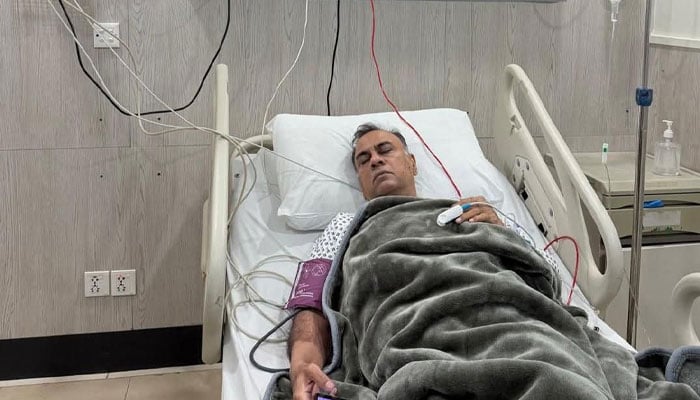
      Former Pakistan Test cricketer Basit Ali has been hospitalized after experiencing a heart-related health issue. The 55-year-old former international cricketer was taken to a private hospital, where doctors are currently treating him. According to Basit Ali’s wife, the former cricketer was brought to the hospital for an angioplasty procedure. She said that Basit Ali is currently under medical care and that doctors are monitoring his condition. Further details about his health are expected to emerge following the treatment. Basit Ali is a well-known former Pakistani cricketer who represented the national team during the 1990s. He was regarded as a talented middle-order batsman and became known for his aggressive approach at the crease. During his international career, he represented Pakistan in both Test and One Day International cricket. Basit Ali played 19 Test matches for Pakistan, scoring 858 runs. In the longer format, he was part of the national side during a period when Pakistan had a highly competitive cricket team and several established international batsmen. In One Day International cricket, Basit Ali represented Pakistan in 50 matches and scored 1,265 runs. His ability to score quickly and play attacking strokes made him a notable member of Pakistan’s limited-overs squad. The former cricketer’s hospitalization has drawn attention from the Pakistani cricket community, with fans and former players expressing concern over his health. His family has confirmed that he is receiving treatment at the private hospital. Angioplasty is a medical procedure commonly used to restore blood flow through narrowed or blocked arteries. During the procedure, doctors generally open the affected blood vessel to improve circulation. The decision to perform angioplasty depends on the patient’s medical condition and the assessment of the treating doctors. Basit Ali’s illness comes as a reminder of the importance of timely medical attention when symptoms related to the heart occur. His family brought him to the hospital for treatment, where specialists are currently attending to him. Born in Karachi, Basit Ali made his international debut for Pakistan in the early 1990s. Although his international career was relatively short, he remained a familiar figure in Pakistani cricket. Following his playing career, he continued to remain associated with the sport through cricket-related activities and analysis. His experience as a former international player has also allowed him to remain connected with Pakistan’s cricketing circles. Over the years, he has regularly shared his views on Pakistan cricket and the performances of national players. The cricket fraternity is now awaiting further updates regarding his condition. His family has requested prayers and good wishes as he undergoes treatment. At present, Basit Ali remains under medical supervision at the private hospital. His wife has confirmed that he was admitted for angioplasty and that treatment is underway. Fans and cricket supporters across Pakistan are hoping for his speedy recovery and a return to good health.

  • Songkran Road Toll at 71, With 317 Injured After Two Days

    BANGKOK — Seventy-one people have been killed and 317 others injured in traffic accidents during the first two days of the Songkran festival holiday period, according to figures released by the Ministry of Public Health on Sunday. Twenty Road Fatalities on First ‘Dangerous Day’ of Songkran Holidays The victims were involved in 344 traffic accidents […]

Leave a Reply

Your email address will not be published. Required fields are marked *