martyred terror attack
| | |

15 martyred in terror attack on joint security Che…

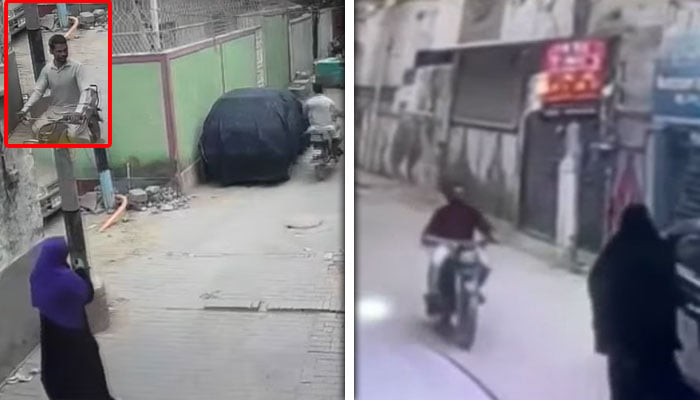
At least 15 people, including 14 security personnel, were martyred after terrorists launched a major attack on a joint security checkpost in Tank district of Khyber Pakhtunkhwa during the early hours of Friday.

According to the Inter-Services Public Relations (ISPR), the attackers attempted to storm the checkpost in a coordinated assault. Security personnel immediately responded with heavy fire and successfully prevented the militants from capturing the position.

During the intense gun battle, security forces killed 12 terrorists who were attempting to escape after the failed assault. Officials said the troops displayed exceptional bravery and professionalism while defending the post.

The attackers later rammed an explosive-laden vehicle into the outer wall of the checkpost. The massive explosion caused severe structural damage and resulted in the martyrdom of 12 army personnel, two police officers and one Forest Department official who were performing their duties at the time of the attack.

The blast also damaged parts of the security installation, while emergency teams rushed to the area to assist the injured and secure the site.

Following the attack, security forces launched a large-scale search and clearance operation in the surrounding areas to track down any remaining militants and ensure the area was fully secured. The operation is continuing.

Military officials said Pakistan’s security forces remain fully committed to eliminating terrorism and will continue intelligence-based operations across the country under the Azm-i-Istehkam national counterterrorism strategy.

The military paid tribute to the martyred personnel, describing their sacrifice as a symbol of courage, dedication and unwavering commitment to the defence of the country. Officials said such attacks would not weaken the nation’s resolve to defeat terrorism.

The latest incident comes amid continued efforts by security forces to dismantle militant networks operating in Khyber Pakhtunkhwa and Balochistan through intelligence-led operations. Authorities have intensified counterterrorism efforts in recent months following a rise in attacks targeting security personnel and public installations.

Senior officials condemned the attack and vowed that those responsible would be hunted down and brought to justice. They reaffirmed that operations against terrorist groups would continue until peace and stability are fully restored across Pakistan.

Security experts believe militant groups are attempting to target security installations to undermine ongoing counterterrorism operations. However, officials maintain that such attacks will only strengthen the determination of Pakistan’s security forces to continue their mission against terrorism.

Similar Posts

  • Thailand Officially Enters Rainy Season With Below-average Rainfall Forecast

    BANGKOK, Thailand — Thailand officially entered its rainy season on Friday, May 15, though meteorological authorities have forecast below-average rainfall for much of the country, according to an announcement from the Meteorological Department on Thursday. Meteorological Department Issues Heavy Rain Warning For Thailand Director-General Sukanyanee Yawinchan stated that the season’s formal commencement was determined by […]

  • | |

    Trump’s new hairstyle sparks buzz and memes online

    US President Donald Trump has once again become the centre of attention on social media. This time, the focus is not on politics. It is on his hairstyle. Trump recently appeared at an event in Las Vegas. He attended the gathering at the Red Rock Casino Resort. Photos from the event quickly spread across social media. Many users noticed that Trump’s hair appeared thicker and fuller than usual. The change soon became a talking point on X. Users shared comments about the president’s appearance. Several also posted memes and humorous reactions. Some social media users suggested that Trump may have changed his hairstyle. Others revived older rumours about his hair. The latest pictures have also brought renewed attention to long-standing speculation about whether Trump has undergone a cosmetic procedure involving his hair. One of the claims circulating online involves an alleged scalp reduction surgery. However, there is no independent confirmation that Trump underwent such a procedure. Trump has also not publicly addressed the latest speculation about his hairstyle. Questions about the US president’s hair have existed for decades. Some of the older claims were linked to his highly publicised divorce proceedings in the 1990s. During those legal proceedings, Trump’s former wife, Ivana Trump, reportedly referred to an alleged hair-related surgical procedure in court testimony. The claims have continued to attract public interest over the years. Trump’s distinctive hairstyle has become one of his most recognisable features. His latest appearance in Las Vegas has now revived that interest. Images from the event have been widely shared online. As memes continue to circulate, social media users remain divided over whether Trump’s hair simply looked different because of styling, lighting or another reason. For now, there is no verified evidence confirming that the change was the result of a cosmetic procedure.

  • |

    Houthi Red Sea blockade threat raises fears of wider global energy disruption

    A new threat by Yemen’s Houthi movement to impose a maritime blockade on Saudi Arabia has raised concerns about global energy supplies as tensions across the Middle East continue to escalate. The announcement comes at a time when shipping through the Strait of Hormuz has already been disrupted, increasing fears that two of the region’s most important oil routes could be affected at the same time. The Iran aligned Houthi group said it plans to target Saudi Arabia through a blockade in the Red Sea. While the group has not explained how it intends to enforce the measure, the warning has intensified concerns over the security of international shipping and energy exports. The Bab el Mandeb Strait at the southern entrance to the Red Sea is one of the world’s most important maritime routes. It connects the Red Sea with the Gulf of Aden and serves as a key passage for oil shipments travelling between the Middle East, Europe and Asia. Since disruptions in the Strait of Hormuz, Saudi Arabia has redirected much of its crude oil exports to its Red Sea port of Yanbu. From there, shipments bound for Europe pass through the Suez Canal, while cargo heading to Asian markets travels south through the Bab el Mandeb Strait. Industry data shows that oil exports from Yanbu have increased sharply over the past year, making the Red Sea an increasingly vital route for global energy markets. Millions of barrels of petroleum now pass through the Bab el Mandeb every day, helping to stabilise international oil supplies despite ongoing tensions elsewhere in the region. Analysts warn that any serious disruption in the Red Sea could significantly affect global energy prices by restricting another major export route from the Gulf. Saudi Arabia is reportedly considering expanding its pipeline network to the Red Sea coast to reduce dependence on vulnerable sea lanes. The Houthis have been involved in conflict with Yemen’s internationally recognised government for more than a decade and have previously launched missile and drone attacks against Saudi Arabia. Although a truce reached in 2022 reduced fighting, tensions have risen again following recent military strikes around Sanaa. The latest escalation began after Yemen’s recognised government said it had targeted Sanaa airport to prevent an Iranian aircraft from landing. The Houthis blamed Saudi Arabia for the attack and responded by firing missiles towards Abha airport in southern Saudi Arabia. A senior Houthi official later warned that continued escalation could lead to the closure of the Bab el Mandeb Strait. Although the Houthis maintain that they make their own military decisions, the United States has long accused Iran of supplying the group with weapons, funding and training. The Houthis reject claims that they act as an Iranian proxy. The movement previously disrupted international shipping after the outbreak of the Gaza war in late 2023. It launched attacks on commercial vessels in the Red Sea, saying the operations were intended to support Palestinians. Those attacks forced many major shipping companies to reroute vessels around southern Africa, increasing transport costs and delaying deliveries worldwide. Although Red Sea traffic had begun recovering after attacks eased, shipping through the Suez Canal remains well below previous levels. The latest Houthi threat has renewed fears that instability could once again disrupt one of the world’s busiest trade routes. During the recent conflict involving Iran, the Houthis played a more limited military role than other armed groups aligned with Tehran. However, their latest announcement suggests they may now be prepared to increase pressure on regional rivals, raising fresh concerns over the security of global energy supplies and international trade.

  • |

    Iran set to receive Chinese air-defence missiles

    Iran is expected to receive a shipment of Chinese-made shoulder-fired air-defence systems within weeks, according to sources familiar with the reported agreement. The deal involves between 300 and 400 man-portable air-defence systems (MANPADS). The systems reportedly include China’s QW-12 and FN-16 missiles. The agreement is estimated to be worth between $60 million and $70 million. If completed, it would represent one of Iran’s most significant known efforts to strengthen its short-range air-defence capabilities since the country’s recent conflict with the United States and Israel. Three sources familiar with the agreement told Reuters that the deal has already been signed. They spoke anonymously because of the sensitivity of the reported military arrangement. The agreement was reportedly made through Zhongqing Baoshang International Investment, a Hong Kong-based company described by the sources as an intermediary between Iranian interests and the Chinese supplier. Iran has been seeking to rebuild and strengthen its military capabilities after months of fighting. During the conflict, US and Israeli strikes reportedly targeted facilities associated with Iran’s missile, drone and air-defence programmes. Tehran responded with missile and drone attacks. The fighting also exposed difficulties in protecting fixed military installations and strategic infrastructure from advanced aircraft and precision-guided weapons. The reported acquisition of hundreds of MANPADS could provide Iran with a more mobile layer of defence. Unlike large fixed air-defence systems, portable systems can be operated by small teams and moved quickly between locations. The QW-12 and FN-16 are shoulder-fired, infrared-guided surface-to-air missile systems. They are designed to engage low-flying targets, including aircraft, helicopters and drones. Their mobility could allow Iranian forces to deploy them around military facilities, energy infrastructure and other sensitive locations. Defence analysts consider the QW-12 less advanced than some newer Chinese systems. However, they say such weapons can still offer useful short-range protection against drones and low-flying aircraft. The reported delivery route has also drawn attention. According to the sources, the initial shipments are expected to travel by air from Urumqi in western China before passing through Pakistan and reaching Iran. The sources did not clarify whether the equipment would subsequently be transported into Iran by road or by air. Pakistan has rejected any suggestion that it is involved in supplying Chinese air-defence weapons to Iran. The Inter-Services Public Relations (ISPR) described reports of Pakistan’s involvement in the transfer as false and fabricated. A Pakistani Foreign Ministry spokesperson did not immediately respond to requests for comment. China has also denied the reported deal. Its Foreign Ministry described the reports as groundless and said Beijing’s position has consistently focused on promoting peace and ending conflict. Iran’s Foreign Ministry did not immediately respond to requests for comment on the reported agreement. The sources also cautioned that the reported deal could still change. Delivery schedules, quantities and other implementation arrangements may be altered before the weapons reach Iran. Security officials and defence experts have indicated that Iran has been exploring different options to acquire Chinese military equipment. A European security source said authorities were aware of several proposed contracts involving QW-series MANPADS. These reportedly included the QW-12, QW-18 and QW-19 systems. A separate Middle Eastern security source said Iran had sought QW-12 and QW-18 missiles but was not aware of a completed agreement. Iran has invested heavily in domestic missiles, drones and radar systems over the past two decades. However, international sanctions and restrictions have continued to limit its access to foreign defence equipment. The reported purchase highlights Tehran’s continued effort to combine domestic weapons production with foreign military supplies. Two Western intelligence sources and an Iranian official also said Iran had explored land routes for transporting Chinese military equipment and dual-use components. Such routes could potentially provide a more discreet method of moving sensitive supplies and reduce the risk of disruption. The reported agreement comes as military ties between China and Iran appear to be attracting greater attention. A separate agreement involving Chinese anti-ship cruise missiles was also reportedly under discussion. However, it remains unclear whether that deal was ultimately completed.

  • | |

    Waqar Zaka clinches global trading crown, wins top…

    LAHORE: Pakistani technology entrepreneur and cryptocurrency advocate Waqar Zaka has won the international WEEX TradFi Masters trading championship, outperforming more than 3,000 participants from across the globe in a solo multi-asset trading competition. The tournament challenged traders to compete independently using their own capital, without team support or referral incentives. Participants traded across stocks, commodities, precious metals and cryptocurrencies on a single platform, with performance measured on profitability and risk management. Zaka emerged as the overall winner after posting a 74 per cent return in just 20 days. Starting with an account of $100,000, he generated a profit of $74,000, increasing his portfolio value to $174,000. His performance placed him ahead of competitors from South Korea and China, who finished second and third with returns of 57 per cent and 35 per cent, respectively. As the champion, Zaka was awarded a brand-new 2026 Mercedes-Benz G-Wagon during a ceremony in Dubai. The organisers also acknowledged his achievement on their official social media platforms. The victory marks a significant milestone, making Zaka the first Pakistani trader to secure the top position in an international competition of this scale focused on both traditional financial markets and digital assets. His latest success also represents a remarkable improvement from the previous edition, where he finished among the top ten competitors. Organisers described the championship as a rigorous test of strategy, adaptability and disciplined decision-making in rapidly changing financial markets. The event reflects the growing popularity of competitive trading, where participants are increasingly recognised for their analytical skills and market expertise. Zaka has been a prominent advocate of cryptocurrency and blockchain technology in Pakistan for several years. He has consistently promoted wider adoption of digital assets and has previously urged policymakers to consider establishing a national Bitcoin reserve as part of the country’s long-term financial strategy. His latest international triumph has once again drawn attention to Pakistan’s growing presence in global financial and digital trading markets, highlighting the increasing integration of traditional finance with the cryptocurrency sector.

  • | |

    Sindh to introduce AI in public service recruitmen…

    KARACHI: The Sindh government has decided to introduce artificial intelligence (AI) and modern technology into the recruitment and examination system of the Sindh Public Service Commission (SPSC). The decision was taken during a high-level meeting chaired by Sindh Chief Secretary Asif Haider Shah on Tuesday. The chairman of the SPSC, the secretary of information technology and other senior officials attended the meeting. During the meeting, the chief secretary said AI and modern technology would be used to make the SPSC examination process more efficient and transparent. Officials discussed the use of technology in several stages of the examination process. This includes the preparation of question papers, assessment of candidates and management of examination-related data. The new system is also expected to reduce unnecessary human involvement in certain stages of the examination process. Officials believe greater use of technology could help improve efficiency and minimise administrative delays. The Sindh government also plans to establish technology-equipped workstations across the province. These facilities will provide candidates in different areas with access to modern examination services. The initiative is aimed at improving accessibility for applicants from various parts of Sindh. The government said the use of AI and digital tools would help modernise the recruitment process and improve the overall management of SPSC examinations.

Leave a Reply

Your email address will not be published. Required fields are marked *