pak datacoms shift

Pak Datacom’s shift to foreign satellite raises security concerns

Islamabad: Serious questions have been raised over Pak Datacom’s reported shift of satellite connectivity for sensitive government linked organisations from Pakistan’s PakSat network to UAE based Yahsat, with a former chief executive of the company has asked regulators to investigate whether required approvals were obtained and whether national data security safeguards were fully protected. Pak Datacom officials were contacted for their response to the allegations and questions raised in the complaint, but no reply had been received at the time of filing this story.

The concerns were raised by retired Brigadier Syed Zulfiqar Ali, who described himself in the complaint as a former chief executive and shareholder of Pak Datacom. He sent a formal complaint to authorities including the Pakistan Space Activities Regulatory Board, the Pakistan Telecommunication Authority, the Director General Technical and PakSat International, with a copy also sent to the Ministry of Information Technology and Telecommunication.

The complaint alleges that Pak Datacom moved VSAT services being provided to the National Bank of Pakistan and other government organisations from its local satellite arrangement to Yahsat’s YahClick service. According to the complaint, the earlier system used PakSat with network hubs located in Pakistan, while the new arrangement involves a UAE based satellite service.

The complainant described the change as a possible security concern because the National Bank of Pakistan handles important government accounts. The main issue raised is whether the satellite change followed Pakistan’s regulatory requirements and if the necessary approvals were obtained.

Pakistan’s Space Activities Rules state that government departments, armed forces and other government entities should use national satellite capacity and give the National Space Agency the first right of refusal. The same rules also provide an exception. If the required capacity is not available through a national satellite, services from a registered satellite operator may be used, subject to the regulatory process and an NOC from PSARB.

The key unanswered questions are whether national satellite capacity was unavailable, whether Yahsat was being used as a registered satellite service under the relevant rules and whether the required approvals or NOC were obtained.

The complaint asks the authorities to determine exactly these points. The complainant alleged that the move contradicted the Space Activities Rules and asked regulators to establish whether the formal procedure had been followed.

The rules give PSARB powers to regulate satellite activities and ensure maximum use of national space assets. They also empower the regulator to issue an NOC to government organisations for using other registered satellites when national satellites cannot provide or arrange the required capacity.

Pak Datacom is a listed company and, according to the documents supplied with the complaint, Telecom Foundation holds 55 percent of its shares while the remaining 45 percent is held by the general public.

The complaint states that Pak Datacom has worked with defence and public sector organisations and has provided satellite communication and network support to organisations including the National Bank of Pakistan, NADRA, OGDCL, AGPR and NLC.

According to the documents, Pak Datacom had been providing satellite backup connectivity to more than 400 National Bank branches. The complaint says this connectivity previously operated through PakSat, using hubs in Karachi and Islamabad before services shifted to Yahsat.

The complainant argued that keeping government connectivity on an indigenous network would provide greater control, particularly for organisations handling sensitive information. Pak Datacom’s reported use of a virtual private network was also mentioned in the material.

The complaint nevertheless argued that using a foreign satellite and overseas infrastructure required closer examination from a national security point of view. These concerns remain allegations that relevant regulators and the company must verify.

Another issue raised in correspondence sent to the Ministry of Information Technology concerned the cost of the reported transition. The complainant alleged that approximately $97,000 was spent on imported equipment. He also alleged that around Rs 10 million was paid in Customs duties and taxes and around Rs 4 million in demurrage charges.

The complaint linked the demurrage amount to alleged delay or negligence. The complainant requested an inquiry to determine whether the satellite shift was carried out according to the regulatory framework and whether the reported spending was justified.

The Space Activities Rules give PSARB authority to investigate possible violations. Under the rules, PSARB may form a special committee to conduct a fact-finding inquiry if an act or omission may have violated the regulatory framework. The rules also state that satellite-based communication services in Pakistan must be provided through national satellites or registered satellites.

Foreign satellite operators are also required to meet regulatory conditions for providing services in Pakistan. The documents therefore leave an important regulatory question open. If all required permissions, registration and NOCs were obtained and national satellite capacity was unavailable, the foreign satellite arrangement may fall within the exception provided by the rules.

If those conditions were not met, regulators would need to determine whether any breach occurred and what action, if any, is required. The reporter contacted Pak Datacom Acting CEO Ali Saleem Rana and other company officials seeking clarification on why VSAT connectivity was reportedly shifted from PakSat to Yahsat.

Questions were also sent asking whether the company had obtained the required approvals, how it responded to the security concerns and whether the reported expenditure figures were correct. No response had been received at the time the story was prepared.

Pak Datacom’s position will be incorporated if the company responds. The matter now centres on whether the responsible regulatory authorities confirm that the required procedures were followed and whether the foreign satellite arrangement met Pakistan’s security and space regulation requirements.

The central questions are whether the system was properly authorised, whether national capacity was considered first, whether government data remained protected and whether public and shareholder money was spent according to the rules.
Similar Posts

  • |

    Mohsin Naqvi calls for autonomous, modern Interior…

    Federal Interior Minister Mohsin Naqvi has directed the Ministry of Interior’s affiliated institutions to become more autonomous, empowered and capable of making decisions independently rather than referring every matter to the ministry. He made the remarks while chairing a meeting of heads of all subordinate departments and institutions of the Ministry of Interior. The meeting reviewed the performance of various institutions, ongoing reforms and measures to improve coordination and communication among them. Naqvi stressed that institutions should take timely decisions within their respective mandates. He also instructed officials to immediately propose necessary legal amendments and administrative reforms wherever existing laws or procedures create obstacles to effective functioning. The interior minister said the Ministry of Interior deals with matters that are different and more sensitive than those handled by many other ministries. He assured participants that the government would provide full support to newly established institutions, including the Land Port Authority, and ensure that all departments receive the resources they need. He called for stronger cooperation among the ministry’s institutions and directed their heads to adopt comprehensive measures to strengthen data protection and cybersecurity. He said modernising the institutions and bringing them in line with contemporary requirements remained a key priority. Naqvi also asked the heads of all affiliated institutions to submit comprehensive two-year transformation plans for their respective organisations. He said the government aims to transform every institution under the Ministry of Interior along modern lines and improve its overall efficiency. “The goal is to make every institution under the Ministry of Interior exemplary and public-friendly,” Naqvi said, stressing the need to set clear targets and ensure their timely achievement to provide citizens with better facilities and quality services. The minister also highlighted the performance of the ministry’s institutions during the Hajj operation, noting that the absence of any reported drug-smuggling case during the operation reflected improved performance and stronger enforcement measures. Minister of State for Interior Talal Chaudhry also addressed the meeting and said a culture of poor performance had previously existed in federal institutions. He said the government had taken steps to change that mindset and was now focusing on target-based, result-oriented and performance-driven work. Chaudhry stressed that all institutions must focus on measurable outcomes, improve efficiency and work collectively to deliver better services to the public.

  • | | |

    Nawaz Sharif urges PML-N leaders to ignore Naqvi&#…

    Pakistan Muslim League-Nawaz (PML-N) President Nawaz Sharif has reportedly directed party leaders to avoid reacting to recent remarks made by Interior Minister Mohsin Naqvi, stressing that national unity and institutional harmony are essential in the current political and security environment. According to sources, Nawaz Sharif described coordination between the federal government and state institutions as a critical national requirement at a time when Pakistan is facing significant economic, political, and security challenges. He reportedly advised party leaders to exercise restraint and refrain from making statements that could create the impression of differences between the government of Prime Minister Shehbaz Sharif and Chief of Army Staff Field Marshal Syed Asim Munir. The development comes after Mohsin Naqvi’s recent remarks regarding the country’s political system reportedly prompted concerns within sections of the PML-N leadership. Senior party members are said to have conveyed their reservations to Nawaz Sharif during internal consultations. Sources said Nawaz Sharif instructed party leaders to ignore the statement and avoid escalating the matter publicly. He emphasised that the country’s national interest requires maintaining close cooperation and mutual understanding among all state institutions. According to the sources, the PML-N president believes that unnecessary public controversy over individual statements could undermine confidence at a time when the country is confronting multiple internal and external challenges. Nawaz Sharif reportedly maintained that preserving institutional harmony is essential for political stability, effective governance, and addressing the country’s economic and security priorities. He also urged party leaders to remain focused on governance and public service rather than engaging in political disputes that could create perceptions of divisions within the state structure.

  • | |

    Sharjeel Memon turns to NCCIA over social media al…

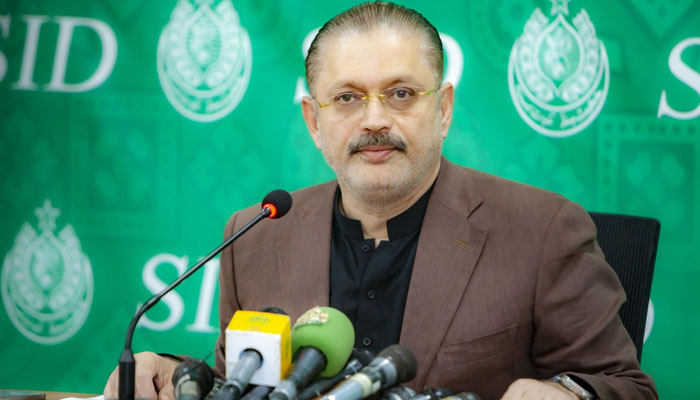
    KARACHI: Senior Sindh Minister Sharjeel Inam Memon has approached the National Cyber Crime Investigation Agency (NCCIA) over what he described as a social media campaign aimed at damaging his reputation and that of his son, Rawal Memon. Memon filed a written complaint with the cybercrime agency on August 9, seeking an investigation into what he termed false, fabricated and malicious claims circulating online. The controversy centres on social media allegations linking Memon to a guesthouse in Gulistan-e-Jauhar, Karachi, where Mir Ali Raza was allegedly tortured and killed. Posts circulating on social media claimed that the property was owned by the Sindh minister. Taking notice of the allegations, Memon urged the NCCIA to investigate the matter and determine the facts behind the claims. He also expressed his willingness to cooperate fully with the authorities during the investigation. The minister’s complaint comes as scrutiny surrounding the Mir Ali Raza case continues to generate discussion on social media, with competing claims being circulated online.

  • | |

    Pakistan’s Pharmaceutical exports reach 20-year …

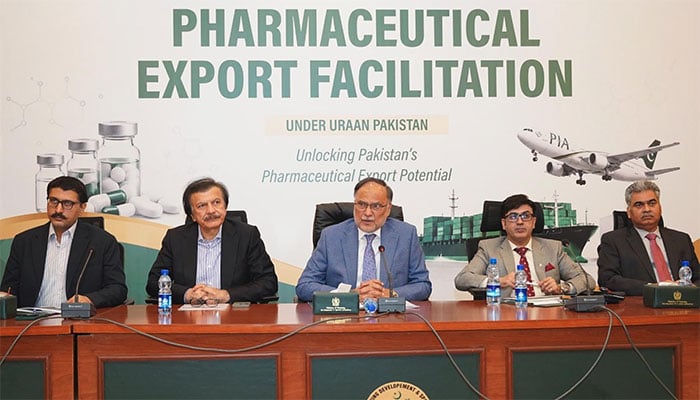
        ISLAMABAD: Federal Minister for Planning and Development Ahsan Iqbal has said that Pakistan’s pharmaceutical exports have reached a 20-year high of $457 million, stressing that the pharmaceutical industry must establish a clear contribution towards the country’s ambitious target of generating more than $100 billion in exports by 2035. Speaking at a roundtable conference in Islamabad organised to facilitate pharmaceutical exports under the government’s Uraan Pakistan initiative, the federal minister said the industry needed to adopt a long-term strategy to expand its presence in international markets. Ahsan Iqbal called on representatives of the pharmaceutical sector to hold consultations over the next month and prepare a comprehensive roadmap for the industry’s development through 2030 and beyond. He said Pakistan’s objective should be to transform the country into a global hub for pharmaceutical manufacturing and exports. The minister emphasised that Pakistan needed to secure a significant position in the international pharmaceutical market by improving the competitiveness and quality of locally manufactured products. He said cooperation between the government and private sector could help the industry compete more effectively at the global level. According to the minister, continuity in government policies and the creation of a business-friendly environment are essential for the sustainable growth of the pharmaceutical sector. He stressed that investors and manufacturers require predictable policies and a supportive regulatory framework to make long-term investments in production, research and exports. Ahsan Iqbal also highlighted the need to reduce Pakistan’s dependence on imported pharmaceutical inputs and increase domestic manufacturing capacity. He said approximately 85 percent of the raw material used by the pharmaceutical industry is currently imported, creating challenges for the sector and increasing its exposure to international supply disruptions and currency fluctuations. He called for strengthening the local pharmaceutical value chain so that a greater proportion of raw materials, intermediate products and finished medicines could be produced within Pakistan. The minister said enhancing domestic production would not only reduce the country’s import bill but could also improve the competitiveness of Pakistani pharmaceutical companies in international markets. A stronger local supply chain could help manufacturers reduce production costs, improve efficiency and develop products that meet international standards. He further stressed the importance of developing a coordinated strategy involving government institutions, pharmaceutical manufacturers, researchers and other stakeholders. Such cooperation, he said, would be necessary to identify the major obstacles facing the sector and develop practical solutions. The roundtable conference was held as part of efforts under Uraan Pakistan to promote exports and strengthen productive sectors of the economy. The initiative aims to improve Pakistan’s economic performance by encouraging investment, increasing exports and promoting sustainable industrial development. Ahsan Iqbal said the pharmaceutical industry had significant potential to contribute to Pakistan’s export growth if its structural challenges were addressed. He urged industry representatives to use the consultation process to develop realistic targets and identify measures that could help Pakistan increase its share in the global pharmaceutical market. The minister’s remarks come as Pakistan seeks to diversify its export base and reduce dependence on traditional export sectors. He said the pharmaceutical industry could become an important contributor to this effort by improving domestic production, investing in innovation and expanding access to international markets. The government, he added, would continue working with the private sector to create conditions that encourage investment and promote the long-term growth of Pakistan’s pharmaceutical industry.

  • | |

    Dar, Iran FM reaffirm diplomatic cooperation

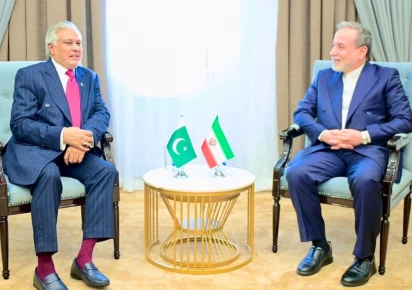
    Deputy Prime Minister and Foreign Minister Ishaq Dar held a meeting with Iranian Foreign Minister Abbas Araghchi on the sidelines of the Shanghai Cooperation Organisation (SCO) Council of Foreign Ministers’ meeting, where both leaders reaffirmed their commitment to strengthening bilateral relations and promoting peace through diplomacy. During the meeting, the two foreign ministers reviewed the evolving regional situation, particularly rising tensions in the Middle East. They discussed recent developments affecting regional security and agreed that continued dialogue, restraint and diplomatic engagement remain the most effective path toward achieving lasting peace and stability. Dar reaffirmed Pakistan’s commitment to maintaining close and friendly relations with Iran. He stressed the importance of avoiding further escalation and called on all parties to resolve differences through peaceful negotiations. He also highlighted the need to build upon the understandings reached under the Islamabad Memorandum of Understanding (MoU) signed in June 2026, which aimed to encourage diplomatic engagement and reduce regional tensions. The Pakistani foreign minister expressed concern over the deteriorating security situation in the region and said cooperation among neighbouring countries is essential to preserve peace, protect economic interests and ensure regional stability. Iranian Foreign Minister Abbas Araghchi appreciated Pakistan’s diplomatic efforts to reduce tensions and promote constructive dialogue. He thanked Pakistan for its continued support in regional peace initiatives and acknowledged Islamabad’s role in facilitating the safe return of Iranian fishermen and crew members, including individuals whose vessels had been intercepted during recent regional tensions. Both leaders agreed to maintain close coordination and regular consultations on regional and international issues of mutual interest. They reiterated their shared commitment to strengthening cooperation for peace, security and prosperity in the region. The meeting took place as tensions between the United States and Iran continue to escalate. Recent military exchanges have increased concerns about wider instability in the Middle East, with continued air strikes and retaliatory actions raising fears of a broader regional conflict. The situation has also affected key international shipping routes, particularly around the Strait of Hormuz and the Red Sea, increasing concerns over global energy supplies and international trade. The uncertainty has contributed to higher oil prices and renewed fears about the impact on the global economy. In recent days, US President Donald Trump warned of stronger military action against Iran following attacks on commercial shipping in the Red Sea. Iranian officials, however, have continued to reject the accusations and have criticised recent US policies, including proposals concerning frozen Iranian assets. Against this backdrop, Pakistan has continued to advocate dialogue and diplomacy as the only sustainable solution to regional disputes. Pakistani officials maintain that peaceful engagement remains essential to preventing further escalation and ensuring long-term stability across the Middle East.

  • | | |

    DPM Dar boosts Pakistan-ADB partnership

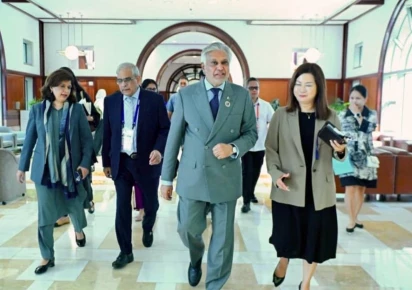
    Deputy Prime Minister and Foreign Minister Ishaq Dar visited the headquarters of the Asian Development Bank (ADB) in Manila on Wednesday to review the bank’s partnership with Pakistan and discuss ways to strengthen future cooperation. The visit took place on the sidelines of the 33rd ASEAN Regional Forum Ministerial Meeting, where Pakistan is participating in a series of high-level diplomatic engagements with regional and international partners. Upon his arrival at the ADB headquarters, Dar was welcomed by senior officials of the bank. He signed the visitors’ book before holding discussions on the institution’s evolving development agenda and its ongoing collaboration with Pakistan. The meeting focused on expanding cooperation in several important sectors, including infrastructure, energy, climate resilience, education, economic reforms and sustainable development. Both sides also discussed future opportunities to support Pakistan’s economic growth and development priorities. Dar later attended a working luncheon hosted by Pakistan’s Executive Director to the ADB, Nashita Mohsin. The event was attended by Pakistani professionals serving in senior leadership positions across different departments of the bank. During the interaction, Dar appreciated the contributions of Pakistani professionals working at the ADB. He said their expertise and leadership have strengthened the institution’s work while enhancing Pakistan’s image at the international level. He also congratulated Nashita Mohsin on assuming her responsibilities as Pakistan’s Executive Director to the Asian Development Bank and expressed confidence that she would further strengthen Pakistan’s engagement with the institution. On the sidelines of the ASEAN forum, Dar also met Bangladesh’s Foreign Minister Khalilur Rehman. The two leaders reviewed the positive momentum in bilateral relations and discussed ways to expand cooperation between the two countries. Both sides welcomed the steady improvement in diplomatic ties and appreciated the growing engagement in trade, communication and people-to-people contacts. They noted that the launch of direct flights earlier this year has further improved connectivity and created new opportunities for cooperation. The two ministers reaffirmed their commitment to maintaining the positive momentum in bilateral relations and agreed to continue close engagement in areas of mutual interest. Dar and Rehman also exchanged views on regional and international developments, including issues affecting South Asia and broader global challenges. They emphasized the importance of dialogue and cooperation in promoting regional peace, stability and economic development. Earlier, Dar arrived in Manila with a Pakistani delegation to participate in the 33rd ASEAN Regional Forum Ministerial Meeting. During the visit, he is expected to attend the forum’s plenary session and hold several bilateral meetings with foreign ministers from participating countries. The ASEAN Regional Forum brings together foreign ministers and senior diplomats from ASEAN member states and major global powers to discuss regional security, economic cooperation, energy security, food security, geopolitical developments and other international issues. Representatives from the United States, China, Japan, India, Australia, South Korea, Russia, the United Kingdom and the European Union are also participating in the meeting.

Leave a Reply

Your email address will not be published. Required fields are marked *