pope leo risk
| |

For Pope Leo, the risk of an AI apocalypse is a major concern

VATICAN CITY – The Vatican warned about the risk of an apocalypse spurred by artificial intelligence years before major American firms sounded the alarm at the United Nations Security Council on Wednesday, September 23 — a concern that Pope Leo is placing at the heart of his papacy.

Leo, who in May called on world leaders for global rules to oversee the industry, renewed his warnings about AI at a Vatican meeting on Thursday, September 24, and is expected to do so again on Friday, September 25, in a speech at the Paris headquarters of the UN’s culture and education body, UNESCO.

“This is not happening on day zero for the Holy See,” Rev. Paolo Benanti, a leading Vatican advisor on AI issues, told Reuters, referring to recent calls for a slowdown that have been endorsed by the CEOs of AI firms Anthropic, OpenAI and xAI, among others.

“The transformative power of AI…could produce a magnitude of societal changes that are very hard to predict,” said Benanti, an Italian academic who recently took part in the AI summit hosted by Britain’s King Charles.

The priest said he could not reveal details about the contents of the summit’s confidential discussions.

In a speech to the Pontifical Academy of Sciences on Thursday, Leo said AI can benefit humanity, but it has introduced “new dangers to security and international peace.” He urged global leaders to “govern wisely” in overseeing the technology.

Cardinal: The future of humanity is at stake

Leo, the first US-born pope, has raised the possible dangers of AI development frequently throughout his 16-month-old papacy and first discussed the issue publicly on his third day in office.

In his May appeal, released as his first major document, Leo warned that AI systems spread misinformation, prioritise ​conflict and could lead the world down a path of unending war.

Cardinal Pietro Parolin, the Vatican’s top diplomat, reiterated Leo’s call for international regulation of the industry at an event in Rome last week, warning that countries cannot “go it alone” on the technology.

“The future of humanity is really at stake here,” Parolin said. The world, he said, needs “everyone’s involvement in establishing some common rules that can genuinely govern this phenomenon.”

Anthropic co-founder Chris Olah spoke at the Vatican’s launch event for the Pope’s May document, known as an encyclical.

Asked if the Vatican is in ongoing dialogue with any AI firms, Benanti stressed the decentralized nature of the global church and said some discussions are being led by local bishops.

On September 16, the US bishops’ conference said it had created a new AI task force after several of its leaders met with executives that day.

“The dialogue focused on ways to keep any system of artificial intelligence at the service of humanity and the urgent need to address the real and present dangers such technology presents,” a statement said.

Leo warns about autonomous weapons

The Vatican began warning about the risks of AI in 2019, hosting two conferences that year on the possible dangers of the technology. The late pope Francis warned attendees at one of the events that misinformation spread by AI could spark a world war.

The Vatican also teamed with Microsoft MSFT.O, IBM IBM.N, the UN’s Food and Agriculture Organization and the Italian government in 2020 to issue a call for AI development that “does not have as its sole goal greater profit or the gradual replacement of people in the workplace.”

Leo has urged oversight especially for the development of weapons systems, such as those being used in the Russia-Ukraine war. He said in his encyclical that such weapons have advanced “practically beyond any human ‌reach to govern them.”

The Vatican’s advocacy on the global stage against autonomous weaponry goes back decades, Benanti said, likening AI-powered drones to landmines that are indiscriminate with their targets.

The priest compared the Vatican’s warnings about the risks of AI to how popes have long called for nuclear disarmament.

“If nuclear weapons can destroy humanity … the manipulation of generative AI content in social spaces can destroy the capabilities of people to stay together as a society,” he said.

“Nuclear weapons have to be stocked inside facilities, and you can count and control them. AI is not this visible.” – Rappler.com
Similar Posts

  • |

    White House considers removing top DC prosecutor over dropped monument case

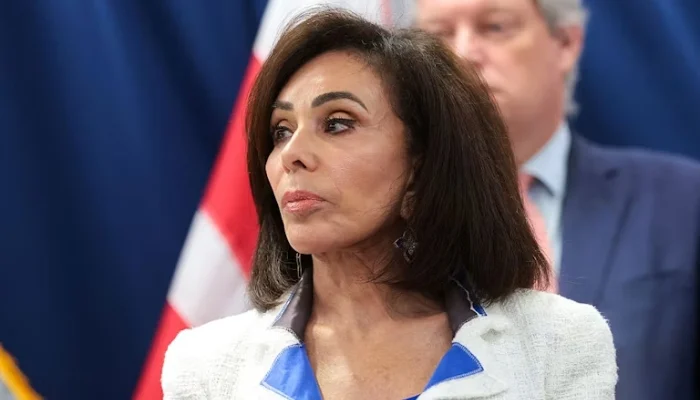
    US President Donald Trump is contemplating the dismissal of Jeanine Pirro from her position as US Attorney for the District of Columbia following her department’s move to abandon the criminal prosecution related to damage at the Lincoln Memorial Reflecting Pool. The decision by federal prosecutors to drop charges against former Olympian David Hearn came after evidence revealed the peeling liner stemmed from a rushed, substandard renovation rather than criminal intent. Trump reportedly felt caught unawares by the court submission, publicly rebuking Pirro for backing down under judicial pressure and claiming she buckled during proceedings. In defence of her office’s actions, Pirro explained that crucial documentation regarding the botched installation was withheld by the Department of the Interior until after the original indictment had been filed. Conversely, Interior Secretary Doug Burgum disputed this account, continuing to insist that intentional destruction caused the damage. Formal dismissal of the charges against Hearn remains pending before the court.

  • | | |

    Iran rejects US proposals over ‘Excessive Demands’

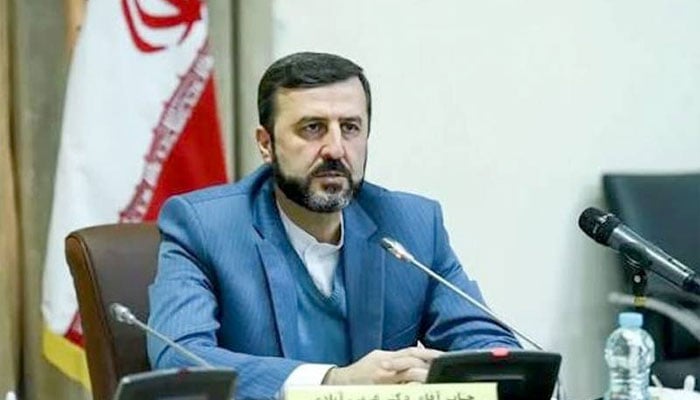
    Iran has rejected proposals put forward by the United States during indirect negotiations, Iranian Deputy Foreign Minister Kazem Gharibabadi said, citing what Tehran described as excessive and unacceptable demands from Washington. Speaking about the recent diplomatic contacts, Gharibabadi said the talks initially began in Islamabad through intermediaries. According to him, the US side presented a plan that included demands Iran could not accept, prompting the Iranian delegation to reject the proposal outright. Gharibabadi said Washington had warned that rejecting the plan would effectively end the negotiations and lead to the withdrawal of the US delegation. He added that the talks ultimately ended in exactly that manner, with the American delegation leaving the discussions. The Iranian deputy foreign minister stressed that Tehran neither insisted on continuing the negotiations nor asked the US delegation to remain at the table. He described Iran’s position as an example of what he called “dignified diplomacy,” arguing that Tehran would not compromise on what it considers its fundamental principles. Gharibabadi also discussed developments surrounding the Strait of Hormuz, a vital international shipping route. He said diplomatic discussions also took place in Oman after Iran moved to close the strait. According to the Iranian official, an Omani delegation proposed keeping a southern route open to allow ships to pass while Iran and Oman continued discussions. The proposal reportedly suggested that the route could later be closed depending on the outcome of the talks. However, Gharibabadi said Iran did not accept the proposal. He maintained that Iran had made its position clear from the beginning of the conflict and would not agree to arrangements that it believes undermine its stated principles. Gharibabadi further said Iran’s policy of keeping the Strait of Hormuz closed remains unchanged. He presented the decision as another example of Tehran’s approach to what he described as “dignified diplomacy,” signalling that Iran intends to maintain its position despite continued diplomatic efforts and international pressure.

  • | |

    Pakistan envoy Saadia Altaf Qazi honors Sahara Wel…

    OSLO: In a heartfelt ceremony marking the end of her diplomatic tenure in Norway, Pakistan’s Ambassador to Norway, Saadia Altaf Qazi presented a certificate of appreciation to Hafiz Muhammad Aslam Haq, chairman of the Sahara Welfare Foundation, in recognition of his longstanding humanitarian services and commitment to social welfare. The ambassador acknowledged Hafiz Aslam Haq’s contributions to supporting underprivileged communities across Pakistan, including assistance for poor families, orphans, widows and victims of devastating floods. She praised the foundation’s welfare initiatives, describing them as a valuable example of community service and compassion that reflects the true spirit of humanity. During the ceremony, Hafiz Aslam Haq paid tribute to Ambassador Saadia Altaf Qazi for her dedicated service to the Pakistani community in Norway and her efforts to strengthen diplomatic, cultural and people-to-people ties between Pakistan and Norway. He commended her leadership throughout her diplomatic assignment and wished her continued success in her future responsibilities. Expressing his gratitude for the recognition, Hafiz Aslam Haq thanked the ambassador for honoring his organization’s humanitarian work. He also extended his best wishes and prayers for her health, prosperity and continued achievements in representing Pakistan abroad. The event came as Ambassador Saadia Altaf Qazi concluded her diplomatic mission in Norway. Following the completion of her tenure, she is departing Oslo to assume her new assignment as Pakistan’s ambassador to Thailand. Her tenure in Norway has been widely recognized for promoting stronger bilateral relations, engaging with the Pakistani diaspora and enhancing cooperation between the two countries. The farewell recognition ceremony served not only as a tribute to humanitarian service but also as a celebration of the enduring partnership between Pakistan and Norway, highlighting the important role played by both diplomats and community leaders in strengthening international goodwill and supporting those most in need.

  • |

    US war on iran costs $37.5bn so far: Pentagon

    The United States has spent 37.5 billion dollars on its war against Iran to date, US Defence Secretary Pete Hegseth told lawmakers at a Senate Appropriations Committee hearing in Washington, while calling on Congress to approve additional funding for the conflict. The statement comes six months ahead of midterm elections, where Democrats lead in public opinion polls and are attempting to link the unpopular war with broader economic affordability concerns. Hegseth stated that the 37.5 billion dollar figure covers specific operational aspects of the war as well as anticipated expenditures through September 30, though the exact calculations used by the Pentagon were not detailed. The funding request follows President Donald Trump’s call for nearly 90 billion dollars in supplemental funding last month, primarily for the Iran conflict, setting up legislative friction with lawmakers who express frustration over the war’s trajectory and communication. Both Democratic and Republican members of Congress criticised the administration for a lack of transparency since US and Israeli military operations against Iran began on February 28. Senator Patty Murray warned that the president’s severe threats against civilian infrastructure risk war crimes and a prolonged conflict, while Senator Kirsten Gillibrand criticised contradictory statements from the administration regarding the duration and scope of the war. Hegseth warned lawmakers that without an urgent influx of capital, military training operations would need to be curtailed. Chairman of the Joint Chiefs of Staff General Dan Caine acknowledged that while service members would receive their pay, the Pentagon could face challenges covering equipment maintenance and investments in future capabilities due to strains on its nearly 1 trillion dollar budget. In response, Hegseth urged Congress to approve not only the supplemental package but also a 1.5 trillion dollar defence budget for 2027, describing any failure to fund the department at that level as the single greatest threat to national security. The appeal for funds follows the breakdown of a fragile ceasefire earlier in the month, leading to daily reciprocal strikes between US and Iranian forces. US troop casualties have risen to 18 killed and approximately 430 injured, including 100 wounded since July 7, though the Pentagon noted that 96 per cent of those injured have returned to active duty. Meanwhile, President Trump has threatened to expand targets to include Iranian energy plants, bridges, the Kharg Island oil hub via ground forces, and the deep-underground Pickaxe Mountain nuclear-linked facility, stating that a strike on the mountain site would occur in the near future.

  • |

    WhatsApp web gets voice and video calling

      WhatsApp has introduced a major update that brings voice and video calling to WhatsApp Web, allowing users to make and receive calls directly through their web browsers. Previously, these features were available only on the mobile app and the native desktop application. With this latest expansion, WhatsApp Web now offers a more complete communication experience, making it easier for users to stay connected without switching devices. The update significantly enhances the web version by introducing a dedicated Calls tab, where users can view their recent call history, access favorite contacts, and start voice or video calls with ease. WhatsApp Web also now supports features such as screen sharing and emoji reactions during calls, bringing it closer to the experience already available on the desktop application. According to Meta, these improvements are designed to make conversations more convenient for both personal and professional use. Whether users are catching up with friends and family or participating in work meetings, the new calling features aim to provide a smoother and more interactive experience. One of the most notable additions is the ability to transfer an ongoing call between devices without disconnecting. For example, a user who answers a call on a computer can seamlessly continue the conversation on a smartphone without interruption. This feature offers greater flexibility for people who frequently switch between devices during the day. WhatsApp has also introduced waiting rooms for group calls. When creating a call link, hosts can enable the “Require approval to join” option, allowing them to decide who can enter the call. This added layer of control is expected to be especially useful for business meetings, online classes, and large group discussions. The latest update also improves call quality by introducing background noise suppression, helping reduce unwanted sounds during voice and video calls made in noisy environments. In addition, Meta has enhanced video performance by enabling high-definition (HD) video streaming within the first few seconds of a call, providing users with a clearer and sharper video experience much sooner than before. The announcement comes as Meta continues to expand WhatsApp beyond traditional messaging. The company is also developing WhatsApp usernames, which will allow users to connect and make calls without relying solely on phone numbers, offering greater privacy and convenience. The new calling features are being rolled out gradually to WhatsApp users around the world. As the update reaches more devices, users will gain access to a more powerful communication platform that combines messaging, voice calls, video conferencing, and collaboration tools in a single service.

Leave a Reply

Your email address will not be published. Required fields are marked *