iran rejects proposals
| | |

Iran rejects US proposals over ‘Excessive Demands’

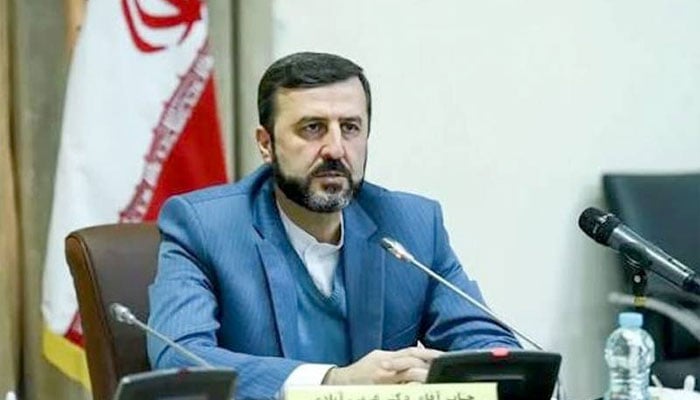
Iran has rejected proposals put forward by the United States during indirect negotiations, Iranian Deputy Foreign Minister Kazem Gharibabadi said, citing what Tehran described as excessive and unacceptable demands from Washington.

Speaking about the recent diplomatic contacts, Gharibabadi said the talks initially began in Islamabad through intermediaries. According to him, the US side presented a plan that included demands Iran could not accept, prompting the Iranian delegation to reject the proposal outright.

Gharibabadi said Washington had warned that rejecting the plan would effectively end the negotiations and lead to the withdrawal of the US delegation. He added that the talks ultimately ended in exactly that manner, with the American delegation leaving the discussions.

The Iranian deputy foreign minister stressed that Tehran neither insisted on continuing the negotiations nor asked the US delegation to remain at the table. He described Iran’s position as an example of what he called “dignified diplomacy,” arguing that Tehran would not compromise on what it considers its fundamental principles.

Gharibabadi also discussed developments surrounding the Strait of Hormuz, a vital international shipping route. He said diplomatic discussions also took place in Oman after Iran moved to close the strait.

According to the Iranian official, an Omani delegation proposed keeping a southern route open to allow ships to pass while Iran and Oman continued discussions. The proposal reportedly suggested that the route could later be closed depending on the outcome of the talks. However, Gharibabadi said Iran did not accept the proposal.

He maintained that Iran had made its position clear from the beginning of the conflict and would not agree to arrangements that it believes undermine its stated principles.

Gharibabadi further said Iran’s policy of keeping the Strait of Hormuz closed remains unchanged. He presented the decision as another example of Tehran’s approach to what he described as “dignified diplomacy,” signalling that Iran intends to maintain its position despite continued diplomatic efforts and international pressure.

Similar Posts

  • | |

    Japan PM Takaichi’s approval falls as inflation hits households

    Japanese Prime Minister Sanae Takaichi is facing growing public dissatisfaction as rising prices and higher living costs begin to weaken support for her government. A nationwide poll published by the Yomiuri newspaper showed that approval for Takaichi’s administration fell sharply in July. The cabinet’s approval rating dropped to 57 per cent, compared with 69 per cent in June. It is the first time since Takaichi took office that support for her government has fallen below 60 per cent. The survey was conducted from July 24 to 26. It showed that public disapproval also increased significantly. The share of respondents who opposed the cabinet rose to 34 per cent, up from 21 per cent in the previous month. Inflation has emerged as the biggest concern for voters. About 71 per cent of respondents expressed dissatisfaction with the government’s handling of rising prices and living costs. That figure stood at 56 per cent in June. The findings indicate that economic pressure is increasingly affecting Takaichi’s political standing. Her government had previously enjoyed strong public support, but persistent price increases are creating fresh challenges. Takaichi is also facing criticism over her government’s expansionary fiscal and monetary policy approach. The policies have contributed to higher bond yields and pressure on the yen, which has fallen to levels not seen in several decades. The latest polling results could increase pressure on the government to provide immediate relief to households. While issues such as national security remain important, voters are increasingly focused on everyday expenses and their purchasing power. Takaichi now faces the challenge of demonstrating that her economic policies can control inflation while maintaining broader economic stability.

  • | | | |

    Hormuz uncertainty pushes global oil prices higher

    KARACHI: Global oil prices edged higher on Monday as uncertainty over the reopening of the Strait of Hormuz continued to unsettle energy markets. Brent crude climbed by more than 1% in Asian trading, moving above $84 a barrel, while US crude prices also posted gains of over 1%. The market remains focused on the situation surrounding the Strait of Hormuz, a critical maritime route through which a significant share of the world’s oil supplies passes. Any prolonged disruption or uncertainty over shipping through the waterway could put further pressure on global energy prices. Iran has indicated that discussions with Oman on establishing alternative shipping routes are nearing completion. However, Tehran says the United States still needs to fulfil additional conditions before arrangements concerning the waterway can move forward. With the situation still unresolved, traders are closely watching developments around the Strait, with concerns over supply disruptions continuing to influence crude prices.

  • | | |

    West nile virus cases rise in Israel as two people…

    A mosquito-borne disease has resurfaced in Israel, with 13 people reportedly diagnosed with West Nile fever this year and two deaths recorded. According to reports, Israel’s Ministry of Health has confirmed the presence of mosquitoes carrying the West Nile virus in several areas where cases have been identified. The disease is primarily transmitted to humans through the bite of infected mosquitoes. Israel’s Ministry of Environmental Protection said mosquitoes carrying the virus were detected in the Menashe Regional Council, Ramat Hasharon and Eilat. Health officials explained that West Nile virus is generally transmitted through mosquitoes that become infected after feeding on birds carrying the virus. The infected mosquitoes can subsequently transmit the virus to humans through bites. Professor Sigal Sadeski, head of the Public Health Division, said that West Nile fever is mild in most cases and many infected people may not develop noticeable symptoms. However, the infection can become serious in some patients. Health experts warn that the virus can affect the nervous system and, in severe cases, lead to complications such as encephalitis or meningitis. The risk of severe illness is reportedly higher among people over the age of 60 and those who already have underlying health conditions. Investigation Underway Israeli authorities have launched epidemiological investigations to determine how and where the affected individuals were exposed to infected mosquitoes. Officials are also examining whether cases reported in different locations are connected and are attempting to identify areas where infected mosquitoes may have come into contact with people. The discovery of infected mosquitoes has also increased the importance of mosquito surveillance and control measures in the affected areas. Environmental authorities are expected to monitor mosquito populations and take steps aimed at reducing the risk of further transmission. Previous Outbreak in 2024 Israel also experienced a significant outbreak of West Nile virus in 2024. According to an Israeli report submitted to the World Organisation for Animal Health, 916 human cases had been confirmed by September 2024, with 71 deaths reported. The latest cases have renewed concerns about the seasonal spread of West Nile virus and the potential risks posed by infected mosquitoes. While most infections are mild or may cause no obvious symptoms, severe neurological complications can occur in a small proportion of patients. Health authorities are therefore continuing surveillance and investigating the latest infections to better understand the spread of the virus. The current outbreak highlights the importance of mosquito-control measures, particularly during periods when mosquito activity is high. Authorities are expected to continue monitoring affected areas and investigating possible sources of transmission.

  • | |

    Australia defends social media ban for under-16s

    The Australian government has defended its ban on social media use by children under the age of 16, despite new data showing that most teenagers continue to access restricted platforms months after the law came into effect. The legislation, introduced in December, was designed to protect children from the harmful effects of social media on their mental and physical health. The policy attracted international attention, with Australia becoming the first country to implement such a nationwide restriction on underage social media users. A recent report by Australia’s online safety regulator found that more than eight in ten teenagers under the age of 16 were still using social media platforms three months after the restrictions became operational. The findings have highlighted the challenges governments face in enforcing digital regulations. Despite the report, Australian authorities insisted that the policy remains an important step toward creating a safer online environment for children. Officials said the law has already influenced public discussion about online safety and encouraged greater awareness among parents, educators and technology companies. Assistant Minister for Productivity, Competition, Charities and Treasury Andrew Leigh said the government never expected complete compliance immediately after the law came into force. He explained that many public safety laws require time before they achieve widespread compliance. Leigh said the government considers the legislation successful because it has changed the national conversation about children’s use of social media and encouraged stronger action to protect young users from harmful online content. He noted that millions of social media accounts had already been closed or restricted since the implementation of the law. According to the minister, this demonstrates that the legislation is already having an impact, even if some teenagers continue to access online platforms. The government also stressed that technology companies have a major responsibility to ensure compliance with the new rules. Officials said digital platforms must strengthen age verification systems and take effective measures to prevent underage users from creating or maintaining accounts. Regulatory authorities are continuing to assess how well social media companies are implementing the restrictions. They are also examining additional measures that could improve enforcement and ensure technology firms meet their legal obligations. Experts say the latest findings illustrate the complexity of regulating online platforms, particularly as social media has become deeply integrated into the daily lives of young people. They note that effective enforcement will require cooperation between governments, parents, schools and technology companies.

  • | | |

    UK border crisis: new record as 230 migrants cross…

    The UK’s ongoing small boat crisis has come under renewed scrutiny after around 230 migrants crossed the English Channel and arrived in Britain, raising fresh questions about the government’s efforts to tackle irregular migration. The latest arrival comes just 17 days after 165 people crossed the Channel in a single day, according to reports. The new figure has added to growing political pressure on the UK government as ministers face continued challenges in preventing dangerous journeys across one of the world’s busiest shipping routes. Hundreds of people are believed to have reached the UK by small boats during the current week, with reports putting the number at more than 900. The continued crossings have become a major political issue, with the government under pressure to demonstrate that its border policies can reduce the number of people making the journey. People-smuggling networks are believed to charge migrants thousands of pounds for the dangerous passage. Critics say the criminal gangs running these operations make substantial profits while placing migrants’ lives at serious risk by using overcrowded and often unsuitable boats. The latest development follows an incident last week in which a small boat caught fire while attempting to cross the Channel. A total of 173 people were reportedly rescued following the incident, highlighting the dangers faced by those attempting the journey. Shadow Home Secretary Chris Philp criticized the French authorities over the continued crossings. He argued that French officials could have prevented boats of this size from entering deeper waters but failed to do so. The issue has also drawn strong criticism from Reform UK leader Nigel Farage. He has called for small boat crossings to be treated as a national security emergency, reflecting the increasingly prominent role of immigration in Britain’s political debate. The UK government has repeatedly pledged to tackle illegal immigration and disrupt the criminal networks responsible for organizing Channel crossings. However, the continued arrival of boats demonstrates the difficulty of stopping the journeys despite increased enforcement measures and cooperation with French authorities. The small boat crisis has become one of the most contentious issues in British politics, with politicians divided over how best to address irregular migration. While supporters of tougher policies argue that stronger border controls are urgently needed, others have stressed the need to address the criminal smuggling networks and the wider factors driving people to attempt dangerous crossings. With hundreds more people arriving in Britain, pressure on the government is likely to remain intense as it seeks to reduce Channel crossings and restore public confidence in its immigration strategy.

  • |

    Bangladesh signals interest in joining Pakistan-Saudi Arabia-Türkiye defence framework

      DHAKA: Bangladesh has indicated that it is open to joining the Makkah Joint Defence Agreement signed by Pakistan, Saudi Arabia and Türkiye, as Dhaka looks to broaden its strategic partnerships while maintaining a foreign policy centred on national interests. According to the state-run Bangladesh Sangbad Sangstha (BSS), Bangladesh Prime Minister’s Adviser for Foreign Affairs Humayun Kobir said the country maintained a positive outlook towards the possibility of becoming part of an economic or defence framework involving Saudi Arabia, Pakistan and Türkiye. Kobir said any decision regarding participation would be considered in light of Bangladesh’s national interests as well as changing global economic and trade dynamics. He stressed that Dhaka was pursuing a balanced foreign policy under its “Bangladesh First”approach, with national priorities remaining at the heart of its international engagement. He said Bangladesh was also working to strengthen its bilateral relationship with Pakistan through normal diplomatic channels. According to Kobir, the two countries were particularly focusing on expanding trade and improving people-to-people contacts and connectivity. The Bangladeshi adviser’s remarks come amid signs of improving diplomatic engagement between Dhaka and Islamabad. He also said Prime Minister Tarique Rahman’s proposed visit to Riyadh, following an invitation from Saudi Crown Prince and Prime Minister Mohammed bin Salman was expected to be finalised after the summer. The possibility of Bangladesh joining the defence framework comes shortly after Pakistan, Saudi Arabia and Türkiye signed the Makkah Joint Defence Agreement in Makkah on August 7. Under the agreement, an armed attack against any one of the three participating countries is to be treated as an attack against all three. The pact also provides a framework for greater defence cooperation, coordination and collective deterrence among the signatories. The agreement has attracted regional and international attention because of its potential to expand security cooperation among key Muslim-majority countries. Turkish Foreign Minister Hakan Fidan has described the arrangement as technically comparable to NATO’s Article 5 principle of collective defence, while emphasising that the agreement is not aimed at Iran or any other specific country. Ankara has also suggested that the framework could potentially be expanded to include additional regional states. Egypt has previously been mentioned as a possible participant in the broader security arrangement. Pakistan has similarly maintained that the agreement is defensive in character and is not directed against any particular country. Islamabad has also indicated that the framework remains open to states that are willing to support its principles and objectives. Deputy Prime Minister and Foreign Minister Ishaq Dar has said the agreement does not seek to replace existing bilateral or multilateral defence and security arrangements. Instead, he said, it provides an additional platform for cooperation based on mutual respect, shared interests and peaceful resolution of disputes. Bangladesh’s latest position suggests that Dhaka is carefully assessing emerging regional partnerships while seeking to preserve strategic flexibility. Its potential participation could further broaden the Makkah agreement’s regional significance and strengthen cooperation among Pakistan, Saudi Arabia, Türkiye and other interested countries. For Bangladesh, however, any decision to join would ultimately depend on how the proposed framework aligns with its national interests, foreign policy priorities and assessment of the evolving regional and global security environment.

Leave a Reply

Your email address will not be published. Required fields are marked *