decoded regulation lags
| | | | |

[DECODED] When regulation lags, how do organizations protect their truth?

In case you missed it, the Ad Standards Council (ASC) released last week its guidelines on the use of artificial intelligence in advertising. ASC’s Circular No. 2026-014 mandates that:

  • Advertisers utilize appropriate human oversight, maintaining full responsibility for all claims and depictions in their respective ads. 
  • Ads created, generated, or materially enhanced using AI include a disclosure.
  • Disclosures must be clear and reasonably conspicuous, including use of words like “AI-generated,” “AI-assisted,” “Created with AI,” or “Contains AI-generated content.” 

Hello, I am Iris B. Gonzales. I started my career in advertising back in 2018. Today, I am a Senior Brand Strategist at The Nerve and am also enrolled at the FEU Institute of Law. I chose both paths because of a growing unease about influence operations and how they affect our information landscape and, ultimately, the democratic systems we seek to uphold.

We at The Nerve have studied how influence operations in the Philippines can mislead audiences, manipulate narratives, and damage organizations’ reputations at scale. These operations now involve synthetic, AI-generated content — and the preliminary report of the Independent International Scientific Panel on AI, co-chaired by The Nerve’s Head of Global Strategy Maria Ressa, points out that such content slowly erodes our ability to distinguish authentic from generated content.

That’s a slippery slope toward distrust of media that could otherwise be truthful, termed the “liar’s dividend” in the UN report.

READ: [DECODED] How crises and disinformation impact brands and reputations

This is why I welcome the ASC’s move to require advertisers to disclose AI use in their content. To be clear, ASC stated that the use of AI by itself doesn’t render an ad misleading or deceptive. The circular merely aims to promote transparency in AI use and compliance with existing laws.

An added benefit, in my view, is that these labels will allow us as consumers to better recognize the tell-tale signs of AI-generated content, and hopefully apply the same discipline to the other content that we consume.

But that discipline only works if the labels are honest in the first place. Advertisers play a crucial role in preserving this authenticity. The more advertisers invest in truth, the more trust they build — not just for their respective organizations, but even for our information ecosystem.

This ASC circular is just one of many discussions we should be having now that AI is developing faster than our ability to measure or govern it. When regulation lags, brands and organizations are often left to police themselves, leaving them vulnerable to reputational risks. For those navigating this shift, the question now becomes: are you ready when that risk hits your organization?

If you’re looking to protect your organization’s reputation in the age of AI, join us in our Crisis Management Masterclass on Friday, October 9. You may also join more of these discussions exploring human values during this year’s Social Good Summit. – Rappler.com

Similar Posts

  • |

    PSX jumps 2,100 points on global optimism

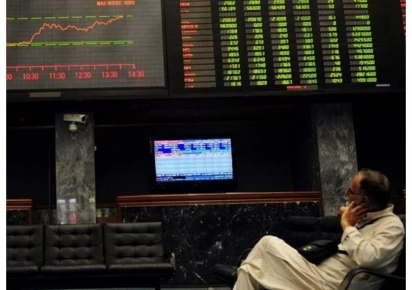
    The Pakistan Stock Exchange (PSX) witnessed a strong rally at the start of trading on Wednesday, with investors returning to the market after signs of easing geopolitical tensions in the Middle East lifted global sentiment. The benchmark KSE-100 Index climbed by more than 2,100 points during the opening session, reflecting renewed optimism among market participants. By around 9:30am, the KSE-100 Index was trading at 179,216.20 points, registering a gain of 2,132.98 points, or 1.20 percent, compared with the previous close. Market analysts attributed the sharp recovery to encouraging remarks from officials in Qatar and the United States, which strengthened expectations that diplomatic efforts could help prevent further escalation of the Iran conflict. The improved global outlook encouraged investors to increase buying in key sectors of the local market. The rally was broad-based, with significant buying interest recorded in automobile assemblers, cement manufacturers, commercial banks, fertiliser companies, oil marketing firms, power generation companies and refineries. Among the major gainers were heavyweight stocks such as Attock Refinery Limited (ARL), Mari Energies (MARI), Oil and Gas Development Company (OGDC), Pakistan Petroleum Limited (PPL), Pakistan Oilfields Limited (POL), Pakistan State Oil (PSO), Habib Bank Limited (HBL), MCB Bank, Meezan Bank (MEBL) and United Bank Limited (UBL), all of which traded in positive territory during the early session. Investor confidence also received support from reports that Pakistan has approached China to refinance a $1.3 billion commercial loan. According to reports, the financing is expected to be finalised later this month after both sides complete negotiations on the terms and conditions. Market participants believe the move could help strengthen Pakistan’s external financing position and provide support to the country’s foreign exchange reserves. The strong opening followed a volatile trading session on Tuesday, when the stock market closed significantly lower after investors engaged in widespread profit-taking. Although the KSE-100 Index had reached an intraday high of 178,768.83 points, selling pressure emerged later in the session as traders locked in gains following Monday’s impressive rally. Global financial markets also contributed to the positive sentiment. Asian equities advanced sharply after strong corporate earnings in the United States and continued enthusiasm for technology stocks pushed Wall Street to fresh record highs. Investors were further encouraged by hopes that diplomatic efforts would help keep the Strait of Hormuz open, easing concerns over disruptions to global energy supplies and putting downward pressure on oil prices and bond yields. Japan’s Nikkei index surged around 3 percent, while South Korea’s benchmark gained more than 4 percent. The broader MSCI Asia-Pacific Index outside Japan also posted strong gains, with Chinese blue-chip shares moving higher as investors welcomed improving market sentiment across the region. In the United States, stock futures remained stable after the S&P 500 reached another record high. However, trading in some technology stocks remained mixed. Chipmaker AMD declined in after-hours trading despite reporting earnings that exceeded analysts’ estimates, as investors had anticipated even stronger results. Concerns also persisted over the heavy capital spending required to support artificial intelligence infrastructure, with rising borrowing costs continuing to weigh on parts of the technology sector.

  • | | |

    PRL and SSGC face Senate anger over missing inform…

    Islamabad: State owned petroleum companies Pakistan Refinery Limited (PRL) and Sui Southern Gas Company (SSGC) faced serious criticism in the Senate after lawmakers expressed dissatisfaction over missing information, failure to follow committee directions and concerns about company management. The Senate Standing Committee on Petroleum questioned the performance and accountability of government owned petroleum companies and considered taking strict action against officials who failed to cooperate with parliamentary oversight. During the meeting chaired by Senator Umer Farooq, the committee reviewed the appointment criteria for chairpersons and managing directors of petroleum companies, the structure of their boards and progress on previous committee recommendations. The committee took serious notice of the absence of the Managing Director of Pakistan Refinery Limited during the meeting. Members expressed concern that PRL, despite being a state-owned company, did not provide the required information to the committee. The committee considered initiating a privilege motion against the Managing Director of PRL for failing to appear and provide necessary details. The Petroleum Division was directed to submit complete information about the boards of directors and senior management of all government owned petroleum companies. The committee said transparency in leadership appointments and company management is necessary because these organisations deal with matters directly linked to the national economy and public interest. The committee also expressed dissatisfaction over the performance of Sui Southern Gas Company and its failure to implement previous recommendations. Members said SSGC had not provided details of its board of directors despite earlier instructions. The committee also raised concerns over remarks made by SSGC that were considered discouraging toward the Senate Standing Committee’s role in discussing important matters. The committee considered moving a privilege motion against SSGC over non compliance with its directions. The Petroleum Division was further directed to review the tenure of board members who have remained in positions beyond the approved period and submit a detailed report. The committee also raised concerns over the absence of performance audits of oil rigs. Authorities were directed to provide the required audit report within seven days so that the committee could review the performance and efficiency of petroleum sector operations. Members said proper audits are necessary to identify problems, improve production and ensure better use of national resources. The committee also reviewed issues related to LPG quotas and licensing. The Oil and Gas Regulatory Authority was directed to hold consultations with all relevant stakeholders and submit a detailed report to the committee. Senators stressed that petroleum companies must improve governance, follow parliamentary instructions and ensure public institutions operate with transparency. The committee said accountability in state owned petroleum companies is essential to protect national interests and improve confidence in the energy sector.

Leave a Reply

Your email address will not be published. Required fields are marked *