psx jumps 2100
|

PSX jumps 2,100 points on global optimism

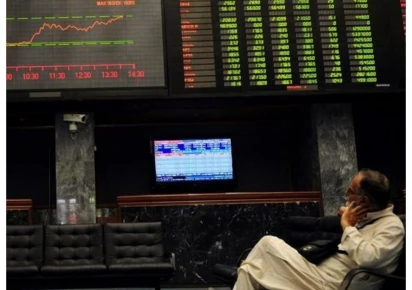
The Pakistan Stock Exchange (PSX) witnessed a strong rally at the start of trading on Wednesday, with investors returning to the market after signs of easing geopolitical tensions in the Middle East lifted global sentiment. The benchmark KSE-100 Index climbed by more than 2,100 points during the opening session, reflecting renewed optimism among market participants.

By around 9:30am, the KSE-100 Index was trading at 179,216.20 points, registering a gain of 2,132.98 points, or 1.20 percent, compared with the previous close.

Market analysts attributed the sharp recovery to encouraging remarks from officials in Qatar and the United States, which strengthened expectations that diplomatic efforts could help prevent further escalation of the Iran conflict. The improved global outlook encouraged investors to increase buying in key sectors of the local market.

The rally was broad-based, with significant buying interest recorded in automobile assemblers, cement manufacturers, commercial banks, fertiliser companies, oil marketing firms, power generation companies and refineries. Among the major gainers were heavyweight stocks such as Attock Refinery Limited (ARL), Mari Energies (MARI), Oil and Gas Development Company (OGDC), Pakistan Petroleum Limited (PPL), Pakistan Oilfields Limited (POL), Pakistan State Oil (PSO), Habib Bank Limited (HBL), MCB Bank, Meezan Bank (MEBL) and United Bank Limited (UBL), all of which traded in positive territory during the early session.

Investor confidence also received support from reports that Pakistan has approached China to refinance a $1.3 billion commercial loan. According to reports, the financing is expected to be finalised later this month after both sides complete negotiations on the terms and conditions. Market participants believe the move could help strengthen Pakistan’s external financing position and provide support to the country’s foreign exchange reserves.

The strong opening followed a volatile trading session on Tuesday, when the stock market closed significantly lower after investors engaged in widespread profit-taking. Although the KSE-100 Index had reached an intraday high of 178,768.83 points, selling pressure emerged later in the session as traders locked in gains following Monday’s impressive rally.

Global financial markets also contributed to the positive sentiment. Asian equities advanced sharply after strong corporate earnings in the United States and continued enthusiasm for technology stocks pushed Wall Street to fresh record highs. Investors were further encouraged by hopes that diplomatic efforts would help keep the Strait of Hormuz open, easing concerns over disruptions to global energy supplies and putting downward pressure on oil prices and bond yields.

Japan’s Nikkei index surged around 3 percent, while South Korea’s benchmark gained more than 4 percent. The broader MSCI Asia-Pacific Index outside Japan also posted strong gains, with Chinese blue-chip shares moving higher as investors welcomed improving market sentiment across the region.

In the United States, stock futures remained stable after the S&P 500 reached another record high. However, trading in some technology stocks remained mixed. Chipmaker AMD declined in after-hours trading despite reporting earnings that exceeded analysts’ estimates, as investors had anticipated even stronger results. Concerns also persisted over the heavy capital spending required to support artificial intelligence infrastructure, with rising borrowing costs continuing to weigh on parts of the technology sector.

Similar Posts

  • |

    Russia issues arrest request for Telegram founder Pavel Durov

    Russian authorities have announced that they are seeking the arrest of Telegram founder Pavel Durov, accusing him of allowing the messaging platform to be used for activities linked to terrorism. The move marks the latest escalation in Moscow’s long running dispute with the tech entrepreneur, who has repeatedly clashed with Russian officials over internet freedom and user privacy. Russia’s Federal Security Service, known as the FSB, said it had launched international search proceedings against Durov, alleging that Telegram was being used by Ukraine’s security services to recruit Russian citizens for sabotage and other attacks. The agency claimed that Durov failed to remove a dating bot that it says played a central role in these recruitment efforts. According to the FSB, an international wanted notice has been issued for Durov, who serves as Telegram’s chief executive. However, Russian authorities did not clarify the type of notice issued or whether foreign governments or international law enforcement agencies would recognise or act on the request. Durov’s legal representatives declined to comment on the allegations, while Telegram said the company would not make any public statement at this stage. The FSB alleged that a bot known as Leo Match Bot, which is banned in Russia, was used by individuals posing as young women to contact Russian teenagers and young adults. Authorities claimed these fake identities were created by Ukrainian intelligence agents to persuade users to attack police officers and carry out acts of sabotage against transport and energy infrastructure. Russian officials said that since July 2025, 46 people between the ages of 12 and 22 have been arrested in connection with attacks allegedly organised through the messaging bot. Ukraine has not publicly responded to these specific accusations. Since the beginning of the war, both Russia and Ukraine have accused each other of using online platforms and social media to recruit supporters and gather intelligence. The internet has become an increasingly important part of the conflict, with governments closely monitoring digital communication and online activity. Durov, who was born in Saint Petersburg, left Russia years ago and now holds French and United Arab Emirates citizenship. He first gained prominence after creating VKontakte, Russia’s largest social networking platform, before losing control of the company as government pressure increased. He later founded Telegram, which has grown into one of the world’s most widely used encrypted messaging services. Telegram has remained especially popular in Russia despite repeated attempts by the government to restrict access to the platform. Officials have long criticised the company for refusing to provide user data and have encouraged citizens to use state backed communication services instead. Durov also faced legal challenges in France last year, when he was arrested as part of an investigation into the distribution of illegal content through Telegram. He was later released on bail, and French authorities eventually lifted restrictions on his travel, allowing him to leave the country. The latest action by Russia comes as state controlled social media company VK continues promoting its government backed messaging application Max as an alternative to Telegram and WhatsApp. Russian authorities have increasingly supported domestic digital platforms as part of broader efforts to strengthen control over online communications. The announcement adds another chapter to the long standing conflict between the Russian government and Durov, whose commitment to encrypted communication and user privacy has repeatedly placed him at odds with Moscow’s efforts to regulate internet platforms. The outcome of Russia’s international arrest request remains uncertain, particularly given Durov’s residence outside the country and his foreign citizenship.

  • | | |

    IHC judge urges lawyers to improve courtroom condu…

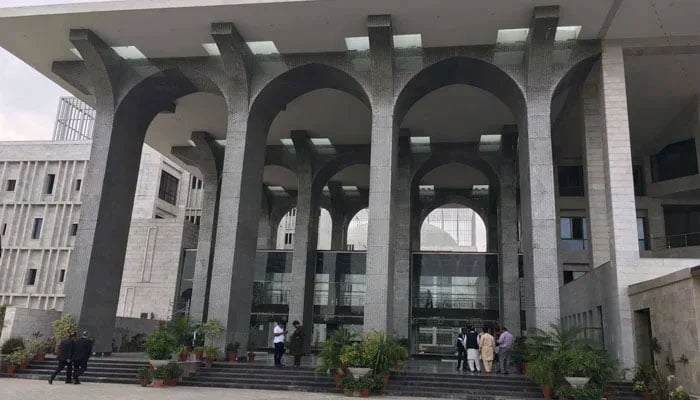
    Islamabad High Court (IHC) Justice Khadim Hussain Soomro has expressed serious concern over the conduct of lawyers in the federal capital. He urged the leadership of the legal community to take steps to improve professional behaviour in courts. The judge made the remarks during the hearing of a case in which Supreme Court Bar Association President Haroon Rashid appeared before the court. Justice Soomro said he felt deeply disappointed after observing the attitude of some lawyers in Islamabad. He said lawyers were expected to cooperate with the court and maintain a respectful environment during proceedings. The judge observed that lawyers in Islamabad did not provide the level of assistance that he expected. He said the behaviour he had witnessed was painful and disappointing. Justice Soomro also referred to his background. He said he belonged to a village where people did not behave in such a manner. He remarked that even in his hometown, people showed greater respect while communicating with one another. “I came here to learn, but I did not learn anything,” the judge said while expressing his disappointment over the situation. He further criticised the manner in which some people spoke in the courtroom. He said it was regrettable to see people using inappropriate or disrespectful language during legal proceedings. Justice Soomro asked the Supreme Court Bar president to take up the matter with lawyers’ representative bodies. He urged him to visit the bar council and bar association and advise lawyers to maintain professional standards. The judge stressed that Islamabad was the federal capital. He said lawyers practising in the capital should demonstrate responsible and professional conduct. Addressing Haroon Rashid, Justice Soomro said he was the president of one of the country’s largest and most influential bar associations. He asked him to play an active role in guiding lawyers and improving the atmosphere in courts. The judge’s remarks highlighted the importance of discipline, mutual respect and cooperation between lawyers and judges. He said a healthy courtroom environment was essential for the smooth administration of justice.

  • | |

    Naqvi warns against disrupting peace, backs lawful…

    ISLAMABAD: Federal Interior Minister Mohsin Naqvi has made it clear that the government will not allow anyone to undermine peace and public order, while reaffirming that citizens have the right to hold peaceful protests within the limits of the law. Speaking during a visit to the Frontier Corps (FC) Training Center in Shabqadar, Naqvi said peaceful demonstrations were a legitimate democratic right and would not be opposed as long as they remained lawful. However, he stressed that protests could not be used as a pretext for violence, vandalism or activities that threaten public safety and disrupt law and order. During the visit, the minister reviewed the training standards and operational preparedness of FC personnel stationed at the facility. He also received briefings on the security situation and challenges facing the region, along with measures being taken to protect citizens and maintain stability. Naqvi praised the Frontier Corps for its contribution to maintaining peace and security in Khyber Pakhtunkhwa and acknowledged the role of its personnel in dealing with security challenges. The Interior Minister reiterated that maintaining peace and protecting public safety remained a priority, adding that lawful political and public activity would be respected while any attempt to disturb the peace would be dealt with according to the law.

  • |

    DR Congo Ebola outbreak exceeds 4,000 confirmed cases

    The Democratic Republic of Congo is facing the fastest-spreading Ebola outbreak on record, with official data confirming that total infections have surpassed 4,000 cases. According to the national public health institute, recorded infections have reached 4,053, alongside 1,850 deaths across five provinces: Ituri, North Kivu, South Kivu, Haut-Uele, and Tshopo. Research published in the journal Science indicates that the virus was circulating in Ituri as early as January 2026, months before the epidemic was officially declared on 15 May, with over 500 suspected cases occurring during that initial period. Containment efforts continue to be severely hampered by delayed detection, overwhelmed healthcare surveillance, active military conflict, and an absence of vaccines or targeted treatments tailored for the specific viral species involved. Ranking as the world’s second-largest Ebola outbreak in history, the epidemic is surpassed only by the 2014–2016 West African outbreak.

  • | |

    Iran pressures Gulf allies to rein in Trump, threa…

    Iran has launched an intensive diplomatic campaign targeting Gulf states, warning them directly that Tehran will strike their oil, power and water facilities unless they persuade President Donald Trump to halt US military action and pursue a negotiated end to the war instead. According to a senior Iranian official, the warning covers potential attacks on energy facilities, oil fields, refineries, electricity grids, water systems, transport networks and other strategic infrastructure belonging to Washington’s closest Arab partners in the region. The message formed part of a wider Iranian strategy to discourage further American military action by raising the specter of significant economic damage across the Gulf. Sources familiar with the matter said the warning traveled through a wave of high level diplomatic contacts following Trump’s July 28 threat to strike Iran’s energy network and broader infrastructure. Two senior Iranian officials, two Gulf sources and a senior regional diplomat, all speaking on condition of anonymity given the sensitivity of the discussions, said Iranian Foreign Minister Abbas Araqchi held conversations with his Saudi, Turkish and Qatari counterparts as well as Pakistan’s army chief. The senior diplomat said Araqchi pressed Washington’s Gulf allies to use their influence with Trump to head off renewed strikes, cautioning that any attack on Iran would trigger retaliation against American assets and critical infrastructure throughout the Gulf. The diplomat said Araqchi delivered a consistent message in each conversation, expressing readiness to retaliate while stressing that a diplomatic solution offers the best chance of avoiding wider regional destruction. One Gulf source described the Iranian position as unambiguous, saying Tehran made clear that any American strike on Iranian infrastructure would draw retaliation against Gulf energy facilities and other regional targets. The campaign illustrates how Iran is attempting to convert Gulf vulnerability into diplomatic leverage, presenting regional governments with the prospect that a renewed confrontation between Washington and Tehran could put the infrastructure their economies depend on directly at risk. Saudi Crown Prince Mohammed bin Salman subsequently spoke with Trump directly, urging him to hold off on military action, return to the negotiating table, pursue a ceasefire and seek a diplomatic resolution, according to the senior diplomat and Gulf sources. Another Gulf source said the warning was meant for every Gulf state but traveled primarily through Saudi Arabia and Qatar, both of which have rebuilt ties with Iran in recent years after a long period of regional rivalry. Qatar, Oman and Saudi Arabia have each urged Washington to resume talks with Tehran and prevent a fresh round of conflict, with Iran cautioning that further strikes could turn the region into what one Iranian official called a fireball. On August 2, Trump said he had agreed to call off a planned attack on Iran, provided a deal could be reached quickly. Concerns over wider escalation A Gulf source said Saudi Arabia believes additional escalation would only cause further destruction, explaining why Riyadh pushed Trump to give diplomacy more room to work. At the same time, Saudi officials made clear the kingdom would defend itself if directly threatened, with a second Gulf source saying Riyadh warned that any strike on Saudi territory would draw a military response of its own. Ali Shihabi, a Saudi analyst with ties to the royal court, said the kingdom’s assessment holds that further escalation is unlikely to produce the outcome Washington wants. He said Saudi officials believe a mix of proportionate military responses combined with sustained pressure on Iran around the Strait of Hormuz offers the most realistic route toward a workable diplomatic settlement. Iran’s clerical leadership has repeatedly called for the closure of US military bases across the Gulf and urged Gulf Arab states to stop sharing intelligence with Washington, which Tehran believes has enabled strikes against Iranian targets. Shihabi noted that memories of the September 2019 drone and missile strikes on Saudi Arabia’s Abqaiq and Khurais oil facilities still shape regional thinking, since that attack temporarily cut more than half the kingdom’s crude output and exposed how vulnerable Gulf energy infrastructure remains. A separate Iranian official reiterated that any damage inflicted on Iran would be met with far greater retaliation, again citing power grids and refineries among potential targets. From Tehran’s perspective, the senior Iranian official said, Trump now confronts two difficult options: escalate a conflict that risks engulfing the wider Gulf and disrupting global energy markets, or accept a negotiated settlement that falls short of the decisive win Washington has sought. The senior regional diplomat identified Washington’s reluctance to let Tehran claim any form of victory as one of the central obstacles blocking an agreement, noting that American officials want tangible proof they prevailed in the conflict.

Leave a Reply

Your email address will not be published. Required fields are marked *