russia germanys top
|

At UN, Russia and Germany’s top diplomats hold first talks since 2022

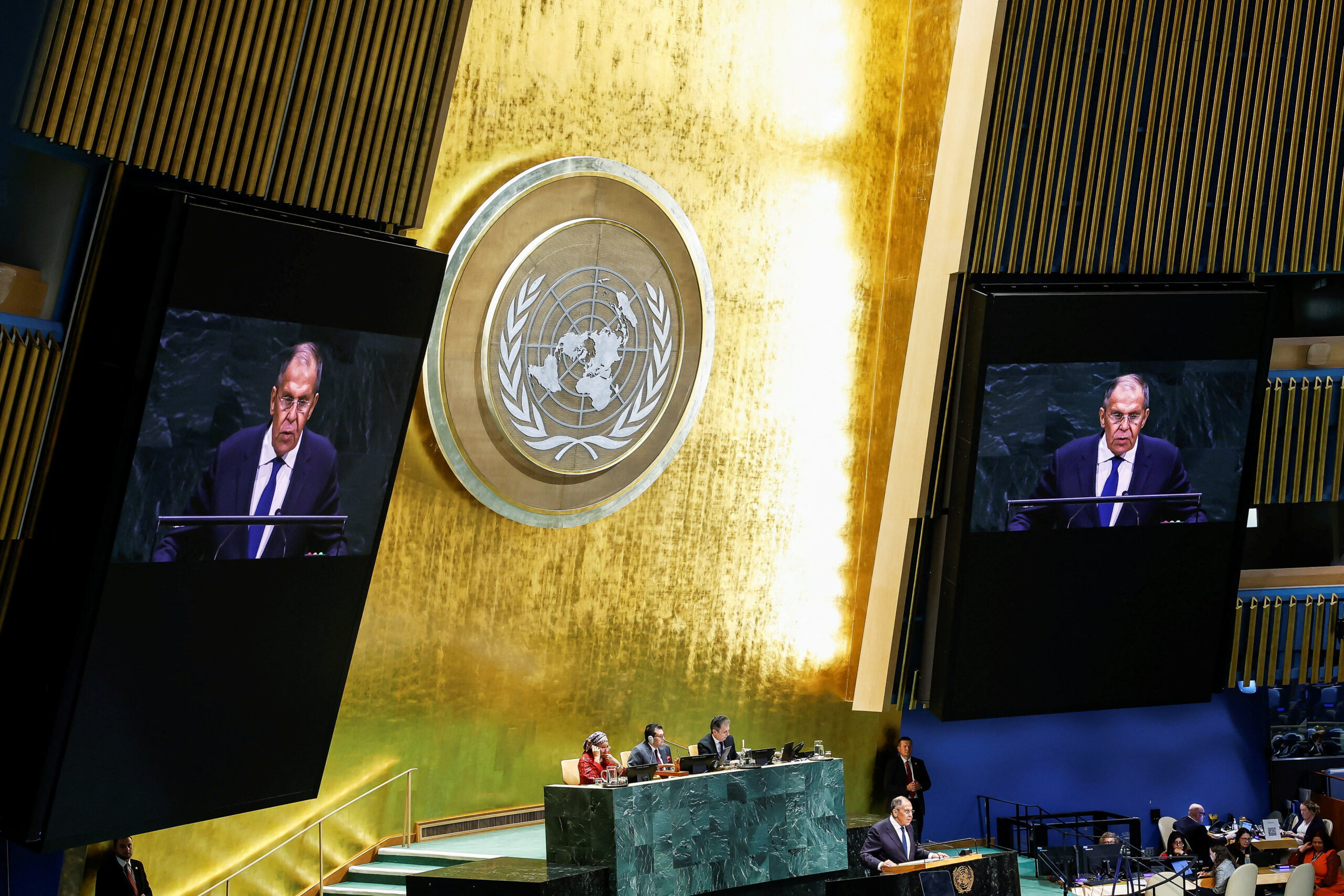
The foreign ministers of Russia and Germany met in New York on the sidelines of the UN General Assembly on Saturday, September 26, in the first such talks since before Russia’s 2022 invasion of Ukraine.

Relations between Moscow and Berlin, a close ally of Ukraine, have been frozen since the Russian invasion, and tensions escalated further after a drone incident at Leipzig/Halle Airport in eastern Germany in August.

In a sign of the continued frostiness, Russian Foreign Minister Sergey Lavrov told a news conference that he had learned nothing new from his German counterpart in the talks that Berlin had not already said publicly in its official statements.

“I told him that frankly … you could just have called me and said: ‘read my statement’,” Lavrov said.

Still, the ministers discussed bilateral ties and the war in Ukraine, officials from both sides said.

German Foreign Minister Johann Wadephul used the talks to urge Lavrov to do “everything possible to reach an agreement on grain exports via the Black Sea,” a German delegation source said. The meeting comes amid diplomatic efforts to revive Russia and Ukraine’s Black Sea grain and energy exports that have been sharply curtailed by attacks on vessels and port infrastructure.

Lavrov told the news conference that Russia had been in talks with India, Egypt and Turkey about proposals to ensure safe navigation in the Black Sea, potentially involving bilateral deals between Russia and those countries.

“There is a need for separate discussions with the Ukrainians, and not in the language of requests, but rather demands,” he said, blaming Ukraine for the attacks on vessels.

Ukraine has said it is open to agreements and blames all the fallout from the war on Russia and its invasion.

Wadephul told Lavrov, “Time is of the essence: given the food shortages in many countries — particularly in the Global South — all parties must be willing to engage constructively,” the German delegation source said.

The German minister also told Lavrov that “a pragmatic solution could pave the way for further concrete steps”, the source said.

Bilateral ties

In a sign of the sensitivities around meeting the wartime Russian foreign minister, Wadephul notified his European allies of the meeting afterwards in a message seen by Reuters.

“I used this opportunity to reiterate our position on Russia’s war of aggression against Ukraine and to call for an immediate and complete cease-fire, most pressingly with a focus on grain exports, and the energy infrastructure,” he wrote.

The German government said this month it had concluded that Russia was responsible for that attempted drone attack. It closed a consulate and a Russian cultural centre in Berlin in retaliation.

The Russian embassy in Berlin has dismissed the allegations as “fabricated provocation” and as “a new wave of anti-Russian hysteria in Germany.”

Wadephul used the talks to call on Russia “to abandon the dangerous path of escalation vis-à-vis Germany, Europe, and NATO,” according to the delegation source.

Wadephul said incidents such as the attempted attack in Leipzig or further hybrid attacks would not shake Germany’s resolve to support Ukraine, according to delegation sources. – Rappler.com
Similar Posts

  • |

    Japan marks 81 years since Nagasaki bombing amid nuclear debate

    Japan commemorated the 81st anniversary of the atomic bombing of Nagasaki on August 9, 2026. The ceremony was held as the country faces renewed debate over its nuclear policy and security strategy. Thousands gathered at Nagasaki Peace Park to remember the victims of the 1945 attack. Participants observed a moment of silence at 11:02am. It marked the exact time when the United States dropped the atomic bomb on the city. The bombing killed an estimated 74,000 people. The attack came three days after the atomic bombing of Hiroshima, where about 140,000 people were estimated to have died. Japan surrendered on August 15, 1945. The surrender brought World War II to an end and marked a major turning point in Japan’s history. The anniversary has also become a focus of debate over Japan’s long-standing pacifist and non-nuclear policies. Prime Minister Sanae Takaichi attended the Nagasaki ceremony. She has opened discussion on Japan’s postwar non-nuclear principles at a time of growing security concerns in East Asia. The debate has intensified as China expands its military capabilities in the region. Questions have also emerged over the long-term reliability of the US security commitment to Japan. Takaichi has maintained that Japan should pursue a realistic and practical approach toward achieving a world without nuclear weapons. However, her position on all three of Japan’s non-nuclear principles remains unclear. Japan’s three principles have traditionally called for the country not to possess, produce or permit the introduction of nuclear weapons into its territory. Takaichi supports the principles against possessing and developing nuclear weapons. She has not given the same clear commitment regarding the third principle. Her position has sparked concern among pacifists and atomic bomb survivors. Critics fear that any change in Japan’s nuclear stance could weaken the country’s postwar commitment to nuclear disarmament. Nagasaki Mayor Shiro Suzuki strongly defended the city’s anti-nuclear position during the ceremony. Suzuki described nuclear weapons as an absolute evil. He rejected the argument that nuclear weapons could be considered a necessary evil for national security. He also urged the central government to uphold Japan’s war-renouncing Constitution. He called on Tokyo to maintain its non-nuclear principles and participate in the upcoming review conference of the Treaty on the Prohibition of Nuclear Weapons. The mayor’s remarks came as Japan considers changes to its defence policy. The government is seeking stronger military capabilities in response to growing regional security threats. The anniversary also highlighted concerns about atomic bomb survivors who have not been officially recognised as hibakusha. Some people exposed to radiation during the Nagasaki bombing remain outside the government’s official recognition criteria. Their exclusion is linked to their location at the time of the attack and the areas officially designated as part of the blast zone. Shigemitsu Tanaka, head of the Nagasaki Atomic Bomb Survivors Council, raised the issue directly with Takaichi. Tanaka urged the government to provide support to both officially recognised survivors and those who remain unrecognised. He said the survivors are aging and that time is running out for them. Takaichi responded that the government already provides medical expense subsidies to unrecognised survivors on a level comparable to assistance given to officially recognised hibakusha. She said the government would continue implementing such support. The Nagasaki anniversary therefore carried both historical and political significance this year. Survivors and peace advocates continue to call for stronger commitments to nuclear disarmament. At the same time, Japan’s government is balancing its pacifist traditions with growing concerns over regional military threats.

  • | |

    Trump targets birthright citizenship again after c…

    WASHINGTON: US President Donald Trump has signed two executive orders seeking to restrict birthright citizenship, renewing his administration’s challenge to a constitutional provision just weeks after the Supreme Court rejected his earlier attempt. The new orders, signed on Thursday, take a narrower approach than Trump’s previous directive and focus on specific categories of children born in the United States. The administration argues that the measures fall outside the scope of the Supreme Court’s June 30 ruling. Birthright citizenship has been a central issue in Trump’s immigration agenda, with the White House particularly targeting what it describes as “birth tourism” — a practice in which pregnant foreign nationals travel to the US to give birth so their children can obtain American citizenship. At the signing ceremony in the Oval Office, White House aide Stephen Miller said the administration was formally moving to end the practice, declaring that “birth tourism” was banned under the new orders. The executive orders also seek to restrict citizenship rights for children born to certain foreign government employees and children of people classified as “alien enemies.” They could potentially have implications for people born in US territories if Congress approves proposed legislation seeking to end automatic citizenship there. Trump’s latest move comes only weeks after the Supreme Court ruled 6-3 against his earlier attempt to restrict birthright citizenship. His first executive order, issued in 2025, instructed federal agencies not to recognise citizenship for children born in the US when neither parent was an American citizen or lawful permanent resident. The 14th Amendment has traditionally been interpreted as guaranteeing citizenship to people born on US soil, with limited exceptions including children of foreign diplomats and members of an enemy occupying force. Trump criticised the Supreme Court ruling, calling it a “very unfortunate decision” and arguing that businesses and individuals were exploiting the citizenship system through birth tourism. However, legal experts and immigrant rights groups have questioned whether the new orders can withstand judicial scrutiny. The American Civil Liberties Union predicted that the administration’s latest effort would fail in court, while advocates accused Trump of attempting to bypass the Supreme Court. Deborah Fleischaker of UnidosUS said the high court had recently reaffirmed that birthright citizenship was a constitutional guarantee and argued that presidents could not alter it through executive action. The 14th Amendment’s Citizenship Clause states that all persons born or naturalised in the United States and subject to its jurisdiction are US citizens. The Supreme Court’s June ruling, Chief Justice John Roberts wrote, reaffirmed the principle that citizenship represents the right to participate fully in the country’s political community. The latest orders are therefore expected to trigger another legal battle, potentially putting Trump’s immigration policies and the constitutional interpretation of birthright citizenship back before the courts.

  • | | |

    Balochistan attack: sessions judge Abdul Hakeem Ka…

    District and Sessions Judge Abdul Hakeem Kakar and his security guard were killed in an armed attack while traveling toward Mastung from Quetta, officials confirmed on Thursday. According to officials, Judge Kakar was traveling with Additional Sessions Judge Tariq Lashari when unidentified armed men targeted their vehicles near Wali Khan crossing. The attack resulted in the deaths of Judge Kakar and his guard, while Judge Lashari and another person sustained injuries. Balochistan Home Department officials said the injured victims were shifted to a hospital in Mastung for medical treatment. Authorities have launched an investigation into the attack and are collecting evidence from the crime scene. Balochistan Chief Minister Sarfraz Bugti took notice of the incident and directed authorities to investigate all aspects of the attack. Officials said strict action would be taken if any negligence was found during security arrangements. The provincial government described the attack as a targeted assault against the judicial community. Officials said such incidents were aimed at creating fear and challenging the authority of state institutions. President Asif Ali Zardari strongly condemned the attack and expressed grief over the deaths of the judge and his guard. He said the sacrifices of those killed in such attacks would not go in vain and reaffirmed the country’s commitment to fighting terrorism. Interior Minister Mohsin Naqvi also condemned the incident, saying such acts could not weaken the nation’s determination against terrorism. PPP Chairman Bilawal Bhutto-Zardari expressed solidarity with the victims’ families and vowed that those responsible would be brought to justice. The attack comes amid heightened security concerns in Balochistan, where several violent incidents have recently taken place. Just a day earlier, three people were killed and several others injured in an attack on a passenger bus in Mastung, while a bridge on the national highway was damaged in a separate incident. Security forces have intensified operations across the province following a rise in militant activities. Authorities say counterterrorism efforts are continuing to restore peace and prevent further attacks. The investigation into the killing of Judge Abdul Hakeem Kakar and his guard remains ongoing, with security agencies working to identify and arrest those responsible.

  • | |

    Italy’s fourth summer heat wave peaks as rec…

    Italy’s fourth heat wave of the summer reached its most intense point on Monday, with a record 25 cities placed under red heat alerts as temperatures climbed above 40 degrees Celsius in parts of the country, according to local media reports. Italy’s Health Ministry raised the number of cities under its highest heat risk warning from 23 on Sunday to 25 on Monday, marking the highest total recorded so far this summer. Only Reggio Calabria and Messina avoided the red alert designation, though both remained under yellow level warnings. The Po Valley and central regions of the country are experiencing the harshest conditions, while inland areas and Sardinia could also see temperatures exceed 40 degrees Celsius. In parts of central and northern Italy, overnight temperatures are expected to stay above 25 degrees Celsius, a pattern meteorologists have described as super tropical nights. The central province of Terni recorded a temperature of 41 degrees Celsius on Sunday. Experts have linked the extreme heat to a persistent African anticyclone combined with continued warming of the Mediterranean Sea, where surface temperatures have reached or surpassed 30 degrees Celsius across much of the basin. Meteorologist Lorenzo Tedici of iLMeteo.it said the accumulated heat is expected to fuel atmospheric instability, warning of strong afternoon thunderstorms forming over the Alps and Apennines. Italy’s Civil Protection Department has issued yellow alerts for heavy rainfall along the Apennine mountain range stretching from Umbria to Calabria, as well as in inland areas of Sicily. Tedici said a genuine shift away from the hottest phase of summer 2026 is unlikely before at least mid August. Authorities have also flagged an elevated risk of wildfires, placing Sicily and Emilia Romagna under orange alerts as the heat wave continues to grip the country. The extreme temperatures fit a broader pattern of intensifying summer heat across southern Europe in recent years, as scientists have repeatedly linked rising Mediterranean sea temperatures and more frequent heat waves to long term climate trends affecting the region’s weather systems.

  • |

    UK brain drain? 246,000 Britons leave in a year

    The number of young and skilled people leaving the United Kingdom has increased significantly in recent years, raising concerns about the country’s ability to retain its talent. However, experts have cautioned against describing the trend as a complete “brain drain,” saying many people may eventually return to the UK. Official figures show that around 246,000 British citizens left the country last year, while the number of Britons returning was considerably lower. The gap between departures and returns has continued to widen since 2022. People under the age of 35 make up a significant proportion of those leaving the UK. Rising living costs, high taxes, expensive housing and increasing education costs are among the factors encouraging young people to consider opportunities abroad. The UK’s labour market has also become a concern for young graduates. Unemployment has reached 5.2 per cent, while the number of graduate-level job opportunities has reportedly fallen by around 45 per cent. London, in particular, has become increasingly expensive for young professionals. High rents and the overall cost of living are making it difficult for many people to establish themselves financially. Research suggests that the desire among young Britons to live and work abroad is growing. According to a British Council study, 72 per cent of Britons aged 18 to 30 are considering living and working overseas either temporarily or for a longer period. Canada and Australia are emerging as popular destinations for Britons seeking better career opportunities and a lower cost of living. The trend has sparked debate over whether Britain is becoming less attractive to skilled workers. Experts, however, say migration should not automatically be viewed as a permanent loss of talent. Many young professionals move abroad to gain international experience, improve their career prospects or seek better living conditions. Some may eventually return to Britain after gaining experience overseas. The growing number of departures nevertheless presents a challenge for the UK economy. Retaining young graduates and skilled professionals is increasingly important as the country faces pressure from rising living costs and a competitive global labour market.

Leave a Reply

Your email address will not be published. Required fields are marked *