russia germanys top
|

At UN, Russia and Germany’s top diplomats hold first talks since 2022

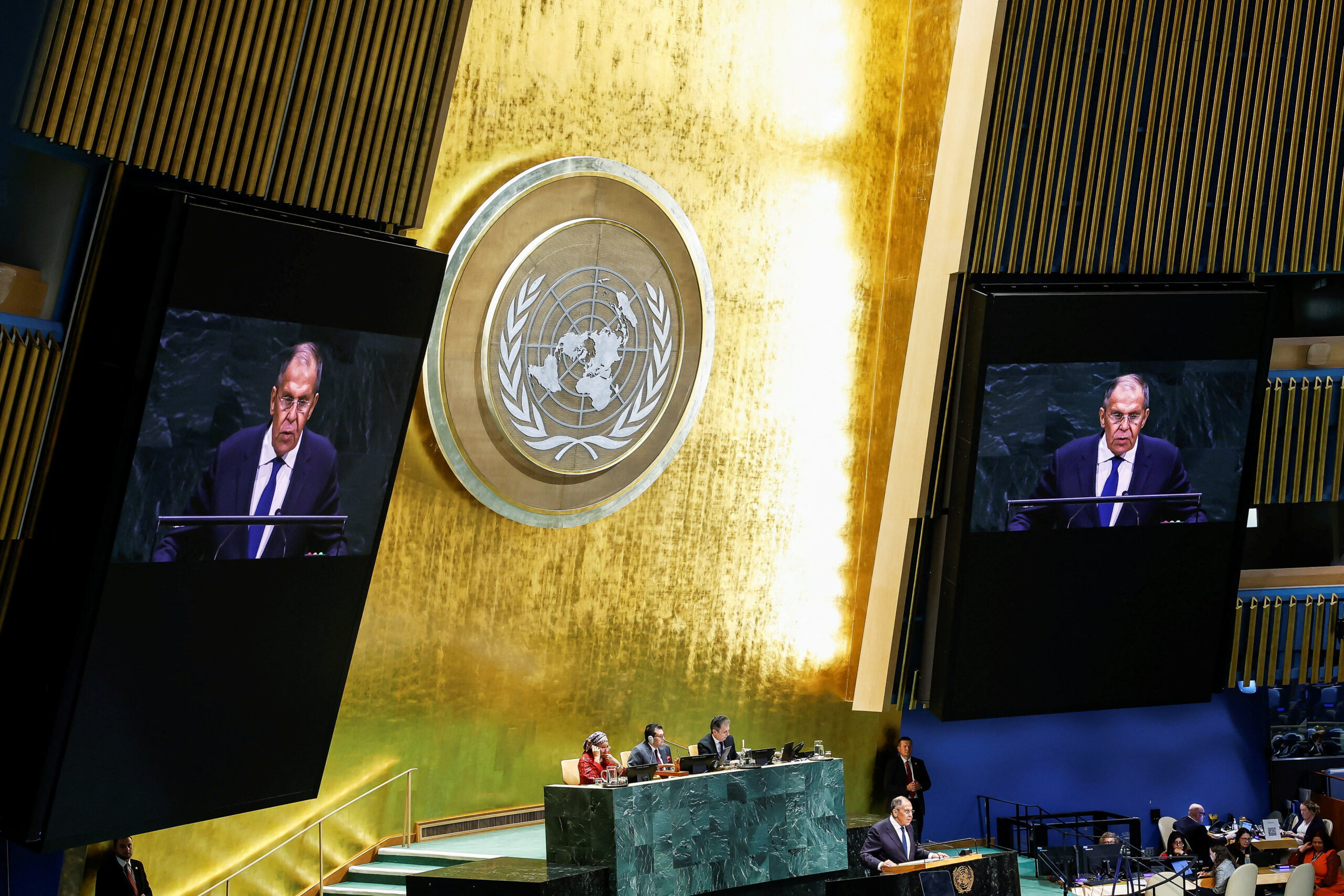
The foreign ministers of Russia and Germany met in New York on the sidelines of the UN General Assembly on Saturday, September 26, in the first such talks since before Russia’s 2022 invasion of Ukraine.

Relations between Moscow and Berlin, a close ally of Ukraine, have been frozen since the Russian invasion, and tensions escalated further after a drone incident at Leipzig/Halle Airport in eastern Germany in August.

In a sign of the continued frostiness, Russian Foreign Minister Sergey Lavrov told a news conference that he had learned nothing new from his German counterpart in the talks that Berlin had not already said publicly in its official statements.

“I told him that frankly … you could just have called me and said: ‘read my statement’,” Lavrov said.

Still, the ministers discussed bilateral ties and the war in Ukraine, officials from both sides said.

German Foreign Minister Johann Wadephul used the talks to urge Lavrov to do “everything possible to reach an agreement on grain exports via the Black Sea,” a German delegation source said. The meeting comes amid diplomatic efforts to revive Russia and Ukraine’s Black Sea grain and energy exports that have been sharply curtailed by attacks on vessels and port infrastructure.

Lavrov told the news conference that Russia had been in talks with India, Egypt and Turkey about proposals to ensure safe navigation in the Black Sea, potentially involving bilateral deals between Russia and those countries.

“There is a need for separate discussions with the Ukrainians, and not in the language of requests, but rather demands,” he said, blaming Ukraine for the attacks on vessels.

Ukraine has said it is open to agreements and blames all the fallout from the war on Russia and its invasion.

Wadephul told Lavrov, “Time is of the essence: given the food shortages in many countries — particularly in the Global South — all parties must be willing to engage constructively,” the German delegation source said.

The German minister also told Lavrov that “a pragmatic solution could pave the way for further concrete steps”, the source said.

Bilateral ties

In a sign of the sensitivities around meeting the wartime Russian foreign minister, Wadephul notified his European allies of the meeting afterwards in a message seen by Reuters.

“I used this opportunity to reiterate our position on Russia’s war of aggression against Ukraine and to call for an immediate and complete cease-fire, most pressingly with a focus on grain exports, and the energy infrastructure,” he wrote.

The German government said this month it had concluded that Russia was responsible for that attempted drone attack. It closed a consulate and a Russian cultural centre in Berlin in retaliation.

The Russian embassy in Berlin has dismissed the allegations as “fabricated provocation” and as “a new wave of anti-Russian hysteria in Germany.”

Wadephul used the talks to call on Russia “to abandon the dangerous path of escalation vis-à-vis Germany, Europe, and NATO,” according to the delegation source.

Wadephul said incidents such as the attempted attack in Leipzig or further hybrid attacks would not shake Germany’s resolve to support Ukraine, according to delegation sources. – Rappler.com

Similar Posts

  • |

    Far-right extremism expert Heidi Beirich arrested as US Justice Department expands case against SPLC

    The United States Department of Justice has arrested leading far-right extremism expert Heidi Beirich, charging her with financial crimes in an expansion of the federal government’s criminal case against the Southern Poverty Law Centre (SPLC). A superseding indictment returned in Alabama federal court charges Beirich, the former chief financial officer and Intelligence Project director for the SPLC, with conspiracy to commit wire fraud, conspiracy to make false statements to a bank, and conspiracy to commit money laundering. The charges stem from an April indictment against the civil rights organization over a discontinued intelligence programme that paid informants to infiltrate white supremacist groups. Federal prosecutors allege the SPLC secretly funneled donor funds through shell companies and fictitious entities to hide payments made to field sources. The government claims Beirich engaged in a romantic relationship with one informant and oversaw the transfer of $140,000 in donor funds into a shared bank account. Beirich, who currently serves as chief strategy officer and co-founder of the Global Project Against Hate and Extremism, denied the allegations through her legal counsel. Defense attorney Michael Proctor characterized the prosecution as politically motivated retaliation against an expert who dedicated decades to dismantling white supremacist movements. A federal judge in Alabama permitted the broader case against the SPLC to proceed last week after rejecting arguments requesting a dismissal on grounds of vindictive prosecution.

  • |

    China’s Chang’e-7 Moon mission to launch on August 24

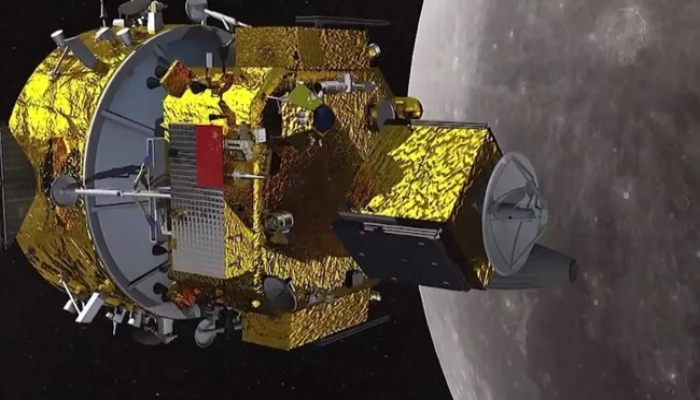
    China is preparing to launch a complex, multi-spacecraft mission to the Moon. The mission will land near the Moon’s south pole and search for evidence of water and ice. The mission is scheduled to launch on August 24 from the Wenchang Satellite Launch Center on China’s Hainan Island. According to a statement issued by the China Manned Space Agency, the Chang’e-7 mission will be launched aboard a Long March 5 rocket. The mission will focus on the Moon’s south pole and attempt to determine whether water and ice are present inside the craters as well as their quantity and other related details. Water vapour has previously been detected in this region of the Moon through remote sensing but scientists have not yet been able to measure it directly or obtain samples. Chang’e-7 will also help lay the technological groundwork for China’s crewed lunar mission planned for 2030. The mission will consist of an orbiter, lander, rover and hopper spacecraft. Five days after launch, the spacecraft is expected to enter lunar orbit. The orbiter will then identify and determine the target landing area. Chinese authorities have not yet announced the exact landing date and the landing is expected to take place several months after launch. The hopper spacecraft will make multiple flights over the permanently dark craters near the Moon’s south pole. It will also be equipped with landing legs to allow it to land and analyze the surface of the selected locations. The mission will also carry scientific payloads from several countries. China’s Chang’e-5 mission in 2020 and Chang’e-6 mission in 2024 successfully collected lunar samples and returned them to Earth.

  • | | |

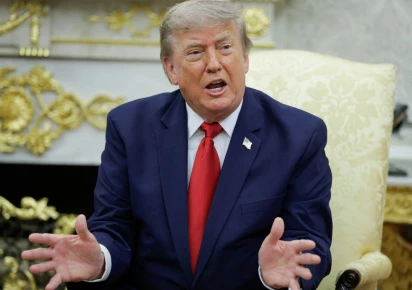
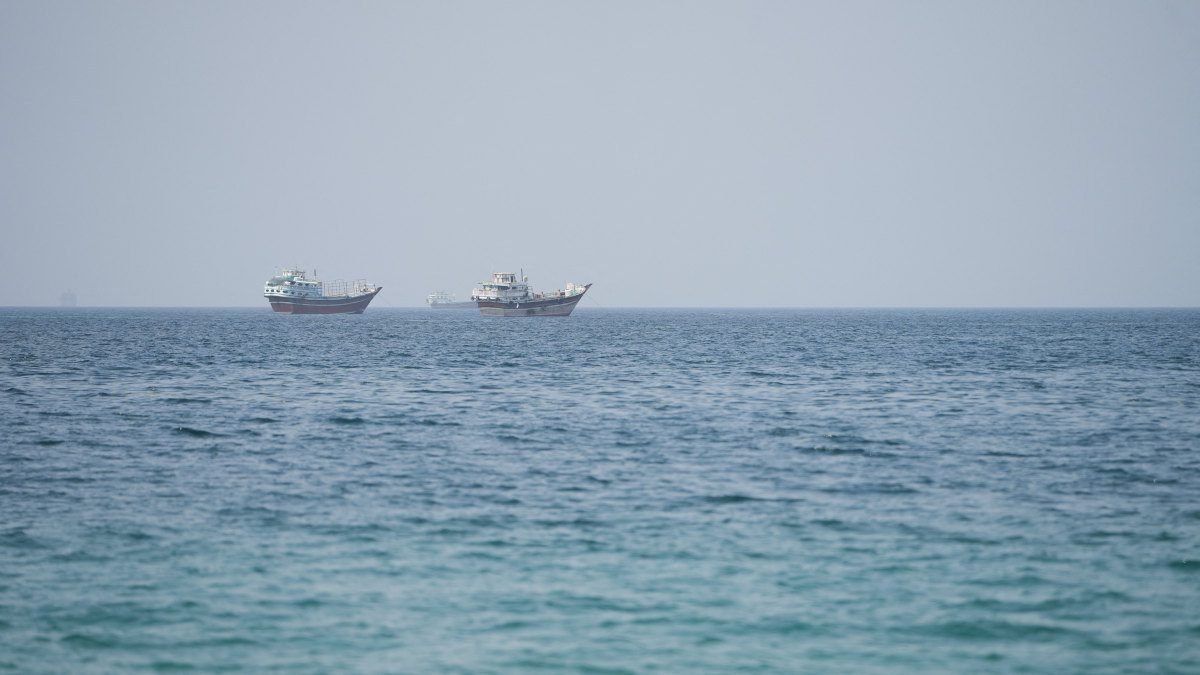
    Trump says US controls Strait of Hormuz

    US President Donald Trump has claimed that the United States is now controlling the Strait of Hormuz. Trump said the US Navy had cleared the entire waterway of naval mines. He made the remarks while speaking to reporters at the Oval Office. The Strait of Hormuz is a major international shipping route. It is also an important passage for global energy supplies. Any disruption in the area can affect international trade and energy markets. Trump was asked about the next steps following recent talks with Iran. However, he declined to provide details about what the United States would do next. The US president also indicated that Washington could increase pressure on Iran. He did not give specific details about what further action could be taken. Trump has also announced plans to seek compensation from Iran. The demand is linked to Americans who were killed or injured in various conflicts involving Iran. He had earlier said that Iran should provide compensation to the families of those killed aboard the US Navy destroyer USS Cole. Trump said his administration was seeking compensation for people who had been killed or wounded in different conflicts. He argued that Iran should be held responsible for the losses. According to Trump, Iran had not previously demanded compensation during earlier negotiations or discussions at different levels. He said Tehran had now unexpectedly raised such a demand. Trump said his decision to seek compensation from Iran would be made in response to the Iranian demand. The latest statements come as tensions between Washington and Tehran remain high. Trump has continued to signal that the United States is prepared to take further action if necessary. However, he did not reveal whether the US would pursue additional military or diplomatic measures.

  • |

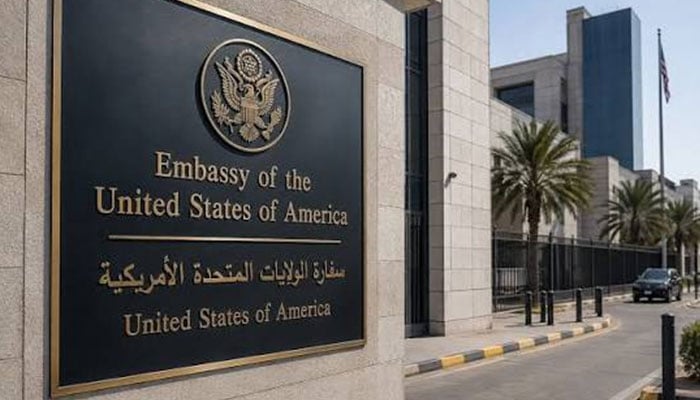
    US prepares to restore diplomatic staff at middle East embassies following Iran war

      WASHINGTON: The United States has begun preparations to return diplomatic personnel to several embassies across the Middle East that were previously evacuated amid concerns over the conflict with Iran. According to a report, an internal document from the US State Department indicates that the process of bringing American diplomats back to the region and scaling down emergency security measures could begin as early as this week. The development is being viewed as a possible indication that the administration of US President Donald Trump does not currently expect a full-scale war with Iran to resume. The planned return of diplomatic personnel suggests Washington may be assessing the security situation as sufficiently stable to gradually restore normal diplomatic operations. The internal document reportedly outlines plans to increase staffing levels at several US diplomatic missions across the region. These include American embassies in Israel, Lebanon, Saudi Arabia, Qatar, Jordan, Oman, Iraq and Kuwait. The planned changes would mark a gradual shift from the emergency measures implemented by the US government after the conflict began. American diplomatic missions had faced heightened security concerns as tensions between Iran, Israel and the United States escalated. Following the outbreak of the war in February, the US State Department ordered the evacuation of personnel from several diplomatic missions in the Middle East. The measures were introduced as a precaution amid concerns that the conflict could expand and expose American diplomats and other personnel to increased risks. The decision to begin reversing some of those measures indicates that Washington may now have greater confidence in the security environment. However, the reported plans do not necessarily mean that all emergency precautions will immediately be removed or that diplomatic operations will return to their previous levels overnight. Instead, the process is expected to take place gradually, with staffing levels and security arrangements adjusted according to conditions in individual countries. The Middle East remains a strategically important region for the United States, with Washington maintaining diplomatic missions across countries that play significant roles in regional politics, energy supplies and security affairs. US embassies also provide important channels for communication with governments and local authorities. The possible return of diplomats comes at a time when Washington continues to closely monitor developments involving Iran and its regional relationships. Any renewed escalation could potentially affect American diplomatic personnel and military interests in the region. The State Department’s reported internal plans therefore suggest an attempt to balance diplomatic needs with security considerations. Returning personnel would allow American missions to resume broader diplomatic activities while maintaining measures designed to protect staff. The report did not indicate that the United States considers the broader security situation completely resolved. Rather, the planned reduction in emergency measures appears to reflect a reassessment of the immediate threat following the conflict. The move could also have wider diplomatic implications. Restoring normal staffing levels at embassies may enable Washington to strengthen engagement with regional governments and improve coordination on political and security matters. For now, the process is expected to depend on developments on the ground. Any significant escalation between the United States, Israel and Iran could lead Washington to reconsider the planned deployment of diplomats and reinstate stricter security measures. The reported preparations nevertheless represent a notable shift from the evacuation measures introduced after the outbreak of the conflict in February.

Leave a Reply

Your email address will not be published. Required fields are marked *