iranians have left
|

Iranians have left Doha talks, draft proposal for US deal being circulated, official says

Iranian negotiators have left talks with Qatari mediators aimed at ending the war with the United States, and a draft proposal is being circulated with a follow-up meeting possible, an official briefed on the talks said on Monday, November 2.

The negotiators departed on Sunday, November 1, though not because of difficulties in the negotiations, the official said, without providing further details on the draft proposal.

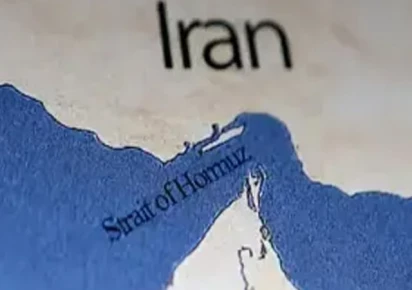
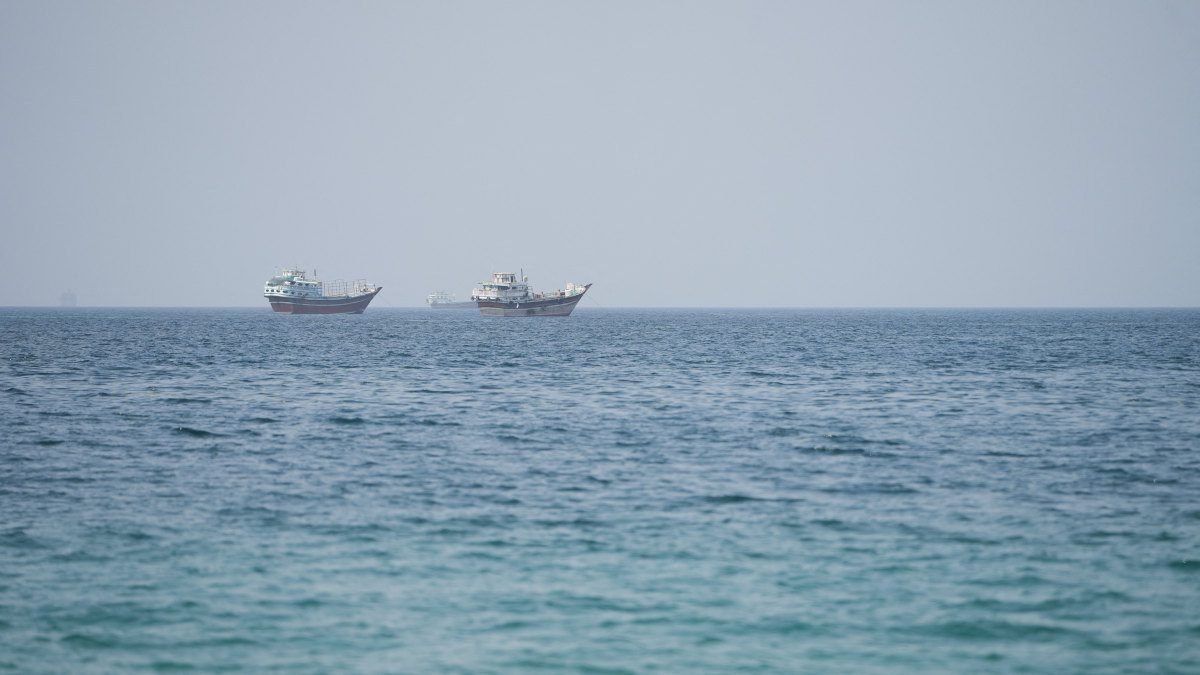
Iran’s foreign ministry spokesperson said the basis of the talks is a seven-step plan Iran drew up in September to reopen the Strait of Hormuz and end the US naval blockade on Iran, with Tehran now suggesting that proposal could be implemented on a faster timeline under a deal.

The spokesperson, Esmaeil Baghaei, said Deputy Foreign Minister Kazem Gharibabadi had been in Doha to facilitate the exchange of messages with Washington via Qatari intermediaries.

“Our demands have been articulated very clearly and transparently. These demands are reasonable and logical: No final agreement can be initiated, nor can the Strait of Hormuz be reopened or secured, unless the US naval blockade is brought to an end, Iran’s demands are respected, and Iran’s legitimate requirements are addressed,” Baghaei said.

On Saturday, Qatari broadcaster Al Jazeera quoted Iran’s Foreign Minister Abbas Araqchi as saying that under a deal the Strait of Hormuz could be opened within a two-day timeline rather than within the seven days originally envisaged.

Iran’s initial proposal was rejected by US President Donald Trump.

The latest round of diplomacy comes amid concerns that the conflict could escalate again after Tuesday’s midterm elections in the United States. Asked about Tehran’s view on the midterms, Baghaei said Tehran did not expect elections to “give birth to a new US.”

Trump has said the United States would not launch new attacks on Iran before the vote and that talks with Tehran have been productive, though he has not ruled out further military action.

Must Read

Three issues defining the 2026 US midterm elections


Three issues defining the 2026 US midterm elections

– Rappler.com

Similar Posts

  • | | |

    China’s Saindak copper mine in Pakistan faces su…

    China’s long-running copper mining project in Pakistan is facing growing operational challenges as repeated militant attacks in Balochistan disrupt supply routes connected to the mine. The Saindak copper and gold mine, located in Balochistan’s Chagai district, is considered one of China’s oldest mining investments in Pakistan and remains its only major copper interest in the country. Analysts say ongoing security issues have created difficulties for transporting materials and maintaining regular operations. The attacks along key routes have raised concerns about what some analysts describe as an “economic blockade,” potentially affecting the movement of supplies required for mining activities and the shipment of copper produced at the site. Copper is a strategically important commodity for China, which is the world’s largest consumer of the metal due to its extensive manufacturing, energy, and technology industries. Any disruption to supply sources can create concerns for industries dependent on stable copper availability. The Saindak project has long been viewed as an important symbol of Pakistan-China economic cooperation. The mine has contributed to Pakistan’s mineral sector while providing China with access to copper resources. However, security challenges in Balochistan have repeatedly affected development projects and infrastructure networks. The province has witnessed several militant attacks targeting government installations, security forces, and economic projects. Officials and security agencies have increased efforts to protect strategic assets and transportation routes, but continued instability remains a major challenge for investors operating in the region. Experts say maintaining security around mining operations is essential not only for the continuity of the Saindak project but also for attracting future foreign investment in Pakistan’s mineral resources. As global demand for critical minerals continues to rise, the stability of resource-rich regions like Balochistan will remain a key factor in determining the future of mining cooperation between Pakistan and international partners.

  • |

    Wildfires force 43,000 to flee in France

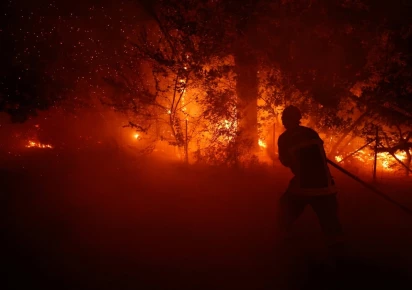
    More than 43,000 people have been evacuated from southwestern France as massive wildfires continue to spread across several regions, threatening residential areas, forests and popular tourist destinations. French authorities have launched one of the country’s largest emergency operations of the year as firefighters work around the clock to contain the rapidly advancing flames. The worst-affected area is located near Arcachon Bay and the Cap Ferret peninsula in the Gironde region. The wildfire has already burned through more than 8,700 hectares of land and continues to spread because of strong winds, dry vegetation and extremely high temperatures. Authorities ordered the complete evacuation of the Cap Ferret peninsula, a major holiday destination on France’s Atlantic coast that attracts thousands of visitors every summer. Residents, tourists and campers were instructed to leave immediately as emergency services expanded evacuation operations. To speed up the evacuation, authorities arranged transport by both road and sea. Special boats were deployed from several coastal villages while vehicles used the peninsula’s only highway leading to the mainland. Emergency officials urged everyone in the affected areas to leave without delay for their own safety. French Interior Minister Laurent Nunez described the Gironde wildfire as the largest fire of the current season. He said around 80 homes have been damaged, including nearly 50 houses that were completely destroyed by the flames. More than 1,000 firefighters, supported by helicopters, military engineering units and civil security teams, are working to control the blaze in Gironde. Hundreds of police officers and emergency personnel have also been deployed to help with evacuations, traffic management and public safety. A second major wildfire is burning near Biscarrosse in the neighbouring Landes region. The fire has destroyed more than 2,500 hectares of forest and forced the evacuation of over 23,000 residents, tourists and campers. Local authorities said the blaze remains out of control after continuing to spread overnight. French President Emmanuel Macron has requested international assistance through the European Union Civil Protection Mechanism. Several European countries have agreed to send additional firefighting aircraft and helicopters to help French authorities contain the fires. Croatia is sending Canadair water-bombing aircraft, while Portugal will provide specialised firefighting planes. The Czech Republic and Slovakia are also deploying heavy helicopters to assist emergency crews. Emergency officials said there have been no confirmed fatalities in the Gironde wildfire so far. However, they warned that weather conditions remain highly dangerous and could make firefighting efforts even more difficult in the coming days. Fire experts say the blazes are spreading unusually quickly because of prolonged heatwaves, severe drought and strong winds. These conditions have left forests and vegetation extremely dry, allowing fires to expand rapidly across large areas. Authorities estimate that nearly 50,000 hectares of land have burned across France since the beginning of this year’s wildfire season, making it one of the country’s most destructive fire seasons in recent years.

  • | |

    Iran, Oman reach deal on Strait of Hormuz shipping routes

    Iran and Oman have reached an agreement on a proposed shipping route map for the strategically important Strait of Hormuz following weeks of technical negotiations, Iranian officials said on Saturday. Iranian Foreign Ministry spokesman Esmaeil Baghaei said the two countries had made significant progress in talks aimed at establishing safer navigation routes through the waterway. The negotiations began around three months ago under an agreement signed in June. Baghaei said the proposed route was developed through coordination between Iran’s foreign ministry and its defence, security and environmental authorities. He added that Tehran and Muscat were still discussing some remaining issues, including the wording of a joint statement. The spokesman stressed that the arrangement was a bilateral agreement between Iran and Oman and was intended to facilitate the safe movement of commercial vessels while respecting the sovereignty of both countries. However, Tehran has made clear that the full restoration of normal shipping through the Strait of Hormuz depends on broader developments involving the United States. Baghaei said Iran wanted an end to what it described as US military threats, naval restrictions and violations of previous commitments before normal commercial traffic could fully resume. Iranian Foreign Minister Abbas Araghchi separately said negotiations with Oman over the waterway were continuing. He described the discussions as separate from the wider diplomatic dispute between Tehran and Washington. Araghchi also rejected the description of an earlier agreement as a simple 60-day ceasefire. He said the understanding was aimed at ending the war, while the 60-day period was intended for negotiations toward a final settlement. He said Qatar and Pakistan were continuing to exchange messages with Iran but stressed that Tehran had not yet decided to resume direct negotiations with Washington. Iranian Deputy Foreign Minister Kazem Gharibabadi also rejected claims that the United States could take control of the Strait of Hormuz. He said Iran remained in charge of decisions concerning the waterway and dismissed statements suggesting that the strait could become US territory. The Strait of Hormuz is one of the world’s most important energy corridors, connecting the Persian Gulf with the Gulf of Oman. A prolonged disruption to shipping through the waterway has raised concerns over global energy supplies and fuel prices. The latest developments come amid continuing tensions between Iran, the United States and Israel. Shipping through the strait remains significantly below normal levels, while diplomatic efforts to end the wider conflict have yet to produce a lasting settlement. US President Donald Trump has meanwhile urged Americans to accept higher fuel prices while the conflict continues, arguing that confronting Iran was necessary to prevent it from obtaining a nuclear weapon. The dispute has already pushed global oil prices higher, while rising fuel costs in the United States have added to inflationary pressures.

  • |

    Nigerian security forces rescue over 300 hostages in record single-day operation

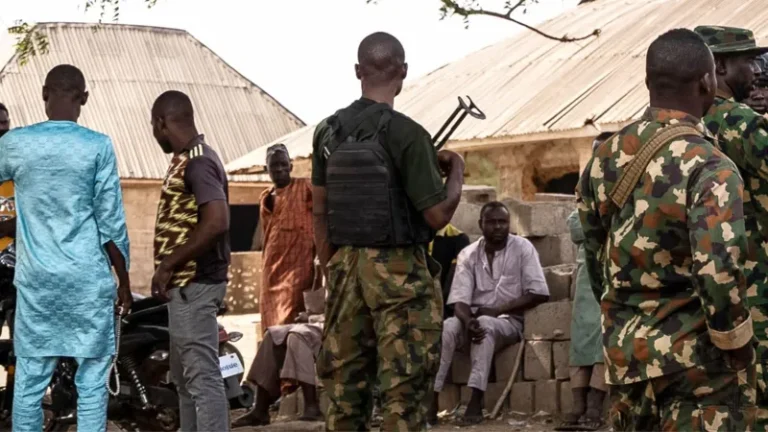
    Nigerian joint security forces have rescued 308 abducted citizens from the Kainji Lake National Park in Niger state, marking the largest single-day hostage recovery operation in the country’s history. The intelligence-led operation involved the Nigerian military, police, Department of State Services, and the National Counter-Terrorism Centre. Those freed include 163 residents abducted during a February attack on the Woro and Nuku communities in Kwara state, alongside 145 individuals seized from neighbouring Niger state. During the February assault on Woro, the suspected killed more than 150 people and burned large parts of the village after residents refused to renounce the Nigerian government. Human rights monitoring groups reported that many victims of the raid were found bound and executed. President Bola Ahmed Tinubu commended the security services for their coordination, stating that the successful rescue demonstrates enhanced operational alignment among Nigeria’s defense and intelligence branches. The freed hostages are currently undergoing medical evaluation and receiving psychosocial support at a federal military facility before being reunited with their families.

  • |

    Trump sends Saudi nuclear deal to Congress, ties i…

    WASHINGTON: The Trump administration has submitted a landmark civil nuclear cooperation agreement with Saudi Arabia to the US Congress for review, but President Donald Trump has maintained that the deal will only move forward if Riyadh agrees to normalize relations with Israel. The agreement, reached between the United States and Saudi Arabia in July, would allow American companies to provide civilian nuclear technology to the kingdom. It was formally submitted to Congress on Monday under procedures required by US law, according to US officials. The move puts a potentially major energy partnership into a closely watched congressional review process while adding another layer to Washington’s efforts to reshape relations between Saudi Arabia and Israel. Trump has said the nuclear agreement is conditional on Saudi Arabia joining the Abraham Accords, the US-backed framework that established diplomatic ties between Israel and several Arab and Muslim-majority countries. Riyadh has not agreed to normalize relations with Israel and has repeatedly linked such a move to progress toward Palestinian statehood. The nuclear agreement is intended for peaceful energy purposes and could support Saudi Arabia’s plans to develop nuclear power as part of its broader effort to diversify its economy and reduce reliance on oil. The pact would also open opportunities for US nuclear companies to participate in the kingdom’s planned nuclear infrastructure. However, the deal has already attracted scrutiny from lawmakers and nuclear nonproliferation experts. A key concern is whether the agreement would place sufficient restrictions on Saudi Arabia’s ability to enrich uranium or undertake other activities that could potentially be used for weapons development. Trump previously said the arrangement would not permit uranium enrichment and would be limited to civilian, non-military purposes. However, reports on the agreement have raised questions over the precise safeguards and long-term provisions surrounding Saudi Arabia’s nuclear programme. Congress now has a review period under US law during which lawmakers can examine the agreement and potentially object to it. The classified nature of the submitted document is expected to add to congressional scrutiny. For Saudi Arabia, the agreement could mark a major step toward nuclear energy. For Washington, however, the deal has become intertwined with one of the Middle East’s most sensitive diplomatic questions: whether Riyadh will ultimately establish formal relations with Israel.

Leave a Reply

Your email address will not be published. Required fields are marked *