gasoline prices get
| |

Gasoline prices get big hike on November 3, diesel and kerosene roll back

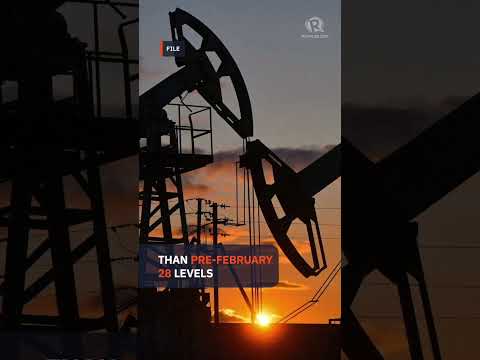
MANILA, Philippines – Gasoline prices are going up by as much as P3.50 per liter starting Tuesday, November 3.

The Department of Energy (DOE) announced the following permitted price adjustments for November 3 to 9:

  • Gasoline – increase of up to P3.50 per liter
  • Diesel – rollback of at least P1 per liter
  • Kerosene – rollback of at least P1.90 per liter
Gasoline prices get big hike on November 3, diesel and kerosene roll back

Last week, gasoline prices had a small rollback of P0.30 per liter, while diesel increased by P1.20 and kerosene by P0.50.

DOE’s price monitoring for the week of October 27 to November 2 put the common price of fuel in NCR at P84.20 for RON95 gasoline, P83.30 for RON91 gasoline, P94.50 for diesel, and P123.90 for kerosene.

Local pump prices remain substantially higher than before fighting involving Iran and US-Israeli forces broke out on February 28. In the last full week before the conflict, common Metro Manila prices stood at P56 per liter for RON95 gasoline, P54.70 for RON91, P55 for diesel, and P83.47 for kerosene.

The Philippines imports much of its petroleum requirements as finished products, making domestic prices vulnerable to changes in regional fuel markets, freight costs, and foreign exchange rates.

Meanwhile, excise taxes on liquefied petroleum gas and kerosene remain suspended under Executive Order No. 125, issued by President Ferdinand Marcos Jr. in September. The relief does not cover gasoline or diesel. – Rappler.com

Similar Posts

  • | | | | |

    Banks, retirees, the business: Where will ABS-CBN’s P6-billion rescue go?

    When stockholders of ABS-CBN finally meet on Wednesday, August 19, the question hanging is no longer simply who was willing to rescue it. It is where the rescue money will go, how much will be spent paying for ABS-CBN’s past, and how much will remain to build its future.

  • |

    Weekly inflation rises 0.15% in second week of August

    ISLAMABAD: Weekly inflation increased by 0.15% during the second week of August 2026, pushing the year-on-year inflation rate to 9.11%, according to the latest data released by the Pakistan Bureau of Statistics (PBS). The weekly Sensitive Price Indicator (SPI), which tracks changes in the prices of essential consumer goods, showed a mixed trend during the week. Prices of several food and household items increased, while consumers received some relief from lower prices of petroleum products and selected food commodities. According to the PBS report, prices of 20 out of 51 essential commodities increased during the week under review, while prices of nine items declined. The prices of the remaining 22 commodities remained unchanged. Onion prices surge sharply Among the major price increases, onions recorded the most significant weekly jump, becoming 24.68% more expensive compared with the previous week. The increase is likely to add further pressure on household food budgets, particularly for low-income consumers who are more exposed to fluctuations in basic food prices. The price of gram pulse increased by 3.35%, while chicken became 2.45% more expensive during the week. LPG prices also edged up by 0.67%. Other commodities that recorded weekly price increases included tea, mustard oil, yoghurt and masoor pulse, adding to the overall upward movement in the weekly inflation indicator. Petroleum prices provide some relief The weekly inflation reading was partly offset by declines in the prices of petroleum and several food items. Petrol prices decreased by 2.35% during the week, providing some relief to consumers and transport users. Tomato prices fell by 1.26%, while potatoes became 0.73% cheaper. Diesel prices also declined, though marginally, by 0.29%. Prices of bananas, moong pulse, eggs and sugar also recorded weekly decreases. Despite these reductions, the increase in the prices of several essential food items, particularly onions, pulses and chicken, kept overall weekly inflation in positive territory. Food prices remain major source of annual pressure The year-on-year comparison presents a more pronounced picture of price pressures in several essential commodities. Tomatoes recorded the largest annual increase, with prices rising by 143.77% compared with the same period last year. Onion prices were 125.75% higher, while wheat flour became 77.41% more expensive. LPG prices increased by 55.41% on an annual basis, while diesel recorded a 34.05% increase. Petrol prices were also 23.02% higher than a year earlier. The sharp annual increases in basic food items indicate that consumers continue to face significant pressure in meeting everyday household expenses, even though some commodities have become cheaper compared with last year. Several commodities become cheaper annually The annual data also showed declines in the prices of a number of commodities. Potato prices dropped by 30% compared with a year earlier, marking the largest annual decline among the commodities listed in the report. Sugar prices fell by 17.93%, while chicken became 17.45% cheaper on an annual basis. Gram pulse, eggs and moong pulse also recorded year-on-year declines. The contrasting movements highlight the uneven nature of inflation, with some essential commodities witnessing substantial annual increases while others have recorded notable reductions. The latest PBS figures suggest that although overall inflation remains elevated, price movements continue to vary considerably across different categories. Food, energy and other essential commodities remain key factors influencing household expenditure and the broader cost-of-living situation.

  • | | | |

    Why BPI asked AMLC to delete P2-B worth of transactions from Duterte-Carpio records

    (3rd UPDATE) A BPI system bug allegedly inflated transactions linked to Manases Carpio, Vice President Sara Duterte’s husband, to more than P2 billion, prompting the bank to ask the AMLC to delete 13 records

  • | |

    SBP reserves fall $229m, gold prices rise

    The State Bank of Pakistan’s (SBP) foreign exchange reserves fell by $229 million in the week ending July 24, 2026, to $17.03 billion, mainly due to external debt repayments. Pakistan’s total liquid foreign exchange reserves stood at $22.4 billion during the week. The SBP held $17.03 billion, while commercial banks maintained net reserves of around $5.4 billion. Meanwhile, the Pakistani rupee edged up against the US dollar, closing at Rs277.81 in the interbank market on Thursday compared with Rs277.82 a day earlier. The dollar remained stable in early Asian trading after the US Federal Reserve kept interest rates unchanged. Gold prices in Pakistan also increased, following gains in international markets. The All-Pakistan Gems and Jewellers Sarafa Association said the price of 24-carat gold rose by Rs1,000 to Rs427,436 per tola. The price of 10 grams increased by Rs857 to Rs366,457. Internationally, spot gold gained 0.8% to $4,098.98 per ounce, while US gold futures for August delivery rose 1.4% to $4,097.70. The Federal Reserve maintained its current interest rates on Wednesday, while softer US inflation data reduced market expectations of a rate hike in September. Analysts, however, warned that the ongoing conflict in the Middle East could put renewed pressure on inflation. Silver prices moved lower in the domestic market, declining by Rs76 to Rs6,215 per tola. Interactive Commodities Director Adnan Agar said the gold market remained range-bound. Bullion traded between $4,028 and $4,120 before settling near $4,107, which he described as a “danger zone.”

Leave a Reply

Your email address will not be published. Required fields are marked *