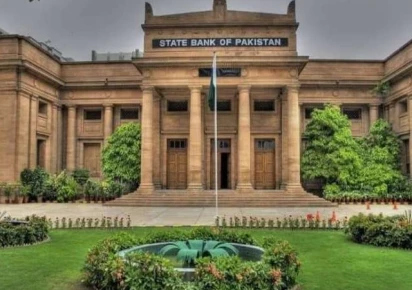
sbp reserves fall
| |

SBP reserves fall $229m, gold prices rise

The State Bank of Pakistan’s (SBP) foreign exchange reserves fell by $229 million in the week ending July 24, 2026, to $17.03 billion, mainly due to external debt repayments.

Pakistan’s total liquid foreign exchange reserves stood at $22.4 billion during the week. The SBP held $17.03 billion, while commercial banks maintained net reserves of around $5.4 billion.

Meanwhile, the Pakistani rupee edged up against the US dollar, closing at Rs277.81 in the interbank market on Thursday compared with Rs277.82 a day earlier. The dollar remained stable in early Asian trading after the US Federal Reserve kept interest rates unchanged.

Gold prices in Pakistan also increased, following gains in international markets. The All-Pakistan Gems and Jewellers Sarafa Association said the price of 24-carat gold rose by Rs1,000 to Rs427,436 per tola. The price of 10 grams increased by Rs857 to Rs366,457.

Internationally, spot gold gained 0.8% to $4,098.98 per ounce, while US gold futures for August delivery rose 1.4% to $4,097.70.

The Federal Reserve maintained its current interest rates on Wednesday, while softer US inflation data reduced market expectations of a rate hike in September. Analysts, however, warned that the ongoing conflict in the Middle East could put renewed pressure on inflation.

Silver prices moved lower in the domestic market, declining by Rs76 to Rs6,215 per tola.

Interactive Commodities Director Adnan Agar said the gold market remained range-bound. Bullion traded between $4,028 and $4,120 before settling near $4,107, which he described as a “danger zone.”
Similar Posts

  • | |

    Ishaq Dar, Turkish foreign minister discuss region…

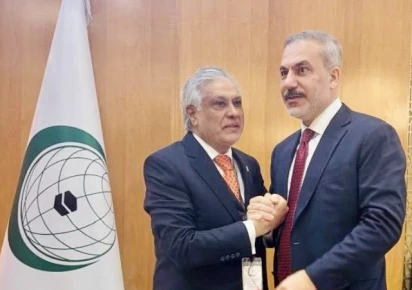
      ISLAMABAD: Deputy Prime Minister and Foreign Minister Ishaq Dar held a telephone conversation with Turkish Foreign Minister Hakan Fidan on Sunday night, during which the two sides discussed recent developments in the region and reaffirmed their commitment to strengthening cooperation on issues of mutual interest. According to Pakistan’s Ministry of Foreign Affairs, the two foreign ministers agreed that dialogue and diplomacy remained the most effective means of addressing regional challenges and promoting peace and stability. The conversation took place as Pakistan continues its diplomatic engagement with regional and international partners amid the ongoing conflict involving the United States, Israel and Iran. Islamabad has increasingly emerged as an important diplomatic channel in efforts aimed at reducing tensions and encouraging negotiations between the parties. Dar has recently held discussions with several senior diplomats regarding the rapidly changing regional situation. Last week, he met US Chargé d’Affaires Natalie Baker, British High Commissioner to Pakistan Jane Marriott, Chinese Ambassador Jiang Zaidong and Pakistan’s Ambassador-designate to Sweden Ahmed Amjad Ali. During these meetings, the foreign minister exchanged views with the diplomats on regional developments and Pakistan’s efforts to contribute to peace and stability. Dar emphasized that the Islamabad Memorandum of Understanding must be implemented in both letter and spirit, describing this as the most appropriate way forward. He also reiterated Pakistan’s commitment to regional peace, security and diplomatic engagement. Dar recently held a joint press conference with Norwegian Foreign Minister Espen Barth Eide, who praised Pakistan’s role during the US-Iran conflict. Eide particularly acknowledged the efforts of Prime Minister Shehbaz Sharif, Ishaq Dar and Chief of Defence Forces Field Marshal Asim Munir during delegation-level discussions held in Islamabad. The Norwegian foreign minister said Pakistan had taken on a significant responsibility by offering Islamabad not only as a venue for negotiations but also as a facilitator between Washington and Tehran. Eide described Pakistan’s diplomatic efforts as a service to the international community and expressed strong support for the role Islamabad had assumed since the conflict began on February 28. The latest diplomatic contacts also come against the backdrop of a major regional security development: the signing of the Makkah Joint Defence Agreement by Pakistan, Saudi Arabia and Turkiye on August 7. The trilateral agreement has been described as a defensive security framework designed to strengthen collective deterrence, expand military cooperation and contribute to regional stability. The agreement has attracted considerable attention because of the growing security challenges in the region and the evolving strategic relationships among Pakistan, Saudi Arabia and Turkiye. The Makkah agreement follows the Strategic Mutual Defence Agreement signed between Pakistan and Saudi Arabia last year. That pact established a stronger bilateral security relationship and stated that aggression against either country would be regarded as aggression against both. The latest developments indicate that Pakistan is seeking to strengthen diplomatic and security partnerships while maintaining its stated preference for dialogue and peaceful resolution of regional disputes. Dar’s conversation with Fidan further reflects the close relationship between Islamabad and Ankara, particularly on regional security and diplomatic matters. Both countries have consistently emphasized the importance of cooperation, consultation and peaceful negotiations in addressing regional crises. Their latest discussion is expected to contribute to continued coordination as tensions across the region remain high.

  • | |

    Bar Council backs SC order on Imran’s treatment

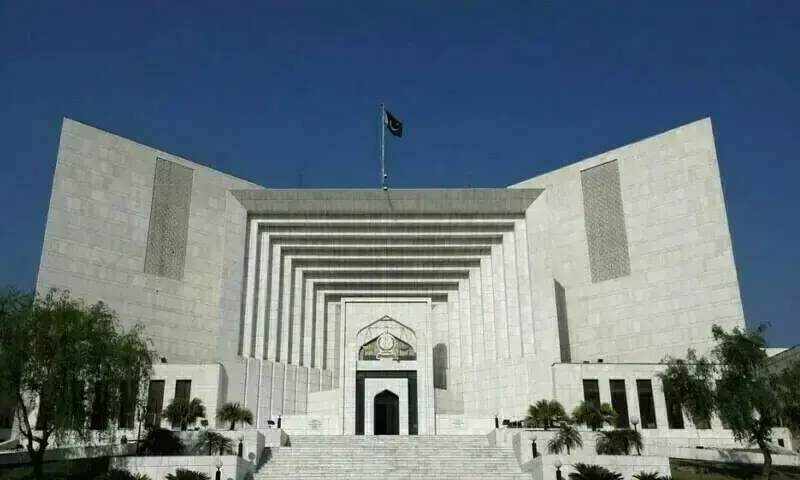
    Eight members of the Pakistan Bar Council have criticised the federal government over what they described as a deliberate failure to comply with the Supreme Court’s order regarding the medical treatment of PTI founder Imran Khan. In a joint statement issued on Saturday, the lawyers said the Supreme Court’s August 18 directive was clear and binding. They alleged that the executive had disregarded the order by not transferring Imran Khan to Shifa International Hospital as directed. The statement was signed by PBC members including PTI Secretary General Salman Akram Raja, Abid Shahid Zuberi, Muhammad Maqsood Buttar, Shafqat Mehmood Chauhan, Munir Ahmed Kakar, Abdul Sattar Khan, Salahuddin Ahmed and Qazi Muhammad Arshad. The members argued that the executive does not have the authority to ignore a binding judicial order. They said such conduct could undermine the authority of the judiciary, weaken the rule of law and damage the constitutional system of checks and balances. They also expressed concern that ignoring a court order could put fundamental rights at risk. According to the statement, judicial orders provide an important constitutional safeguard against arbitrary actions by state institutions. The lawyers further pointed out that the Supreme Court had already addressed the consequences of non-compliance in its August 18 order. They maintained that the government was aware of its obligations under the ruling. The PBC members also rejected the argument that filing a review petition could suspend the Supreme Court’s directive. They said a review petition does not automatically stop the implementation of an existing court order. They called for those responsible for the alleged violation to be identified and for appropriate legal proceedings to be initiated against them. The statement also raised questions about the impact of recent constitutional amendments on the judiciary and the rule of law. The lawyers argued that no constitutional amendment, political consideration or executive decision could provide legal protection for ignoring a binding Supreme Court order. They further questioned whether the constitutional rights to life, health, dignity and medical treatment were being applied equally to political leaders. The controversy follows the Supreme Court’s August 18 interim order directing authorities to transfer Imran Khan to Shifa International Hospital within two days. The court had ordered his examination and treatment by a multidisciplinary medical board. The bench, headed by Justice Shahid Waheed and comprising Justice Naeem Akhtar Afghan and Justice Ishtiaq Ibrahim, was hearing petitions seeking hospitalisation, access to personal doctors and family members, and access to Imran’s medical records. The court had also directed that Dr Uzma Khan and Dr Faisal Sultan, Imran’s personal physician, be present during the medical examination. The government subsequently challenged the hospital-transfer order through a review petition. However, the Supreme Court returned the petition after raising objections over the preparation of the documents and the accompanying paper book. Security arrangements were later made around Shifa International Hospital, creating expectations that Imran would be shifted there. However, authorities subsequently took him to the Pakistan Institute of Medical Sciences for a medical examination before returning him to prison. Information Minister Attaullah Tarar said the decision was linked to security concerns allegedly created by PTI workers near the hospital. The Pims administration later said specialists from Shifa International Hospital had participated in Imran’s eye assessment, while other examinations were conducted by Pims specialists. The medical issue has been under discussion since Imran was diagnosed with right central retinal vein occlusion, an eye condition, earlier this year.

  • |

    Oil prices rise as US-Iran uncertainty and shipping attacks raise supply concerns

    BEIJING: Global oil prices advanced on Wednesday as uncertainty surrounding a potential peace agreement between the United States and Iran, coupled with attacks on commercial shipping in key Middle Eastern waterways, heightened concerns about disruptions to crude supplies. At 0553 GMT, Brent crude futures had gained 75 cents, or 0.84%, to reach $89.66 per barrel. US West Texas Intermediate (WTI) crude rose 72 cents, or 0.87%, to $83.92 a barrel. Both benchmarks had climbed by more than $1 earlier in the session. The latest gains followed a strong rally on Tuesday, when both Brent and WTI settled more than $1 higher, reaching their highest closing levels since July 31. Oil prices had already surged around 5% on Monday as market participants became increasingly sceptical about the prospects of a US-Iran agreement to end the conflict. Concerns intensified after US President Donald Trump issued a fresh demand that Iran compensate people killed in wars, attacks and protests. Market analysts said the latest developments have left energy markets highly sensitive to changes in the US-Iran narrative. “The Middle East is increasingly becoming a seesaw between ‘deal’ and ‘war’,” said Priyanka Sachdeva, head of market insights at Phillip Nova in Singapore, describing the resulting price swings as a pendulum moving between roughly $70 and $90 a barrel. Shipping Disruptions Add to Market Pressure Concerns over the safety of crude shipments were also reinforced after the United States and Yemen’s Iran-aligned Houthis reported separate attacks involving shipping in the Strait of Hormuz and the Bab el-Mandeb Strait. The Strait of Hormuz is one of the world’s most important energy transit routes, making any prolonged disruption there a major concern for global oil markets. Iranian security official Mohsen Rezaei said the strategic waterway would remain closed unless Washington accepted Tehran’s conditions for ending the conflict. Those demands reportedly include the release of frozen Iranian assets and an end to other regional conflicts. Trump, meanwhile, has continued to send mixed signals about the US response, alternating between warnings of a tougher military approach and suggestions that an agreement could still be reached. The uncertainty has contributed to sharp swings in crude prices as traders attempt to assess whether the conflict will escalate or move towards negotiations. Sachdeva said markets could increasingly become accustomed to the frequent changes in the geopolitical narrative, creating a highly volatile environment for short-term traders and speculators. Hormuz Traffic Falls Sharply Shipping data highlighted the scale of the disruption. The number of vessels passing through the Strait of Hormuz fell to only eight on Tuesday, according to shipping data cited in market reports. That compares with an estimated 125 to 140 vessels a day before the conflict, underscoring the extent to which security concerns have affected maritime traffic through the strategic waterway. A sustained reduction in shipping through Hormuz could have significant implications for global energy markets because the route handles a substantial share of international oil shipments. US Crude Inventories in Focus Despite geopolitical concerns, developments in the United States provided a counterweight to the bullish sentiment. A Reuters poll released on Tuesday had indicated that US crude and fuel inventories were expected to decline during the week ended August 7. However, market sources citing data from the American Petroleum Institute (API) reported a substantial increase in US crude stocks. According to the sources, US crude inventories increased by approximately 9.1 million barrels last week. Gasoline stocks declined by around 1.5 million barrels, while distillate inventories fell by approximately 596,000 barrels. The reported crude build was considerably larger than market expectations. If confirmed by official figures, the increase could ease concerns over tightness in the US oil market and potentially limit further price gains. Haitong Futures said in a market note that the unexpectedly large increase in crude inventories could reduce some of the supply-related pressure currently supporting oil prices. EIA Data Awaited Investors are now awaiting official inventory figures from the US Energy Information Administration (EIA), the statistical arm of the US Department of Energy. The EIA’s weekly petroleum report is scheduled for release at 10:30 a.m. Eastern Time (1430 GMT) on Wednesday. Market participants will closely examine the data for signs of changes in crude production, refinery activity, gasoline demand and commercial inventories. Any significant deviation from the API figures could trigger additional volatility in oil prices. Longer-Term Supply Risks Remain Beyond the immediate market reaction, longer-term concerns over Middle Eastern supply disruptions continue to provide support to crude prices. The EIA has estimated that disruptions to Middle Eastern crude supplies could amount to approximately 600,000 barrels per day and persist through the end of 2027. With geopolitical tensions still unresolved and shipping activity through major regional waterways significantly reduced, traders are expected to remain highly sensitive to developments involving the United States, Iran and regional armed groups.

  • | |

    Security forces intensify K-P anti-terror operatio…

    Security forces have stepped up intelligence-based operations (IBOs) across Khyber Pakhtunkhwa under the Azm-e-Istehkam campaign, targeting militant hideouts and disrupting terrorist networks in several areas over the past two months, according to security sources. Officials said one of the major operations was carried out in the Khatti Killi area of North Waziristan, where security forces raided suspected militant hideouts following intelligence reports. During the operation, several terrorists were killed after an exchange of fire, while others sustained injuries and managed to flee. Security sources said troops recovered a large cache of weapons, ammunition and communication equipment from the militants’ hideouts. The recovered material is expected to assist investigators in tracing the activities and support networks of militant groups operating in the region. According to officials, the operations specifically targeted members of Fitna al-Khawarij, the term used by the state for the banned Tehreek-e-Taliban Pakistan (TTP). Authorities said the campaign was conducted with great care to protect civilians and prevent damage to local communities. Security officials emphasised that the ongoing operations are aimed at eliminating terrorist threats, restoring law and order, and ensuring lasting peace across Khyber Pakhtunkhwa. They reaffirmed that intelligence-led operations would continue until militant networks are dismantled and terrorism is eradicated. The latest operations are part of the broader Azm-e-Istehkam strategy launched to strengthen counterterrorism efforts nationwide. The campaign focuses on targeted intelligence operations against militant groups while enhancing the security of vulnerable areas. Last week, Director General of Inter-Services Public Relations (ISPR) Lieutenant General Ahmed Sharif Chaudhry said security forces had carried out more than 40,000 intelligence-based operations across Pakistan so far this year, with a significant number conducted in Balochistan and Khyber Pakhtunkhwa. He said nearly 194 intelligence-based operations are being conducted daily across the country. According to the military spokesperson, security forces have eliminated more than 2,000 terrorists during 2026, reflecting the intensified pace of counterterrorism operations.

  • | | |

    FinMin Aurangzeb seeks US backing for global marke…

    Pakistan has sought stronger support from the United States to improve its access to international capital markets, strengthen foreign exchange reserves and enhance its sovereign credit ratings as part of its broader strategy to accelerate economic growth and attract foreign investment. Finance Minister Muhammad Aurangzeb discussed these priorities during a meeting with US Treasury Secretary Scott Bessent in Washington. The meeting focused on Pakistan’s economic progress, financial reforms and opportunities to deepen economic cooperation between the two countries. During the talks, Aurangzeb briefed the US treasury secretary on Pakistan’s improving economic outlook. He said the country has successfully moved beyond the phase of macroeconomic stabilization and is now entering a period focused on sustainable, export-led growth. He noted that ongoing structural reforms and prudent fiscal management have helped improve economic stability and restore investor confidence. The finance minister also highlighted the challenges posed by regional geopolitical tensions. He said instability in the region has affected Pakistan’s economy and continues to create uncertainty for trade, investment and financial markets. He emphasized that stronger international cooperation would help Pakistan maintain economic stability despite these external challenges. Aurangzeb requested greater US support to help Pakistan improve access to international capital markets. He said easier access to global financing would strengthen the country’s financial position, increase foreign exchange reserves and improve sovereign credit ratings, making Pakistan more attractive to international investors. The two sides also discussed ways to expand bilateral economic cooperation. They reviewed opportunities to increase US investment in Pakistan and explored prospects for advancing strategic development and investment projects that could strengthen economic ties between the two countries. Both governments reaffirmed their commitment to enhancing economic relations, promoting investment and supporting initiatives aimed at expanding trade and long-term financial cooperation. Separately, Aurangzeb held a virtual meeting from Washington with senior representatives of international banking consortia participating in Pakistan’s Global Medium-Term Note Programme and International Sukuk Programme. The meeting marked the beginning of a strategic partnership with selected international financial institutions that will assist Pakistan in raising funds from global capital markets through both conventional bonds and Islamic financing instruments. The banking consortia have been appointed for a three-year period and will support future sovereign bond and Sukuk issuances whenever the government decides to enter international financial markets in line with its financing strategy. Officials said Pakistan’s return to international capital markets has become more feasible due to significant improvements in the country’s macroeconomic environment. Continued fiscal discipline, stronger external financial buffers, better debt management and ongoing structural reforms have improved investor confidence and strengthened Pakistan’s economic credibility. Government officials believe these improvements have also contributed to better market sentiment, with international investors showing growing confidence in Pakistan’s economic reforms and long-term growth prospects.

  • | |

    Suspected crime boss Daniel Kinahan flown back to …

    An Irish government jet carrying suspected crime boss Daniel Kinahan has departed Dubai bound for Dublin, marking a major development in a years long effort to bring the alleged cartel leader to face justice in his native country. The 49 year old was arrested in the United Arab Emirates in April and is now being extradited to the Republic of Ireland, where he faces a charge of directing a criminal organisation. Upon arrival in Dublin, Kinahan will be formally charged and taken by Irish police, known as gardaí, to appear before the non jury, three judge Special Criminal Court on Sunday evening. Extensive security operation accompanies extradition Authorities have mounted a large scale security operation to manage the high profile extradition. In preparation, the Irish Prison Service purchased a specially designed bulletproof and bombproof van intended for escorting prisoners considered to pose a significant security risk, underscoring the scale of the precautions being taken around Kinahan’s return. Flight tracking data showed the plane carrying Kinahan departed Dubai at 13:19 local time, with the aircraft expected to land in Dublin before 19:00 local time on Sunday. Irish authorities are expected to pursue prosecution against him for his alleged role in leading an organised crime group with an extensive international reach. Cartel linked to drug trafficking and gangland murders The National Crime Agency in the United Kingdom has previously stated that the Kinahan cartel bears responsibility for importing tonnes of drugs and firearms across international borders, in addition to having links to more than a dozen gangland murders carried out over the years. Kinahan’s alleged criminal activity has drawn attention well beyond Ireland’s borders. The United States Treasury Department has previously described the Kinahan cartel as one of the most dangerous organised crime groups in the world, reflecting the scale and international scope of the organisation’s alleged operations. The US government imposed formal sanctions on Kinahan in April 2022 after identifying him, along with other members of his family, as leaders of the Kinahan organised crime cartel. The sanctions marked a significant escalation in international efforts to disrupt the group’s operations and cut off its financial networks. Long resistance to extradition finally ends Kinahan spent years fighting attempts to extradite him back to Ireland, where the Kinahan cartel became embroiled in a long running and violent gangland feud that ultimately claimed 18 lives. His return to face the Irish courts brings to a close a prolonged legal battle that spanned multiple jurisdictions and years of pursuit by international law enforcement agencies. The case has drawn significant public attention in Ireland given the scale of the alleged criminal enterprise and its connection to a violent feud that shook communities and claimed numerous lives over an extended period. Sunday’s court appearance will mark the first major legal step in what is expected to be a closely watched prosecution against one of the most prominent alleged organised crime figures pursued by Irish authorities in recent years.

Leave a Reply

Your email address will not be published. Required fields are marked *