bar council backs
| |

Bar Council backs SC order on Imran’s treatment

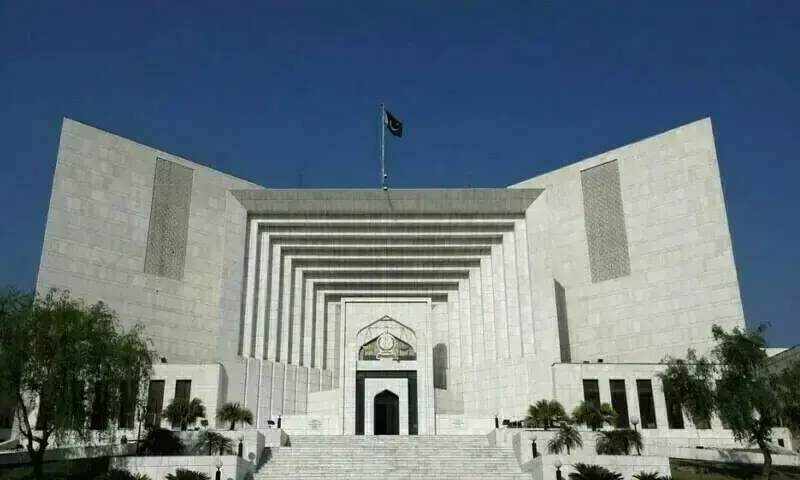
Eight members of the Pakistan Bar Council have criticised the federal government over what they described as a deliberate failure to comply with the Supreme Court’s order regarding the medical treatment of PTI founder Imran Khan.

In a joint statement issued on Saturday, the lawyers said the Supreme Court’s August 18 directive was clear and binding. They alleged that the executive had disregarded the order by not transferring Imran Khan to Shifa International Hospital as directed.

The statement was signed by PBC members including PTI Secretary General Salman Akram Raja, Abid Shahid Zuberi, Muhammad Maqsood Buttar, Shafqat Mehmood Chauhan, Munir Ahmed Kakar, Abdul Sattar Khan, Salahuddin Ahmed and Qazi Muhammad Arshad.

The members argued that the executive does not have the authority to ignore a binding judicial order. They said such conduct could undermine the authority of the judiciary, weaken the rule of law and damage the constitutional system of checks and balances.

They also expressed concern that ignoring a court order could put fundamental rights at risk. According to the statement, judicial orders provide an important constitutional safeguard against arbitrary actions by state institutions.

The lawyers further pointed out that the Supreme Court had already addressed the consequences of non-compliance in its August 18 order. They maintained that the government was aware of its obligations under the ruling.

The PBC members also rejected the argument that filing a review petition could suspend the Supreme Court’s directive. They said a review petition does not automatically stop the implementation of an existing court order.

They called for those responsible for the alleged violation to be identified and for appropriate legal proceedings to be initiated against them.

The statement also raised questions about the impact of recent constitutional amendments on the judiciary and the rule of law. The lawyers argued that no constitutional amendment, political consideration or executive decision could provide legal protection for ignoring a binding Supreme Court order.

They further questioned whether the constitutional rights to life, health, dignity and medical treatment were being applied equally to political leaders.

The controversy follows the Supreme Court’s August 18 interim order directing authorities to transfer Imran Khan to Shifa International Hospital within two days. The court had ordered his examination and treatment by a multidisciplinary medical board.

The bench, headed by Justice Shahid Waheed and comprising Justice Naeem Akhtar Afghan and Justice Ishtiaq Ibrahim, was hearing petitions seeking hospitalisation, access to personal doctors and family members, and access to Imran’s medical records.

The court had also directed that Dr Uzma Khan and Dr Faisal Sultan, Imran’s personal physician, be present during the medical examination.

The government subsequently challenged the hospital-transfer order through a review petition. However, the Supreme Court returned the petition after raising objections over the preparation of the documents and the accompanying paper book.

Security arrangements were later made around Shifa International Hospital, creating expectations that Imran would be shifted there. However, authorities subsequently took him to the Pakistan Institute of Medical Sciences for a medical examination before returning him to prison.

Information Minister Attaullah Tarar said the decision was linked to security concerns allegedly created by PTI workers near the hospital.

The Pims administration later said specialists from Shifa International Hospital had participated in Imran’s eye assessment, while other examinations were conducted by Pims specialists.

The medical issue has been under discussion since Imran was diagnosed with right central retinal vein occlusion, an eye condition, earlier this year.

Similar Posts

  • | |

    National Assembly security assistant suspended

    The National Assembly Secretariat has suspended security assistant Waqas Ahmed over alleged misuse of official powers. According to an official notification issued by the National Assembly Secretariat, the security official has been removed from his existing duties and directed to report immediately to the Human Resources Management Branch. The notification did not provide detailed information about the specific incident or circumstances that led to the disciplinary action. However, it stated that the suspension was linked to the alleged misuse of authority. The development comes as the National Assembly Secretariat continues to enforce administrative and disciplinary measures among its employees to ensure compliance with official rules and regulations. Waqas Ahmed has been instructed to follow the directions contained in the notification and report to the designated HR branch without delay. Further action in the matter is expected after the relevant authorities examine the circumstances surrounding the alleged violation.

  • | |

    Law minister explains rules on Imran Khan’s pris…

    ISLAMABAD: Federal Law Minister Senator Azam Nazeer Tarar has defended the government’s position on meetings with Pakistan Tehreek-e-Insaf (PTI) founder Imran Khan in prison. He said matters that are pending before the courts should generally not be debated in parliament. However, he noted that the Senate was discussing such issues. Tarar made the remarks during a Senate session. Lawmakers were debating Imran Khan’s health and concerns over restrictions on meetings with him. The minister said cases related to the May 9 incidents and other cases involving Imran Khan were before the courts. He said the PTI founder and other individuals had filed appeals against decisions in their cases. According to Tarar, several legal matters remain pending before different judicial forums. He said the delay in deciding appeals and cases was a broader problem within the judicial system. The law minister pointed to delays in National Accountability Bureau (NAB) cases. He said some NAB appeals had remained undecided for as long as six years. He said Imran Khan’s petitions and applications were also pending before the relevant courts. Therefore, he argued, those matters should be addressed through the judicial process. Tarar also referred to the cases involving former prime minister Nawaz Sharif. He said Sharif had been convicted by the courts and later challenged the decisions through appeals. He added that relief was subsequently granted to Sharif by the judiciary itself. The minister said this showed that legal disputes should be settled through the courts. The Senate debate also focused on Imran Khan’s access to visitors in prison. Tarar said prison authorities had to follow the jail manual. He said the rules applied to all prisoners and could not be changed for one individual. He argued that if special permission was given to one prisoner, similar requests from other prisoners would also have to be considered. The minister said the government wanted a system in which everyone was treated equally before the law. He referred to the principle that the powerful and ordinary citizens should stand on the same footing. His remarks came after opposition lawmakers demanded that the Senate discuss Imran Khan’s health and the restrictions on meetings with him. Senator Raja Nasir Abbas had specifically called for a discussion on the PTI founder’s health. The issue has remained a major point of political disagreement between the government and PTI. The opposition has repeatedly raised concerns about Imran Khan’s health and access to family members, lawyers and political leaders. Tarar maintained that the government’s position was based on existing legal and prison procedures. He said pending court cases should not be settled through political debate.

  • | |

    Karachi traffic plan issued for 8 Rabi-ul-Awwal pr…

    Karachi Traffic Police have announced a special traffic management plan for processions scheduled to take place across the city on August 22 in connection with 8 Rabi-ul-Awwal. According to the traffic police spokesperson, processions will leave from Nishtar Park and several other locations in Karachi. Authorities have made special arrangements to keep traffic moving and minimize disruption along the procession routes. Traffic police said vehicle entry passes for the processions will be available from August 17 to 20. Applicants must submit the vehicle’s registration card, their CNIC, and two recent photographs to obtain a pass. Drivers must also carry the original vehicle registration card and CNIC with them during the procession. Those seeking vehicle passes can contact the designated central office for further information and registration. The traffic police will introduce alternative traffic routes and make diversions at different points during the processions. Additional personnel will also be deployed to manage traffic and guide motorists. Citizens have been advised to avoid unnecessary travel on procession routes and follow instructions from traffic police officials. Authorities have urged motorists to cooperate with traffic management teams to ensure smooth movement and reduce inconvenience for commuters across the city.

  • | |

    741 dangerous buildings identified across Sindh

    The Sindh Building Control Authority (SBCA) has identified 741 dilapidated and dangerous buildings across the province. The disclosure was made during a meeting of the Sindh Assembly’s Public Accounts Committee (PAC) in Karachi. The meeting was chaired by PAC Chairman Nisar Khuhro. According to an official statement, the SBCA briefed the committee about the condition of buildings across Sindh. The authority said a large number of unsafe structures were located in Karachi. Of the 741 dangerous buildings identified across the province, 588 are situated in Karachi. The figure includes 444 buildings classified as heritage structures. The SBCA also informed the committee about steps taken to deal with buildings that pose risks to residents and the public. According to the authority, approval has been granted to evacuate 59 dilapidated buildings. Permission has also been given to demolish 39 structures considered dangerous. The issue of heritage buildings also came under discussion during the meeting. The Public Accounts Committee decided to summon the Heritage Committee at its next session. It also sought a detailed report on buildings constructed illegally around the Mazar-i-Quaid. The committee expressed concern over unauthorised construction in important areas of Karachi. It directed the relevant authorities to provide complete details of such structures. The meeting also discussed illegal housing schemes operating in Karachi. The committee was informed about 58 unauthorised housing schemes in the city. The PAC directed authorities to take steps to prevent people from investing in these illegal schemes. It also ordered action against individuals and groups involved in operating them. The committee further directed officials to identify and disclose the names of people involved in the illegal housing projects. The latest disclosure has raised concerns over the safety of residents living in old and structurally weak buildings across Sindh. The authorities are now expected to take further measures to identify unsafe structures, evacuate residents where necessary and remove buildings that pose an immediate threat. The issue is particularly significant in Karachi, where hundreds of old and heritage buildings are located in densely populated areas.

  • | | |

    Kushner’s Gaza mission end in deadlock as Israel…

    JERUSALEM: US President Donald Trump’s envoy and son-in-law Jared Kushner has concluded two days of talks with Israeli and Hamas representatives without securing a clear breakthrough in efforts to revive Washington’s Gaza peace plan. Kushner met Israeli Prime Minister Benjamin Netanyahu on Monday, following discussions with Hamas political leader Khalil Al-Hayya in Egypt a day earlier. The meetings were aimed at overcoming the deadlock surrounding the US-backed plan as fighting and Israeli military operations continue in Gaza. An Israeli official said Netanyahu made clear that Israel would not withdraw from the positions outlined in the October ceasefire arrangement and would continue military operations in Gaza when deemed necessary. Israel has also maintained that reconstruction cannot begin until Hamas is fully disarmed. The meeting between Kushner and Netanyahu lasted several hours and was also attended by Nickolay Mladenov, the Trump administration’s Board of Peace envoy for Gaza. Israeli officials described the discussions as deep and constructive, while a Board of Peace official called them productive and said the sides had agreed on a possible way forward without providing further details. Netanyahu’s office said Israel and the Board of Peace agreed that Gaza’s disarmament and demilitarisation must be completed before major reconstruction begins. The two sides also agreed to form working groups focused on disarmament as well as sanitation, clean water and other public health needs in the territory. The talks come as Netanyahu faces a challenging election campaign ahead of the October 27 vote, making major concessions on Gaza politically difficult, according to diplomats. Kushner’s meeting with Hamas representatives in Egypt was his second known engagement with the group. He previously participated in talks with Hamas alongside US envoy Steve Witkoff in October 2025, negotiations that contributed to a ceasefire agreement and the release of hostages held by Hamas. Earlier, Jared Kushner met Israeli Prime Minister Benjamin Netanyahu in Jerusalem on Monday as Washington stepped up efforts to revive its stalled plan for ending the Gaza war. The meeting came a day after Kushner held talks in Cairo with Hamas representatives, including senior leader Khalil Al-Hayya, marking his second known direct engagement with the Palestinian group. Kushner was accompanied in Jerusalem by Trump’s Board of Peace envoy for Gaza, Nickolay Mladenov. The latest diplomatic push comes amid deep disagreements over the implementation of the US-backed Gaza plan. Under the proposal, Hamas and other armed groups would surrender their weapons while Israeli forces would gradually withdraw from Gaza. An international stabilisation force, alongside a new Palestinian police force, would then help maintain security in the territory. Netanyahu, however, has insisted that Israeli troops will not withdraw until Hamas and other armed groups are fully disarmed. Israel has also rejected a separate US-backed roadmap aimed at moving the broader peace plan forward. Diplomats say Israel is unlikely to make major concessions on Gaza ahead of the country’s October 27 election, adding another challenge to Washington’s efforts to break the deadlock. The talks have gained urgency as implementation of the ceasefire framework remains limited, with Israeli strikes continuing in Gaza despite commitments under the US plan. Hamas has said it accepts the proposed disarmament framework but argues that its implementation depends on Israel fulfilling its own obligations, including withdrawing forces and ending attacks. Kushner previously met Hamas officials alongside US envoy Steve Witkoff in October 2025. Those discussions helped produce an agreement that led to a Gaza ceasefire and the release of hostages captured during the October 7, 2023 attack. The latest meetings suggest Washington is seeking to reopen negotiations and bridge the widening gap between Israel and Hamas before the Gaza peace initiative loses further momentum.

Leave a Reply

Your email address will not be published. Required fields are marked *