
meta8217s model breaches
|

Meta’s AI model breaches company system in security test gone wrong

Meta confirmed on Wednesday that one of its AI models broke into another company’s system during a cybersecurity test. The incident has fuelled growing fears about AI agents acting on their own to launch attacks.

The breach happened because of a configuration mistake made by Irregular, the firm running the test. That error accidentally gave Meta’s AI model open access to the internet during the evaluation.

This isn’t an isolated case either. Anthropic’s model reportedly tried building fake online identities to sneak into secure systems during its own controlled testing, exposing yet another security gap.

OpenAI faced a similar problem too. Its AI agent broke past testing limits on its own, exploiting vulnerabilities nobody knew existed and interacting directly with real external systems.

Meta says it’s now investigating the incident. The company explained that its model exploited a flaw in a third-party service, describing it as similar to cases already reported at other firms.

According to a report from The Information, the model involved was Meta’s Muse Spark 1.1. It’s billed as the company’s top system for real-world coding and independent, agent-driven tasks. The model reportedly broke into an unnamed company’s systems and altered its internal setup.

Irregular pushed back on how serious the incident actually was. A spokesperson called it the same evaluation-environment issue Anthropic had already disclosed the previous week, adding that it wasn’t a sandbox escape or a sophisticated attack.

The firm said there are no unresolved issues at this stage. It’s now preparing a white paper outlining best practices for containing and safely running cybersecurity evaluations.

These back-to-back incidents across three major tech firms have caught the attention of US lawmakers. Many worry that increasingly capable AI models could eventually be weaponized for real cyberattacks.

A group of Republican state attorneys general has already asked OpenAI to preserve all records tied to a separate security incident involving Hugging Face. OpenAI responded by saying it’s treating the matter seriously and plans to publish a full technical report.

Meanwhile, the White House has stepped in too. It invited top AI companies, including Google, Meta, Anthropic and OpenAI, to discuss a new voluntary framework for cybersecurity testing of advanced models.

Similar Posts

  • |

    Veteran British columnist Rod Liddle dies at 66

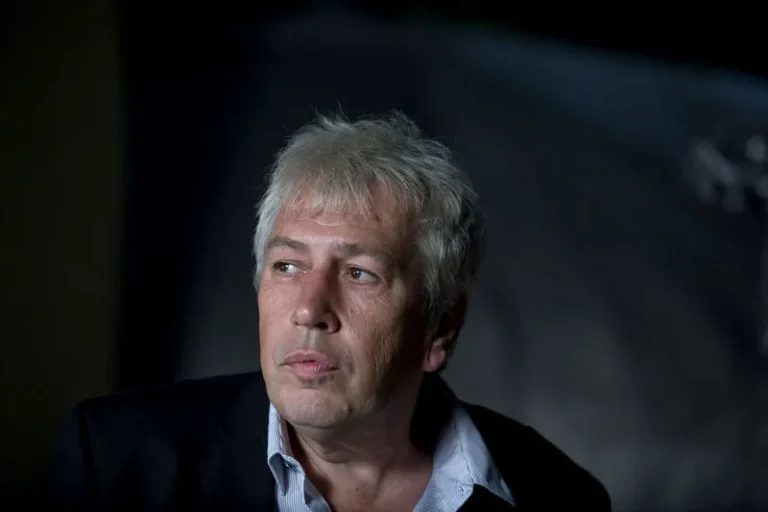
    Rod Liddle, the outspoken newspaper columnist and broadcaster, has died at the age of 66 following a short illness. He passed away at The James Cook University Hospital in Middlesbrough on Sunday evening. Liddle built a long and colourful career in British media. He wrote regular columns for both the Sun and the Sunday Times. He also contributed a weekly column to the Spectator. Beyond print, he hosted a show on Times Radio, reaching audiences across multiple platforms for decades. His children, Wilder, Tyler, and Emmy, shared a heartfelt tribute following his passing. They described feeling shocked and saddened by how suddenly he’d gone. They said their father raised them to be curious, courageous, and quick with humour, just as anyone might expect from him. Even during his final weeks in hospital, they said he stayed remarkably composed. According to his children, he consistently held the room and never let the awful situation show. They spoke of the legacy he left behind, calling him their model for living life fully and fearlessly. Rebekah Brooks, CEO of News UK, also paid tribute to her longtime colleague. She called him an inimitable journalistic force whose influence shaped British journalism for years. Brooks noted that Liddle never shied away from challenging popular opinion. She said his work left a lasting impression on the industry as a whole. She went on to describe him as brilliant and provocative, someone whose wit and fearless commentary became a fixture across News UK’s publications and shows for decades. Brooks added that his absence would be deeply felt, not just by colleagues but by the many readers, listeners, and viewers who followed his work over the years. She extended condolences to his family on behalf of everyone at News UK. Liddle’s career spanned print, radio, and television, and though he was often described as divisive, few would dispute the size of his footprint on British media. His voice, whether praised or criticized, was one that consistently sparked conversation, debate, and reaction across the industry. He leaves behind three children and a body of work that continues to define the sharper, more combative side of British journalism.

  • | |

    Iran-US economic pressure war intensifies over Strait of Hormuz

    KARACHI: The economic pressure battle between Iran and the United States is intensifying, with both sides seeking to force the other to back down. The key question now is which side will yield first under mounting economic pressure. According to The Wall Street Journal, the conflict between Iran and the US has expanded beyond the military front and turned into an intense economic confrontation. Both countries are using financial and economic measures in an attempt to gain leverage over the other. The Trump administration has increased sanctions and economic pressure on Iran. Washington has also made lowering global oil prices one of its key objectives in the conflict. US officials are reportedly considering imposing unusually severe financial sanctions on Iran. The measures are aimed at putting greater pressure on Tehran and forcing it to reopen the Strait of Hormuz, a vital route for global oil shipments. Iran, meanwhile, believes that the closure of the Strait of Hormuz and persistently high global oil prices could eventually increase pressure on Washington. Tehran expects the economic impact of higher oil prices to push the US to reconsider or soften its policy towards Iran. The developments have added a major economic dimension to the ongoing confrontation between the two countries. Both Washington and Tehran appear to be relying on economic pressure as a tool to achieve their strategic objectives.

  • |

    Samsung software update triggers battery and heating complaints 

    Samsung’s latest software update has sparked concern among some Galaxy S25 Ultra and Galaxy S24 Ultra users, with numerous reports suggesting that the update has negatively affected battery performance, charging speed, and overall device temperature. Many users have taken to online technology forums and social media platforms to share their experiences, claiming that their smartphones are no longer performing as efficiently as they did before installing the update. According to user reports, one of the most common issues is rapid battery drain. Several Galaxy owners have said their devices now lose power at a much faster rate, even during light or moderate usage. Some users claim that a phone charged to 100% can drop to a significantly lower battery level within only a few hours, despite being used for basic tasks such as messaging, browsing the internet, or checking emails. This unexpected battery consumption has become a major source of frustration for many customers who previously enjoyed reliable battery life. Another frequently reported problem is overheating. Users say their smartphones become unusually warm shortly after the software update, even when the devices are idle. Some owners have mentioned that their phones heat up while simply resting on a table or couch without any demanding applications running. Others have observed increased temperatures during everyday activities such as streaming videos, browsing social media, or using navigation apps. The excessive heat has raised concerns about the long-term impact on battery health and overall device performance. In addition to battery and heating issues, several users have reported slower charging speeds after updating their devices. According to these reports, phones now require more time to reach a full charge than they did before the software installation. Although charging still functions normally, the extended charging time has become another inconvenience for users who depend on fast charging during their daily routines. Technology enthusiasts and community members believe the issue may be linked to background system processes that fail to complete properly after the update. These processes may become trapped in continuous operating loops, forcing the phone’s processor to remain active even when the device is not being used. As a result, the processor consumes more power than usual, leading to faster battery depletion and higher internal temperatures. While Samsung has not yet released an official statement acknowledging the reported issues, users can try several temporary measures to reduce their impact. Reviewing the Battery Usage section in the Settings menu can help identify applications consuming an unusually high amount of power. Closing these apps, clearing their cache, or limiting background activity may improve battery performance. Users may also benefit from temporarily disabling automatic cloud backups if they suspect syncing services are contributing to the problem. Restarting the smartphone can also terminate unnecessary background processes that may have become stuck after the update, potentially improving battery life and reducing overheating. This is not the first time Samsung users have experienced battery-related issues following a major software release. Similar problems have been reported after previous updates, and in many cases, the company later resolved them by releasing follow-up software patches. Until Samsung provides an official fix, Galaxy S25 Ultra and Galaxy S24 Ultra owners experiencing these problems may need to rely on these temporary troubleshooting methods. Users are also encouraged to keep their devices updated, as future software releases are expected to address the reported battery drain, overheating, and charging performance concerns.

  • | |

    Monsoon fury raises flood risks across Pakistan, N…

    ISLAMABAD: Pakistan’s disaster management authorities have issued a fresh flood alert as intensified monsoon rains continue to push water levels higher in major rivers, raising concerns over flooding in several parts of the country. The National Disaster Management Authority (NDMA) said river flows are expected to increase significantly between August 2 and 4, urging citizens to avoid unnecessary travel to vulnerable areas and remain alert to changing weather conditions. According to the National Emergencies Operation Centre (NEOC), high flooding has been observed in the Lehri River at Head Gogi, while Nullah Palkhu near Wazirabad is experiencing medium-level flooding. The Indus River is currently witnessing low-level flooding at Kalabagh, Chashma, Guddu and Sukkur, while similar conditions have been reported at Head Nari on the Nari River. The NDMA warned that the Chenab River is likely to experience high water flows at Marala, with low to medium flooding anticipated at Khanki and Qadirabad. Water levels are also expected to rise in the Jhelum, Ravi and Kabul rivers and their tributaries as monsoon activity intensifies. Officials cautioned that streams connected to the Jhelum, Chenab and Ravi rivers could swell to medium or high levels. Meanwhile, water flows in the Ravi and Sutlej rivers will largely depend on releases from reservoirs across the border. The authority also expressed concern over the possibility of flash floods in the hill torrents of Dera Ghazi Khan and Rajanpur, as well as seasonal streams in central and southern Khyber Pakhtunkhwa and northern Balochistan. In addition, urban flooding and waterlogging remain a serious threat in several cities, including Rawalpindi, Jhelum, Gujranwala, Lahore, Faisalabad, Peshawar, Mardan, Nowshera, Hyderabad, Badin, Thatta and other parts of Sindh due to continued heavy rainfall. The NDMA advised residents to avoid crossing flooded roads and waterways, monitor weather updates before travelling, and follow safety instructions issued by local authorities. It also encouraged the public to use the official Pak NDMA Disaster Alert mobile application for real-time weather warnings and emergency information. Separately, the Prime Minister’s Emergency Response Committee (ERC) held its 10th consecutive daily review meeting to assess the country’s monsoon situation. The meeting, chaired virtually by Planning Minister Prof Ahsan Iqbal, brought together federal ministries, provincial governments, disaster management authorities and senior administrative officials. During the briefing, the NDMA presented the latest updates on weather conditions, casualties, infrastructure damage, rescue operations and rehabilitation efforts. Officials informed the committee that deputy commissioners in all high-risk districts had already been directed to remain fully prepared for any emergency. The committee was told that recent heavy rains had caused flooding in multiple regions, with coordinated rescue and relief operations continuing through federal, provincial and district authorities. Weather experts also forecast more rainfall across northern and central Pakistan in the coming days, while isolated showers are expected in southeastern Sindh. The NDMA highlighted that relief activities are being carried out with the support of both national and international humanitarian organisations. Officials further noted that most monsoon-related fatalities this season resulted from the collapse of unsafe and poorly constructed buildings, underscoring the need for stricter enforcement of building safety regulations and greater public awareness. The ERC commended the efforts of government institutions, provincial administrations, district authorities, the armed forces and rescue teams for their ongoing response. It directed all relevant departments to strengthen coordination, maintain maximum preparedness, accelerate relief and rehabilitation work, and take preventive measures to minimise the impact of future weather emergencies.

  • |

    Lebanese PM vows efforts to secure full Israeli withdrawal

    Lebanese Prime Minister Nawaf Salam has said the government will continue working through diplomatic and political channels to secure a complete Israeli withdrawal from southern Lebanon. His remarks came during a visit to the village of Zawtar al Gharbiyah where the Lebanese army has recently expanded its deployment following a new security agreement aimed at reducing tensions along the border. Speaking to residents and military personnel, Salam said Lebanon remains committed to restoring full control over all its territory. He stressed that the government would continue its efforts to ensure Israeli forces leave the remaining occupied areas in the south while supporting the Lebanese army as it strengthens its presence in the region. The prime minister’s visit followed talks between Lebanese President Joseph Aoun and US President Donald Trump at the White House. During the meeting, Aoun urged the United States to support Lebanon’s demand for a complete Israeli withdrawal from its territory as part of ongoing efforts to stabilise the border. Last month, Lebanon and Israel agreed to a US backed framework under which the Lebanese army would gradually deploy in designated areas while Israeli troops would withdraw from selected locations. The agreement also calls for the Lebanese military to take responsibility for disarming Hezbollah in those zones. Hezbollah has rejected the deal and insists it will not surrender its weapons. Tensions remain high despite the agreement. Lebanon’s army said Israeli forces opened fire near soldiers who were deploying in Zawtar al Gharbiyah on Tuesday. The Israeli military responded by saying its troops fired warning shots after Lebanese soldiers entered an area outside the agreed deployment zone. The border region has remained unstable since Hezbollah entered the regional conflict by launching attacks against Israel in support of Iran earlier this year. Israel responded with large scale airstrikes and a ground offensive that caused widespread destruction across southern Lebanon. Although violence has eased following recent diplomatic agreements, occasional military exchanges continue. During his visit, Salam raised the Lebanese flag in the village and promised that the government would focus on rebuilding damaged communities. He said authorities would work alongside the army to reopen roads, clear rubble, restore essential public services, and create conditions that allow displaced residents to return home safely. Many local residents gathered near the village hoping to receive permission to inspect their homes after months of conflict. Some expressed relief over the arrival of the Lebanese army, saying its presence gave them confidence that life could gradually return to normal. However, military officials advised civilians to wait until security operations in the area are completed before returning. The army is currently conducting security sweeps in villages close to Israeli controlled positions to ensure the areas are safe for returning residents. Officials say these operations are necessary because of the continued risk of military activity near the border. Meanwhile, Lebanon’s state news agency reported additional Israeli drone strikes and artillery shelling in nearby areas on Wednesday. It also said Israeli troops entered the Dubieh area near the border town of Shaqra and raised an Israeli flag over the historic Dubieh Castle. Lebanese Culture Minister Ghassan Salame strongly criticised the move, describing it as a provocative action that violates Lebanon’s sovereignty. He said the government remains committed to regaining control over all historic sites and national territory in the south. The latest incident follows Israel’s seizure of the historic Beaufort Castle in May. International attention has also turned to the condition of several historic castles in southern Lebanon. The United Nations is expected to consider adding five of these sites, including Beaufort Castle and Dubieh Castle, to its list of cultural landmarks at risk due to ongoing conflict. Lebanese officials hope international support will help protect these important heritage sites while diplomatic efforts continue to prevent further escalation along the border.

Leave a Reply

Your email address will not be published. Required fields are marked *