
samsung software update
|

Samsung software update triggers battery and heating complaints 

Samsung’s latest software update has sparked concern among some Galaxy S25 Ultra and Galaxy S24 Ultra users, with numerous reports suggesting that the update has negatively affected battery performance, charging speed, and overall device temperature. Many users have taken to online technology forums and social media platforms to share their experiences, claiming that their smartphones are no longer performing as efficiently as they did before installing the update.

According to user reports, one of the most common issues is rapid battery drain. Several Galaxy owners have said their devices now lose power at a much faster rate, even during light or moderate usage. Some users claim that a phone charged to 100% can drop to a significantly lower battery level within only a few hours, despite being used for basic tasks such as messaging, browsing the internet, or checking emails. This unexpected battery consumption has become a major source of frustration for many customers who previously enjoyed reliable battery life.

Another frequently reported problem is overheating. Users say their smartphones become unusually warm shortly after the software update, even when the devices are idle. Some owners have mentioned that their phones heat up while simply resting on a table or couch without any demanding applications running. Others have observed increased temperatures during everyday activities such as streaming videos, browsing social media, or using navigation apps. The excessive heat has raised concerns about the long-term impact on battery health and overall device performance.

In addition to battery and heating issues, several users have reported slower charging speeds after updating their devices. According to these reports, phones now require more time to reach a full charge than they did before the software installation. Although charging still functions normally, the extended charging time has become another inconvenience for users who depend on fast charging during their daily routines.

Technology enthusiasts and community members believe the issue may be linked to background system processes that fail to complete properly after the update. These processes may become trapped in continuous operating loops, forcing the phone’s processor to remain active even when the device is not being used. As a result, the processor consumes more power than usual, leading to faster battery depletion and higher internal temperatures.

While Samsung has not yet released an official statement acknowledging the reported issues, users can try several temporary measures to reduce their impact. Reviewing the Battery Usage section in the Settings menu can help identify applications consuming an unusually high amount of power. Closing these apps, clearing their cache, or limiting background activity may improve battery performance.

Users may also benefit from temporarily disabling automatic cloud backups if they suspect syncing services are contributing to the problem. Restarting the smartphone can also terminate unnecessary background processes that may have become stuck after the update, potentially improving battery life and reducing overheating.

This is not the first time Samsung users have experienced battery-related issues following a major software release. Similar problems have been reported after previous updates, and in many cases, the company later resolved them by releasing follow-up software patches.

Until Samsung provides an official fix, Galaxy S25 Ultra and Galaxy S24 Ultra owners experiencing these problems may need to rely on these temporary troubleshooting methods. Users are also encouraged to keep their devices updated, as future software releases are expected to address the reported battery drain, overheating, and charging performance concerns.
Similar Posts

  • | |

    LHC judge steps aside from bail hearing in Libya b…

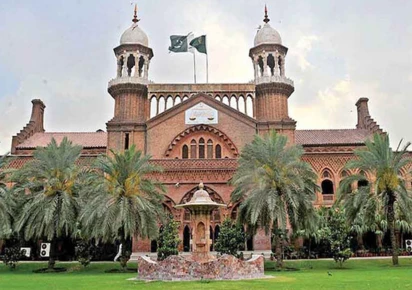
    LAHORE: Lahore High Court ( LHC) Justice Ghulam Sarwar Nihang has recused himself from hearing the post-arrest bail petition of a suspect allegedly linked to the Libyan boat tragedy. The case involving accused Shafaqat Ali was taken up by the Lahore High Court, where Justice Nihang informed the court that he had previously served as a member of the commission formed to investigate the Libya shipwreck. Given his previous involvement with the commission, the judge said he did not consider it appropriate to hear the bail petition concerning the same matter. The case record was subsequently referred to the Chief Justice of the Lahore High Court for further proceedings. During the hearing, the defence counsel argued that bail had already been granted to suspects in several similar cases and requested that Shafaqat Ali also be released on bail until the trial court reaches a decision. The case is part of investigations launched following the Libyan boat accident. The Federal Investigation Agency’s Mandi Bahauddin office has registered cases against suspects allegedly connected to the incident. In a related development, another accused, Muhammad Tahir, has also been granted post-arrest bail in the Libya boat tragedy case.

  • | |

    Bugti offers militants rehabilitation, warns of co…

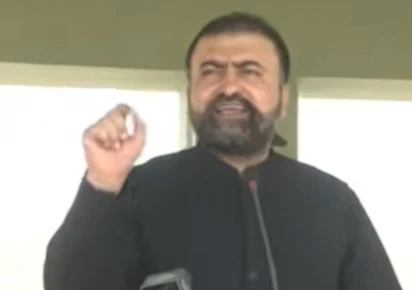
    QUETTA: Balochistan Chief Minister Sarfraz Ahmed Bugti on Friday announced that the provincial government is ready to hold political dialogue with those willing to abandon violence, while making it clear that security operations against armed militant groups will continue until peace is restored. Speaking at the passing-out parade of the Anti-Terrorism Force’s 20th basic training course in Quetta, the chief minister said individuals who surrender and renounce militancy would be given an opportunity to rebuild their lives through a comprehensive rehabilitation programme. Under the government’s reintegration plan, former militants will be offered government employment, educational opportunities for their children and access to healthcare facilities to help them become productive members of society. He said the initiative aims to encourage peaceful participation in the province’s development. However, Bugti warned that those who continue armed activities would face firm action. He said the provincial government, Pakistan Army, Frontier Corps, police, Counter Terrorism Department and Anti-Terrorism Force were working together to eliminate terrorism and restore lasting peace across Balochistan. Referring to the recent rise in militant attacks, the chief minister acknowledged that the province’s security challenges had intensified in recent years but expressed confidence that ongoing counterterrorism operations would defeat militant groups. Bugti also urged political leaders to avoid linking political disagreements with acts of terrorism. While criticism of the government was part of the democratic process, he said attacks on the country’s security forces should not be justified or politicised. Addressing the newly graduated ATF personnel, the chief minister praised their commitment to national service and described them as guardians responsible for protecting the people and maintaining peace. He added that the government was reviewing measures to further strengthen the professional training of security personnel to meet emerging security challenges. The chief minister also announced Rs150 million for improving the Anti-Terrorism Force training school’s infrastructure and highlighted recent steps taken to enhance benefits and welfare packages for police personnel and the families of martyred officers, reaffirming the government’s commitment to strengthening law enforcement institutions.

  • |

    Destructive earthquake hits Western Colombia

    An omnipotent earthquake hit western Colombia in the early morning hours, leaving destruction, multiple fatalities and dozens of collapsed structures across several municipalities. Emergency responders and local residents are rushing  to pull survivors from beneath piles of heavy rubble. In the heart of the country’s coffee-growing region, Pereira Mayor Mauricio Salazar confirmed that 18 residents lost their lives due to the tragic event. Salazar stated, “The situation is critical.” He addressed Caracol Radio regarding the growing casualty toll and structural collapse. Reports from neighboring municipalities highlighted the widespread reach of the disaster. In nearby Manizales, Mayor Jorge Eduardo Rojas reported three fatalities resulting from the shaking. Along Colombia’s Pacific coastline, the key port city of Buenaventura also suffered casualties. Mayor Ligia del Carmen Cordoba confirmed one death after a building caved in, trapping several individuals inside. Cali, one of the nation’s largest urban centers, was among the hardest hit. The municipal authorities have yet to confirm official death tolls there, though. Mayor Alejandro Eder informed Caracol Radio that at least 30 buildings had completely collapsed. The collapse happened even with rescue crews actively operating at 10 high-priority sites across the city. Speaking earlier to Blu Radio, Mayor Eder detailed the urgency of the ongoing efforts: At this point, two people have already been rescued alive, one elderly woman and one young girl. There are more people trapped, he explained, emphasizing the scale of the emergency. He noted further, We have at least 12 critical points and 25 collapsed structures that we are responding to. In order to handle the overwhelming strain on local resources, the city requested emergency disaster support from authorities in Bogota and Medellin. Cali resident Juan Carlos Osorio described the immediate aftermath while sifting through wreckage: The building completely collapsed. It sounded like a bomb. It was horrible, Osorio told Caracol Television. He added, All of us neighbors are working together, forming human chains. We need heavy equipment. There are many people trapped. The immense intensity of the tremor shook neighboring nations including Ecuador, Panama, and Venezuela. However, Colombian officials confirmed that there was no threat of a tsunami. In the capital city of Bogota, the morning quake caused widespread alarm. They’re prompting frightened residents to run into the streets in their pajamas as emergency sirens echoed. Bogota Mayor Carlos Galan reassured the public via Blu Radio that damage within the capital appeared relatively minor, consisting primarily of cracked building facades. Elsewhere, news footage revealed severe structural damage, including multi-story buildings with their outer walls completely sheared off. In Choco province, the governor posted on X that multiple injuries and severe structural damage occurred in the departmental capital of Quibdo. News outlets broadcast images of destruction across cities in the coffee-growing region, known locally as Eje Cafetero. 66-year-old Eje Cafetero resident Martha Estrada told reporters, “There is no electricity or cell phone coverage. It was strong, really strong. Things fell in my house,” recounting the blackout and sudden movement inside her home. Cali’s mayor, Alejandro Eder, re-emphasized that the city was managing major damage and noted that officials were deploying drones to assess structural integrity across neighborhoods. He reiterated that at least 20 buildings had collapsed with individuals trapped inside, driving the urgent appeal for specialized rescue reinforcement from Bogota and Medellin. Residents in Bogota also recalled the intensity of the event, with 29-year-old content creator Valeria Polo remarking, The quake was very, very strong. To safeguard air travel, Colombia’s civil aeronautics agency announced on X that six regional airports temporarily suspended operations. The affected terminals serve Pereira, Manizales, Quibdo, Armenia, Cartago, and Buenaventura, allowing inspection crews to verify runway and building safety. Geographically, Colombia experiences frequent seismic activity because it is situated across three ranges of the Andean mountains. Historically, however, landslides have proven to be the country’s most lethal natural hazards, such as the 1985 Armero disaster that claimed approximately 25,000 lives. Major earthquakes have also left dark marks on the region; in 1999, a 6.2 magnitude earthquake struck the coffee region, resulting in over 1,000 fatalities in Armenia and Pereira. De La Espriella, a right-wing politician who has not previously held elected office, released a video filmed aboard a flight to Bogota following the disaster. He announced that he was suspending his scheduled activities to personally oversee emergency coordination efforts from the national capital.   This natural disaster follows severe regional seismic activity earlier in the summer, when twin earthquakes measuring 7.2 and 7.5 magnitude struck Venezuela on June 24, leaving over 6,000 dead and causing catastrophic damage along the coast near Caracas.

  • |

    Houthis strike Saudi Aramco refinery following historic defence pact with Pakistan and Turkey

    Yemen’s Iran-aligned Houthis launched a drone strike against Saudi Aramco’s Jazan refinery, just two days after Saudi Arabia signed a tripartite defence pact with Turkey and Pakistan to bolster regional deterrence. The Saudi Energy Ministry confirmed that emergency crews extinguished a fire resulting from the drone strike at the 400,000-barrel-per-day facility, reporting no casualties or disruptions to operations. The Houthis also executed combined missile and drone strikes against the Yemeni Red Sea port city of Mocha, killing seven people and damaging critical maritime infrastructure near the Bab-el-Mandeb strait. The newly forged Saudi alliance with Pakistan and Turkey specifies that an armed aggression against one signatory constitutes an attack on all, though member states have not yet detailed any operational military response. Houthi military spokesperson Yahya Saree stated that the Red Sea strikes targeted Saudi military assets and ammunition stores, framing the operations as part of an ongoing naval blockade against the kingdom. The escalating attacks in the Red Sea further complicate global energy transport, depriving Saudi Arabia of key alternative routes while regional access through the Strait of Hormuz remains constrained.

  • | |

    Bilawal calls for truth commission to end AJK unre…

    PPP Chairman Bilawal Bhutto-Zardari has urged the government and protesters in Azad Jammu and Kashmir (AJK) to agree on the formation of a truth and reconciliation commission to investigate the violence and political tensions that have gripped the region. Speaking to party workers in Muzaffarabad on Tuesday, Bilawal said the commission could provide a peaceful mechanism to determine the facts behind the unrest and help prevent further loss of life. He said maintaining peace, fairness and transparency was particularly important during the ongoing AJK elections, arguing that the issue should not be treated as a contest between winners and losers. According to Bilawal, the PPP had been advocating a truth and reconciliation commission for about a month. He proposed that protesters suspend their demonstrations while the commission investigates the incidents and presents its findings. He criticised both the authorities and protesters for failing to compromise, warning that ordinary Kashmiris were suffering despite having no connection with either side. Bilawal said those responsible for violence should be identified through an investigation rather than being punished on the streets. He also accused the state of giving greater importance to the interests of the Pakistan Muslim League-Nawaz (PML-N) than to the interests of Kashmir. Bilawal questions AJK election process Bilawal also criticised the conduct of the AJK elections, particularly the violence and allegations of irregularities reported during polling in parts of the region. He claimed that the PPP had a strong mandate in Mirpur and alleged that polling stations were forcibly occupied and party polling agents removed. He also accused rival political workers of using violence to influence the electoral process. According to preliminary election results, the PML-N won nine of the 13 constituencies in the first phase, while the PPP secured four seats. Bilawal rejected the results in several constituencies and alleged that the PPP’s mandate had been compromised. He questioned how PPP candidate Chaudhry Yasin could lose his home constituency and described the result as unacceptable. He also criticised the decision to conduct the AJK elections in three phases, alleging that the arrangement had failed to prevent electoral malpractice. The PPP chairman referred to reports of violence, firing and the death of a political worker, while also raising concerns over internet disruptions in parts of the region. He called on the authorities to decide whether national interests or political considerations would guide their actions in AJK. Bilawal warned that continued violence and political instability could damage the future of the region. He urged PPP workers to remain peaceful but said the party would not accept attacks on its supporters or the alleged seizure of polling stations. He also appealed for political restraint, saying that the PPP wanted to pursue peaceful politics but would continue to defend what it considers its electoral mandate.

  • |

    PCB unveils squads and schedule for Champions Cup

    The Pakistan Cricket Board (PCB) has announced the squads and schedule for the National Champions Cup 2026, with the tournament set to launch Pakistan’s 2026-27 domestic cricket season in Multan next month. The seven-match 50-over List A competition will be played from August 11 to 18 at Multan Cricket Stadium. All matches will be day-night fixtures and are scheduled to begin at 3pm local time. Four teams — Pakistan Greens, Pakistan Whites, Pakistan Blues and Pakistan Gold — will compete in the tournament. The teams will play each other once in a single round-robin format, with the top two sides advancing to the final on August 18. The PCB has also announced fixed playing XIs for all four teams. Reserve players will only be allowed to enter the playing XI in case of injury or concussion. The reserves will remain with their respective squads during training and match days. The tournament will feature several prominent Pakistan players in leadership roles. Shadab Khan will captain Pakistan Greens, Saim Ayub will lead Pakistan Whites, Sahibzada Farhan will captain Pakistan Blues, while Shaheen Shah Afridi will lead Pakistan Gold. Pakistan Greens include experienced names such as Fakhar Zaman, Faheem Ashraf, Naseem Shah and Mohammad Hasnain alongside emerging players. Saim Ayub’s Pakistan Whites feature Haris Rauf, Khushdil Shah and Mohammad Wasim Jr, while Sahibzada Farhan’s Pakistan Blues include Abdullah Shafique, Hasan Ali, Arafat Minhas and Hussain Talat. Shaheen Shah Afridi’s Pakistan Gold side includes Haider Ali, Kamran Ghulam, Mohammad Nawaz and Faisal Akram. The PCB has selected a 44-player squad and reserve pool as part of its preparations for the 2027 ICC Men’s Cricket World Cup. The domestic tournament is expected to provide selectors with an opportunity to assess players and identify emerging talent ahead of the global event. The reserve pool includes batters Tayyab Tahir, Mohammad Suleman, Mohammad Faiq and Muhammad Irfan Khan. All-rounders Mubasir Khan and Danish Aziz are also included, along with pacers such as Arshad Iqbal, Shahnawaz Dahani and Mohammad Amir Khan. Haseebullah has been named as the reserve wicketkeeper. The tournament will begin on August 11 with Pakistan Greens facing Pakistan Whites. Pakistan Blues will meet Pakistan Gold on August 12, followed by Blues against Whites on August 13. Gold will take on Greens on August 14, while Blues and Greens will meet on August 15. Gold will face Whites on August 16.

Leave a Reply

Your email address will not be published. Required fields are marked *