chief hafiz naeem
| |

JI Chief Hafiz Naeem ur Rehman urges government to…


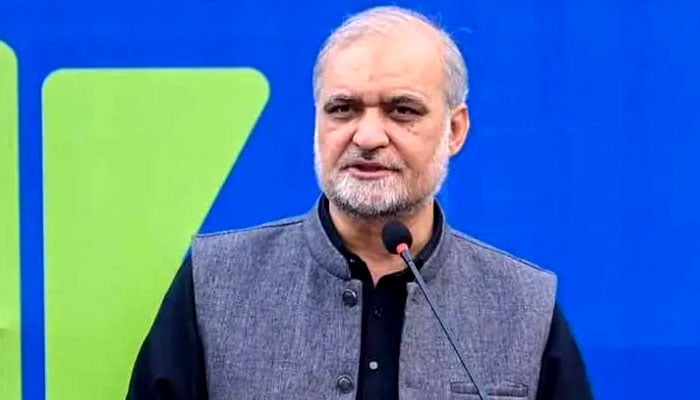
Islamabad: Jamaat-e-Islami (JI) chief Hafiz Naeem ur Rehman has called on the government to focus on resolving the problems faced by the people instead of relying solely on the use of force to establish the writ of the state. He made these remarks in a statement criticizing the government’s economic policies and its handling of public affairs.

According to Hafiz Naeem ur Rehman, a state’s authority cannot be maintained through coercive measures alone. He argued that the government should prioritize addressing the everyday concerns of citizens, including rising inflation, unemployment, and the increasing cost of essential services. He said that public trust is strengthened when governments respond to people’s needs rather than depending on administrative pressure or strict enforcement.

The Jamaat-e-Islami leader strongly criticized the government’s electricity policies, alleging that the ruling authorities are placing an unbearable financial burden on the public through high electricity charges. He stated that ordinary citizens are struggling to pay their utility bills at a time when the cost of living continues to rise. According to him, households and businesses alike are being severely affected by expensive electricity tariffs, making it increasingly difficult for many families to manage their monthly expenses.

Hafiz Naeem ur Rehman also criticized the government’s fuel taxation policy. Referring to the petroleum levy, he alleged that the government is effectively collecting money from the public in the form of what he described as “extortion.” He argued that increasing fuel-related taxes has a direct impact on transportation costs, which in turn raises the prices of food, consumer goods, and other essential commodities. As a result, he claimed, inflation continues to place additional pressure on the country’s middle- and lower-income groups.

In his statement, the Jamaat-e-Islami chief further alleged that both the Pakistan Muslim League (Nawaz) and the Pakistan Peoples Party (PPP) came to power through what he referred to as “Form 47” This phrase has been used by some political parties in Pakistan to allege irregularities in the electoral process. His remarks reflect his party’s political stance regarding the legitimacy of the current governing coalition.

Hafiz Naeem ur Rehman maintained that the country’s leadership should focus on providing relief to the public by reducing electricity prices, reviewing taxation policies, and introducing measures that improve the economic conditions of ordinary citizens. He emphasized that sustainable governance depends on public confidence, transparency, and policies that directly benefit the people.

The government has previously defended its economic decisions by stating that measures such as electricity pricing and petroleum levies are necessary to meet fiscal requirements and maintain economic stability. However, opposition parties, including Jamaat-e-Islami, continue to argue that these policies have placed excessive financial pressure on the public.

The latest remarks by Hafiz Naeem ur Rehman come amid ongoing political debate over Pakistan’s economic challenges, rising inflation, and governance. His statement highlights Jamaat-e-Islami’s continued criticism of the government’s economic policies and its call for greater public relief, while also reiterating the party’s political objections regarding the current administration’s mandate.

Similar Posts

  • |

    Zanjeerain sparks memes after unexpected Chota Bheem reference

    Pakistani drama Zanjeerain, which initially attracted viewers with its revenge-driven storyline and suspenseful plot, is now facing growing criticism from fans who believe the serial has lost its direction. Many viewers have expressed disappointment over the drama’s recent episodes, pointing to slow pacing, inconsistent storytelling and scenes they feel add little to the overall narrative. The latest episode has sparked a wave of discussion on social media after featuring an unexpected reference to the popular animated character Chota Bheem. The scene quickly went viral, with viewers sharing clips, jokes and memes across various platforms. In the scene, Sarbuland is seen talking to Rabiya during a light-hearted conversation. He tells her about his favourite cartoon from childhood, revealing that he was a fan of Chota Bheem. He goes on to mention that the cartoon character loved eating laddus, adding that he also enjoys the sweet treat. While the moment appeared to be intended as a playful exchange, many viewers found it unusual given the serious tone the drama had established in its earlier episodes. The unexpected dialogue immediately became a trending topic online, with fans questioning why such a reference was included in a drama centred around revenge, family conflict and emotional turmoil. Several viewers argued that the scene felt disconnected from the main storyline and interrupted the overall flow of the episode. Social media users were quick to respond with humorous reactions. Many joked that Sarbuland was comparing himself to Chota Bheem, while others suggested that the conversation implied Rabiya was being portrayed as Chutki, another well-known character from the animated series. One user joked, “Sarbuland mein Bheem jaisi shakti,” while another wrote that the scene made it seem as though Sarbuland was indirectly calling himself Chota Bheem. Others laughed that if Sarbuland was Bheem, then Rabiya must be his Chutki. The comments quickly spread across social media, turning the dialogue into one of the most talked-about television moments of the week. The memes did not stop there. Fans created numerous edited images and short videos featuring Sarbuland alongside Chota Bheem, blending scenes from the drama with clips and artwork inspired by the beloved cartoon. Many of these posts attracted thousands of views and shares, with users praising the creativity of the memes even as they criticised the drama itself. Beyond the jokes, several viewers also voiced broader concerns about the direction of Zanjeerain. Fans who had praised the series during its early episodes said they were disappointed by what they described as stretched storylines, repetitive scenes and uneven editing. According to many comments online, the drama’s original revenge-thriller premise has gradually been overshadowed by scenes that feel unnecessary or out of place. Despite the criticism, the viral moment has significantly increased online engagement surrounding the show. Clips from the Chota Bheem conversation continue to circulate on social media, attracting reactions from both regular viewers and people who do not normally follow the drama. Whether the unexpected reference was intended as comic relief or simply a nostalgic nod to a popular childhood cartoon, it has become one of the most memorable moments from the series so far. However, many fans hope future episodes will return their focus to the gripping storyline that originally drew audiences to Zanjeerain, rather than relying on scenes that risk distracting from the central plot.

  • | | |

    Naqvi’s Iran visit focused on ties, regional pea…

    ISLAMABAD: The Foreign Office on Wednesday said Interior Minister Mohsin Naqvi’s ongoing visit to Iran is focused on strengthening bilateral relations, discussing security matters and supporting efforts for peace and stability in the region. Foreign Office spokesperson Tahir Andrabi said during his weekly briefing that Naqvi, who reached Tehran on Tuesday, was meeting senior Iranian officials as part of Pakistan’s diplomatic engagement. The spokesperson said the visit provides an opportunity for Pakistan and Iran to discuss bilateral relations, security concerns and developments in the region. He added that particular attention was being given to promoting peace, stability and constructive dialogue among regional parties. Naqvi was received in Tehran by Iranian Interior Minister Eskandar Momeni. He subsequently met Iranian Foreign Minister Abbas Araghchi and President Masoud Pezeshkian, according to Iranian media reports. Pakistan’s broader mediation efforts between Iran and the United States also featured prominently in the briefing. Andrabi said Islamabad remains engaged with other friendly countries to help address tensions and create conditions for dialogue. He said Pakistan was making efforts to bring the two sides to the negotiating table and build on the Islamabad Memorandum of Understanding. According to the spokesperson, Islamabad wants diplomatic engagement to help reduce tensions and contribute to regional stability. Andrabi also said Pakistan would continue using both direct and indirect diplomatic channels to deal with obstacles to dialogue and encourage a constructive process for resolving outstanding issues. Pakistan, Saudi Arabia and Türkiye defence pact The Foreign Office spokesperson also highlighted the recently signed defence agreement between Pakistan, Saudi Arabia and Türkiye. The pact was signed in Makkah last Friday and seeks to strengthen cooperation and collective deterrence among the three countries. Under the agreement, an attack against one member is to be treated as an attack against all signatories. Andrabi described the agreement as defensive in character and said it reflected the three countries’ longstanding ties and shared responsibility for regional security. He stressed that the pact was not directed against any particular country. Instead, he said, it provides a framework for coordinated efforts to address security threats and challenges facing the member states. Pakistan rejects India’s AJK remarks The Foreign Office also rejected recent comments by India’s Ministry of External Affairs concerning alleged human rights violations in Azad Jammu and Kashmir. Andrabi termed India’s remarks baseless and questioned New Delhi’s criticism by pointing to what Pakistan describes as a record of repression in Indian-administered Jammu and Kashmir. He alleged that excessive use of force, arbitrary detentions, restrictions on political activity and extensive security powers continued to raise serious human rights concerns there. The spokesperson said India’s attempts to politicise developments in AJK could not divert attention from the situation in Indian-administered Jammu and Kashmir. He reaffirmed Pakistan’s stated commitment to protecting fundamental rights and democratic freedoms in AJK.

  • | |

    Saeed Ghani says ethnic voting trend Is fading in …

    Pakistan Peoples Party (PPP) leader Saeed Ghani has said that the trend of securing votes in Karachi primarily on the basis of ethnicity is gradually losing its influence. Addressing a PPP public gathering in Union Council 8 of Korangi, Ghani said voters were increasingly making political choices based on a party’s performance, ideology and vision rather than ethnic identity. He claimed that the PPP government had carried out extensive development work in District Central and Korangi, arguing that these projects had strengthened the party’s connection with residents and addressed long-standing civic needs. Ghani said Karachi’s political landscape was changing as people became more focused on issues that directly affected their daily lives. According to him, voters now paid greater attention to development, public services and the performance of political representatives when deciding which party to support. The PPP leader maintained that political parties could no longer rely solely on traditional ethnic or linguistic loyalties to win elections. He said improved performance and engagement with local communities would play a more important role in shaping voters’ decisions in the future. Ghani also highlighted the importance of development initiatives in strengthening public confidence, saying continued work in areas such as infrastructure and civic facilities could help political parties earn lasting support from Karachi’s residents.

  • | |

    Economic empowerment of minorities, women remains …

    By: Hur Hussaini   Lahore: Punjab Minister for Minorities Affairs, Sardar Ramesh Singh Arora, visited the Head Office of the Rural Community Development Programme (RCDP), where he was warmly received by Muhammad Murtaza, Founder and Chief Executive Officer of RCDP and Vice Chairman of the Pakistan Microfinance Network. During the visit, the Minister held a comprehensive meeting with representatives of the microfinance sector to discuss strategies for promoting financial inclusion, with particular focus on the economic empowerment of religious minorities, women, and other marginalized communities. Addressing the meeting, Sardar Ramesh Singh Arora emphasized that financial inclusion is a powerful instrument for reducing inequality, empowering vulnerable segments of society, and creating equal opportunities for sustainable economic growth. He stated that under the leadership of Chief Minister Maryam Nawaz Sharif, the Government of Punjab is committed to ensuring inclusive development and equal economic opportunities for every citizen without discrimination. The Minister underscored the importance of expanding access to affordable and inclusive financial services for religious minorities, women, and low-income households, enabling them to become financially independent and active contributors to the province’s socio-economic development. Participants also discussed the role of microfinance institutions in advancing human rights and strengthening financial resilience among underserved communities. Both sides agreed to enhance collaboration to make microfinance initiatives more effective and accessible across Punjab. Representatives of the Pakistan Microfinance Network reaffirmed their commitment to expanding comprehensive financial services through the Network’s platform, while the Rural Community Development Programme (RCDP) pledged its continued support for initiatives aimed at promoting the financial independence and economic well-being of minorities and women. The meeting concluded with a shared commitment to strengthening partnerships and undertaking joint initiatives to promote financial inclusion, social protection, and sustainable economic opportunities for vulnerable and marginalized communities throughout Punjab.

  • | |

    Sohail Afridi fires warning over Imran Khan’s sa…

    PTI leader and Khyber Pakhtunkhwa Chief Minister Sohail Afridi has said that the party does not want any harm to befall its founder, Imran Khan. Speaking at a press conference alongside other PTI leaders, Afridi said there was no alternative to resisting what he described as a “fake government”. He warned that young people were increasingly frustrated about their future and would come out of their homes on September 27. Afridi said PTI leaders had repeatedly sought a meeting with Imran Khan but had received no positive response. He said Khan’s family members were non-political and that both his family and lawyers were willing to give assurances that no political press conference would be held after the meeting. The chief minister also expressed concern about Khan’s health. He said the party wanted him to receive proper medical treatment and warned that PTI workers would stage a sit-in outside the Supreme Court if they were not allowed to meet him. Afridi reiterated that the party did not want Imran Khan to suffer any harm. He said PTI’s political struggle was centred around its founder and that his supporters would continue to raise their concerns over his treatment. Speaking on the occasion, PTI leader Salman Akram Raja said Imran Khan’s health was currently the party’s most important concern. Raja said no further interference with Khan’s health would be tolerated. He also indicated that the political campaign being planned by the party would continue and would not be stopped. He criticised the government and alleged that PTI supporters were being treated unfairly. He said the party would continue its political struggle against what he called an imposed government.

  • Health Secretary’s Gujrat visit triggers major health shake-up

    GUJRAT: A high-level visit by Punjab Secretary for Health and Population Nadia Saqib to Gujrat triggered a major administrative shake-up, resulting in the transfer of senior health officials and a newly appointed medical superintendent, while the office of a patients welfare association at Civil Hospital Jalalpur Jattan was sealed. The secretary visited Gujrat to review the Community Health Inspectors (CHI) programme and attended a training workshop for field staff. Addressing community health inspectors, she stressed the importance of improving primary healthcare services, community engagement and effective field monitoring. The workshop was attended by Deputy Director Khalid Sharif, Additional Secretary (Technical) Dr Zohaib Hassan, Project Director PFPP Captain Usman and Additional Director PIU Dr Farrukh Amin. During the visit, Nadia Saqib also inspected Civil Hospital Jalalpur Jattan to review administrative affairs and healthcare services. According to well-placed sources, the secretary expressed serious displeasure after learning that the recent appointment of Dr Shehzad Gul as Medical Superintendent (MS) of Civil Hospital Jalalpur Jattan had been made without the matter coming to her notice. Sources claimed she questioned the appointment during the inspection and sought an explanation from local health authorities. Soon after the visit, Chief Executive Officer (Health) Gujrat Dr Atta-ul-Munim was transferred and posted as Senior Medical Officer (SMO) in Bahawalnagar. Officials familiar with the matter said the transfer order was issued immediately following the inspection. In another significant development, Dr Shehzad Gul, who had only recently assumed charge as Medical Superintendent of Civil Hospital Jalalpur Jattan, was transferred and posted as Medical Officer in Attock. The inspection also resulted in action against the office of Anjuman-e-Behbood-e-Mareezan operating within Civil Hospital Jalalpur Jattan. According to sources, the office was sealed during or after the visit following concerns that it was functioning in a manner inconsistent with its intended welfare role. Sources alleged that the office had effectively been operating like a business despite the fact that medicines required for patients are supplied free of cost through the government hospital. They claimed the matter was brought to the secretary’s attention during the inspection, prompting immediate action. The Health Department has not officially stated the reasons behind sealing the office. Meanwhile, sources indicated that further administrative changes could be on the cards, with the transfer of the District Health Officer (DHO) Gujrat also being considered, although no notification had been issued until late Thursday. No official spokesperson for the Punjab Health Department issued a detailed statement linking the transfers or the sealing of the office to disciplinary proceedings. Efforts to obtain comments from the transferred officials were unsuccessful. The developments have generated considerable discussion within Gujrat’s health sector, where employees view the latest decisions as part of a wider push for administrative accountability and stricter oversight of public health institutions. The secretary’s visit is being seen as a clear message that governance, transparency and adherence to departmental procedures will remain central to the provincial government’s healthcare reform agenda.

Leave a Reply

Your email address will not be published. Required fields are marked *