pakistan clinches central
| | |

Pakistan clinches central Asian Volleyball champio…


Pakistan emerged as the champions of the Central Asian Volleyball Championship after defeating Bangladesh in straight sets in the tournament final held in Islamabad. The national team delivered a commanding performance throughout the competition, remaining unbeaten and securing the prestigious title with an impressive display of teamwork and skill.

In the championship final, Pakistan outclassed Bangladesh in three consecutive sets to seal a comfortable victory. The final scores were 25-20, 25-16, and 25-20, reflecting Pakistan’s dominance from the start of the match to the final point. The team maintained control in all three sets, displaying strong attacking play, effective blocking, and disciplined defense to prevent Bangladesh from mounting a comeback.

The tournament featured six participating teams from the Central Asian region. Pakistan enjoyed an outstanding campaign, winning every match it played and finishing the event with an unbeaten record. Their consistent performances throughout the championship demonstrated the team’s growing strength and highlighted the significant progress made by volleyball in the country.

The final attracted enthusiastic support from local fans, who cheered the national team as they secured another major international volleyball title. Pakistan’s players showed remarkable composure under pressure, while their coordination and tactical execution proved too strong for the Bangladeshi side. The victory further strengthened Pakistan’s reputation as one of the leading volleyball nations in the region.

In the match for third place, Sri Lanka defeated Uzbekistan to finish the tournament with the bronze medal. Both teams competed fiercely for a place on the podium, but Sri Lanka ultimately emerged victorious with a solid all-round performance.

Following Pakistan’s triumph, Prime Minister Shehbaz Sharif congratulated the national volleyball team on winning the Central Asian Volleyball Championship. In an official statement, the Prime Minister praised the outstanding performances of the players, coaches, and team management, acknowledging their dedication and hard work throughout the tournament.

He stated that the national team had made the entire nation proud by demonstrating exceptional teamwork, discipline, and determination. According to the Prime Minister, the players’ remarkable achievements reflected the immense talent present among Pakistan’s youth and proved that they have the ability to bring international recognition to the country in every field of sports.

The Prime Minister also reaffirmed the government’s commitment to promoting sports across Pakistan and supporting young athletes. He emphasized that the development of sports remains an important priority and assured that the government would continue providing every possible opportunity and encouragement to talented players so they can compete successfully at regional and international levels.

Pakistan’s victory in the Central Asian Volleyball Championship is expected to boost the popularity of volleyball in the country and inspire aspiring athletes to pursue the sport. The unbeaten title-winning campaign reflects the dedication of the players, coaching staff, and management, while also highlighting the growing standards of Pakistani volleyball.

With this impressive triumph, Pakistan has once again demonstrated its strength in regional volleyball, ending the tournament as deserving champions and giving sports fans across the nation another memorable achievement to celebrate. The success is likely to serve as motivation for the team as it prepares for future international competitions and aims to build on this historic accomplishment.
Similar Posts

  • | |

    Faizabad Mayor killed in car bomb attack in Afghan…

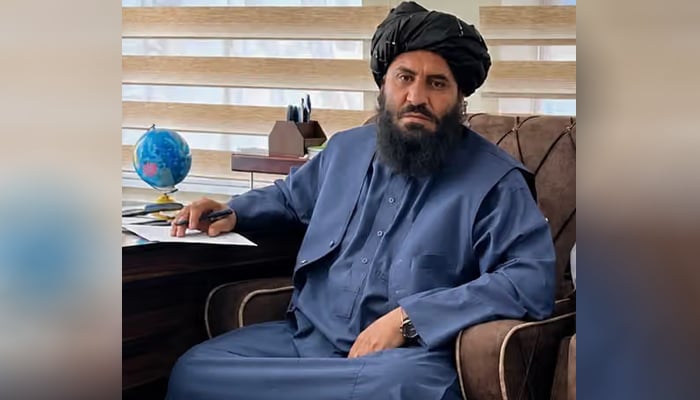
    FAIZABAD: The mayor of Afghanistan’s northern city of Faizabad, Habib-ur-Rehman, was killed in a bomb explosion targeting his vehicle, according to Afghan officials and international media reports. The blast occurred after a magnetic explosive device was reportedly attached to the mayor’s car. One of his colleagues was also injured in the explosion and was taken to a hospital for treatment. An official in Badakhshan province confirmed the death to the BBC, saying Habib-ur-Rehman was killed in the attack while his colleague sustained injuries. The anti-Taliban National Resistance Front has claimed responsibility for the bombing, saying it carried out the attack against the Faizabad mayor. The National Resistance Front is an armed opposition group that has been fighting against Taliban rule in Afghanistan. The group has previously claimed attacks against Taliban officials and security personnel in several parts of the country. The bombing highlights continuing security challenges in Afghanistan, where armed opposition groups remain active despite the Taliban’s efforts to consolidate control across the country. Authorities have not yet provided further details about the circumstances of the attack or identified whether additional suspects have been detained in connection with the bombing.

  • | |

    Climate authority summoned again as questions grow…

    Islamabad: The Pakistan Climate Change Authority has been called back before a Senate committee only days after Chairperson Sherry Rehman strongly questioned why a new authority was operating alongside the Climate Change Ministry, asked what new work it was actually doing and raised concerns over staff costs, duplication and the use of public money. The fresh meeting will again focus almost entirely on the authority, its work, projects, programmes and progress. The quick return of the issue to the committee has increased pressure on the authority to clearly explain why it exists and what results it has produced that the Ministry of Climate Change and Environmental Coordination could not already deliver. At the previous meeting, Sherry Rehman repeatedly asked officials what work the authority was doing that the ministry was not already responsible for. She questioned whether the government had effectively created a parallel structure carrying out the same work on climate mitigation, adaptation, coordination and policy implementation. Rehman said the presentation before the committee did not show a clear new role for the authority. She also questioned why another institution was being created at a time when the ministry itself was facing shrinking development budgets. One of the strongest moments came when the committee discussed the authority’s staffing and expenditure. Rehman referred to a sanctioned strength of 24 positions and said employee related expenditure had already reached around Rs 80 million according to the presentation placed before the committee. She questioned why these costs were being incurred when she could not see a clear difference between the work of the authority and the ministry. She warned officials not to treat the meeting as a routine presentation exercise and demanded direct answers about public spending and actual results. Rehman also questioned whether creating the authority had brought new climate experts into government. Members asked whether the purpose was to recruit technocrats who could not otherwise be brought into the ministry. However, Rehman said the presentation appeared to show many of the same officials who had already worked inside government departments. She described the situation as a reshuffling of bureaucracy rather than the creation of a new technical institution. She said fragmentation was already a major government problem, with different organisations working separately on connected climate and disaster issues. According to her argument, creating another body without a clearly different mandate could increase costs while making responsibility more confusing. Rehman also questioned why the authority had been activated years after the law creating it first appeared. She said the law allowed the authority to exist but argued that this did not necessarily mean the government was forced to operationalise it. She said earlier governments had discussed removing such overlapping structures instead. During the exchange, she said she had opposed operationalising the authority while serving as minister because she feared it would create duplication. She told the committee that the result now appeared close to what she had warned about: officials were moving between the ministry and the authority instead of creating a completely new technical team. The authority defended its role. Dr Muhammad Rafiq told the committee that the authority was originally designed to provide technical support to the ministry. He acknowledged that more explanation was needed regarding what the authority was delivering against its original responsibilities. He suggested that the ministry and authority should be given an opportunity to return with a clearer presentation explaining what results they expected to achieve and what the authority could do that the ministry could not. The committee was told that the authority was still incomplete. Officials said a permanent chairperson was still being appointed and that only three members were working at the authority with a limited number of staff against the total positions planned. The authority also presented one of its strongest arguments in defence of its performance. An authority member told the committee that it had become Pakistan’s first public sector organisation to qualify as a delivery partner with the Green Climate Fund through the relevant mechanism. The official said this had been achieved by only three members and without technical assistance. He argued that this status could help the authority develop technical proposals and bring more climate finance into Pakistan. Rehman was not convinced that this achievement alone justified a separate authority. She argued that Green Climate Fund financing had already been coming to Pakistan through government structures and questioned why a completely new authority was needed when a climate finance office could operate within the ministry. She again asked why project development and technical hiring could not be handled directly by the ministry. Her central question remained the same throughout the discussion: what exactly could the new authority do that the ministry could not already do? The ministry told the committee that it had a supervisory and controlling role over the authority and that the authority’s budget passed through the ministry. However, Rehman continued to question how effective that control was if the authority could hire staff and exercise statutory powers separately. She asked officials to explain how rotating officials into a separate authority would make climate work more efficient when the ministry itself was losing development resources. Professor Dr Zahoor Ahmed Bazai, who identified himself as an unpaid member nominated to the authority and as a climate change academic, defended the institution. He told the committee that the authority was included in the climate law and that members had been nominated through the formal process. He argued that the authority was intended to provide expertise and serve an advisory role. Rehman said her criticism was not directed personally at individual members. She said the bigger problem was duplication between institutions and the growing number of attached bodies dealing with similar climate matters. The committee chairperson was also critical of the presentation the authority gave. Rehman said the presentation was not strong enough to be used by Pakistan at an international climate forum and described it as outdated in style. She said that if the authority wanted to demonstrate its value and

  • |

    Peru and Mexico resume diplomatic relations after political dispute

    The diplomatic break occurred when Mexico granted political asylum to former Peruvian Prime Minister Betssy Chavez, who faced conspiracy charges regarding former President Pedro Castillo’s 2022 attempt to dissolve Congress. As part of the bilateral agreement to restore relations, Peru granted Chavez safe-conduct guarantees under the 1954 Caracas Convention on Diplomatic Asylum, enabling her to leave the Mexican Embassy in Lima and travel to Mexico. Peruvian Foreign Minister Carlos Espa confirmed she departed in good health. The Peruvian Ministry of Foreign Affairs maintained that no political persecution exists in the country and stated that granting safe-conduct does not waive Peru’s legal right to request Chavez’s extradition in the future. The diplomatic rapprochement follows commitments made by newly elected Peruvian President Keiko Fujimori ahead of her inauguration to normalize ties with Mexico, an initiative welcomed by Mexican President Claudia Sheinbaum.

  • |

    Zahid Taimoor reveals why he avoided an acting career

    Danish Taimoor has established himself as one of the most recognizable and successful stars in Pakistan’s television and film industry. With millions of followers on Instagram, the actor enjoys a huge fan base that continues to support him for his charismatic personality, strong screen presence, and memorable performances. Over the years, Danish has appeared in several popular dramas, including Deewangi, Kaisi Teri Khudgarzi, Jaan Nisar, Ab Dekh Khuda Kya Karta Hai, Teri Chhaon Mein, and Ishq Hai. His performances in Sher and Mann Mast Malang have also received appreciation from audiences. Known particularly for his confident portrayal of romantic characters, Danish has become a familiar face among prime-time drama viewers. Apart from acting, Danish Taimoor has also worked as a model and television host. His recent projects have further strengthened his position in the entertainment industry. His drama Humrahi has emerged as one of the most-watched shows of the year, attracting considerable attention from viewers. The actor is also preparing for another upcoming project, Nishtar, which is expected to air on Geo Entertainment. Recently, Danish’s brother Zahid Taimoor attended the premiere of the final episode of Humrahi, where he spoke about his brother’s growing popularity, achievements, and journey in showbiz. The conversation also turned toward Zahid’s own decision not to pursue acting despite sharing a similar appearance and having the potential to enter the entertainment industry. When Zahid was asked why he had not followed Danish into acting, especially given that people often compare their looks, he explained that his interests had always been different. Zahid revealed that business had been his passion since childhood. He said that he had developed his mindset around business from an early age and had always seen himself pursuing a career in that field rather than becoming an actor. Speaking about Danish, Zahid expressed immense pride in his brother’s accomplishments. He described Danish’s success as a major achievement and said that seeing his brother become a superstar was something he deeply appreciated. Zahid also praised Danish for the way he approaches his professional career. According to him, Danish has developed a reputation for carefully selecting his projects rather than appearing in every offer that comes his way. He highlighted that the actor’s choices have consistently connected with audiences, with many of his dramas going on to become major hits. The comments offered fans a glimpse into the close bond between the two brothers. While Danish chose the world of entertainment and built a successful career through acting, modeling, and hosting, Zahid decided to follow his own passion for business. Despite choosing different professional paths, Zahid’s words made it clear that he remains proud of Danish and his achievements. His appreciation also reflects the strong support the actor receives from his family as he continues to take on new projects and maintain his position among Pakistan’s leading television stars.

  • | |

    Trump faces awkward moment as Epstein letter repor…

    WASHINGTON: An uncomfortable chapter in the long-running controversy surrounding President Donald Trump and Jeffrey Epstein returned to the spotlight after journalists whose reporting brought an alleged birthday letter linked to the two men into public view were honored at the White House Correspondents’ Dinner. The moment came during the rescheduled annual dinner on July 24, where Trump was present as The Wall Street Journal received the inaugural Katharine Graham Award for Courage and Accountability for its investigative reporting on his past relationship with Epstein. The award recognized the Journal’s reporting on a controversial letter allegedly written by Trump for Epstein’s 50th birthday in 2003. Trump has denied writing the letter and has strongly disputed the newspaper’s account. The report nevertheless triggered renewed public attention on Trump’s past association with Epstein and contributed to wider scrutiny of documents connected to the late financier. What made the award particularly striking was Trump’s presence in the room. According to reports from the event, Trump briefly congratulated the journalists as they received the honor. His reaction attracted attention because he had previously threatened legal action against the Journal over its Epstein reporting. The dinner itself had already been surrounded by unusual circumstances. The original White House Correspondents’ Association gathering in April was disrupted by a shooting incident, forcing the event to be postponed. The rescheduled dinner took place in July under heightened security measures. Trump also used his speech to take several pointed shots at journalists and political opponents, continuing his frequently combative relationship with the American press. The event nevertheless maintained its traditional role of honoring journalists for investigative and public-interest reporting. The Epstein controversy remains politically sensitive in the United States. Epstein, who died in federal custody in 2019 while facing sex-trafficking charges, had social and professional connections with numerous prominent people. The release and examination of documents related to his activities have repeatedly generated political controversy. For Trump, the latest episode creates an unusual image: a president sitting in the audience as journalists he has publicly challenged receive an award for reporting on one of the most politically explosive stories surrounding his past. The development is likely to keep the Epstein controversy in the headlines, particularly as questions surrounding previously unreleased documents and Trump’s historical relationship with Epstein continue to attract intense public and political scrutiny.

  • | |

    Punjab University staff demand forensic audit, war…

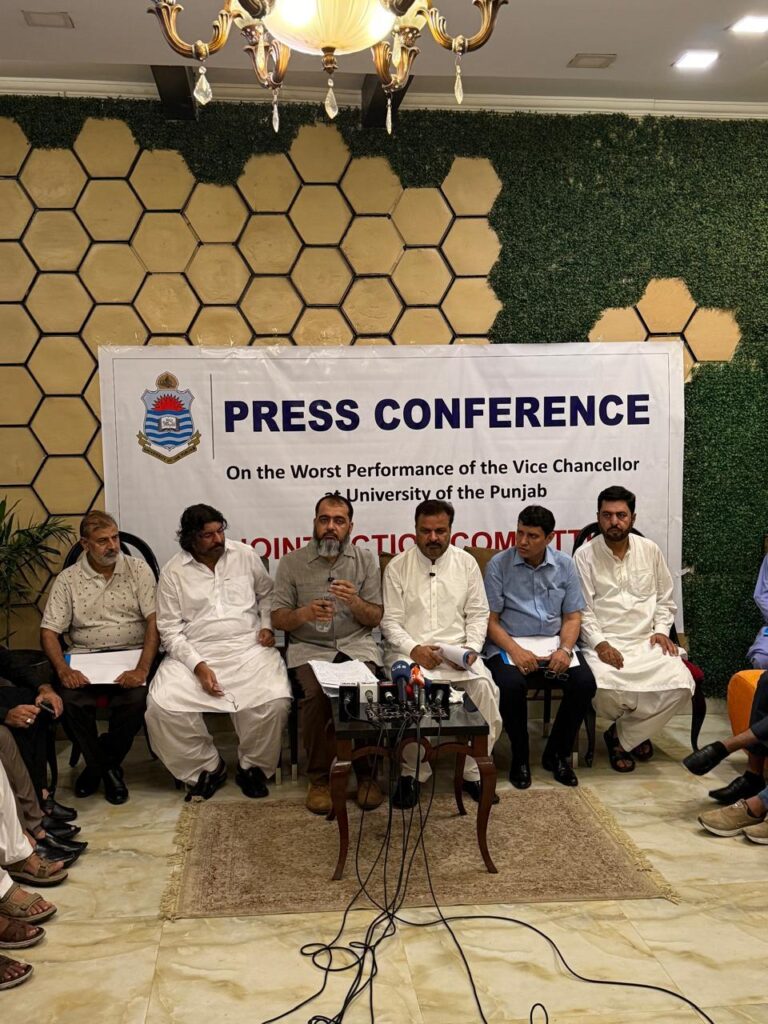
    Lahore: A joint platform representing teachers, officers, employees, and other stakeholders at the University of the Punjab has accused the university administration of driving the country’s oldest and largest public university into a deep financial, administrative, academic, and research crisis, while warning of a protest movement if their demands remain unaddressed within two weeks. Addressing a press conference in Lahore, the Joint Action Committee (JAC) said its purpose was not to target individuals but to present what it described as documented concerns regarding the university’s governance, financial management, academic standards, and research environment. The committee appealed to the Chancellor of the University, the Governor of Punjab, and the provincial government to intervene immediately to safeguard the institution.   The committee alleged that reserve funds worth approximately Rs4.88 billion, accumulated over many years, had been utilized within just 14 months without approval from the Finance and Planning Committee. It claimed that the university’s 2025–26 budget reflected a deficit of Rs2.57 billion and argued that, when combined with the depletion of reserves, the institution was effectively facing a financial shortfall of nearly Rs8 billion. It also questioned expenditures allegedly made beyond approved budget limits and called for greater transparency in financial decision-making. JAC further claimed that around Rs786 million belonging to various academic departments and institutes had been transferred to a central account under the One-Account Policy and later utilized, raising questions about whether the expenditures had received approval from the relevant statutory bodies. It also expressed concern over what it described as the first-ever financial deficit of nearly Rs350 million in the university’s self-supporting programmes. The committee also pointed to an apparent discrepancy in financial reporting, claiming that while the Finance and Planning Committee was informed of a Rs2.57 billion budget deficit at the end of the financial year, a subsequent Syndicate meeting was told the deficit stood at Rs1.6 billion. According to the committee, the variation requires a transparent explanation. Expressing concern over campus security, the committee referred to the killing of a student and the son of a university employee near the Vice Chancellor’s residence despite the presence of armed security personnel, arguing that the incident had raised serious questions about the effectiveness of the university’s security arrangements. On governance, the committee alleged that key statutory bodies, including the Senate, Deans’ Committee, Chairpersons’ Committee, Syndicate, and Selection Boards, had met only infrequently during the current administration, resulting in delays in appointments, promotions, and major policy decisions. It further criticized what it described as an excessive concentration of administrative authority in the office of the Director General (Students, Estate and Security), saying such an arrangement was inconsistent with principles of transparency, institutional balance, and accountability. The committee also referred to pending complaints and inquiries involving the office-holder, questioning the wisdom of assigning additional responsibilities while such matters remain unresolved. Highlighting academic concerns, JAC said the university had slipped from 542nd to 588th position in the QS World University Rankings and had also experienced a decline in the Higher Education Commission’s Office of Research, Innovation and Commercialization (ORIC) rankings. It alleged that faculty members were facing an atmosphere of insecurity and harassment, while research grants, travel support, and publication funding had effectively come to a halt. The committee claimed that although research grants of up to Rs1 million had been announced, no faculty member had yet received financial assistance under the initiative. It further alleged that several researchers had been forced to abandon nationally and internationally funded projects because of inadequate institutional support, damaging both research output and the university’s reputation with funding agencies. According to the committee, hostel accommodation remains unavailable for many students, including research scholars, while an increasing number of inquiry committees against faculty members and officers has created an atmosphere of fear and professional uncertainty. It also expressed concern over delays in permanent appointments to several senior administrative positions, saying the lack of regular appointments had weakened institutional efficiency. The Joint Action Committee demanded an independent forensic audit of the university’s financial affairs, including the use of reserve funds, deficit budgets, the One-Account Policy, and the finances of self-supporting programmes. It also called for the immediate removal of the Director General (Students, Estate and Security) under the principle of “one person, one post,” an end to what it described as retaliatory inquiries, restoration of a secure and professional working environment, immediate advertisement and transparent appointment of a permanent Registrar, payment of outstanding financial dues and benefits to teachers and employees, and the restoration of regular meetings of all statutory bodies in accordance with the University Act. The committee warned that if its demands are not addressed within two weeks, it will launch a phased protest campaign, including demonstrations outside the university, a sit-in outside the Punjab Assembly, publication of a white paper containing documentary evidence, and a boycott of classes that could ultimately disrupt academic activities at the historic institution. The university administration had not issued an official response to the allegations at the time this report was filed.

Leave a Reply

Your email address will not be published. Required fields are marked *