faizabad mayor killed
| |

Faizabad Mayor killed in car bomb attack in Afghan…

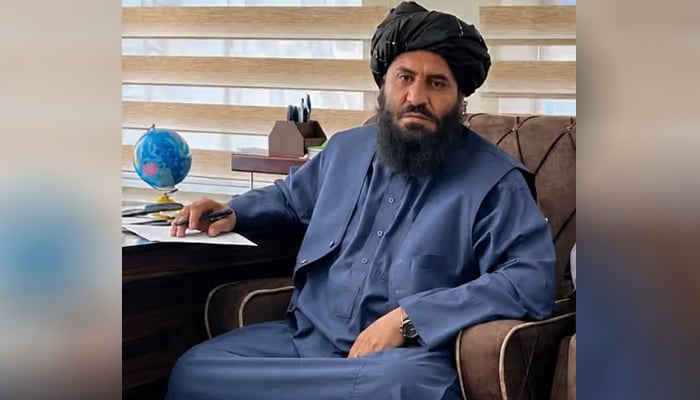
FAIZABAD: The mayor of Afghanistan’s northern city of Faizabad, Habib-ur-Rehman, was killed in a bomb explosion targeting his vehicle, according to Afghan officials and international media reports.

The blast occurred after a magnetic explosive device was reportedly attached to the mayor’s car. One of his colleagues was also injured in the explosion and was taken to a hospital for treatment.

An official in Badakhshan province confirmed the death to the BBC, saying Habib-ur-Rehman was killed in the attack while his colleague sustained injuries.

The anti-Taliban National Resistance Front has claimed responsibility for the bombing, saying it carried out the attack against the Faizabad mayor.

The National Resistance Front is an armed opposition group that has been fighting against Taliban rule in Afghanistan. The group has previously claimed attacks against Taliban officials and security personnel in several parts of the country.

The bombing highlights continuing security challenges in Afghanistan, where armed opposition groups remain active despite the Taliban’s efforts to consolidate control across the country.

Authorities have not yet provided further details about the circumstances of the attack or identified whether additional suspects have been detained in connection with the bombing.

Similar Posts

  • | | |

    Maryam Nawaz’s electric bus gift to AJK sparks d…

    Punjab Chief Minister Maryam Nawaz’s decision to provide 10 electric buses to Azad Jammu and Kashmir (AJK) has ignited a political and constitutional debate over the use of provincial resources outside Punjab. The controversy intensified after the buses arrived in Muzaffarabad just days before the first phase of the AJK Legislative Assembly elections. Maryam Nawaz shared a video on social media announcing that the green electric buses had reached Muzaffarabad. The buses carried banners featuring her photograph alongside the message, “A gift from Punjab Chief Minister Maryam Nawaz to the people of Azad Jammu and Kashmir.” The announcement came only two days before polling in the Mirpur Division, where election campaigning was underway. At the time, Maryam Nawaz and Pakistan Muslim League-N (PML-N) President Nawaz Sharif were in the region to campaign for their party’s candidates. The timing of the announcement prompted criticism from political opponents and legal observers, who questioned whether public resources should be used during an active election campaign. The issue has also sparked a broader debate over whether a provincial government can spend taxpayer-funded resources outside its constitutional jurisdiction. Critics argue that the Punjab government’s primary responsibility is to serve the residents of Punjab, while supporters maintain that intergovernmental cooperation and public welfare projects are permissible under certain circumstances. Senior PML-N leader and Adviser to the Prime Minister Rana Sanaullah defended the party’s participation in the election campaign. Speaking to local media, he stated that because Azad Jammu and Kashmir does not have a caretaker government during elections, federal and provincial ministers are legally allowed to campaign. However, Rana Sanaullah also acknowledged concerns about the electoral process. He suggested that the newly elected AJK Legislative Assembly should consider legal reforms to prevent governments in power from influencing elections through official positions or public resources. The controversy has renewed discussions about election ethics, transparency, and the appropriate use of taxpayer funds during political campaigns. Legal experts note that while development assistance between governments is not uncommon, the timing and political context of such announcements often determine whether they are viewed as administrative decisions or campaign-related activities. As political debate continues, the electric bus initiative has become a key issue in discussions about governance, constitutional authority, and the responsible use of provincial resources ahead of elections.

  • |

    Atif Aslam reflects on decade-long India music ban

    Pakistani singer Atif Aslam has spoken about his decade-long absence from the Indian music industry, reflecting on the ban imposed on Pakistani artistes following the 2016 Uri attack. In an interview with Kris Fade on his YouTube channel, the 43-year-old singer discussed how the restrictions affected his professional relationship with India and his millions of fans there. Atif said it had been almost 10 years since he was banned from working in India, explaining that the decision was made by the Indian government. He also pointed out that Indian artistes have faced similar restrictions in Pakistan, describing the situation as something beyond the control of individual musicians. Atif revealed that he has not recorded a song for the Indian market during the past decade. Despite the ban, however, he said his music continues to reach Indian listeners through different means. According to the singer, some fans use VPNs to access his music, while others share his songs through CDs. Although he made it clear that he does not support piracy, Atif said music ultimately finds its way to audiences who want to listen to it. Addressing his Indian fans directly, the singer delivered an emotional message and assured them that he has not forgotten them. He said he does not necessarily miss working in India but genuinely misses the people who supported his music throughout the years. Atif also reflected on how the ban unexpectedly influenced his artistic journey. He explained that his experience with playback singing had taught him a great deal, but the absence of opportunities in India pushed him to focus more deeply on creating his own music. Rather than viewing the ban entirely negatively, Atif said the situation gave him an opportunity to explore himself creatively. He expressed gratitude to his supporters as well as those responsible for the restrictions, suggesting that the circumstances ultimately encouraged him to develop a different side of his musical identity. The restrictions on Pakistani artistes in India began in the aftermath of the September 2016 Uri attack. The Indian Motion Picture Producers’ Association subsequently called on its members to stop working with Pakistani artistes. Restrictions became even stronger following the 2019 Pulwama attack, when the All India Cine Workers Association announced a complete ban on Pakistani actors working in Indian cinema. Despite being unable to work in India for years, Atif has remained one of the most popular Pakistani singers among Indian audiences. His connection with Indian music lovers dates back to his breakthrough with “Aadat,” which featured in the 2005 Bollywood film Kalyug. He later became known for several successful Bollywood songs, including “Tera Hone Laga Hoon,” “Tere Sang Yaara” and other popular tracks that strengthened his position as one of the region’s most recognised playback singers. Atif’s latest comments highlight the lasting connection between his music and Indian listeners, even after years of political and industry-level restrictions.

  • | |

    Spider-Man, Brand New Day faces boycott calls over…

    Pro-Palestinian campaigners in Lebanon, Jordan and other parts of the Arab world are calling for a boycott of Spider-Man: Brand New Day, turning the release of the highly anticipated superhero film into a wider debate over politics, culture and entertainment. The campaign is focused on producer Avi Arad, an Israeli and US citizen and former Marvel Studios chief, whose public statements and past military service have drawn criticism from activists opposed to Israel’s conduct during the war in Gaza. In Lebanon, the Campaign to Boycott Supporters of Israel urged audiences not to buy tickets for the film, arguing that spending money on productions involving individuals who have publicly supported Israel amounts to cultural normalisation. The group called on the public to avoid paid screenings and questioned whether audiences should financially support a production involving people with political ties to Israel. A separate anti-normalisation group in Jordan, Taharrak, also called for the movie to be boycotted and urged cinemas not to include it in their schedules. The group appealed to Jordanian artists, cinema operators and other organisations to take a position against its screening. The boycott calls have subsequently been shared by activists and online content creators in other Arab countries. The film, which stars Tom Holland as Peter Parker, was released internationally on July 31. Directed by Destin Daniel Cretton, it is produced by Arad alongside Kevin Feige, Amy Pascal and Rachel O’Connor. Campaigners have specifically targeted Arad rather than the film’s storyline or its wider cast and production team. Arad served in the Israeli military from 1965 to 1968 and has previously spoken publicly about his connection to Israel. In a 2024 letter published by TheWrap, he criticised former US Senate Majority Leader Chuck Schumer after Schumer criticised Israeli Prime Minister Benjamin Netanyahu and called for new Israeli elections. Arad argued that American politicians should not interfere in Israel’s electoral affairs and described himself as a proud former member of the Israeli military. Campaigners say such statements justify their call for a boycott, arguing that ticket purchases could provide financial support to a production involving Arad. However, the impact of the campaign on the film’s commercial performance remains uncertain. Despite the boycott appeal, Spider-Man: Brand New Day continued screening in Lebanon, while a representative of Grand Cinemas told L’Orient Today that audience demand remained strong shortly after its release. The controversy highlights how major Hollywood releases can become entangled in geopolitical debates, with audiences increasingly examining the political positions and backgrounds of figures behind popular entertainment.

  • |

    Trump’s former lawyer Todd Blanche confirmed as US attorney general

    Todd Blanche, a former personal attorney to US President Donald Trump, has been confirmed as the country’s attorney general after a closely contested Senate vote. Blanche secured confirmation by 50 votes to 49, with Republican Senators Susan Collins and Lisa Murkowski joining Democrats in opposing his nomination. Senator Bill Cassidy provided the crucial Republican vote in Blanche’s favour after saying he believed Blanche was the strongest candidate Trump was likely to nominate. The vote ended a prolonged dispute between the Trump administration and Senate Republicans over Blanche’s appointment. He had been serving as acting attorney general since April, after Pam Bondi was removed from the position. All Senate Democrats voted against Blanche’s confirmation. Several Republican lawmakers had questioned Blanche’s record and raised concerns about his involvement in a number of controversial matters. Among them was his handling of documents related to convicted sex offender Jeffrey Epstein and his role in developing Trump’s proposed $1.8 billion “anti-weaponization” fund. The proposed fund was intended to compensate people who claimed they had been politically targeted or persecuted by the government. However, critics, including Murkowski, warned that the scheme could potentially benefit people prosecuted for their involvement in the January 6, 2021 attack on the US Capitol. During his confirmation process, Blanche promised to abandon the proposed fund following opposition from Republican senators. Questions remain over whether that commitment would prevent the administration from introducing a similar programme under a different structure in the future. Murkowski said she opposed Blanche because she lacked confidence that he would be willing to challenge what she described as the administration’s worst impulses. She also expressed concern about the increasing politicisation of the Justice Department. Collins raised separate concerns over Blanche’s involvement in Trump’s $10 billion lawsuit against the Internal Revenue Service. Despite those reservations, she ultimately did not support his confirmation. Cassidy, meanwhile, said he trusted Blanche to provide Trump with independent and candid legal advice. He acknowledged that the president ultimately determines the direction of the Justice Department but argued that Senate confirmation would give Blanche greater authority to advise the administration and push back when necessary. Cassidy also said he did not want political disagreements to prevent the Justice Department from carrying out its responsibilities, particularly in combating violent crime. Blanche’s confirmation marks a significant development for the Trump administration, given his previous role as Trump’s personal lawyer. He was serving as deputy attorney general when he assumed the department’s temporary leadership in April.

  • | |

    Whoopi Goldberg defends Elliot Page’s casting in The Odyssey

    Whoopi Goldberg has stepped forward to defend the casting of Elliot Page in Christopher Nolan’s The Odyssey, delivering a pointed and characteristically direct response to the wave of criticism that has been directed at the actor since the film’s release. Speaking on Tuesday’s episode of The View, Goldberg addressed the backlash head-on after a clip was played of conservative commentator Ben Shapiro describing Page’s role as an “absolute puzzler” and taking aim at the actor’s appearance and voice. Goldberg’s response was blunt and unapologetic. “A lot of conservatives who see this are going to feel the same way. That’s okay,” she said. “But I don’t understand. Why go see the movie? If you don’t want to see it, don’t go see it. Why do you care who’s cast in it?” She continued: “I don’t understand this idea that if we hate it, everybody must hate it because we hate it for this reason. You don’t like Elliot Page? Don’t go see the damn movie. Don’t do it. We will be okay if you don’t go see it.” Page, who is trans, plays Sinon in the film, a cousin of Matt Damon’s Odysseus. The casting drew significant online criticism, some of it amplified after Elon Musk weighed in on social media, initially claiming incorrectly that Page would be playing the warrior Achilles. Despite the inaccuracy being pointed out, the backlash continued and widened. Page is not the only cast member to have faced criticism over their casting. Lupita Nyong’o, who plays both Helen of Troy and her sister Clytemnestra in the film, has also been subjected to racially charged criticism over her dual role, highlighting a pattern of commentary around the film’s diverse ensemble that goes well beyond questions of artistic interpretation. Fellow View panelist Alyssa Farah Griffin also pushed back on the criticism during the segment, arguing that the film’s themes of family, faith and the consequences of war are broad and universal enough to resonate across different audiences, including those who had voiced objections before seeing the film. What the controversy has not managed to do is dent the film’s commercial performance. The Odyssey opened in theatres on July 17 and crossed $300 million worldwide within days, making it one of the biggest releases of Christopher Nolan’s career and one of the year’s most significant box office events so far. For Goldberg, the message was simple: the film exists, it is performing, and those who object to its casting choices have every right to stay away. What they do not have, in her view, is the right to demand that everyone else feels the same.

  • | |

    Iran summons French ambassador over diplomats accu…

    Iran summoned the French ambassador in Tehran this week over allegations that two French diplomats interfered in the country’s internal affairs. A spokesman for Iran’s Foreign Ministry said the ambassador was called in specifically to address the conduct of the two diplomats stationed in Tehran. Speaking at a weekly press briefing, Esmaeil Baghaei said the meeting emphasized that the French government must halt what he described as interference in Iran’s domestic affairs carried out under misleading pretexts. Baghaei said both diplomats had been using contact with civil society groups as cover for activities that amounted to meddling in Iran’s internal matters, and argued that their conduct had no legal basis under the Vienna Convention on Diplomatic Relations. The dispute stems from an incident on July 20, when Iranian security forces detained the two French diplomats and questioned them for several hours before allowing them to return to the French embassy. One of the diplomats later alleged that he was subjected to physical mistreatment while in custody. French Foreign Minister Jean Noel Barrot condemned the episode, describing it as an extremely serious act of intimidation. The incident adds to a period of heightened friction between Iran and Western governments, as Tehran remains locked in a broader standoff with the United States and its allies over its nuclear program and regional activities, a dynamic that has repeatedly spilled over into diplomatic disputes with European nations in recent months.

Leave a Reply

Your email address will not be published. Required fields are marked *