solo travel finding

Solo travel finding its footing in Pakistan

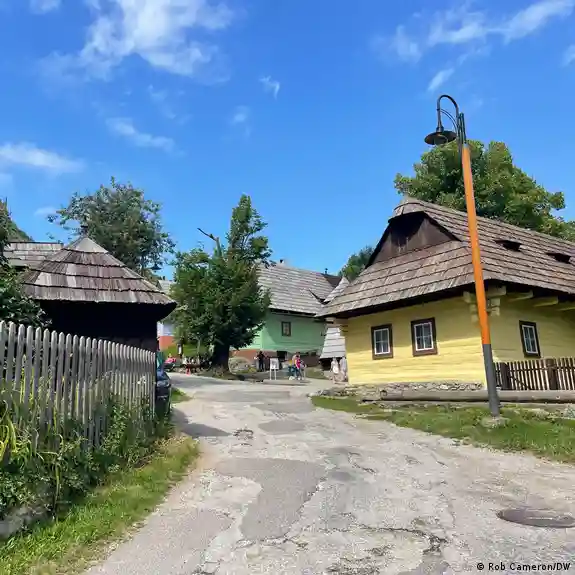
The image of travel in Pakistan is changing. At bus terminals in Rawalpindi, at Islamabad International Airport, and on trails in Hunza, a growing number of travellers are moving with just one thing in common — they are alone.

Solo travel, once seen as unusual, is now a quiet but visible trend among Pakistanis. Industry data and tour operators say bookings by single travellers have risen steadily over the last two years, driven by social media, remote work, and a desire for independence.

For decades, Pakistani travel meant family trips to Murree, Nathiagali, or Swat, or group tours arranged through agencies. That model is shifting.

Nevertheless, reasons are practical and personal. Let’s say, no need to coordinate leave or budgets with others, or time to navigate new places on one’s own terms.

These days , hostels, cafés, and trekking groups in places like Karimabad and Skardu have become meeting points for solo travellers.

However, safety remains the top concern, especially for women. That is pushing both travellers and the industry to adapt.

Hotels in major tourist towns now offer female-only dorms. Ride-hailing apps provide trip sharing. Also, the Ministry of Tourism has started listing registered guesthouses and guides on its website.

Taking about the top destinations, Domestically, the most popular solo destinations of 2026 are, Hunza, Skardu, and Fairy Meadows for trekking and landscapes, Swat and Kalam for short trips, easier access. And Islamabad and Lahore, for weekend culture trips, history, and food walks.

Internationally, Pakistanis traveling alone are choosing Turkey, Malaysia, and Saudi Arabia for Umrah-plus-tourism packages. Portugal and Japan are also rising for first-time solo travellers abroad due to safety and transit systems. But I would say Sri Lanka is the must go.

For traveling solo, One of the biggest challenge is price. Single rooms and ‘single supplements’ on tours can add 20-30% to costs. However, to counter this, some operators are launching “solo-friendly” departures — group tours where you get your own room but share activities.

To combat this, solo travellers usually travel in shoulder months and spend more on local experiences — guides, food, and home-stays.

I am a travelwriter, who travels solo weather traveled domestically or internationally, my advise is basic precautions, let say, safe hotels, air travel, authentic agents and no home stays, since for my travel I only prefer top notch hotels, always get the travel plan from reputable travel agencies, and travel with the guide from company. Also, I avoid night life.
Similar Posts

  • Window cleaning legend Terry Burrows keeps World record

    Cleaning windows may seem like a simple job but doing it at a world class level takes years of skill and practice. That is why 71 year old Terry Burrows is still considered one of the best professional window cleaners in the world. Speaking to a British newspaper Burrows said that many people half his age cannot do what he does.  He explained that professional window cleaning is a skill that requires proper training not just hard work. Burrows who still competes in the Window Cleaning World Cup is often called the “Usain Bolt of window cleaning.” In 2009 he set a world record by cleaning three 45×45 inch windows in just 9.14 seconds.  His record remains unbeaten. Under competition rules every contestant uses the same equipment including a 12-inch squeegee a 14-inch T-bar an applicator cover a bucket of water window cleaning detergent and a scrim cloth. Competitors must clean all three windows as quickly and perfectly as possible. During the event three judges watch closely as contestants use a special S-shaped squeegee technique. They then wipe away any remaining marks with a scrim cloth before shouting “Stop” which ends their time. Even after 17 years no professional window cleaner has managed to break Terry Burrows remarkable world record.

  • Remembering Maryam Mirzakhani

    When Maryam Mirzakhani approached complex mathematical problems, she did not rush to find immediate solutions. Instead, she unrolled large sheets of paper across her floor, sat down with markers, and drew intricate shapes, loops, and abstract surfaces. A ritual so visual that her young daughter described her rigorous research simply as painting. Behind those quiet, methodical sketches was one of the most brilliant mathematical minds of her generation. A scholar whose work reshaped our understanding of spatial geometry and dynamic systems forever. Born and raised in Tehran, Iran, Mirzakhani’s early childhood ambitions centered on literature rather than numbers. She devoured books and dreamed of writing novels. However, during her high school years, her focus shifted dramatically as she discovered the creative, puzzle-like nature of advanced mathematics. Her extraordinary talent surfaced on the world stage when she represented Iran at the International Mathematical Olympiad, winning gold medals in back-to-back years at ages 17 and 18, including a flawless top score in her second appearance. After completing her undergraduate studies at Sharif University of Technology in Tehran, Mirzakhani moved to the United States to pursue graduate research. At Harvard University, under the mentorship of Fields Medalist Curtis McMullen, she tackled complex problems in theoretical geometry that had baffled researchers for decades. She earned her PhD at age 27, producing a doctoral dissertation so groundbreaking that it yielded multiple papers published in top-tier mathematical journals. Her career progressed rapidly, leading to a full professorship at Stanford University by the age of 31. Mirzakhani’s work specialized in theoretical areas such as hyperbolic geometry, Riemann surfaces, and moduli spaces. She’s expert in abstract concepts that involve understanding the geometry and dynamic possibilities of complex curved surfaces. While her research was firmly rooted in pure mathematics, it held profound implications for theoretical physics, quantum field theory and cryptography. In 2014, at the age of 37, Mirzakhani achieved a historical milestone. She was awarded the Fields Medal, officially known as the International Medal for Outstanding Discoveries in Mathematics. Widely regarded as the equivalent of the Nobel Prize for mathematics, the honor is presented only once every four years to exceptional scholars under 40. Mirzakhani became both the first woman and the first Iranian ever to receive the award since its establishment in 1936. Despite national and international acclaim, Mirzakhani remained famously modest. She often referred to herself as a slow mathematician. She emphasized that true insight comes from patience, resilience, and a willingness to feel lost before finding a breakthrough. To her, mathematics was not about fast calculations, but about deep, enduring understanding. Tragically, her life was cut short. Diagnosed with breast cancer in 2013, she continued her scholarly pursuits while fighting the disease. By 2016, the cancer had spread to her liver and bones. On July 14, 2017, Mirzakhani passed away at Stanford Hospital at the age of 40. Her passing sparked widespread tributes across the globe, with academic institutions, world leaders, and fellow scientists celebrating her contributions. Today, her legacy endures as a testament to human curiosity. Her life is an enduring inspiration for women pursuing careers in science and mathematics worldwide.    

  • |

    Bangkok’s original name has 168 characters

    Did you know that the city with the world’s longest official name is also one of the most famous cities on Earth? Interestingly, the name by which most people know this city is not its official name. The city is Bangkok, the capital of Thailand whose full ceremonial name consists of 168 characters. If you ever visit Thailand, you are unlikely to hear local residents recite the full name as even many of them cannot remember it. The city’s full ceremonial name is Krungthepmahanakhonamonrattanakosinmahintharaayuthayamahadilokphopnoppharatratchathaniburiromudomratchaniwetmahasathanamonpimanawatansathitsakkathattiyawitsanukamprasit. Bangkok’s official ceremonial name is recognized by Guinness World Records as the longest place name in the world. If you find it impossible to remember, you’re certainly not alone. The city also has a shorter official name in Thai: Krung Thep Maha Nakhon which is commonly shortened further by locals to simply Krung Thep. In 2022, the Thai government announced that both Krung Thep Maha Nakhon and Bangkok would be accepted as official Romanized names for the capital. The 168-character ceremonial name is derived from Sanskrit and Pali and its shorter form roughly translates to “The Great City of Angels.” However, historians are still uncertain why such an extraordinarily long ceremonial name was originally adopted. How did name “Bangkok” come about? According to popular accounts, the name Bangkok predates the establishment of the city as Thailand’s capital. It is believed to have originated from the area’s former village or district name possibly derived from the Thai words “Bang” (a village or riverside settlement) and “Makok” referring to a type of wild plum or olive tree that once grew abundantly in the area. Over time, the name Bang Makok is thought to have evolved into Bangkok, the name by which the city became known internationally.

  • |

    The aftermath of Free (Azad) Kashmir

    For centuries, poets have romanticized Kashmir. The famous Persian couplet claimed: “Agar firdaus bar roo-e-zameen ast, hameen ast-o, hameen ast-o, hameen ast” If there is a paradise on earth, it is this, it is this, it is this. Our national rhetoric held this idea and declared Azad Jammu and Kashmir (AJK) as an Eden of resilient souls. We were taught to view the region through a single prism from our classrooms to our living rooms. Kashmir is a land of dignity waiting for liberation. We rightly raised our voices in moral outrage against Indian state violence.  We condemned the pellet guns in Srinagar. We  called out internet blackouts as crimes against basic humanity. Yet today, as the late Kashmiri poet Agha Shahid Ali lamented: “Kashmiri people are being rowed through Paradise in a river of Hell.” When the same heavy boots, digital blockades, and live gunfire echo through Rawalakot, Kotli, and Mirpur, our collective morality falls into a deafening silence. Finally, the elections have settled down with Pakistan Muslim League-Nawaz (PML-N) securing its lead amid heavy security deployments. Still, the official state narrative speaks of democratic continuity and institutional order.  Beyond the victory speeches lies a darker reality. Elections held under the shadow of civil crackdowns are not a triumph of democracy. In fact, they are an exercise in management. The citizens of Azad Kashmir have not taken to the streets over abstract political games. Their demands were fundamental, human, and modest organized under grassroots movements like the Jammu Kashmir Joint Awami Action Committee (JAAC). They protested peacefully for affordable flour, fair electricity tariffs, local economic dignity, and genuine political representation. Instead of earnest dialogue, the state answered by banning civil rights, mobile internet access, and deploying paramilitary forces. The cost of this refusal to listen is written in blood. Over months of recurring unrest, clashes between security forces and civilian demonstrators have left dozens dead. The deaths consumed local traders, young protesters, and security personnel alongside over 100 people wounded across the region. Reports of continuous firing near Rawalakot confirm a tragic pattern. Whenever citizens ask for basic constitutional rights, they are met with gunshots.  It is painful to admit this hypocrisy, but honesty demands it. As ordinary citizens living in Punjab, we cannot spend our lives idealizing human rights movements across the border while remaining selectively blind to Kashmir. When Delhi cut the internet in the Kashmir Valley, we rightfully called it authoritarian. What name do we give to the blackouts imposed on Muzaffarabad and Poonch? When Indian police opened fire on demonstrators, we called it state violence. How do we rationalize our forces opening fire on citizens asking for fair economic treatment? We must acknowledge that living outside the valley does not grant us the privilege of silence. True solidarity cannot be a convenient geopolitical slogan. Azad (Free) Kashmir must’ve to be anything more than an empty prefix. Its people must possess the freedom to speak, to dissent, to connect, and to live without fear of a bullet. There mustn’t be such an electoral victory that carries legitimacy at the expense of Kashmiri lives. These political wins will remain hollow until the blockades are lifted and the state listens with humility rather than force.  

  • | |

    What happens to your body if you drink soft drinks…

    Soft drinks have become a regular part of modern lifestyles, with many people enjoying them during meals, celebrations, and social gatherings. While these sugary beverages are refreshing and widely available, health experts warn that drinking them every day can have serious consequences for overall well-being. Regular consumption of soft drinks has been linked to several health problems, making it important to understand the risks and choose healthier alternatives whenever possible. One of the biggest concerns is the high sugar content found in most carbonated beverages. A single can of soft drink often contains a significant amount of added sugar and calories, which can contribute to weight gain over time. Consuming excess sugar regularly increases the risk of obesity, a condition that is closely associated with type 2 diabetes, high blood pressure, and heart disease. Soft drinks may also contribute to dehydration. Although they are liquids, many contain caffeine, which can have a mild diuretic effect in some individuals. Combined with high sugar levels, these beverages may not hydrate the body as effectively as water. As a result, people who rely heavily on soft drinks instead of water may experience headaches, fatigue, constipation, and reduced energy levels. Another area of concern is digestive health. Nutrition experts suggest that excessive intake of sugary and artificially sweetened drinks may affect the balance of beneficial bacteria in the gut. A disrupted gut microbiome can lead to digestive discomfort, increased appetite, changes in metabolism, and difficulty maintaining a healthy weight. Dental health is also at risk. The acids used in carbonated drinks can gradually wear away tooth enamel, making teeth more vulnerable to decay. At the same time, the high sugar content feeds harmful bacteria in the mouth, increasing the likelihood of cavities and gum problems. Drinking these beverages frequently throughout the day can significantly raise the risk of long-term dental damage. Research has also explored possible links between frequent consumption of sugary beverages and chronic illnesses. Studies suggest that high intake of sugar-sweetened drinks is associated with an increased risk of cardiovascular disease and type 2 diabetes. Some research has examined potential connections with certain types of cancer, but scientists continue to investigate these relationships, and more evidence is needed before firm conclusions can be drawn. Health professionals recommend limiting soft drink consumption and choosing healthier options such as water, fresh fruit-infused water, milk, buttermilk, or unsweetened natural juices. Making small dietary changes today can reduce long-term health risks and support a healthier lifestyle for years to come.

  • New breakthrough against superbugs

    Bacteria that cause infections are becoming harder to treat because many of them no longer respond to common antibiotics. These bacteria known as superbugs have developed resistance to medicines that once killed them easily.  As a result infections that were once simple to treat are becoming much more dangerous. Health experts say that every year thousands of people die from antibiotic resistant infections. This growing problem also makes surgeries cancer treatments and many hospital procedures riskier because patients are more likely to develop infections that are difficult to cure. Now scientists have made a promising discovery that could help solve this problem. Instead of creating entirely new antibiotics researchers have found a way to make existing antibiotics work again. The new approach uses special compounds called antibiotic adjuvants. These compounds do not kill bacteria on their own. Instead they help antibiotics become effective again by weakening the bacteria’s defenses. Researchers at Cold Spring Harbor Laboratory (CSHL) in the United States discovered a compound called PGHI-4. When they combined it with the powerful antibiotic vancomycin it successfully killed bacteria that had already become resistant to vancomycin. Vancomycin is commonly used to treat serious bacterial infections including those caused by MRSA and Clostridioides difficile (C. diff.). Over time however some bacteria developed resistance to this important medicine making treatment much more difficult. During laboratory tests, scientists found that PGHI-4 blocks an important bacterial enzyme called SagA. Without this enzyme the bacteria’s protective cell wall becomes weaker allowing vancomycin to destroy the bacteria once again. The treatment was especially successful against drug resistant Enterococcus faecium a bacterium known for causing difficult hospital infections. Professor John Moses of Cold Spring Harbor Laboratory said the discovery was the result of years of chemistry research. He explained that the newly found compound blocks an enzyme that helps bacteria resist antibiotics opening the door to more effective treatments. The research team also used a modern chemical method called Diversity Oriented Clicking (DOC) to create a library of more than 150 chemical compounds. Scientists believe this technique could speed up the discovery of new medicines, not only for antibiotic resistant infections but also for diseases such as cancer. Experts say that if future studies confirm these results the same strategy could eventually help treat other dangerous drug resistant infections including tuberculosis (TB). Doctors also warn that the misuse and overuse of antibiotics have made antibiotic resistance much worse. They advise people to take antibiotics only when prescribed by a doctor and to always complete the full course of treatment. This helps reduce the chances of bacteria becoming resistant to medicines. Scientists say this research is an important reminder that many of the biggest medical breakthroughs begin in laboratories where new discoveries can lead to better treatments and save lives in the future.

Leave a Reply

Your email address will not be published. Required fields are marked *