khan victims await
| |

DG Khan victims await CM’s compensation

By MIR HUNBAL BIRMANI

A heartfelt public appeal has been made to Punjab Chief Minister Maryam Nawaz Sharif on social media , urging her to announce financial compensation for the families of the four children who were killed and sixteen injured in the Little Scholars School tragedy in Dera Ghazi Khan on May 7, similar to the relief package announced for victims of the recent Kahna, Lahore academy roof collapse.

Parents of deceased children of little scholar school roof collapse incident expressed profound grief over the tragic incident in Kahna, Lahore, where the collapse of an academy roof claimed the lives of innocent children and left several others injured. They offerd prayers for the departed souls, strength for the bereaved families, and a speedy recovery for the injured.

Referring to reports that the Punjab government has announced Rs2 million each for the families of the deceased and Rs500,000 each for the injured in the Kahna tragedy, the public appeal on social media describes the decision as commendable. However, it argues that the absence of a similar announcement for the victims of the Little Scholars School tragedy in Dera Ghazi Khan has created a perception of unequal treatment .

The statement notes that both incidents involved the collapse of classroom roofs, resulting in the deaths and injuries of schoolchildren. It stresses that negligence and carelessness cannot be overlooked in either case and that the victims in Dera Ghazi Khan deserve the same compassion and support extended to those in Lahore.

The appeal further points out that while the Chief Minister promptly announced relief for the Kahna victims, no compensation has yet been announced for the families affected by the Dera Ghazi Khan tragedy, nor did the Chief Minister visit the city to offer condolences. It says this has caused disappointment among the bereaved families and residents of Dera Ghazi Khan.

Questioning the perceived disparity, the appeal states that if the Chief Minister considers herself a mother to all the children of Punjab, then the victims of both tragedies should receive equal treatment.

The appeal concludes by urging Chief Minister Maryam Nawaz Sharif to announce a compensation package for the families of the deceased and injured children in the Little Scholars School tragedy. It emphasizes that while no amount of money can compensate for the loss of a child or heal the grief of the parents, such assistance would demonstrate that the government stands with all citizens equally.

The statement also calls upon elected representatives from Dera Ghazi Khan and the district administration to formally recommend to the Punjab government that financial assistance be provided to the affected families.

Similar Posts

  • |

    Jeff Bezos throws weight behind $2.6B AI startup fixing the chip material crunch

    Jeff Bezos has placed his bet on CuspAI, an artificial intelligence startup working to discover and design advanced materials for the next generation of computer chips. The investment aims squarely at the material shortage behind the ongoing chip crisis that has rattled the tech industry over the past several months. This is not  CuspAI’s first big funding win. Back in July, the company closed a $450 million Series B round, pushing its valuation to $2.6 billion. That round pulled in heavyweight backers, including Bezos Expeditions, AMD Ventures, Nvidia, and Meta. CuspAI was founded in 2024 with a much narrower focus. Originally, the company built AI tools to identify and test materials for water purification and carbon capture projects. Since then, its mission has grown considerably. By expanding into AI infrastructure and chip materials, the startup now positions itself as a possible fix during a period of serious supply chain strain. One of CuspAI’s key advantages lies in finding substitutes. The company’s AI can search for alternative materials that mimic the properties of scarce elements like tantalum, gallium, and iridium. These elements are becoming harder to source as demand climbs, particularly with the explosion of AI infrastructure worldwide. The International Energy Agency has already flagged concerns that data centre demand for gallium could outpace supply within the next few years. Adding to the pressure, rising geopolitical tension between the US and China over rare earth minerals continues to complicate global supply chains. Analysts have pointed to this rift as a growing risk factor for tech manufacturers everywhere. Beyond securing fresh funding, CuspAI has also launched something bigger: the AI Materials Foundry. This initiative brings together more than 45 major industry players under one coalition, including tech giants like Nvidia, Samsung, Meta, and Hyundai Motor Group. The goal is to pool resources and expertise as the industry races to solve its materials bottleneck. With Bezos now backing the effort directly, CuspAI’s profile in the AI and semiconductor space is only expected to grow. As chip shortages continue to challenge manufacturers worldwide, the company’s approach of using AI to hunt for alternative materials could prove critical in keeping production on track.

  • |

    Sri Lanka strengthens prison security after deadly riot at overcrowded jail

    Sri Lankan authorities have stepped up security measures at prisons across the country after a violent riot at Mahara Prison left one person dead and six others injured. The latest unrest has once again highlighted the serious overcrowding and growing pressure within the country’s prison system. The violence broke out on Saturday at Mahara Prison, located about 15 kilometres from the capital Colombo. According to police sources, the disturbance began during family visiting hours when a group of inmates climbed onto rooftops, set fire to a building inside the prison compound and damaged several facilities. The unrest also resulted in the destruction of documents kept in administrative offices, while parts of the prison hospital, training centre and kitchen suffered extensive damage. Law enforcement agencies, supported by the military and other security personnel, were deployed to regain control of the situation. Officials said the operation successfully ended the riot and prevented further violence from spreading within the prison. The Sri Lankan Air Force also assisted by deploying helicopters and drones to monitor the prison complex during the emergency. The incident has renewed concerns about the country’s overcrowded prisons. Mahara Prison currently holds around 4,100 inmates despite having space for only about one quarter of that number. Similar conditions exist throughout Sri Lanka’s prison network, where more than 41,000 convicted prisoners are housed in 22 facilities built to accommodate only around 11,000 inmates. In addition to convicted prisoners, thousands of remand prisoners awaiting trial are also being held in these facilities, adding to the strain on available space and resources. The latest violence comes only weeks after another deadly prison clash in the coastal town of Negombo. In early July, fighting between rival inmate groups resulted in the deaths of 10 prison officials and 20 prisoners over two days. Authorities described that incident as the country’s worst prison violence since 2012, prompting the deployment of police special forces, the military and navy to restore order. Senior Deputy Inspector General of Police Sajeewa Medawatta said security has now been increased at major prisons across the country, particularly those located near Colombo, including Negombo Prison. He said officials have transferred inmates back to their cells and are ensuring they receive food and water as normal while security operations continue. According to Medawatta, the combined efforts of police, military and prison authorities were crucial in bringing the Mahara situation under control. Outside the prison, dozens of worried relatives gathered on Saturday evening seeking information about family members inside. Police established security cordons to prevent crowds from approaching the prison during the operation. To maintain public order, authorities also imposed a temporary curfew in three nearby villages. The restrictions remained in place overnight before being lifted by midday on Sunday after officials confirmed the situation had stabilised. The repeated outbreaks of violence have intensified calls for reforms within Sri Lanka’s prison system. Human rights groups and legal experts have long warned that severe overcrowding, ageing infrastructure and limited resources have created dangerous conditions that increase the risk of unrest. The latest incident has added further pressure on the government to address these long standing challenges while ensuring the safety of both prison staff and inmates.

  • Refining Margins to Be Lowered, Diesel Set to Drop by 2.14 Baht

    BANGKOK – Energy Minister Akanat Promphan has ordered a reduction in diesel refining margins aimed at lowering retail fuel prices by approximately 2.14 baht per litre, with the measure expected to take effect on Thursday. The decision marks the first time Thailand has used emergency powers to directly influence refinery pricing in order to ease […]

  • |

    Rome to host US-mediated Israel-Lebanon negotiations on southern pilot zones

    Technical delegations from Israel and Lebanon will assemble in Rome from August 4 to 6 for a fresh round of United States-brokered talks designed to advance the implementation of their bilateral framework agreement. First disclosed by Italian Foreign Minister Antonio Tajani and subsequently confirmed by the US State Department, the upcoming dialogue will address the expansion of designated pilot zones in southern Lebanon alongside broader border resolutions and long-term peace objectives. The core terms of the underlying framework deal, established after conflict flared between Israel and the Iran-backed militant group Hezbollah in March, require a cessation of hostilities, the disarming of Hezbollah, the national deployment of the Lebanese Armed Forces, and a structured, phased withdrawal of Israeli forces commencing from two initial pilot areas. Negotiators aim to leverage early operational data from these initial zones to refine the broader security rollout and facilitate a progressive expansion of government control throughout the border region. The upcoming diplomatic round occurs amidst friction on the ground, with the Lebanese military recently condemning persistent Israeli artillery shelling and strikes in southern territory, cautioning that continued operations directly impede the full deployment of state troops outlined in the agreement.

  • | |

    Pakistan’s new diplomatic momentum: Ishaq Dar’…

    Pakistan’s diplomatic profile has undergone a significant transformation over the past year. Once viewed primarily through the prism of regional security, the country is now increasingly being recognised as a constructive diplomatic actor capable of facilitating dialogue and contributing to regional stability. Against this backdrop, Deputy Prime Minister and Foreign Minister Senator Muhammad Ishaq Dar’s official visit to the United Kingdom, beginning on Monday, carries considerable strategic and political importance. The visit comes at a time when Pakistan’s international standing has strengthened through an active and confident foreign policy. Islamabad’s recent role in facilitating dialogue and reducing tensions in the Middle East has earned international recognition, while its efforts to promote regional peace have been acknowledged by major global powers. Pakistan’s leadership in supporting diplomacy between the United States and Iran, together with its broader commitment to regional stability, has enhanced its credibility as a reliable international partner. This growing diplomatic influence has also been reflected in the historic Makkah Joint Defence Agreement between Pakistan, Saudi Arabia and Türkiye. The agreement has reinforced Pakistan’s position as an important contributor to collective security, strategic cooperation and peace in the wider Middle East, demonstrating its ability to work closely with key regional partners on issues of shared security. Senator Ishaq Dar’s visit to the United Kingdom is aimed at building upon this diplomatic momentum by further strengthening Pakistan’s relationship with one of its most important international partners. It will be Pakistan’s first high-level engagement with the United Kingdom since Prime Minister Andy Burnham assumed office on 20 July 2026, making the visit particularly significant in establishing an early and comprehensive dialogue with the new British leadership. A central feature of the visit will be Mr Dar’s meeting with United Kingdom Foreign Secretary Ed Miliband. The discussions are expected to cover the full spectrum of Pakistan–United Kingdom relations, including political cooperation, trade and investment, institutional collaboration, education, cultural exchanges and people-to-people links. Particular emphasis is likely to be placed on the invaluable contribution of the British Pakistani community, which continues to serve as a bridge between the two countries. Regional and international developments, particularly the evolving situation in the Middle East, are also expected to feature prominently on the agenda. The Deputy Prime Minister is also scheduled to meet the United Kingdom’s National Security Adviser, Jonathan Powell. These talks are expected to focus on regional and global security challenges, with discussions covering counter-terrorism cooperation, intelligence sharing and broader strategic coordination. Such engagement reflects the growing importance both countries attach to security cooperation in an increasingly complex international environment. Another significant engagement will be Mr Dar’s meeting with International Maritime Organization (IMO) Secretary-General Arsenio Dominguez. The meeting will reaffirm Pakistan’s longstanding cooperation with the IMO and underline Islamabad’s commitment to promoting safe, secure and efficient international shipping. As a maritime nation with expanding regional connectivity ambitions, Pakistan’s engagement with the IMO remains an important component of its international diplomacy. Beyond the scheduled meetings, the visit represents a broader strategic opportunity. It offers both Islamabad and London the chance to redefine and modernise a long-standing partnership that extends beyond traditional diplomacy to encompass trade, investment, technology, education, climate cooperation and regional security. With changing geopolitical dynamics and emerging economic opportunities, both countries have strong incentives to deepen cooperation across multiple sectors. For Pakistan, the visit is also a demonstration of a more proactive and confident foreign policy that seeks engagement rather than isolation. It reflects Islamabad’s determination to cultivate stronger ties with major global powers while simultaneously playing a constructive role in addressing regional and international challenges. If successful, Senator Ishaq Dar’s visit is expected not only to strengthen Pakistan–United Kingdom relations under the new United Kingdom leadership but also to pave the way for further high-level exchanges in the months ahead. More importantly, it will reinforce Pakistan’s growing image as a responsible diplomatic partner whose influence extends beyond South Asia and whose voice is increasingly valued in discussions on international peace, security and strategic cooperation.

  • | |

    NSPP conducts 5th three-day directors’ training …

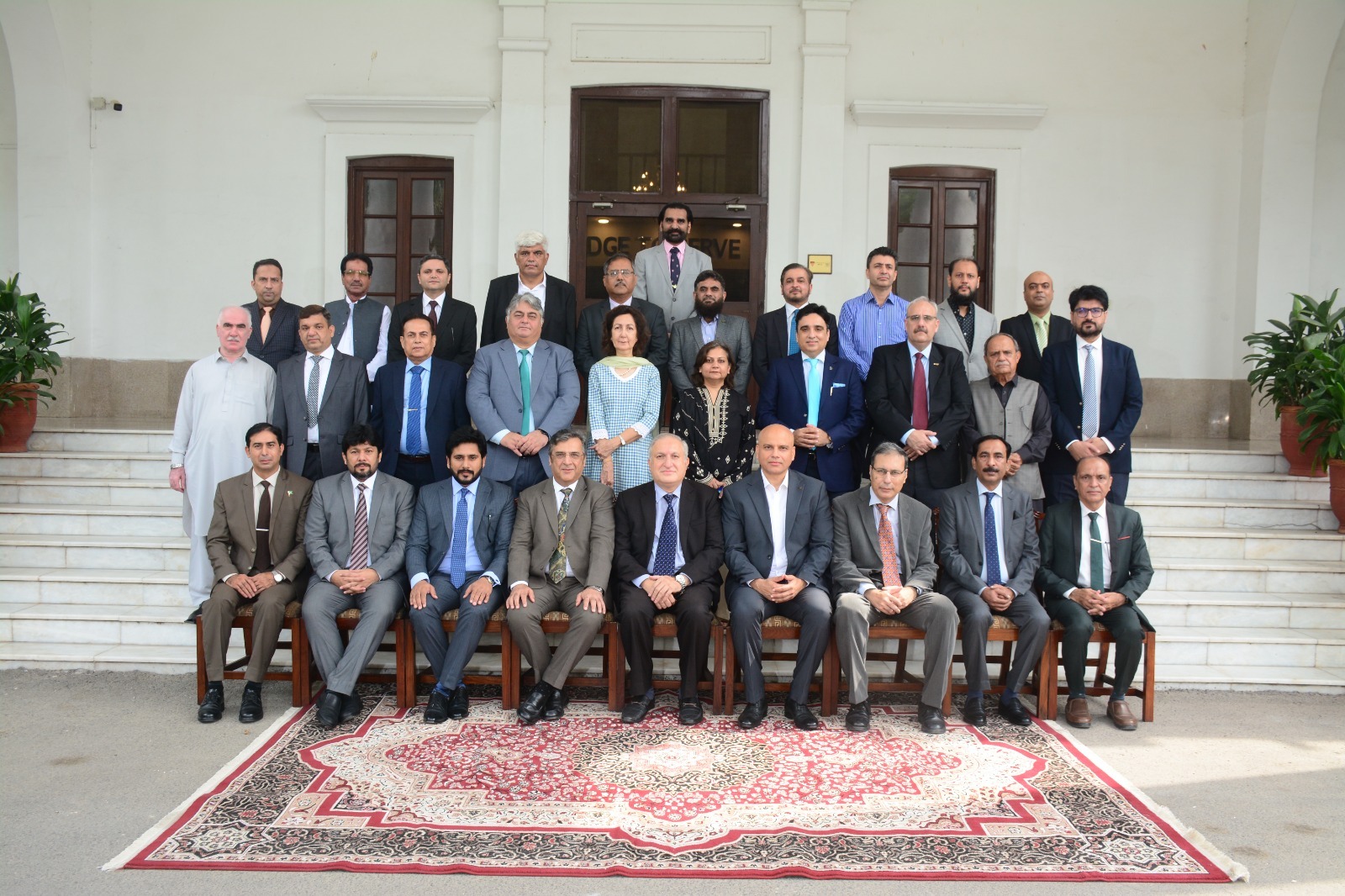
      LAHORE: The Executive Development Institute (EDI) of the National School of Public Policy (NSPP), Lahore, successfully conducted the fifth course of its three-day Directors’ Training Program (DTP) for State-Owned Enterprises (SOEs) from August 19 to 21, 2026. The training initiative was approved by the Securities and Exchange Commission of Pakistan (SECP) and focused on enhancing corporate governance, leadership and institutional performance within SOEs. A total of 21 participants from across Pakistan attended the program, representing federal and provincial governments as well as the private sector. Participants included officials and executives from the Ministry of Industries and Production, SECP, Pakistan Civil Aviation Authority, Pakistan Airports Authority, NESPAK, PASSCO, Northern Power Generation Company Limited, WAPDA, Water and Sanitation Services Company Haripur, Punjab Mineral Company, Punjab Police, Universal Service Fund, Pakistan Kidney and Liver Institute and Research Center, and Lahore Development Authority. Rector NSPP Mr. Farhan Aziz Khawaja welcomed the participants and highlighted the importance of strengthening corporate governance through quality professional training. He said the program aimed to establish a new benchmark in governance training with the support of SECP. He also emphasized the importance of transparency, accountability and responsible leadership in public-sector organizations. Dr. Naveed Elahi, Dean EDI, provided an overview of the training program and explained its focus on improving SOE governance and performance through effective leadership. He said the course addressed contemporary governance requirements, including directors’ legal responsibilities, board effectiveness, risk management and ethical decision-making. He encouraged participants to actively engage in case studies, simulations, discussions and networking opportunities throughout the training. The program featured a distinguished panel of guest speakers, including Mr. Abdul Rehman Warraich former SECP Commissioner; Dr. Ishrat Hussain, former Advisor to the Prime Minister; Mr. Kashif Ahmad Noor Military Accountant General; Mr. Farhan Aziz Khawaja, Rector NSPP/DG CSA; Dr. Irum Saba Director, IBA Karachi; Mr. Muhammad Anwar Sheikh retired Federal Additional Secretary, Finance Division; Mr. Mairaj A. Ariff, former Director General, NIPA Quetta; Dr. Kashif Zafar Dean-SST, UMT Lahore; Mr. Imtiaz Mahmood Company Secretary, SNGPL; Mr. Tariq Bajwa former Governor State Bank of Pakistan and Ex-SAPM on Finance; and Mr. Salman Amin Member, Competition Commission of Pakistan. The three-day course covered a wide range of topics, including principles of corporate governance, SOE reforms and legal frameworks, government stewardship, directors’ selection and performance evaluation, external and internal audits, audit committees, organizational culture, Islamic finance, financial risk governance, public service obligations, competitive neutrality, business planning, cybersecurity, digitization, reporting and disclosure, board composition and structure, as well as board simulations and case studies. During the closing session, Rector NSPP thanked the participants for their active participation and valuable contributions. He also appreciated the efforts of the Dean EDI and his team in successfully organizing the program. Participants showed keen interest throughout the course and actively participated in question-and-answer sessions. At the conclusion of the training, Rector NSPP, along with the Dean EDI, distributed certificates among the participants, formally marking the successful completion of the fifth Directors’ Training Program for State-Owned Enterprises.

Leave a Reply

Your email address will not be published. Required fields are marked *