shooter kills oregon
|

Shooter kills 4 at Oregon elementary school and is shot dead by citizen

A 16-year-old shooter opened fire on Thursday, October 15, at an elementary school in Bend, Oregon, killing four people, including three children, before being killed by an armed person who had pursued the assailant into the school, police said.

The shooter entered the school by shooting through locked doors, police said, without offering any details beyond the shooter’s age.

The dead were children aged 5, 8 and 11 and one teacher. In addition, a 7-year-old student and a 54-year-old teacher were taken to hospital with critical injuries, Bend Police Chief Mike Krantz told a press conference.

Person, Car, Transportation
RESPONSE. Emergency personnel direct traffic at the scene of a shooting at Silver Rail Elementary School in Bend, Oregon, US, October 15, 2026. Reuters

Oregon Governor Tina Kotek, appearing at the same briefing, thanked the community member who “heroically intervened to stop further loss of life.”

“No parent should have to have this kind of day, and no community should have to live through this kind of day, and as we learn more about the children and the adults who have been killed or injured, and their families and their loved ones, we are going to do a lot of crying, and we are going to cry together, and we’re probably going to cry privately,” Kotek said.

Krantz said the community member, whom he did not identify, had seen the suspect enter the school and pursued him.

The shooting took place in Bend, a city of about 100,000 residents in rural central Oregon, 280 km southeast of Portland, in the Oregon high desert adjacent to the Deschutes National Forest.

Silver Rail Elementary School serves kindergarten through fifth grade, roughly ages 5 to 11, and has about 450 students and 40 staff members, officials said.

Police said they received a call around 1 pm (2000 GMT) that “indicated that an unknown man had shot into a car” at Silver Rail Elementary School.

Moments later, emergency dispatchers received multiple calls “reporting that a person had entered the school and begun shooting,” police said in a statement.

Officers arrived within three minutes and found that the suspect had been shot dead. – Rappler.com


Similar Posts

  • | |

    Oman oil spill spreads dramatically, nearing scale…

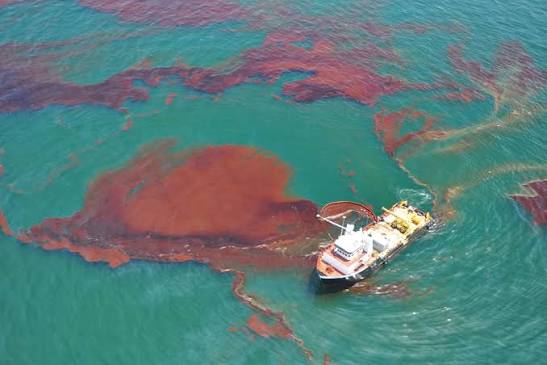
    An oil spill off the coast of Oman is rapidly expanding into one of the worst maritime environmental disasters in years after weeks of largely unchecked spread, according to international agencies, satellite imagery and environmental organizations. The slick, which originated from a grounded tanker carrying Russian crude, had reached Oman’s mainland by Wednesday, the United Nations shipping agency confirmed. John Amos, an oil spill specialist who reviewed satellite imagery, said the affected area now covers more than 2,000 square kilometers. The vessel involved, the Caroline Bezengi, was carrying an estimated 800,000 barrels of Russian oil and operates under international sanctions. It ran aground on June 30 near an Omani island that forms part of a protected marine nature reserve. The tanker first reported trouble off the coast of Yemen on June 8, and maritime sources said an explosion appeared to have occurred on board. No party has claimed responsibility for any attack, though the ship was navigating waters tied to two separate conflicts during its voyage from Russia to India. The tanker departed the Black Sea port of Novorossiysk in April, a region central to the ongoing war between Russia and Ukraine. Ukrainian forces have targeted vessels belonging to the so called shadow fleet used to transport Russian oil, a network that includes the Caroline Bezengi. Ship tracking data shows the tanker then passed through the Suez Canal in late May before sailing near Yemen, where Iran aligned Houthi forces have become entangled in the broader regional conflict involving the United States, Israel and Iran. A tangled set of war related and sanctions related shipping regulations is already complicating the emergency response and could further delay efforts to contain the disaster, according to insurers and analysts. The IOPC Funds, the intergovernmental body responsible for compensating tanker spill damages, told a foreign news agency it will not cover cleanup costs since the incident is being classified as an act of war rather than an ordinary accident. The 25 year old tanker also lacks coverage from any recognized Western insurer. Amos, who serves as chief executive of the environmental nonprofit SkyTruth, said the worst case outcome would involve no adequate response capable of preventing further damage. He said the spill’s scale could ultimately rival the 1989 Exxon Valdez disaster and noted that the tanker is comparable in size to the Sanchi, an Iranian vessel that collided with a freighter off China in 2018 in what became the world’s worst tanker disaster in decades. Slick accelerates toward mainland The spill was first identified by analysts in early July and has since begun reaching Oman’s mainland, according to the International Maritime Organization. A spokesperson for the agency said oil is drifting offshore northeast of Al Qibliyyah Island, with some already washing ashore, and confirmed that contingency planning for the spill is underway. The IMO said seasonal monsoon weather has restricted access to the tanker and delayed salvage efforts. Satellite images show the vessel grounded at Al Qibliyyah Island, part of a nature reserve that includes the Hallaniyat Islands and provides habitat for endangered sea turtles, humpback whales and coral reef ecosystems, all of which now face heightened risk from the spreading oil. Omani officials said Monday the slick covers nearly 400 square kilometers, though they have not responded to requests for additional detail on containment efforts beyond confirming the use of booms to limit the spread. Environmental groups and independent specialists estimate the true size at several times that figure, and say the rate of spread has accelerated sharply since early August. Greenpeace reported Tuesday that the affected area grew from around 45 square kilometers at the end of July to 150 square kilometers by early August, then quadrupled to roughly 600 square kilometers within just two days, according to Hanen Keskes, the group’s political campaigns lead for the Middle East. Amos’s estimate of 2,000 square kilometers suggests the spill has grown more than 40 times larger since the start of August alone. Amos said containing the disaster will require more than floating booms, including stabilizing the grounded vessel and transferring any remaining crude to another tanker. He warned that delays in salvage operations will only worsen the tanker’s condition and make the eventual recovery effort more complicated and dangerous.

  • | |

    France wildfires force 150,000 to evacuate amid he…

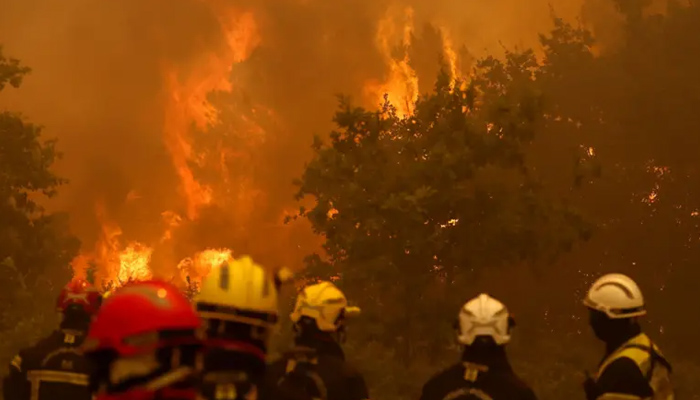
    A relentless heatwave has triggered massive wildfires across southwestern France, forcing around 150,000 people to evacuate as flames swept through forests and threatened homes in one of the country’s most popular tourist destinations. French authorities ordered the complete evacuation of Cap Ferret, a renowned coastal resort, after fast-moving fires engulfed nearly 47,000 acres of forest. Officials said more than 100 homes had been damaged as firefighters continued battling the blaze under extreme weather conditions. The rapidly spreading fire has prompted an extensive emergency response, with President Emmanuel Macron directing the French military to assist firefighting teams in containing the flames and protecting nearby communities. The crisis has also spread beyond France. In neighboring Spain, authorities declared the country’s first-ever national emergency over a wildfire near Madrid, highlighting the growing impact of the ongoing heatwave across southern Europe. According to media reports, the Spanish wildfire has destroyed more than 43 homes, while approximately 19,000 residents living in mountainous areas west of Madrid were ordered to evacuate. More than 2,000 emergency personnel, supported by 10 firefighting aircraft, have been deployed to contain the flames. Officials warned that soaring temperatures, dry vegetation and strong winds have created ideal conditions for wildfires, making firefighting operations increasingly difficult. The latest disaster comes only weeks after France experienced one of its deadliest heatwaves in recent years. According to the country’s national public health agency, 21,674 deaths were recorded between June 17 and July 2, compared with an expected 15,910 deaths under normal conditions. The agency said the period saw 5,764 excess deaths—an increase of 36% above normal mortality levels—underscoring the severe health impact of prolonged extreme heat. Climate experts have repeatedly warned that rising global temperatures are increasing the frequency and intensity of heatwaves and wildfires across Europe. As emergency crews continue to battle the blazes in France and Spain, authorities remain on high alert, warning residents that worsening weather conditions could fuel further fires in the coming days.

  • | |

    Irish Football association withdraws support for FIFA President Gianni Infantino

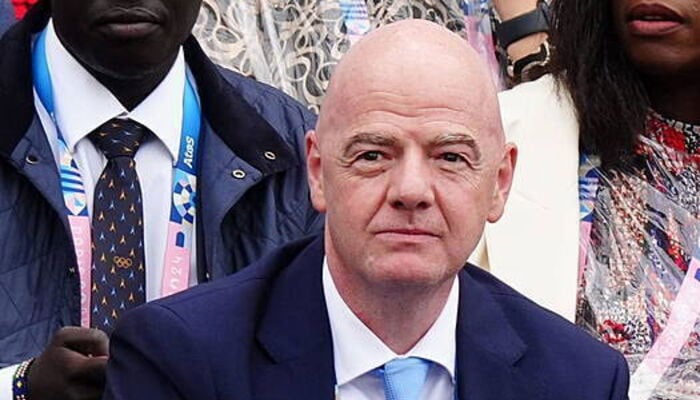
      The Irish Football Association (FAI) has formally confirmed that it has withdrawn its support for FIFA President Gianni Infantino, delivering another setback to his bid to secure a fourth term as the head of world football’s governing body. According to international media reports, the FAI informed Infantino of its decision through a formal letter. The association said that recent developments had raised serious concerns regarding governance, transparency and consultation within FIFA. The decision reflects growing unease among football organisations over the way important matters have been handled under Infantino’s leadership. The withdrawal of support from Ireland adds to increasing pressure on Infantino as he prepares to seek another term as FIFA president. Infantino has led FIFA since 2016 and was re-elected in 2019 and again in 2023. A fourth term would extend his leadership of the organisation, but recent disagreements with several football bodies could make the process more challenging. European football’s governing body UEFA, along with CONCACAF and the Asian Football Confederation, have already expressed serious concerns about Infantino’s leadership. These organisations have accused him of undermining trust and have raised questions about governance and communication. The FAI’s decision is particularly significant because Ireland is one of the associations within the British Isles football community, where several national football bodies have recently reconsidered their positions regarding Infantino. The Football Association of Wales became the first of the four British home nations to withdraw its support for Infantino. The English Football Association has also stepped back from supporting the FIFA president. The latest decision by the Irish association further increases the number of football bodies distancing themselves from Infantino. Meanwhile, the Northern Ireland Football Association has also expressed support for UEFA’s position. Although the four home nations operate independently in international football, their positions can carry political and symbolic importance within the wider European football structure. The growing disagreement centres largely on concerns about FIFA’s governance practices and the level of consultation with national and regional football organisations. Critics believe that major decisions affecting international football should involve greater communication and consultation with the organisations directly responsible for the sport in their respective regions. The FAI’s letter is therefore being viewed as another indication of the growing divisions between FIFA leadership and some of its member associations. While withdrawing support does not automatically prevent Infantino from seeking another term, it demonstrates that his leadership is facing opposition from several influential football organisations. Infantino has previously defended FIFA’s approach and has promoted reforms aimed at expanding football’s global reach and increasing opportunities for national associations. Under his presidency, FIFA has also pursued major changes to international competitions and commercial strategies. However, disagreements over governance and transparency have increasingly become a source of tension between FIFA and some football confederations. With the Irish Football Association now joining other organisations in withdrawing or reconsidering their support, Infantino’s campaign for a fourth presidential term faces a growing political challenge. The developments are likely to increase pressure on FIFA to address concerns about transparency, consultation and trust before the next presidential election. The extent to which other national football associations follow Ireland, Wales and England could play an important role in determining the strength of Infantino’s bid for another term. For now, the FAI’s decision represents another significant warning for the FIFA president as opposition to his leadership continues to grow across parts of the international football community.

Leave a Reply

Your email address will not be published. Required fields are marked *