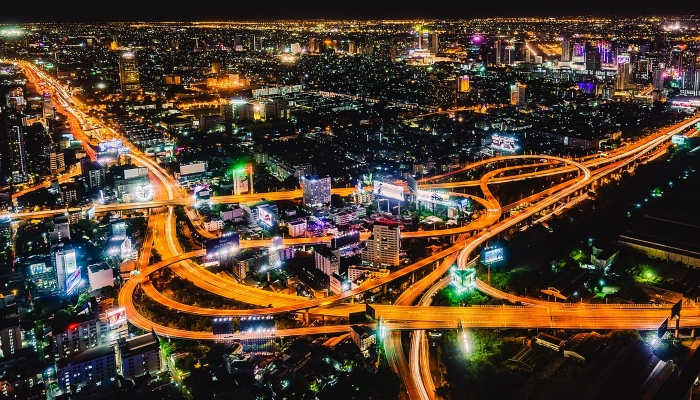
nepal rescuers reach
| |

Nepal rescuers reach remote areas, electricity restored nearly a week after devastating floods

KATHMANDU, Nepal – Nepali rescuers built temporary bridges to reach remote areas and dug through the ruins of hydropower projects in the Himalayas to rescue close to 300 trapped workers, nearly a week after devastating floods left a trail of destruction across the country’s towns and valleys.

At least 639 people remain stuck in several devastated hydropower stations that have become the focus of rescue efforts, the country’s disaster management authority said on Tuesday, with the total death toll going up to 987. About 4,000 are still missing.

“Thousands of citizens have lost their homes, families, loved ones and property,” Prime Minister Balendra Shah said in a late-night social media post on Monday. “The government understands the immense pain they are enduring.”

Police official Bipin Regmi said a search team recovered 24 bodies from a house in Betrabati village in Nuwakot district.

“We are reaching new areas and recovering bodies,” Regmi told Reuters.

Foreign help flows in

In China, rescue teams worked through the night to reopen access to the Nepali border, on a steep mountain gorge with unstable cliffs on one side and fast-flowing river channels on the other.

Beijing will send DNA testing experts to disaster-hit areas at the Nepal-China border as well as a second batch of relief supplies later on Tuesday, its foreign ministry said, adding that equipment would include drones and water purification.

South Korea, nine of whose nationals were working at a hydropower project and are missing, also said it will send a 44-member emergency relief team to support search-and-rescue operations in the Rasuwa region.

Nepal last week turned down foreign involvement in general search and rescue but said it needed specialized services and advanced technological support in areas such as life-detecting machines, large refrigerators, Bailey bridges.

Giant neighbors India and China have led the foreign assistance, and the US, Japan, South Korea, Singapore, Australia, EU countries, and the UAE, have also contributed.

“Some of the support has already arrived,” foreign ministry spokesperson Lok Bahadur Chhetri told Reuters.

Aid worth more than $42 million had poured into the country after the disaster, Shah said, and the government expected the contributions to increase.

Rescue efforts focus on hydropower stations

Shah said 279 workers had been rescued from hydropower projects, with joint teams of Nepal, India, and China working on search and rescue operations.

Pictures and videos shared by rescue teams showed earth-moving equipment digging and shovelling mud and rocks under lights in the dark of the night as workers watched. Soldiers used torchlight in a big pit they had created to look for space to get into one tunnel.

“Our first rescue observation at Trishuli Hydro Power plant shows that it is not humanly possible to go into the tunnel,” Asish Gurung, a mountain guide helping in the tunnel rescue, told Reuters from Haku village in Rasuwa district.

“We need machines like bulldozers and excavators. There are two of them here now. One is not functioning and the other is being repaired. There may be about 500 people trapped inside,” he said.

There has been a boom in hydropower projects in Nepal since the turn of the century as the mountainous country sought to take advantage of its Himalayan water resources to address chronic domestic power shortages and exploit prospects for selling electricity to southern neighbor India.

Hydropower projects in Nepal’s mountains need tunnels to carry water through the steep terrain, allowing developers to exploit the sharp elevation drop between Himalayan rivers and powerhouses to generate electricity.

Nepal PM highlights climate change risks

A total of 583 foreign nationals were still missing, the disaster management authority said, as family members desperately pursued news of their loved ones.

An Australian hiker who went missing after the flood was located after she made contact with the Australian embassy on Saturday, Australian media reported.

Cara Severino, 26, was trekking in the Langtang area when the flood hit and said in a statement that she survived because of the “amazing people” she was with at a national park when the flood hit.

PM Shah said the catastrophic event signaled the growing risks that the Himalayan region faces.

“The region must therefore remain vigilant. The time has come for us to strongly raise before the international community the disasters we are experiencing as a consequence of climate change,” Shah said in his post.

Last week’s flood was “caused by glacier instability under the long-term effects of global warming”, China’s state broadcaster said on Monday. – Rappler.com
Similar Posts

  • |

    UK expands Global Talent visa scheme to attract world’s top scientists and engineers

    In a major boost to Britain’s science and innovation ambitions, the UK government has announced a significant expansion of its Global Talent visa programme, allowing more than 100 research-intensive companies to sponsor leading scientists and engineers from around the world. Previously focused primarily on universities and research institutions, the expanded scheme will now enable eligible private-sector research organisations to recruit exceptional international talent directly. The move is aimed at strengthening the UK’s position as a global leader in cutting-edge technologies, including artificial intelligence (AI), quantum computing, nuclear fusion, clean energy and life sciences. The government said attracting the world’s brightest researchers would accelerate scientific breakthroughs, support innovation-led industries and create highly skilled jobs across every region of the UK. The initiative forms part of a broader strategy to boost economic growth through investment in advanced research and technology. By widening access to the Global Talent visa route, ministers hope Britain will remain one of the world’s most attractive destinations for leading researchers, scientists and engineers amid increasing international competition for high-skilled talent.

  • |

    US car leasing declines as higher costs hit buyers

    Car leasing in the United States has dropped significantly in recent years as automakers reduce incentives and consumers struggle with rising monthly payments. Before the COVID-19 pandemic, leasing accounted for nearly 30% of new vehicle deals in the US. However, the share fell sharply during the post-pandemic vehicle shortage and has not fully recovered. In the first half of 2026, leasing represented around 23% of new car transactions. Industry experts say one of the biggest reasons behind the decline is the end of attractive lease offers that previously encouraged customers to choose leasing over buying. Automakers have become less willing to provide low-cost lease deals as they focus on maintaining tighter vehicle inventories and reducing discounts. As a result, many customers returning after the end of their lease terms are facing significantly higher monthly payments. Dealers say some customers are surprised to find their next lease costing hundreds of dollars more than their previous agreement, causing many to reconsider leasing altogether. The decline in leasing has added pressure to vehicle affordability in the US market. Some buyers are now choosing longer financing plans, including loans lasting up to seven years, to manage higher vehicle prices. Leasing usually allows customers to drive newer vehicles with lower monthly payments compared with traditional financing. The average lease payment remains lower than loan payments, but industry analysts say the gap has narrowed significantly. Experts believe automakers changed their approach after the 2021–2023 vehicle shortage caused by semiconductor supply disruptions. Limited inventories helped companies reduce incentives and maintain stronger pricing power. The decline in leasing is also affecting the used-car market. Vehicles returned after three-year leases have traditionally provided dealerships with a steady supply of affordable pre-owned cars. With fewer leased vehicles coming back to the market, used-car supplies have tightened and prices have increased. Data from industry analysts shows that average prices for three-year-old used vehicles have risen substantially compared with pre-pandemic levels. Dealers warn that fewer lease customers could also weaken long-term customer loyalty, as leasing often brings buyers back to showrooms every few years for new vehicles

  • |

    Bangkok’s original name has 168 characters

    Did you know that the city with the world’s longest official name is also one of the most famous cities on Earth? Interestingly, the name by which most people know this city is not its official name. The city is Bangkok, the capital of Thailand whose full ceremonial name consists of 168 characters. If you ever visit Thailand, you are unlikely to hear local residents recite the full name as even many of them cannot remember it. The city’s full ceremonial name is Krungthepmahanakhonamonrattanakosinmahintharaayuthayamahadilokphopnoppharatratchathaniburiromudomratchaniwetmahasathanamonpimanawatansathitsakkathattiyawitsanukamprasit. Bangkok’s official ceremonial name is recognized by Guinness World Records as the longest place name in the world. If you find it impossible to remember, you’re certainly not alone. The city also has a shorter official name in Thai: Krung Thep Maha Nakhon which is commonly shortened further by locals to simply Krung Thep. In 2022, the Thai government announced that both Krung Thep Maha Nakhon and Bangkok would be accepted as official Romanized names for the capital. The 168-character ceremonial name is derived from Sanskrit and Pali and its shorter form roughly translates to “The Great City of Angels.” However, historians are still uncertain why such an extraordinarily long ceremonial name was originally adopted. How did name “Bangkok” come about? According to popular accounts, the name Bangkok predates the establishment of the city as Thailand’s capital. It is believed to have originated from the area’s former village or district name possibly derived from the Thai words “Bang” (a village or riverside settlement) and “Makok” referring to a type of wild plum or olive tree that once grew abundantly in the area. Over time, the name Bang Makok is thought to have evolved into Bangkok, the name by which the city became known internationally.

Leave a Reply

Your email address will not be published. Required fields are marked *