irish football association
| |

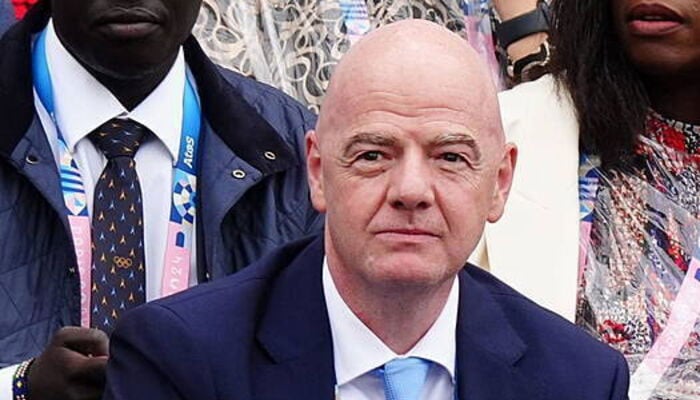
Irish Football association withdraws support for FIFA President Gianni Infantino


The Irish Football Association (FAI) has formally confirmed that it has withdrawn its support for FIFA President Gianni Infantino, delivering another setback to his bid to secure a fourth term as the head of world football’s governing body.

According to international media reports, the FAI informed Infantino of its decision through a formal letter. The association said that recent developments had raised serious concerns regarding governance, transparency and consultation within FIFA. The decision reflects growing unease among football organisations over the way important matters have been handled under Infantino’s leadership.

The withdrawal of support from Ireland adds to increasing pressure on Infantino as he prepares to seek another term as FIFA president. Infantino has led FIFA since 2016 and was re-elected in 2019 and again in 2023. A fourth term would extend his leadership of the organisation, but recent disagreements with several football bodies could make the process more challenging.

European football’s governing body UEFA, along with CONCACAF and the Asian Football Confederation, have already expressed serious concerns about Infantino’s leadership. These organisations have accused him of undermining trust and have raised questions about governance and communication.

The FAI’s decision is particularly significant because Ireland is one of the associations within the British Isles football community, where several national football bodies have recently reconsidered their positions regarding Infantino.

The Football Association of Wales became the first of the four British home nations to withdraw its support for Infantino. The English Football Association has also stepped back from supporting the FIFA president. The latest decision by the Irish association further increases the number of football bodies distancing themselves from Infantino.

Meanwhile, the Northern Ireland Football Association has also expressed support for UEFA’s position. Although the four home nations operate independently in international football, their positions can carry political and symbolic importance within the wider European football structure.

The growing disagreement centres largely on concerns about FIFA’s governance practices and the level of consultation with national and regional football organisations. Critics believe that major decisions affecting international football should involve greater communication and consultation with the organisations directly responsible for the sport in their respective regions.

The FAI’s letter is therefore being viewed as another indication of the growing divisions between FIFA leadership and some of its member associations. While withdrawing support does not automatically prevent Infantino from seeking another term, it demonstrates that his leadership is facing opposition from several influential football organisations.

Infantino has previously defended FIFA’s approach and has promoted reforms aimed at expanding football’s global reach and increasing opportunities for national associations. Under his presidency, FIFA has also pursued major changes to international competitions and commercial strategies.

However, disagreements over governance and transparency have increasingly become a source of tension between FIFA and some football confederations.

With the Irish Football Association now joining other organisations in withdrawing or reconsidering their support, Infantino’s campaign for a fourth presidential term faces a growing political challenge.

The developments are likely to increase pressure on FIFA to address concerns about transparency, consultation and trust before the next presidential election. The extent to which other national football associations follow Ireland, Wales and England could play an important role in determining the strength of Infantino’s bid for another term.

For now, the FAI’s decision represents another significant warning for the FIFA president as opposition to his leadership continues to grow across parts of the international football community.

Similar Posts

  • |

    Child’s refusal to buckle up leads to flight cancellation in Canada

    A Porter Airlines flight from Victoria to Toronto was cancelled after a young child refused to sit in the assigned seat and fasten the seat belt. The incident happened on flight PD444 at Victoria International Airport in British Columbia. The aircraft had already left the terminal. It was preparing for takeoff when crew members noticed the child standing on the seat. Flight attendants tried to resolve the situation. The child’s parents also attempted to convince the youngster to sit down. However, the child continued to resist. The crew could not proceed with the flight while the safety issue remained unresolved. Aviation safety rules require passengers to remain seated and use seat belts when instructed. The aircraft therefore had to return to the terminal. The family was removed from the plane. Their baggage also had to be taken off the aircraft. Airport and airline staff then had to complete the required travel and security procedures. The process took considerable time. The procedures continued beyond 12:30am. Victoria International Airport closes its main runway at 12:30am every night. Because the runway had already closed, the aircraft could not take off again that night. The cancellation caused further inconvenience for the other passengers. They were forced to spend the night in Victoria. Porter Airlines apologised to the affected passengers for the disruption. The airline arranged alternative flights for them the following day. The incident highlights how even a seemingly minor safety issue can cause major delays when an aircraft is preparing for departure. Airlines are required to ensure that all passengers follow safety instructions before takeoff

  • | |

    Greek police fast-track toxicology tests in probe …

    Greek investigators say they are prioritizing toxicology testing in hopes of determining within days how a Scottish woman died after her body was discovered inside a suitcase in Athens. Elisabeth-Jane Ross, 38, was found in an abandoned building in the Kypseli district of the Greek capital on July 18, reportedly by a homeless man who came across the body. Known to family as Lisa, she is believed to have traveled to Greece from Edinburgh in late June and was reported missing on July 15. Greek authorities are also working to locate American friends of Lisa’s who they say were staying in the same Kypseli area at the time she disappeared. Police have not yet determined whether her death is being treated as a homicide. A post mortem examination is currently underway, and investigators say toxicology results could help establish whether foul play was involved in her death. Such tests typically take anywhere from several weeks to a few months to complete, depending on case complexity and the workload of forensic laboratories. However, police spokesperson Konstantina Dimoglidou told a Scottish broadcaster on Saturday that authorities have made the case a priority and expect results within days, saying investigators need answers on how she died without further delay. According to police accounts, Lisa initially stayed in the Keratsini area, located roughly six miles west of central Athens, with Greek friends. She told them that on July 15 she planned to travel to Kypseli to meet American friends or acquaintances. Investigators are now trying to identify those individuals. Officials also noted that her mobile phone continued transmitting a signal and sending messages for several days after her death is believed to have occurred. The UK’s Foreign, Commonwealth and Development Office confirmed Wednesday that it is providing consular support to Lisa’s family and remains in contact with Greek authorities. Scotland’s First Minister John Swinney described the case as absolutely appalling and said the Scottish government and the FCDO would continue supporting her family. Police Scotland said it is also providing assistance to the family as the investigation continues.

  • | | |

    Iran says Pakistan ties gaining greater importance

    TEHRAN: Iran has described its relationship with Pakistan as increasingly important, saying Islamabad has played a significant role as a mediator since the outbreak of the regional conflict. Iranian Foreign Ministry spokesperson Esmaeil Baghaei said the two neighbouring countries were maintaining close diplomatic contacts. He also confirmed that Iranian Foreign Minister Abbas Araghchi and Parliament Speaker Mohammad Bagher Ghalibaf had been invited to visit Islamabad. Baghaei said the two officials would travel to Pakistan at a suitable time. He did not announce a specific date for the visit. He described reciprocal visits between the two countries as a natural part of their growing bilateral relationship. The Iranian official also played down concerns that the recently signed defence agreement between Pakistan, Saudi Arabia and Turkiye was aimed at Tehran. Pakistan, Saudi Arabia and Turkiye signed the Makkah Joint Defence Agreement on August 7. The agreement seeks to strengthen collective defence cooperation and provides for a joint response if any member comes under attack. Baghaei said Tehran did not consider the agreement a direct threat to Iran. He said regional countries were increasingly seeking security arrangements based on their own regional realities rather than relying entirely on external powers. He maintained that regional cooperation could contribute to stability if such arrangements remained inclusive and focused on preventing conflict. Baghaei also said Iran was not prepared to resume direct negotiations with the United States while Tehran believed Washington was violating an interim agreement. The Iranian government has also linked the reopening of the Strait of Hormuz to a number of demands. These include compensation for damage caused during the conflict and an end to the US naval blockade of Iranian ports. Meanwhile, Iran and Oman are continuing discussions on arrangements for commercial shipping through the Strait of Hormuz. Baghaei said the talks were progressing in a constructive manner. He said the two sides had reached an understanding on a proposed map for shipping traffic and were working on several technical details. According to the Iranian official, the proposed arrangement would establish mechanisms for safer maritime movement. It would also address environmental protection and maritime crimes. He stressed that the discussions with Oman were focused on ensuring safe international shipping and were separate from broader political disputes. Baghaei nevertheless reiterated that Tehran would not allow the full reopening of the strategic waterway unless its conditions concerning Washington were addressed. In a separate development, Iran has appointed former Islamic Revolutionary Guard Corps commander Mohsen Rezaei to a senior position in the Supreme National Security Council. Rezaei has replaced Mohammad Baqer Zolqadr as secretary of the body responsible for coordinating Iran’s security and foreign policy. No official reason was immediately given for the change. It also remains unclear whether the appointment will lead to any major shift in Iran’s security policy. Rezaei, 71, commanded the Revolutionary Guards from 1981 to 1997. He later served for more than two decades as secretary of Iran’s Expediency Discernment Council and also held the position of vice president for economic affairs. Iran’s Supreme National Security Council brings together senior military, intelligence and government officials. It is formally chaired by the president, while the supreme leader retains ultimate authority over major state matters. A separate decree appointed Rezaei as the supreme leader’s representative on the council. Zolqadr was instead named as a political adviser. The developments come as Iran faces heightened regional tensions and continues efforts to manage its relations with neighbouring countries and major international powers.

  • |

    Trump backs Infantino as FIFA power struggle intensifies

    WASHINGTON: US President Donald Trump has thrown his support behind embattled FIFA president Gianni Infantino, warning that removing the football chief would be a “terrible mistake” as opposition to Infantino grows within several major football confederations. Trump’s intervention came after UEFA, CONCACAF and the Asian Football Confederation (AFC) jointly criticised Infantino in an unusually strong open letter, accusing him of damaging trust and placing his authority above the wider football community. “If, for any reason, they even considered replacing President Gianni Infantino,” Trump said on Truth Social, “FIFA would be making a terrible mistake.” The US president described Infantino as “fantastic” and praised his leadership of the expanded 2026 World Cup, which was hosted by the United States, Canada and Mexico. Trump also argued that the tournament had been the most successful World Cup ever and warned that FIFA could struggle to maintain the same level of success and profitability without Infantino. The public backing is significant because Infantino is facing growing resistance over a controversial proposal to bring private investment into FIFA competitions, including the World Cup. The plan was eventually withdrawn after fierce opposition from European football authorities. UEFA had threatened to boycott future World Cups if the investment proposal went ahead, describing the arrangement as an opaque and questionable deal. The pressure ultimately played a major role in Infantino abandoning the plan. The FIFA president received renewed support from senior officials during an emergency meeting in Morocco last week. However, UEFA, CONCACAF and AFC dismissed that backing, arguing that the meeting did not address the concerns raised by the confederations. The three bodies accused Infantino of failing to uphold the principles of accountability and collective leadership. They stressed that football’s governing structure should not revolve around one individual. The dispute could have major consequences ahead of the FIFA presidential election scheduled for March 2027. Infantino, who has led FIFA for a decade, is seeking a fourth and final term. Candidates must declare their intentions by November 18. CONCACAF president Victor Montagliani is regarded as a potential challenger, although Infantino continues to enjoy support from several influential football bodies. The Confederation of African Football has backed him, while South American governing body CONMEBOL remains broadly supportive. Several individual national associations have also expressed support. However, FIFA’s voting system means individual member associations—not confederations—will ultimately decide the election. Infantino’s position had appeared secure after the successful 48-team World Cup, but the private investment controversy has dramatically changed the political landscape. The latest confrontation has therefore turned the road to the 2027 FIFA election into an increasingly intense power struggle, with Trump now openly backing Infantino while several major football authorities demand greater accountability and collective decision-making.

Leave a Reply

Your email address will not be published. Required fields are marked *