cop31 climate summit
| | |

COP31 climate summit risks failure as talks go deep into overtime

ANTALYA, Turkey – The COP31 climate summit will either produce a good deal or no deal at all, the European Union’s top climate official said on Saturday, November 21, as talks stretched deep into overtime.

Negotiators from nearly 200 countries are struggling to bridge divisions over fossil fuels and climate finance, delaying an agreement at the two-week conference that had been scheduled to end on Friday, November 20.

“It’s either going to be a good deal, or it’s going to be no deal,” EU Climate Commissioner Wopke Hoekstra told reporters.

Asked about the chances of no deal emerging, he said, “We will find out.”

The last major breakdown in UN climate talks came in Copenhagen in 2009, when countries failed to adopt the Copenhagen Accord by consensus in a setback for multilateral climate diplomacy.

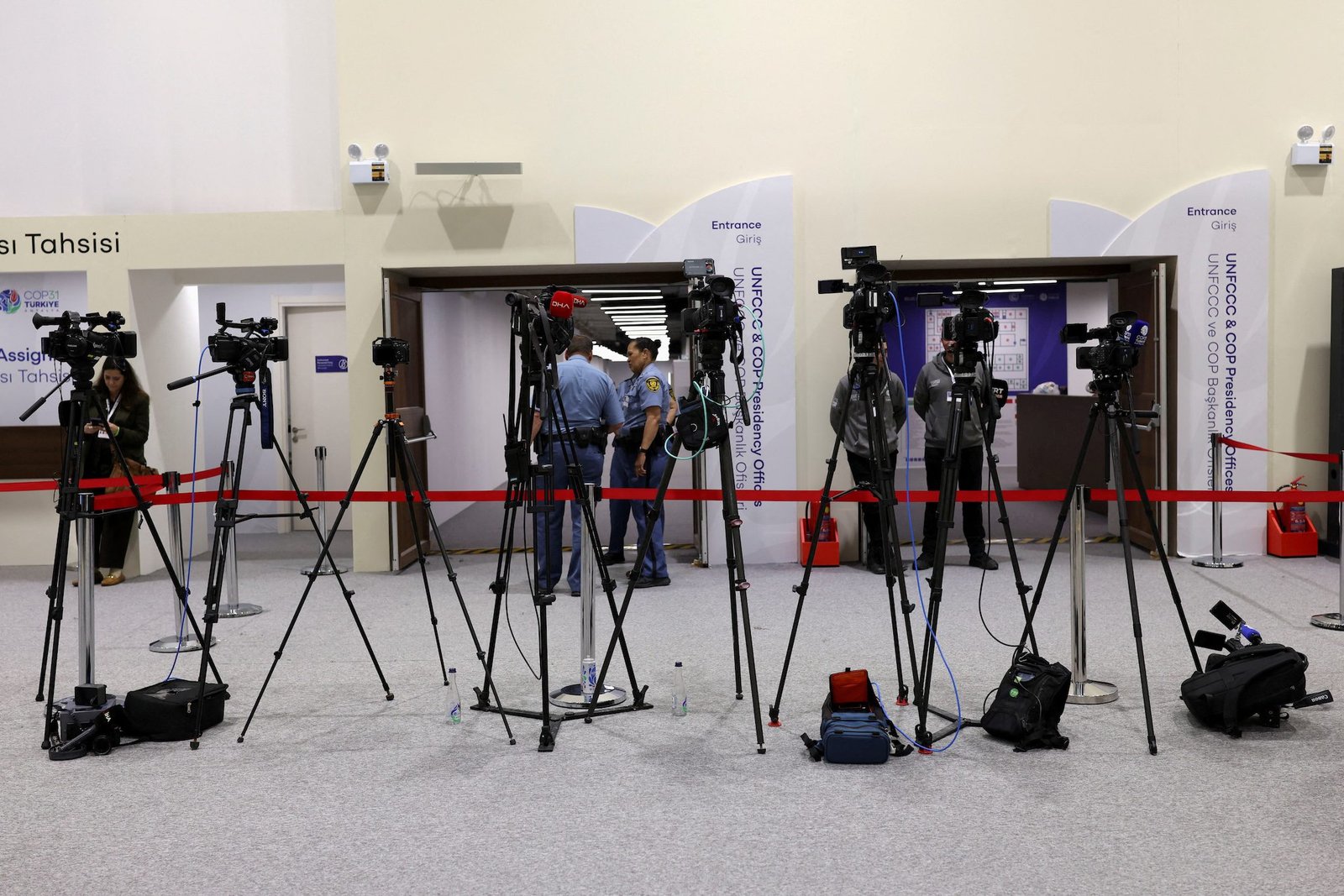
As workers dismantled catering stands and exhibits at the venue, delegations shuttled between meeting rooms to discuss tactics, while others rested as they awaited a new version of the negotiating text.

Turkey’s COP31 President Murat Kurum met officials from the EU, Australia and Saudi Arabia in an effort to break the deadlock, but acknowledged a deal could prove elusive.

“I call on every country to act responsibly,” he told reporters. “There is no benefit for anyone to ruin this process by getting hung up on words, phrases.”

The biggest sticking points are whether a final agreement should mention the fossil fuels driving global warming and whether it should include support for poorer countries adapting to climate change.

A draft deal published on Thursday, November 19, removed earlier references to ending fossil fuel use. Observers said Saudi Arabia and other major oil and gas producers had opposed the language.

The draft also dropped a proposed $120 billion target for finance to help developing countries adapt to climate change.

Negotiators had expected a revised draft on Friday. But by Saturday afternoon, with no new text on the table, hopes for significant changes had faded and frustration was mounting.

Delays

Recent climate summits have regularly overrun without collapsing, eventually producing agreements.

Isatou Camara, Gambia’s finance negotiator, said some countries appeared to be using delay tactics to pressure others into accepting a weaker outcome.

“This delay strategy, which has been used at previous COPs, could be so at the end when things are put on the table you accept because you are fed up, exhausted, and want to go home,” she said.

This year’s talks have been further complicated by war and rising living costs, which are competing for the attention of policymakers and the public.

The US, the world’s largest historical greenhouse gas emitter, is also absent from the talks for the second year in a row after President Donald Trump ended cooperation on climate policy, calling global warming a hoax.

A UN report last month found the world is on track to exceed 1.5 degrees Celsius (2.7 degrees Fahrenheit) of warming above pre-industrial levels, a threshold governments agreed under the 2015 Paris Agreement to try to avoid breaching.

The draft agreement acknowledges that projected overshoot and calls for faster deployment of technologies that remove greenhouse gases from the atmosphere to help bring temperatures back down.

Some delegations opposed including carbon-removal technologies, arguing that doing so could open the door to continued fossil fuel use.

“The fact there is loads of unfinished business at this COP shows there’s a big problem here,” said Brenda Mwale, Malawi’s loss and damage negotiator. “The question is, are we in a leadership crisis? Was there really a vision for this COP?” – Rappler.com
Similar Posts

  • |

    Tata chairman to step down amid trust tensions

    NEW DELHI: N. Chandrasekaran, chairman of Tata Sons, has decided not to seek another term at the helm of India’s major business conglomerate, bringing his leadership tenure towards an end after growing differences with the group’s influential charitable trust arm. Chandrasekaran, 63, said on Wednesday that he would remain chairman until his current term expires in February. He said greater certainty over the group’s future leadership was necessary because several major projects were at critical stages. The decision follows months of disagreement between Chandrasekaran and Tata Trusts, which controls about 66% of Tata Sons. The two sides have reportedly differed over several important strategic and governance issues. Among the disputed matters were the future ownership and structure of Tata Sons, whether the company should pursue a stock market listing, losses at Air India, the proposed departure of a minority shareholder and the composition of the board. Tata Sons had postponed a decision on Chandrasekaran’s reappointment in February after Noel Tata, chairman of Tata Trusts, opposed extending his tenure. Six months later, the issue remained unresolved. A person familiar with Chandrasekaran’s decision said the disagreement with Tata Trusts was the sole reason behind his decision not to seek another term. Tata Trusts has not publicly commented on the development. Leadership change comes at difficult time Chandrasekaran’s planned departure comes as the Tata Group faces challenges across several major businesses. Air India, which is controlled by Tata, has been struggling with losses following its return to private ownership. Tata’s automotive operations are also facing pressure, including weaker performance at Jaguar Land Rover. The group’s electronics business has additionally faced the consequences of a recent data leak that affected major customers, including Apple and Tesla. The leadership uncertainty immediately affected investor sentiment. Shares of Tata Consultancy Services, where Chandrasekaran spent most of his career, fell around 5% following news of his planned departure. Tata Motors also declined, while Tata Steel and Titan recorded smaller losses. From TCS intern to Tata chairman Chandrasekaran joined Tata Consultancy Services as an intern in 1987 and spent his entire corporate career with the information technology company. He rose through the ranks and became TCS chief executive in 2009. He was appointed chairman of Tata Sons in 2017. He became the first chairman of Tata Sons who was not a member of the Tata family or from the Parsi community. Under his leadership, Tata expanded its presence across technology, automobiles, aviation, electronics and consumer businesses. The Tata Group is one of India’s oldest and most prominent business organisations. Its companies operate across a wide range of sectors, with products and services ranging from salt and consumer goods to automobiles, hotels, aviation and software. The group’s publicly listed companies had a combined market value of hundreds of billions of dollars at the end of March, highlighting the potential significance of any leadership transition at Tata Sons. Tata’s history has also included previous disputes between its corporate leadership and charitable trusts. One of the most prominent occurred in 2016, when the Tata Sons board removed chairman Cyrus Mistry following a bitter dispute involving governance and the group’s leadership.

  • |

    Trump appoints Will Scharf as new White House counsel

    US President Donald Trump has named Will Scharf as the incoming White House counsel and assistant to the president, succeeding David Warrington on September 1, 2026. Warrington, who previously served as general counsel for Trump’s campaign and managed initial administration legal affairs, will be departing for the private sector. Scharf currently serves as the White House staff secretary, a role where he manages the daily flow of papers and documents reaching the president’s desk. In addition to these duties, he chairs the National Capital Planning Commission, where he helped fast-track approvals for a controversial $400 million White House ballroom project. A former federal prosecutor and appellate law clerk, Scharf joined Trump’s personal legal team in 2023. He played a central role in defending Trump across several high-profile legal battles, including the federal election interference case and the landmark presidential immunity ruling before the US Supreme Court. In his new post, Scharf will lead the administration’s legal strategy. His responsibilities will include overseeing executive privilege, managing judicial nominations, liaising with the Department of Justice, and preparing for potential congressional inquiries ahead of the upcoming midterm elections.

  • |

    Protests erupt in Bologna after man’s death during police restraint

    Thousands of people marched through the Italian city of Bologna after the death of a Moroccan born man who died while being restrained by police, prompting a criminal investigation and violent clashes that left dozens of officers injured. The protests were held in memory of Abderrahim Fakir, whose death on Sunday has sparked widespread public anger and renewed debate over police conduct in Italy. Demonstrators gathered to demand justice before a smaller group broke away from the main rally and clashed with riot police late into the night. Authorities said 64 police officers were injured during the unrest as protesters threw objects, confronted security forces and set two vehicles on fire. Police eventually brought the situation under control. The incident that led to the demonstrations began after officers responded to reports of a man behaving erratically in Bologna’s Pilastro neighbourhood. According to police, Fakir was seen kicking garage doors before officers attempted to calm him. They later used pepper spray during the confrontation. A video widely shared by Italian media shows two police officers holding Fakir face down on the ground while another man restrains his legs. Emergency medical workers are also visible nearby. In the footage, Fakir can be heard asking the officers to stop before he gradually stops moving. After he became unresponsive, officers handcuffed him and attempted to wake him before medical staff intervened. Prosecutors have opened a manslaughter investigation involving the police officers and emergency workers who were present at the scene. The inquiry will examine whether the restraint methods or medical response contributed to Fakir’s death. Several witnesses told local media that although Fakir appeared distressed, he was unarmed and did not pose a threat to anyone nearby. His sister, Khadija Fakir, called for a full investigation and said the family wanted answers about how he died while in police custody. Bologna Mayor Matteo Lepore also expressed shock after watching the video and organised Monday’s public demonstration in support of Fakir’s family. During the rally, Fakir’s niece addressed the crowd, describing her uncle as a caring and respected member of the community. She said he deserved compassion, dignity and help rather than the outcome that followed. Although the main demonstration remained peaceful, officials said a small number of protesters later turned violent. Mayor Lepore condemned the unrest while drawing a distinction between peaceful demonstrators and those who resorted to violence. The police union defended the officers’ actions and argued that the available video showed they had acted appropriately under difficult circumstances. Union representatives said the officers immediately handed over body camera footage to investigators and insisted the use of force was justified because officers faced resistance during the incident. Prime Minister Giorgia Meloni called for a thorough investigation into Fakir’s death while strongly condemning the violence that followed. She said determining the truth about the incident was essential but stressed that attacks on law enforcement could not be justified. Fakir’s death has drawn comparisons with previous high profile cases involving deaths in police custody in Italy. Opposition politicians have criticised the government’s strong support for police, while human rights advocates say the investigation must establish whether officers followed proper procedures during the arrest. The case has intensified public discussion over policing practices and accountability across the country.

  • | | | |

    China’s Huawei convicted in sprawling US criminal trial over Iran business

    The jury in Brooklyn federal court finds Huawei guilty on 10 of the 12 criminal counts the company faced, including bank fraud, wire fraud, sanctions violations and conspiring to steal trade secrets

Leave a Reply

Your email address will not be published. Required fields are marked *