vietnam police arrest
|

Vietnam police arrest 12 over theft of 2,700 cats for slaughter 

HANOI, Vietnam – Police in Vietnam have arrested 12 people accused of stealing 2,700 cats and selling them for slaughter in Ho Chi Minh City, the Ministry of Public Security said this week.

  • The suspects, aged between 16 and 39, were arrested on suspicion of stealing the cats with the intention of selling them for food.
  • The men were found with cat traps, cages and fur-removal equipment, according to a ministry statement.
  • Police rescued dozens of cats during the raid.
  • Cat meat dishes are still served in some parts of Vietnam, particularly in rural areas, where they are sometimes marketed as “mini tiger” and believed by some consumers to have medicinal properties
  • The arrests followed complaints from residents about the nighttime disappearance of their pet cats, the statement said.
  • Authorities identified Luu Thanh Binh, 39, as the alleged ringleader and distributor. Investigators said he also bought live cats and resold them to customers seeking cat meat.
  • To supply the operation, Binh allegedly worked with several accomplices who recruited younger people to capture cats in residential neighborhoods. Police said he also supplied traps used in the thefts.
  • The group operated mainly between 11 pm and 4 am, using fish bait and traps placed outside homes with pet cats. Captured animals were quickly collected and transported for sale, police said.
  • Police have returned 13 of the cats to their owners and said the remaining animals were being cared for by animal welfare group HavePaws while authorities continued efforts to identify their owners.

– Rappler.com

Similar Posts

  • |

    Houthis strike Saudi Aramco refinery following historic defence pact with Pakistan and Turkey

    Yemen’s Iran-aligned Houthis launched a drone strike against Saudi Aramco’s Jazan refinery, just two days after Saudi Arabia signed a tripartite defence pact with Turkey and Pakistan to bolster regional deterrence. The Saudi Energy Ministry confirmed that emergency crews extinguished a fire resulting from the drone strike at the 400,000-barrel-per-day facility, reporting no casualties or disruptions to operations. The Houthis also executed combined missile and drone strikes against the Yemeni Red Sea port city of Mocha, killing seven people and damaging critical maritime infrastructure near the Bab-el-Mandeb strait. The newly forged Saudi alliance with Pakistan and Turkey specifies that an armed aggression against one signatory constitutes an attack on all, though member states have not yet detailed any operational military response. Houthi military spokesperson Yahya Saree stated that the Red Sea strikes targeted Saudi military assets and ammunition stores, framing the operations as part of an ongoing naval blockade against the kingdom. The escalating attacks in the Red Sea further complicate global energy transport, depriving Saudi Arabia of key alternative routes while regional access through the Strait of Hormuz remains constrained.

  • |

    US announces visa curbs on cybercrime suspects

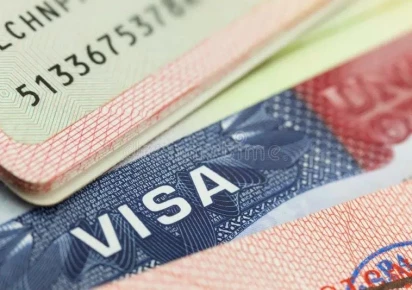
    The United States has announced a new visa restriction policy targeting foreign nationals accused of involvement in cybercrime, online fraud and other cyber-enabled criminal activities. The new measures will apply to people who are directly involved in such crimes or who knowingly assist criminal networks. The policy specifically covers online scams, cyber fraud and sextortion. US Secretary of State Marco Rubio said the policy was introduced as part of the Trump administration’s broader campaign against cybercrime and fraud targeting American citizens. The move follows an executive order signed by President Donald Trump aimed at combating cybercrime, financial fraud and schemes that exploit US citizens. According to the US State Department, online investment scams have become a major threat to Americans. The department said US citizens lost at least $10 billion to scams in 2024. Officials also raised concerns about criminal organisations operating across borders. Some scam operations are allegedly linked to transnational criminal groups and are associated with money laundering, corruption and human trafficking. The US government also highlighted the growing threat of sextortion. American children have reportedly been targeted by overseas criminals who use online platforms to manipulate and blackmail victims. Under the new policy, visa restrictions can be imposed on foreign nationals found responsible for or complicit in cybercrime and cyber-enabled criminal activities. In certain cases, immediate family members of individuals involved in such activities may also face visa restrictions. The policy has been introduced under Section 212(a)(3)(C) of the US Immigration and Nationality Act. The administration said visa restrictions would form part of a wider effort to disrupt international scam networks. Other measures could include sanctions, criminal prosecutions, asset seizures and extradition requests. Washington also plans to strengthen cooperation with international law enforcement agencies to identify and dismantle criminal networks operating across borders. Rubio said the United States would pursue individuals who target Americans through cybercrime and fraudulent schemes. The administration said the new restrictions were intended to increase the consequences for criminals and those who help them operate

  • |

    Former Turkish PM Davutoglu quits politics

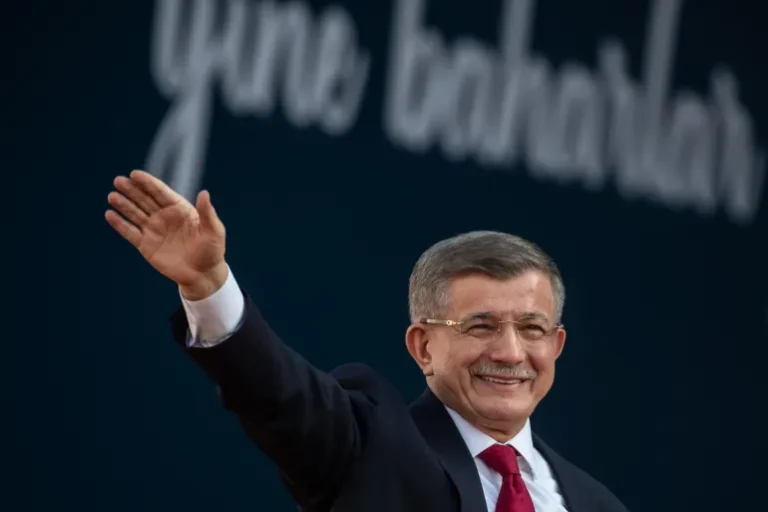
    ISTANBUL: Former Turkish prime minister Ahmet Davutoglu has announced his decision to step away from politics and dissolve his Future Party, ending a decades-long political career that saw him rise as one of President Recep Tayyip Erdogan’s closest allies before becoming a vocal critic. Davutoglu announced the decision this week, saying he wanted to distance himself from what he described as a “dirty political climate” in Turkiye. He said the move was not a surrender but a step taken on moral grounds and a call for a broader rethink of politics. The former premier criticized issues including corruption, favouritism and weak accountability, saying these challenges had damaged public trust. He also raised concerns over the country’s presidential system introduced in 2018, arguing that it weakened checks and balances. Davutoglu began his career as an academic before entering politics. Born in Konya in 1959, he studied political science and international relations at Bosphorus University and later earned a doctorate in the same field. Before joining government, he worked as a professor and wrote several books on foreign policy. His academic reputation helped him become a key figure in shaping Turkiye’s international strategy. After the Justice and Development Party (AKP) came to power in 2002, Davutoglu joined the party and became a close adviser to Erdogan. He played an influential role in developing the “zero problems with neighbours” foreign policy approach, which aimed to improve relations with regional countries. He served as Turkiye’s foreign minister from 2009 to 2014 and became prime minister after Erdogan moved to the presidency in 2014. However, relations between the two leaders gradually weakened due to differences over governance, foreign policy and the distribution of political power. In 2016, Davutoglu resigned as prime minister and was replaced by Binali Yildirim. Three years later, Davutoglu left the AKP and launched the Future Party, presenting it as a conservative alternative focused on democracy and reforms. However, the party struggled to gain major public support and received a small share of votes in the 2024 elections.

  • | | |

    CIA doubted Iran threat behind Trump plane switch

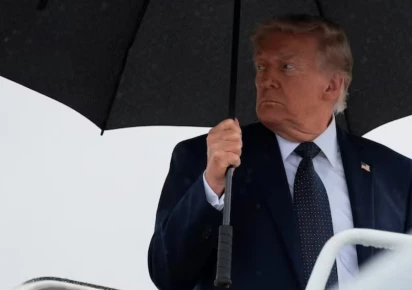
    WASHINGTON: US intelligence officials had doubts about the credibility of an alleged Iranian threat against President Donald Trump that triggered an extraordinary security operation during his departure from Türkiye last month, according to a Washington Post report. The revelation adds a new twist to the dramatic episode in which Trump was secretly moved from an aircraft at Ankara airport and flown to Britain aboard a smaller military jet while another aircraft was used as a decoy. The Washington Post, citing current and former US officials familiar with the intelligence, reported that CIA analysts did not consider information provided by Israel sufficiently compelling. The analysts reportedly communicated their reservations to officials in the Trump administration. The intelligence was described by one US official as Israeli-derived rather than US-generated and assessed with “low confidence”, according to the report. The CIA has declined to comment publicly. Despite the doubts, the US Secret Service decided that the potential danger justified extraordinary precautions. Trump’s security team has faced several serious incidents during his presidency and officials have stressed that they were unwilling to take unnecessary risks. The unusual operation unfolded after Trump attended the NATO summit in Ankara on July 8. According to reports, the president was initially expected to leave Türkiye aboard Air Force One. Instead, he was covertly transferred to a C-32A military aircraft through an airport catering truck. Trump and a small group of close aides then travelled to Britain’s Mildenhall air base, with fighter jets providing protection. Meanwhile, the regular presidential aircraft continued as part of a carefully planned deception. The operation has attracted considerable attention because it involved not only a change of aircraft but also secrecy from journalists and some senior officials travelling with the presidential delegation. The Washington Post reported that close Trump aides Dan Scavino, Natalie Harp and Walt Nauta accompanied him during the covert transfer, while no Cabinet officials did. The White House has defended the decision, saying Trump faces numerous threats, including threats linked to Iran, and that the Secret Service’s primary responsibility is protecting the president. Trump himself said the decision to use another plane was made by the Secret Service and that he followed its instructions. Reuters also reported that US officials considered the threat serious enough to warrant the covert aircraft switch. The intelligence dispute has nevertheless raised broader questions about the information shared between Israel and Washington. Some current and former US intelligence officials reportedly believe Israeli reporting can sometimes be intended not only to warn American leaders but also to influence policy decisions. The episode comes amid heightened tensions between Washington, Israel and Iran, making intelligence assessments particularly sensitive. It also highlights the difficult balance between acting quickly on potential threats and determining how reliable those threats actually are. For the Trump administration, the incident has now become more than a story about an unusual plane switch. It has raised questions about intelligence credibility, presidential security and the influence of foreign-provided information on US decision-making.

  • | |

    Iran pressures Gulf allies to rein in Trump, threa…

    Iran has launched an intensive diplomatic campaign targeting Gulf states, warning them directly that Tehran will strike their oil, power and water facilities unless they persuade President Donald Trump to halt US military action and pursue a negotiated end to the war instead. According to a senior Iranian official, the warning covers potential attacks on energy facilities, oil fields, refineries, electricity grids, water systems, transport networks and other strategic infrastructure belonging to Washington’s closest Arab partners in the region. The message formed part of a wider Iranian strategy to discourage further American military action by raising the specter of significant economic damage across the Gulf. Sources familiar with the matter said the warning traveled through a wave of high level diplomatic contacts following Trump’s July 28 threat to strike Iran’s energy network and broader infrastructure. Two senior Iranian officials, two Gulf sources and a senior regional diplomat, all speaking on condition of anonymity given the sensitivity of the discussions, said Iranian Foreign Minister Abbas Araqchi held conversations with his Saudi, Turkish and Qatari counterparts as well as Pakistan’s army chief. The senior diplomat said Araqchi pressed Washington’s Gulf allies to use their influence with Trump to head off renewed strikes, cautioning that any attack on Iran would trigger retaliation against American assets and critical infrastructure throughout the Gulf. The diplomat said Araqchi delivered a consistent message in each conversation, expressing readiness to retaliate while stressing that a diplomatic solution offers the best chance of avoiding wider regional destruction. One Gulf source described the Iranian position as unambiguous, saying Tehran made clear that any American strike on Iranian infrastructure would draw retaliation against Gulf energy facilities and other regional targets. The campaign illustrates how Iran is attempting to convert Gulf vulnerability into diplomatic leverage, presenting regional governments with the prospect that a renewed confrontation between Washington and Tehran could put the infrastructure their economies depend on directly at risk. Saudi Crown Prince Mohammed bin Salman subsequently spoke with Trump directly, urging him to hold off on military action, return to the negotiating table, pursue a ceasefire and seek a diplomatic resolution, according to the senior diplomat and Gulf sources. Another Gulf source said the warning was meant for every Gulf state but traveled primarily through Saudi Arabia and Qatar, both of which have rebuilt ties with Iran in recent years after a long period of regional rivalry. Qatar, Oman and Saudi Arabia have each urged Washington to resume talks with Tehran and prevent a fresh round of conflict, with Iran cautioning that further strikes could turn the region into what one Iranian official called a fireball. On August 2, Trump said he had agreed to call off a planned attack on Iran, provided a deal could be reached quickly. Concerns over wider escalation A Gulf source said Saudi Arabia believes additional escalation would only cause further destruction, explaining why Riyadh pushed Trump to give diplomacy more room to work. At the same time, Saudi officials made clear the kingdom would defend itself if directly threatened, with a second Gulf source saying Riyadh warned that any strike on Saudi territory would draw a military response of its own. Ali Shihabi, a Saudi analyst with ties to the royal court, said the kingdom’s assessment holds that further escalation is unlikely to produce the outcome Washington wants. He said Saudi officials believe a mix of proportionate military responses combined with sustained pressure on Iran around the Strait of Hormuz offers the most realistic route toward a workable diplomatic settlement. Iran’s clerical leadership has repeatedly called for the closure of US military bases across the Gulf and urged Gulf Arab states to stop sharing intelligence with Washington, which Tehran believes has enabled strikes against Iranian targets. Shihabi noted that memories of the September 2019 drone and missile strikes on Saudi Arabia’s Abqaiq and Khurais oil facilities still shape regional thinking, since that attack temporarily cut more than half the kingdom’s crude output and exposed how vulnerable Gulf energy infrastructure remains. A separate Iranian official reiterated that any damage inflicted on Iran would be met with far greater retaliation, again citing power grids and refineries among potential targets. From Tehran’s perspective, the senior Iranian official said, Trump now confronts two difficult options: escalate a conflict that risks engulfing the wider Gulf and disrupting global energy markets, or accept a negotiated settlement that falls short of the decisive win Washington has sought. The senior regional diplomat identified Washington’s reluctance to let Tehran claim any form of victory as one of the central obstacles blocking an agreement, noting that American officials want tangible proof they prevailed in the conflict.


Leave a Reply

Your email address will not be published. Required fields are marked *