
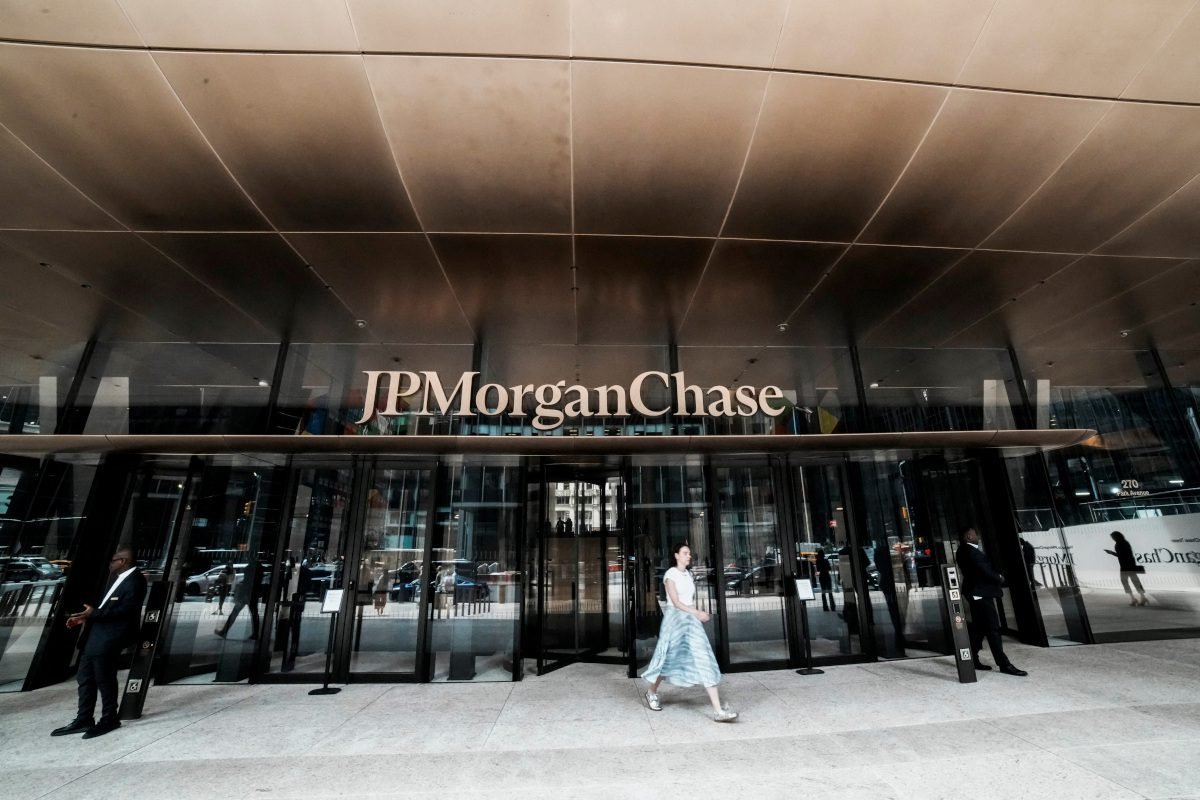
jpmorgan visa mastercard
|

JPMorgan, Visa, Mastercard say third-party vendors targeted in cyberattack

JPMorgan Chase, the largest US lender, said on Thursday, November 19, that third parties who provide services to the firm were the target of a cyberattack.

“Based on our investigation so far, we believe the attackers accessed certain marketing data held by those vendors, which may include some customer names and email addresses,” a JPMorgan spokesperson said, adding the company would be contacting affected customers directly.

“There is no connection to service disruption of some customers experienced earlier this week,” the spokesperson added.

Earlier this week, the bank experienced problems processing transactions due to a software bug which also affected other banks and caused some disruptions.

These incidents at JPMorgan followed several other recent problems including a nationwide FAA ground stop that disrupted travel last week and Microsoft’s global email outage, while last month crypto exchange Binance experienced a massive hack.

After the outage, lenders received inquiries from the Office of the Comptroller of the Currency, according to an industry executive, who added that the US banking regulator was trying to assess the impact and wanted to know about communication to customers.

The Treasury and the OCC were calling banks minutes after the incident was reported to check that the issue was contained and it was not a cyber-related incident, a second person said adding that the OCC routinely checks after any such incidents.

“Customers don’t distinguish between a bank and a vendor when it comes to a cyberattack, so there is a question of reputational risk here,” said Carissa Robb at SolomonEdwards, a consulting firm. “There needs to be a little bit more pressure on how often companies are scrutinizing the amount of data that is shared with vendors and the necessity of the data being shared,” Robb said.

A cyber extortion group called “n0n” claimed on November 16 to have obtained cardmember engagement records that included “hundreds of thousands of campaign interactions for tens of thousands of distinct cardmember email addresses,” according to a screenshot of the message captured by cybercrime research platform eCrime.ch.

The data includes what appears to be 124 bank employee email addresses and more than 16,000 customer email addresses, some with phone numbers and postal codes, according to a Reuters review. Reuters could not independently verify the authenticity of the data.

JPMorgan declined to comment on the data.

The same hacking group on November 16 posted similar claims regarding Visa and Mastercard and posted data.

A Visa spokesperson said the company is aware of the claims and that they are “associated with an incident involving a third-party service provider in Asia Pacific. Visa’s systems were not involved and were not impacted. No payments data such as card numbers were affected.”

A Mastercard spokesperson said the company was recently informed of an incident “at a third-party provider that resulted in the exposure of limited amount of email addresses — non-payments information — from a small subset of cardholders enrolled in a specific benefit program. There is no impact to the Mastercard payment network or the ability for people to use their cards.”

The Visa data posted by the group appears to be primarily focused on Asian-Pacific markets, including Hong Kong, Taiwan, Korea, Japan, Philippines, Singapore, Malaysia, Australia, Macau and others, according to a Reuters review. Across several spreadsheets, the data includes thousands of purported customer email addresses, phone numbers, and Visa marketing campaign data. Reuters has not verified the authenticity of the data.

The Mastercard data posted by n0n includes marketing data related to customers in North America, the Middle East and Africa, and a small number of Mastercard employee email addresses.

The hacking group has claimed roughly 200 incidents since emerging in September 2026, according to eCrime.ch. – Rappler.com

Similar Posts

  • | |

    Australia defends social media ban for under-16s

    The Australian government has defended its ban on social media use by children under the age of 16, despite new data showing that most teenagers continue to access restricted platforms months after the law came into effect. The legislation, introduced in December, was designed to protect children from the harmful effects of social media on their mental and physical health. The policy attracted international attention, with Australia becoming the first country to implement such a nationwide restriction on underage social media users. A recent report by Australia’s online safety regulator found that more than eight in ten teenagers under the age of 16 were still using social media platforms three months after the restrictions became operational. The findings have highlighted the challenges governments face in enforcing digital regulations. Despite the report, Australian authorities insisted that the policy remains an important step toward creating a safer online environment for children. Officials said the law has already influenced public discussion about online safety and encouraged greater awareness among parents, educators and technology companies. Assistant Minister for Productivity, Competition, Charities and Treasury Andrew Leigh said the government never expected complete compliance immediately after the law came into force. He explained that many public safety laws require time before they achieve widespread compliance. Leigh said the government considers the legislation successful because it has changed the national conversation about children’s use of social media and encouraged stronger action to protect young users from harmful online content. He noted that millions of social media accounts had already been closed or restricted since the implementation of the law. According to the minister, this demonstrates that the legislation is already having an impact, even if some teenagers continue to access online platforms. The government also stressed that technology companies have a major responsibility to ensure compliance with the new rules. Officials said digital platforms must strengthen age verification systems and take effective measures to prevent underage users from creating or maintaining accounts. Regulatory authorities are continuing to assess how well social media companies are implementing the restrictions. They are also examining additional measures that could improve enforcement and ensure technology firms meet their legal obligations. Experts say the latest findings illustrate the complexity of regulating online platforms, particularly as social media has become deeply integrated into the daily lives of young people. They note that effective enforcement will require cooperation between governments, parents, schools and technology companies.

  • |

    PBS revises import data after billions of dollars in discrepancies

    The Pakistan Bureau of Statistics (PBS) has revised the country’s monthly and annual import figures after uncovering major discrepancies in trade data, with the adjustments reaching billions of dollars over certain periods. The data revisions, which could amount to as much as $30 billion for some periods, are expected to have a notable impact on Pakistan’s Gross Domestic Product (GDP) calculations and other key economic indicators. The statistical agency has incorporated the updated import figures across several major sectors as part of the data reconciliation process. According to senior government officials, the PBS has completed a detailed report outlining the discrepancies and the methodology used to revise the import statistics. The report has been submitted to the Ministry of Finance, which is currently examining its potential implications. The ministry is expected to make the findings public by the end of August 2026. Differences emerge between PBS and SBP data The issue came to light after officials identified significant differences between import figures compiled by the PBS and corresponding data maintained by the State Bank of Pakistan (SBP). The discrepancies were initially detected while comparing Pakistan’s trade figures with China. Further scrutiny subsequently revealed differences in specific tariff lines and categories of imports that had not been fully reflected in the PBS data. Following the discovery, the Pakistan Single Window and other relevant government institutions became involved in the reconciliation process. The objective was to identify the source of the differences, verify transaction-level information and ensure that import statistics accurately reflected the country’s external trade. The matter later attracted the attention of the International Monetary Fund (IMF), which has been closely monitoring Pakistan’s economic data and statistical reporting under its reform programme. IMF seeks greater transparency The IMF had previously highlighted weaknesses in Pakistan’s procedures for collecting, compiling and consolidating import data. It called for improvements in the statistical framework and greater transparency about the scale and economic impact of the discrepancies. Under the agreed reform requirements, the PBS was tasked with publishing revised monthly and annual import statistics by the end of August 2026. The statistical agency is also expected to provide an explanation of the changes and their impact on previously reported figures. The revisions are particularly significant because imports are an important component of national accounts and external-sector statistics. Changes in import values can influence the calculation of GDP, trade balances, current account figures and other macroeconomic indicators. GDP impact under review The Ministry of Finance is examining the PBS report largely because of the potential impact of the revised import figures on national economic data. Officials are assessing how the changes could affect previously reported GDP estimates and other indicators based on import statistics. The scale of the revisions means that the exercise could result in adjustments to historical economic data, depending on how the revised figures are incorporated into the national accounts. Officials, however, are expected to provide further details once the Ministry of Finance completes its review and the PBS publishes the revised statistics. IMF review mission approaching The development comes ahead of the IMF’s next review of Pakistan’s economic reform programme. The Fund’s review mission under the country’s $7 billion Extended Fund Facility (EFF) is expected to visit Pakistan by early September 2026. The publication of revised import data before the mission’s arrival is likely to be closely watched, as strengthening the reliability and transparency of economic statistics remains an important element of Pakistan’s commitments under the IMF programme.

  • Major Fuel Smuggling Ring Exposed at Chiang Rai-Myanmar Border

    CHIANG RAI – Thai law enforcement officials have exposed a massive fuel smuggling operation operating along the Mekong River. Smugglers have successfully bypassed a national export ban by using falsified shipping documents. The illegal operation has rerouted tens of millions of liters of fuel directly into Myanmar. National Police Deputy Chief General Thatchai Pitaneelaboot led […]

Leave a Reply

Your email address will not be published. Required fields are marked *