have p5000 you
| | | | |

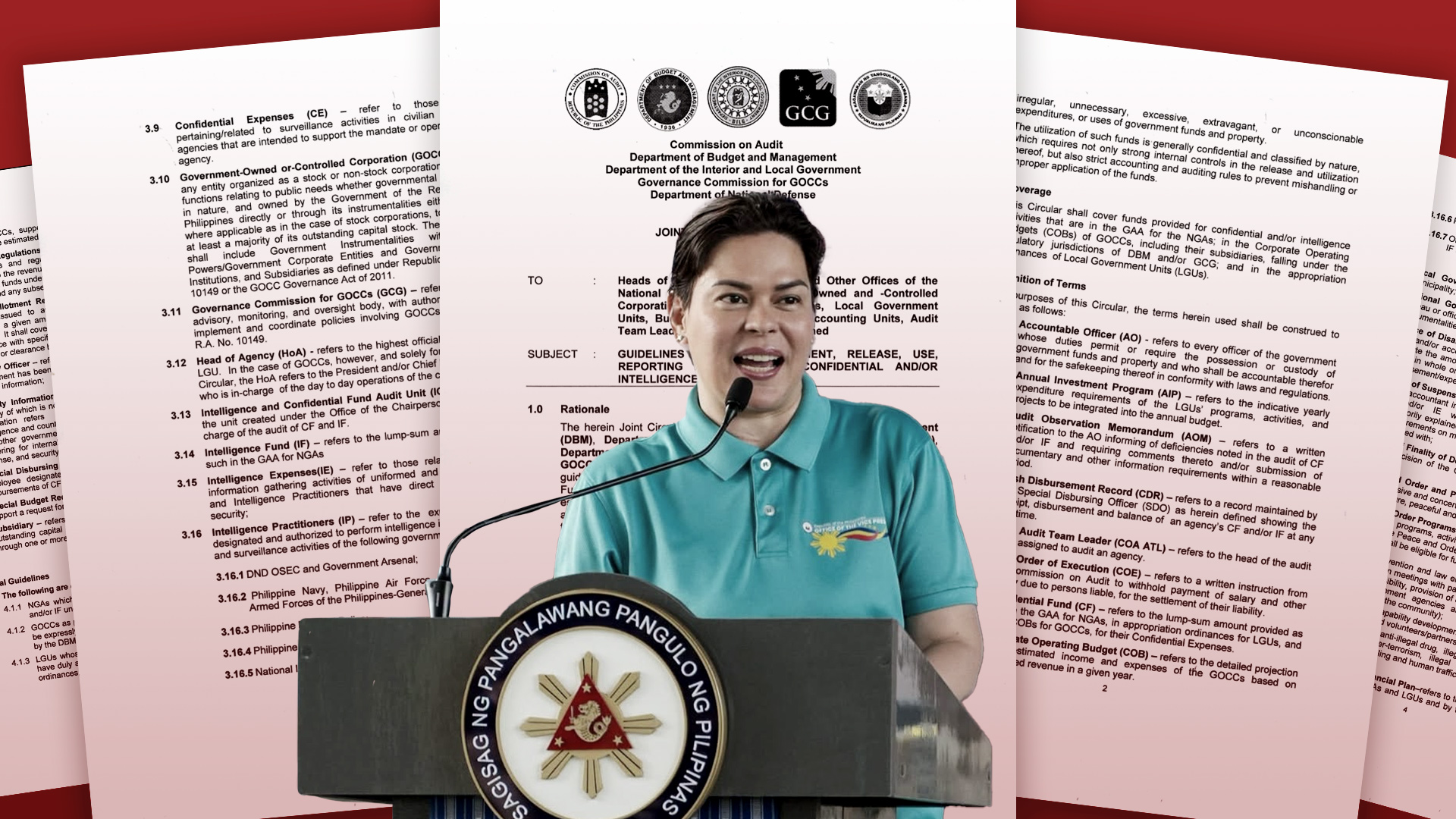
Have P5,000? You can invest in RTB 32 and earn 6.8% per year

Last Tuesday, September 29, the Bureau of Treasury (BTr) launched the public offering of its latest retail bond issue, the Retail Treasury Bonds Tranche 32 (RTB-32).  

RTB-32 has a term of 2.5 years and features an attractive coupon rate of 6.875% per annum, with interest paid quarterly and subject to a 20% final withholding tax. The auction’s first day had an overwhelming oversubscription, raising P84.9 billion against an initial target of P30 billion.

To allow the high participation of the common public to become investors in the issue, the minimum investment requirement is P5,000 only.  

Investors can subscribe over-the-counter through authorized selling banks or digitally via the BTr Online Ordering Facility, the LANDBANK Mobile Banking App, OFBank App, RCBC Pulz, ATRAM apps, PDAX, and GCash via its GBonds platform. 

Additionally, investors holding specific older government securities can choose to swap them directly for RTB 32 before the final settlement of this new issue on October 12, 2026.

RTBs are considered powerful and stable, non-inflationary instrument used to fund national budgets, build infrastructure, and manage fiscal deficits. It is also one of the ideal instruments that could help promote financial inclusion and literacy to the general public, many of whom still remain with limited access to mainstream investment services.  

In this regard, RTBs were actually the subject of discussion at the Monday Circle’s latest forum. Like always, the subject was given a critical eye on what it has been doing in financing the government and on its role in promoting savings and financial literacy.  

Invited as guest speaker for the occasion was Director Robert Dominick “Doms” Mariano, head of the research department of the Bureau of Treasury (BTr). Mariano has more than 15 years of work experience on debt management, government finance, and fiscal programming. He also has an extensive background on national government treasury management, financial market surveillance, risk management, and macroeconomic and fiscal planning. 

Historical context

RTBs have gone a long way from a tradeable small-denominated bonds under the “Small Investors Program” in late 1998 into what it is now as a pillar of the country’s national debt management strategy.  

Over the last 25 years, RTBs have transitioned from a niche financial inclusion project into a strategic financing instrument for the government. They have become the cornerstone for sovereign fund mobilization or the process by which the government gathers, pools, and deploys its financial resources at the same time serving as a practical, real-world classroom that elevates the financial literacy of the general public. 

Today, RTBs are no longer a minor funding source. They consistently make up to roughly 35% of the government’s outstanding domestic debt securities. The government has been intentionally utilizing RTBs to protect the national budget from extreme foreign exchange shocks and global market volatility. 

RTBs became a critical crisis-management tool during the COVID-19 pandemic. The government leaned heavily on its RTB-25 and RTB-26 bond issues to strategically raise billions for pandemic response programs and health infrastructure.

Public financial literacy

The regular distribution model of RTBs teaches the mechanics of passive income and cash flow management because RTBs pay out interest on a fixed, quarterly basis. When an ordinary saver receives a direct credit to their account every three months, the concept of “money working for you” transitions from a textbook phrase into a tangible reality.  

Moreover, this predictable structure teaches individuals how to budget around recurring income streams, encouraging long-term financial planning over impulsive short-term spending. Thus, RTBs are the perfect beginner tool for financial literacy for the common public.  

Again, when the government launches an educational roadshow or a financial literacy webinar to explain how an RTB works, it is not doing it as a formality only. It is actively promoting these bonds to raise the money the country needs.

Conversely, when the common public purchases these bonds, they are not merely performing a civic duty; they are securing a reliable, wealth-building vehicle to shield their savings from inflation and market volatility.

This process creates a chain reaction where one good thing leads to another. As government outreach increases public awareness, the general saving public becomes more financially literate. A more financially literate population, in turn, demands a higher volume of secure, transparent investment products, driving deeper demand for subsequent government bond issuances. 

Over time, this collaborative mechanism fosters a robust domestic capital market, reduces the national dependency on foreign debt, and builds a financially resilient society capable of weathering macroeconomic shocks.

Economic bridge

As summarized by Mariano, the RTB program illustrates that sound fiscal policy and public financial empowerment are not competing priorities, but mutually reinforcing pillars of long-term economic development. They are a powerful economic bridge that balances the government’s financial needs with the public’s wealth goals. 

By offering a safe, high-yielding alternative to standard savings, RTBs gather scattered public money to fund critical infrastructure. At the same time, they open up the financial world to everyone, transforming the common public into disciplined, smart, and tech-savvy investors. – Rappler.com

(The article has been prepared for general circulation for the reading public and must not be construed as an offer, or solicitation of an offer to buy or sell any securities or financial instruments whether referred to herein or otherwise.  Moreover, the public should be aware that the writer or any investing parties mentioned in the column may have a conflict of interest that could affect the objectivity of their reported or mentioned investment activity. You may reach the writer at densomera@yahoo.com)  

Must Read

[ANALYSIS] The market implications of a GCash IPO


[ANALYSIS] The market implications of a GCash IPO

Similar Posts

  • |

    Pension crisis hits Pak PWD workers as Committee orders urgent action

    Islamabad: Retired employees of the dissolved Pak PWD and families of workers who died during service are still waiting for pension benefits after being adjusted in the Capital Development Authority, the Senate Standing Committee on Housing and Works was told. The committee expressed serious concern over the delay and ordered the Ministry of Interior to send the case to the Prime Minister within three days for a final decision. The committee said the matter should be settled on humanitarian grounds and without further delay. The meeting, chaired by Senator Nasir Mehmood, reviewed the implementation of earlier directions concerning the adjustment, salaries and pension matters of employees of the former Pakistan Public Works Department. The Secretary of the Ministry of Housing and Works told the committee that all employees of the dissolved department had now been adjusted according to the committee’s directions. The committee learned that the employees were receiving their salaries and allowances. The chairman appreciated senior officials of the concerned ministries for completing the adjustment process. However, serious problems remain over pensions. The committee was told that former Pak PWD employees who were adjusted into the CDA and later retired had still not received their pension benefits. The same problem also affected employees who died during service, leaving their families waiting for benefits. Officials told the committee that the pension cases remained pending because government departments held differing views on the legal and administrative status of the adjusted employees. The Finance Division was providing budget for salaries and allowances but had not provided funds for pensions or medical reimbursement, the committee was informed. Members questioned how employees could be transferred to another organisation yet fail to receive all benefits normally connected with their service. The committee stressed that the adjustment of Pak PWD employees had been made under directions of the Federal Cabinet. It said the employees should therefore receive all related rights, benefits and privileges instead of receiving salaries alone. The committee was informed that the Ministry of Interior had prepared a summary for the Prime Minister. Officials explained that the Finance Division’s opinion binds ministries and divisions. Because of this, the dispute could only be finally resolved through a decision by the Prime Minister or the Federal Cabinet. After a detailed discussion, the committee unanimously decided that the issue should not remain pending. Chairman Senator Nasir Mehmood directed the Ministry of Interior to submit the summary to the Prime Minister within three days. The committee said retired employees and families of deceased workers should not continue suffering because of differences between government departments over rules and interpretation. Senator Nasir Mehmood said the committee supported the affected employees and would continue to pursue their cases until their legitimate issues were resolved. The final decision now depends on the Prime Minister or the Federal Cabinet after the Interior Ministry submits the summary.

  • Northern Thailand Universities Unite to Promote Local Thai Textiles 

    CHIANG MAI – Rajabhat University and seven partner schools have launched the “Exquisite Fabrics, Creative Wisdom” exhibition. The event takes place from July 24 to 26, 2026, at Central Chiang Mai Airport. It aims to boost the local economy by combining traditional weaving wisdom with modern research and a green economy approach. On July 24, 2026, […]

  • |

    PSX faces heavy selling as KSE-100 index drops over 1,300 points

    KARACHI: Selling pressure intensified at the Pakistan Stock Exchange (PSX) on Tuesday as investor sentiment weakened amid growing uncertainty over the prospects of a peace agreement between the United States and Iran and the reopening of the strategically important Strait of Hormuz. The benchmark KSE-100 Index came under pressure during the trading session, losing more than 1,300 points as investors remained cautious and reduced exposure to major stocks across several sectors. At around 2pm, the KSE-100 Index stood at 179,996.62 points, showing a decline of 1,313.66 points, or 0.72%, from the previous close. The market witnessed broad-based selling, with several major sectors contributing to the decline. Automobile assemblers, cement companies, commercial banks, fertiliser manufacturers, oil and gas exploration firms and oil marketing companies (OMCs) remained under pressure. Several index-heavy stocks also traded in negative territory. Prominent companies including HUBCO, Mari Petroleum (MARI), Oil and Gas Development Company (OGDC), Fauji Fertilizer Company (FFC), Habib Bank Limited (HBL), MCB Bank, Meezan Bank (MEBL) and United Bank Limited (UBL) were among the stocks weighing on the benchmark index. Previous session also ends lower The latest decline follows a weak close in the previous trading session. On Monday, the PSX initially moved higher but lost momentum during the second half of the session as investors opted to book profits in heavyweight shares. The KSE-100 Index eventually closed at 181,310.28 points, down 119.74 points, or 0.07%. The continued weakness suggests that investors are closely monitoring developments in international markets, particularly the situation surrounding oil supplies and the Strait of Hormuz. US-Iran tensions keep markets on edge Global financial markets remained unsettled on Tuesday as hopes for an agreement between Washington and Tehran appeared to fade. Negotiations aimed at ending the conflict and restoring normal shipping through the Strait of Hormuz have encountered fresh difficulties. US President Donald Trump on Monday responded to Iran’s conditions for a possible peace agreement by putting forward his own demands, including calls for compensation related to deaths and losses associated with wars, attacks and protests. The tougher rhetoric has raised concerns that diplomatic efforts could take longer, potentially prolonging disruptions around the crucial maritime route. The Strait of Hormuz is one of the world’s most important energy corridors, and prolonged disruption to shipping through the waterway could have significant consequences for crude oil supplies and global energy prices. Oil prices climb to highest level since July 31 The uncertainty surrounding the situation was reflected in international oil markets. Brent crude futures climbed to around $88 per barrel, while US West Texas Intermediate crude futures rose to approximately $82.45 per barrel. Both benchmarks reached their highest levels since July 31 after recording gains of roughly 5% during Monday’s trading session. Higher oil prices are a major concern for economies that depend heavily on imported energy. For Pakistan, sustained increases in global crude prices could increase the country’s import bill and place additional pressure on external accounts, inflation and domestic fuel prices. The rise in energy prices is also being closely watched by investors because higher input costs can affect corporate profitability and influence monetary policy expectations. Asian markets remain cautious The uncertainty was not limited to Pakistan. Asian equity markets moved within a narrow range as investors assessed the potential impact of rising energy prices on inflation and economic growth. MSCI’s broadest index of Asia-Pacific shares outside Japan moved between gains and losses before trading modestly higher. South Korea’s Kospi also recorded a slight increase. However, the escalation in tensions around the Gulf kept overall market sentiment fragile, with investors remaining wary of further developments that could affect energy supplies and global trade. US stock futures were also slightly positive on Tuesday. Nasdaq futures rose around 0.28%, while S&P 500 futures gained approximately 0.1%, following a weaker session on Wall Street on Monday. Inflation data in focus Investors are also awaiting the latest US consumer price data, which could provide further clues about the direction of interest rates and inflationary pressures in the world’s largest economy. The increase in crude oil prices has added another element of uncertainty ahead of the inflation report. A sustained rise in fuel and energy costs could complicate efforts to bring inflation closer to central-bank targets. For Pakistani investors, the combination of geopolitical uncertainty, higher global oil prices and pressure on heavyweight shares is likely to remain a key factor influencing trading sentiment in the near term.

Leave a Reply

Your email address will not be published. Required fields are marked *