new antitaliban group
|

New anti-Taliban group emerges in Afghanistan


Armed resistance against the Taliban appears to be expanding in Afghanistan, with a new anti-Taliban group reportedly emerging in the northern province of Faryab.

Sources say growing opposition to the Taliban’s style of governance, alleged ethnic discrimination and corruption has fueled resistance among sections of the Afghan population. Opposition has also increased over restrictions on education, employment and basic human rights, while the ongoing situation has contributed to a rise in Afghan migration toward Europe.

According to sources, fighters affiliated with the newly formed Liberation Front carried out an attack against Taliban forces in Faryab province on Monday. The group is expected to formally announce its organisational structure, leadership and future activities within the next few days.

The emergence of the new group comes as other anti-Taliban factions also signal plans to intensify their activities. General Sami Sadat, head of the Afghanistan United Front, and General Yasin Zia of the Afghanistan Freedom Front have both announced their intention to step up resistance against the Taliban.

The developments indicate growing challenges for the Taliban as it continues to face opposition from armed groups as well as criticism over its policies on governance, human rights, education and employment.

Similar Posts

  • | | |

    Ceuta migrant crisis: death toll rises to 72 durin…

    The migrant crisis in Ceuta, a Spanish-controlled territory in North Africa, has drawn international attention after reports that dozens of migrants died while attempting to enter the region from Morocco. Local authorities reportedly stated that the death toll reached 72, with fatalities linked to boat accidents and deadly crowd situations near border areas. Ceuta, along with Melilla, is one of the few European-controlled territories located on the African continent. The area has long been considered an important route for migrants and asylum seekers attempting to reach European territory. Due to its strategic location, the region has strict border controls, security fencing, and surveillance systems. According to local reports, thousands of migrants attempted to cross into Ceuta through land and sea routes. Authorities said that many people later returned voluntarily to Morocco after entering the territory. The large movement of migrants created significant pressure on border facilities and emergency services. Officials reported that some migrants lost their lives after boats carrying people encountered difficulties at sea, while others reportedly died during chaotic scenes near border barriers. Rescue and security teams have been involved in managing the situation and responding to emergencies. The latest incident has renewed discussions about migration challenges facing Europe. Human rights organizations and international observers have repeatedly highlighted the dangers faced by migrants who attempt dangerous journeys due to conflict, poverty, and limited economic opportunities in their home countries. European governments continue to debate policies regarding border security, asylum procedures, and cooperation with neighboring countries. While authorities emphasize the need to control illegal crossings, humanitarian groups call for safer migration pathways and stronger protections for vulnerable migrants. Ceuta has experienced previous migration crises, including a major influx in 2021 when thousands of people attempted to enter the territory from Morocco within a short period. The latest developments once again demonstrate the complex challenges surrounding migration at Europe’s external borders. As investigations continue, officials and international organizations are expected to assess the causes behind the deaths and examine measures to prevent similar tragedies in the future.

  • | |

    China stands firm on economic strategy ahead of ke…

    BEIJING: China has intensified its defence of its state-led economic model as it prepares for crucial trade discussions with the European Union and the United States, signalling that it is unlikely to make major policy concessions despite mounting international criticism. Beijing has repeatedly argued that its development strategy, which prioritises investment in advanced manufacturing and technology, remains essential for long-term economic growth. Chinese leaders maintain that the country’s industrial policies have helped strengthen innovation and global competitiveness, rejecting accusations that they distort international trade. The latest policy statements from China’s leadership indicate a commitment to maintaining its current economic direction. While officials acknowledge challenges such as weak domestic demand and excess production capacity, they continue to favour targeted policy support instead of broad consumer-focused stimulus measures. Chinese authorities have also dismissed Western claims of industrial overcapacity, describing such criticism as politically motivated. They argue that China’s manufacturing success reflects its stage of economic development and benefits global consumers through affordable, high-quality products. Ahead of expected meetings between President Xi Jinping and US President Donald Trump later this year, as well as upcoming negotiations with the European Union, Beijing has adopted a more confident tone in defending its economic policies. Analysts believe the messaging is intended to establish clear limits on what China is willing to negotiate while encouraging greater understanding of its development model. China has also sought to counter warnings of a new “China shock” by portraying its industrial expansion as an opportunity for global economic growth. However, many Western economists argue that China’s reliance on exports, combined with subdued domestic consumption, continues to create imbalances that affect international markets. Although Beijing has slowed public investment by tightening oversight of local government spending, officials acknowledge that supply and demand remain uneven. Authorities have pledged to reduce destructive price competition among manufacturers and have reiterated their intention to strengthen consumer demand, though without announcing sweeping structural reforms. Chinese policymakers have also recognised that the country’s traditionally low household consumption cannot remain a permanent feature of its economy. While official publications describe the existing model as historically appropriate, they also suggest gradual adjustments will be necessary to ensure sustainable long-term growth. Despite these acknowledgements, Beijing remains cautious about implementing rapid reforms, fearing that abrupt policy changes could undermine economic stability. International studies continue to raise concerns over China’s economic practices. Recent research suggests that government subsidies have played a significant role in boosting the global market share of many Chinese companies, while other reports attribute much of China’s export growth to weak domestic consumption and industrial overcapacity. Analysts also note that China continues to invest in productive assets at a much faster pace than Europe and the United States, even though returns on those investments have declined. Many experts believe Beijing’s increasingly assertive defence of its economic model reflects growing confidence that it can manage trade tensions with Western partners without fundamentally changing its industrial strategy.

  • | | |

    Iran demands Qatar probe over missing pilots

    TEHRAN: Iran has asked Qatar to allow an Iranian military fact-finding team to enter the country to investigate the fate of pilots Tehran says went missing after an incident involving Iranian aircraft, adding another layer of tension to already strained regional relations. Iranian military official Mohammad Baqerzadeh, commander of the Armed Forces General Staff’s Committee for the Search for Missing Persons, said an Iranian Air Force expert team had been waiting for months to travel to Qatar, according to Iranian media. Baqerzadeh accused Qatari authorities of repeatedly delaying the investigation and called on the International Committee of the Red Cross to intervene in the case. Qatar, however, has rejected Iran’s claim that it is holding Iranian pilots. Doha said its search-and-rescue teams recently recovered the remains of one pilot after Iranian aircraft entered Qatari airspace in March and failed to respond to repeated attempts to establish contact. Qatari authorities said they had contacted Tehran to coordinate the transfer of the remains and invited Iranian officials to examine details of the search-and-rescue operation. Qatar said it had not received a response. The dispute comes as Tehran continues to focus heavily on the security of the Strait of Hormuz, one of the world’s most important energy shipping routes. Iran says air defence capacity survived war Separately, an Islamic Revolutionary Guard Corps official claimed that more than 85 per cent of Iran’s air-defence production capacity survived the recent conflict. According to Iranian media reports, the official said attacks on military production facilities had not significantly reduced the production or delivery of missiles and air-defence systems. He also claimed that production in some areas had increased and that Iran’s operational air-defence capabilities were now stronger than at the beginning of the fighting. The claims could not be independently verified. Hormuz shipping talks continue Iran has also announced progress in negotiations with Oman over new shipping routes through the Strait of Hormuz. Foreign Ministry spokesman Esmaeil Baghaei said Tehran and Muscat had reached an agreement on a shipping-route map following weeks of technical discussions. The negotiations began after a memorandum of understanding was signed in June to develop safer navigation arrangements. Foreign Minister Abbas Araghchi stressed that the technical talks with Oman should not be confused with negotiations over reopening the waterway. He said existing maritime routes were no longer functional and that Iran and Oman were working on a temporary route that could eventually become permanent. Tehran links security to US actions Iranian officials continue to insist that the full restoration of security in the strait depends on an end to what Tehran describes as US military pressure, threats and a naval blockade. Deputy Foreign Minister Kazem Gharibabadi also declared that the Strait of Hormuz would remain under Iranian control, while accusing Washington of suffering strategic setbacks. The statements underline the widening gap between Iran and the United States over the strategic waterway, despite technical discussions between Iran and Oman aimed at facilitating maritime navigation. Hezbollah commander reportedly killed Meanwhile, tensions have also continued along Iran’s regional front. Israel’s military said it killed Abu Hassan Alaa, described as a senior Hezbollah commander, in a strike in southern Lebanon. The Israeli army said the attack targeted a Hezbollah headquarters in the Ansar area. Hezbollah had not immediately commented on the claim. The developments show how multiple disputes remain intertwined across the region, from missing military personnel and air-defence claims to the sensitive question of shipping through Hormuz. For Tehran, however, control and security of the strait remain central. While Iran and Oman appear to be making technical progress on navigation arrangements, Iranian officials continue to maintain that any broader reopening of the waterway will depend on wider political and security conditions.

  • |

    Houthis seek to replicate Iran’s Strait of Hormuz strategy in Red Sea, warns Yemeni diplomat

    Yemen’s Houthi movement is attempting to replicate Iran’s strategy in the Strait of Hormuz by disrupting maritime traffic through the Bab el-Mandeb strait, Yemeni Foreign Minister-designate Afrah al-Zouba warned on Monday. Speaking to reporters at the Yemeni Embassy in Riyadh, al-Zouba stated that an insufficient international response has emboldened the group to pursue control over critical Red Sea shipping corridors. The Red Sea has emerged as a major flashpoint following escalations linked to the broader regional conflict involving Iran. The Houthis have intensified operations against Saudi Arabia by launching drone and missile strikes and announcing a blockade on Saudi-bound shipping. In response, Saudi Arabia has conducted airstrikes targeting Houthi military positions and reaffirmed its commitment to protecting commercial maritime routes. The surge in hostilities threatens to unravel the fragile truce established in 2022, raising concerns among diplomats and officials over a potential return to full-scale war in Yemen. Al-Zouba confirmed that while military skirmishes persist along frontline positions stretching from the Red Sea to the Saudi border, neither side has launched a major ground offensive. She emphasised that the internationally recognised government is prepared for further escalation, asserting that the conflict must ultimately be resolved either diplomatically or by force.

  • |

    Afghan fathers struggle as girls remain barred from secondary schools

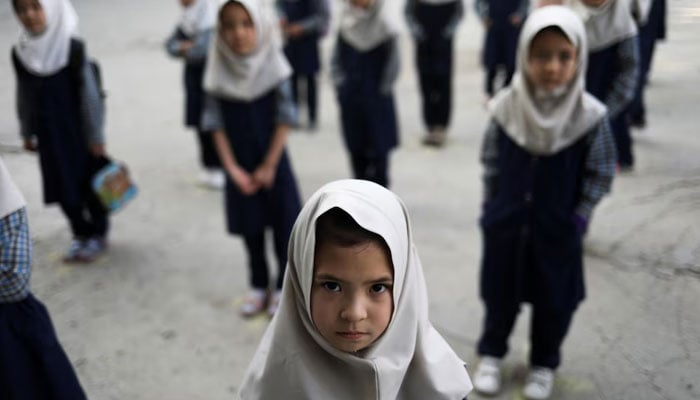
    KABUL: Afghan fathers are facing growing distress as their daughters remain unable to continue their education beyond primary school under restrictions imposed by the Taliban authorities. Families across Afghanistan say the education ban is creating deep emotional and financial pressure. Some fathers are openly questioning the policy, despite their religious beliefs and support for other government measures. The Taliban administration has defended the restrictions as temporary and based on its interpretation of religious principles. However, many Afghan men say they cannot understand why girls should be prevented from receiving secondary education. A United Nations survey conducted last year found that about nine out of 10 Afghan men considered it important for girls to attend secondary school. Nearly two-thirds also viewed supporting a daughter’s education as a religiously commendable act. Girls were barred from secondary schools after the Taliban returned to power in 2021. Women were later also prohibited from attending universities. The restrictions have affected a large number of young Afghan women and girls. For many families, the approaching end of primary education has become a source of fear. Fathers worry that their daughters will lose their chance to pursue higher education and build professional careers. One father, identified as Ahmad, said he had never imagined that his daughters could be forced to stop studying. His wife is a mathematics teacher who is also unable to continue teaching secondary-level students. Ahmad said his eldest daughter is approaching the end of primary school. The family has considered private and underground educational options, but the cost is difficult to manage. Another father, a doctor identified as Mohammad, said he had always wanted his daughters to attend leading universities. He believes women are essential to Afghanistan’s development and should have opportunities beyond household responsibilities. His daughters are approaching the age when they will be forced to leave formal schooling. The family has considered sending them abroad, including to Pakistan, but changing regional circumstances have made that option difficult. Some families have turned to private schools that secretly provide general education alongside religious studies. These institutions often charge high fees and may not provide recognised graduation certificates. Parents also fear that authorities could take action against schools operating outside official restrictions. This leaves families caught between protecting their children and trying to continue their education. Another father from Kandahar said his young daughter has a strong interest in astronomy. She asks questions about the solar system, gravity and science. The girl reportedly asked her father how she could continue learning if she could not study beyond the sixth grade. Her question has become a painful reminder of the limited opportunities available to girls. Some families have moved to Kabul in search of better educational opportunities. Others are relying on online courses, home schooling and secret classes. The restrictions are also affecting children emotionally. Parents say many girls feel frustrated, isolated and uncertain about their future. One father said his teenage daughter often stays at home and becomes deeply upset when she thinks about her education. He said he sometimes leaves the room because he cannot control his emotions and ends up crying privately. Another family has created a home-schooling routine using old secondary-school textbooks. The parents try to maintain a school-like schedule so their daughters can continue learning. However, the parents say home education cannot fully replace a formal school environment. They worry about the lack of recognised qualifications, social interaction and access to trained teachers. Some girls have also begun attending secret classes. Their families remain concerned about possible consequences if the authorities discover them. The prolonged restrictions have created uncertainty for an entire generation of Afghan girls. Parents fear that years without formal education will limit their daughters’ future opportunities

  • |

    Drone attack near Moscow kills 5, injures 6

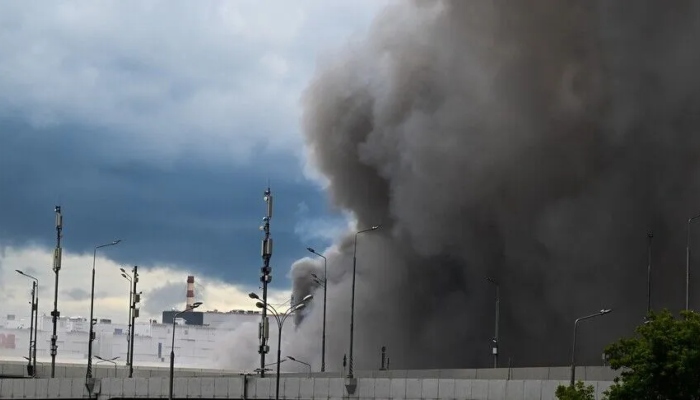
    A drone attack in the Moscow region has killed at least five people and left six others critically injured, according to Russian news agencies. The attack reportedly struck an area near the Russian capital, causing a fire inside a warehouse. The blaze added to the damage caused by the drone strike and prompted emergency responders to move quickly to the scene. Rescue workers and medical teams are assisting those affected by the incident, while the injured victims have been taken for medical treatment. Officials have described the condition of six injured people as critical, raising concerns that the death toll could increase in the coming hours. Authorities are assessing the extent of the damage and continuing emergency operations at the site. The exact circumstances surrounding the drone attack, including the origin of the drones and the intended target, have not yet been fully established. The incident comes amid heightened security concerns in and around Moscow, where drone attacks have periodically targeted the Russian capital and surrounding areas. Such incidents have prompted authorities to strengthen air-defence measures and increase security around key infrastructure and industrial facilities. Russian officials are expected to provide further details as emergency teams complete their work and investigators examine the scene. The latest attack has once again highlighted the growing security challenges posed by drone warfare and its potential impact on civilian areas and critical facilities.

Leave a Reply

Your email address will not be published. Required fields are marked *