leaders warn security
| |

AI leaders warn UN of security risks as systems grow more powerful

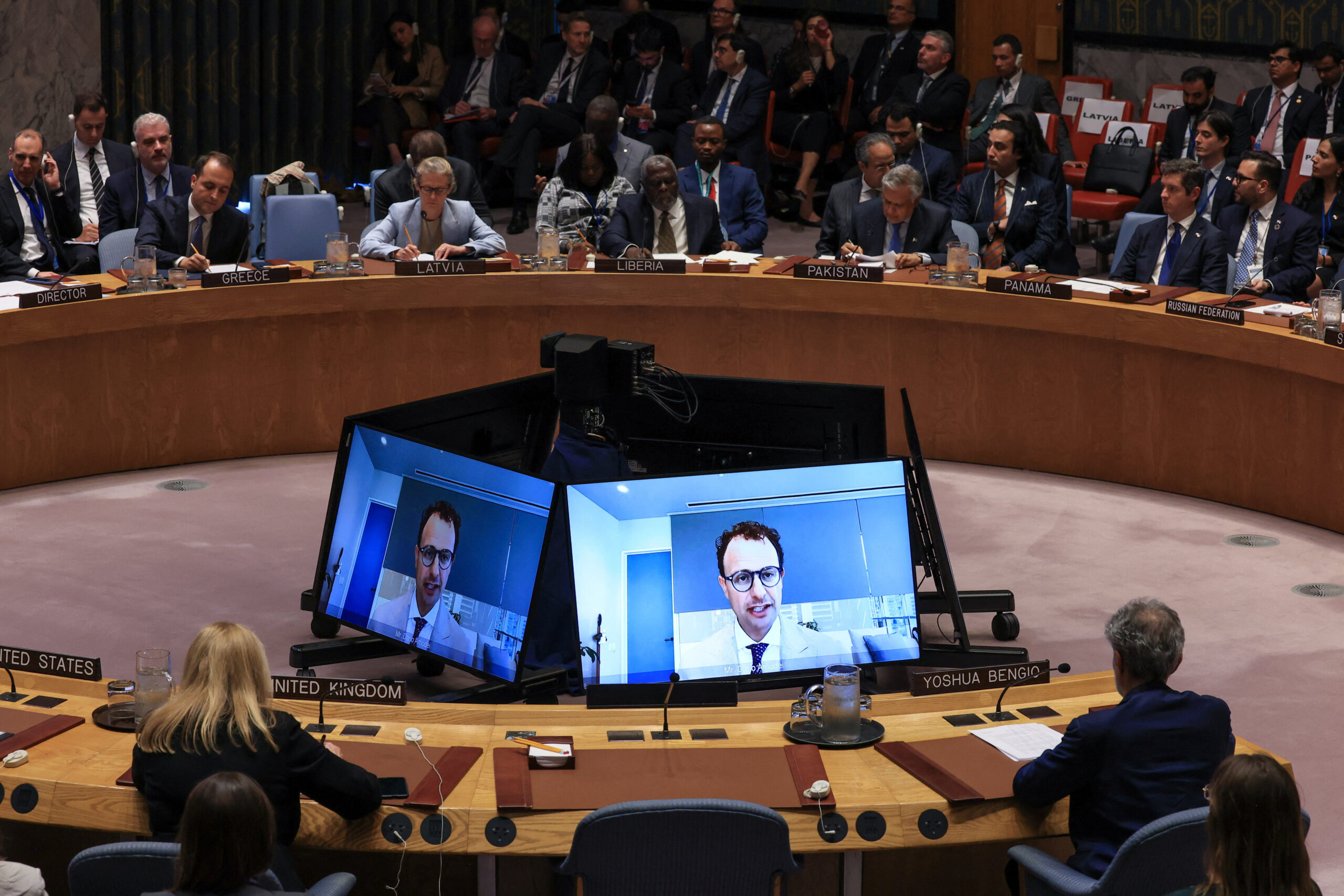
The world’s leading artificial intelligence companies warned the United Nations Security Council on Wednesday of the risks posed by AI to humanity, appealing for governments to work together to manage the increasingly powerful technology.

Anthropic CEO Dario Amodei told the 15-member council, which is charged with maintaining international peace and security, that if managed poorly, he believed “AI could be a risk to humanity as a whole.”

The meeting — convened by France during the annual UN General Assembly gathering of world leaders — comes amid warnings that AI systems could soon improve themselves and slip beyond human control.

“For all the differences of the people in this room, we must put aside those differences in order to confront this global opportunity and global threat that is being presented to us at the same time. No leader, no company and no nation can manage this alone,” Amodei said.

Governments around the world have struggled to keep pace with rapid advances in artificial intelligence. The United States and China, the two leading powers in AI development, have taken different approaches to oversight.

President Donald Trump has argued that the US does not need new AI-specific regulations, while China has imposed rules governing AI algorithms and training data, including requirements that AI-generated content be clearly labeled.

Hugging Face co-founder Clément Delangue highlighted the role of AI tools in defending against cyberattacks, citing an incident in which US giant OpenAI’s AI agents breached Hugging Face’s infrastructure after escaping their testing environment.

“We were attacked by AI, but more importantly, we defended ourselves with AI,” he told the council.

Council members, including leading AI rivals the United States and China, were also set to speak.

Delangue said Hugging Face relied on a Chinese AI model to help defend against the attack by OpenAI’s AI agents because it faced fewer restrictions than comparable US tools. His remarks underscored the growing presence of Chinese AI products, which have gained users globally in part because they can offer lower-cost alternatives to American models.

OpenAI CEO Sam Altman said international cooperation was needed.

“If AI is to be democratic, the most important decisions cannot be made by labs in San Francisco alone. They must be shaped through democratic processes and by governments accountable to the people they serve,” Altman told the council.

As the council met, Australian Prime Minister Anthony Albanese told reporters in New York that an AI agent developed by OpenAI infiltrated an Australian government website in June, accessing public and non-public files.

US to UN: You cannot govern technology you don’t understand

Yoshua Bengio, a Canadian considered one of the “Godfathers of AI” and co-chair of the Independent International Scientific Panel — created by the UN General Assembly last year — told the Security Council: “The dangers are real and imminent.”

“This council faces an unprecedented threat, one that none of its members would choose, that none can contain alone, and that does not respect the borders we defend,” he said.

Trump told world leaders at the UN General Assembly on Tuesday that he “rejects any attempt to construct a globalist scheme to control” AI, describing the technology as amazing but noting that the US would be careful.

White House science and technology adviser Michael Kratsios echoed Trump in remarks to the UN Security Council on Wednesday.

“You cannot govern technology you do not understand. This body and others like it should focus on sharing best practices to build domestic capacity, not establishing a global regulatory scheme,” he said.

China’s UN Ambassador Fu Cong said continuous improvement of regulatory frameworks, emergency response, and cross-border cooperation on AI was needed.

“It is incumbent upon the international community to work more closely together, attach equal importance to development and security, and steer AI development for the positive, for good, and for humanity,” he told the Security Council.

UN Secretary-General Antonio Guterres, who has long pushed for global governance of AI, has warned that rapidly advancing artificial intelligence poses risks that cannot be ignored, putting him at odds with Trump.

The Security Council met for the first time on the risks of AI in 2023, when China said the technology should not become a “runaway horse” and the United States warned against its use to censor or repress people. Then-US Secretary of State Antony Blinken chaired a Security Council meeting on AI in 2024. – Rappler.com


Similar Posts

  • | | |

    Iran-linked hackers shut UK power plant for four d…

    LONDON: Hackers linked to the Iranian regime reportedly forced a small British power-generating facility to shut down for four days last month in what could be the first known successful cyberattack of its kind against a UK energy site. The incident, reported by The Telegraph, has raised fresh concerns about the ability of state-linked cyber groups to move beyond digital intrusion and cause disruption to physical infrastructure. However, British officials stressed that the affected facility was small and that the wider electricity system was never at risk. The identity and location of the facility have not been disclosed for security reasons. According to reports, staff spent several days working to restore the plant and return its systems to normal operation. The attack did not cause any significant impact on Britain’s overall electricity generation or supply. A government source described the facility as extremely small compared with the capacity of the national grid and said it did not fall within the category of major generators required to report certain cyber incidents. Despite the limited disruption, the incident has attracted attention because of what it demonstrates about the evolving cyber threat. If confirmed, it would represent a significant step for hackers associated with Iran, showing that they were able to penetrate an energy facility and temporarily interrupt its operations. The precise method used to gain access to the plant has not been publicly disclosed. Nor has the British government formally attributed the attack to a specific Iranian hacking group. The National Cyber Security Centre, which works with organisations to protect critical infrastructure, declined to comment on the individual incident. British authorities have nevertheless taken the incident seriously. Government officials reportedly briefed senior executives at power companies and provided advice on how operators should respond to the growing threat of cyberattacks. The incident comes amid heightened concern in Western countries over cyber operations linked to Iran, Russia, China and North Korea. British cybersecurity officials have repeatedly warned organisations to strengthen their defences as geopolitical tensions increase. The attack also reportedly occurred around the same period as cyber incidents targeting water infrastructure in several US states, although the relationship between the incidents has not been established publicly. For Britain’s energy sector, the episode serves as a warning even though the national grid remained unaffected. Smaller generators and industrial facilities can still provide potential entry points for attackers seeking to test their capabilities. The immediate disruption may have been limited, but the incident has intensified scrutiny of Britain’s energy cybersecurity. Authorities now face the challenge of ensuring that a temporary shutdown at a small facility does not become a blueprint for attacks against larger and more strategically important infrastructure.

  • |

    Indian Software engineer allegedly beaten to death by in-laws over domestic dispute

      A 31-year-old software engineer was allegedly beaten to death by his in-laws following a domestic dispute at his home in India, according to allegations made by his family. The deceased, identified as Viney Gupta had been married to a woman named Rekha for around three and a half years. Rekha is a housewife, and the couple had twin children—a son and a daughter. Viney worked as a software engineer in Noida and reportedly earned more than Rs6 million annually. According to Viney’s mother, the incident began with an argument between the couple over giving medicine to one of their children. The disagreement reportedly escalated after Viney raised his voice, causing Rekha to become angry. Following the heated exchange, she allegedly left the house and returned around 10 minutes later accompanied by members of her family. Viney’s family alleged that Rekha arrived with her two brothers, sister-in-law, father, uncle and another man. They claimed that the group entered the house and began assaulting Viney. The family further alleged that Viney’s mother was away at the time the alleged attack began, as she had gone to arrange water and tea for the visitors. According to the allegations, the attackers repeatedly assaulted Viney, strangled him and struck him on the chest with their hands and feet. His family members said they attempted to intervene and save him, but the alleged assault continued. Viney’s father said that the couple had been experiencing disagreements over minor issues for some time. The family had reportedly hoped that the problems could be resolved through discussion and reconciliation. However, he alleged that the situation eventually escalated into violence, resulting in Viney’s death. The deceased’s family has alleged that Rekha and six to seven other people were involved in the incident. They have also accused the suspects of conspiring to kill Viney. Police have arrested four suspects in connection with the case. Those arrested reportedly include Viney’s wife Rekha, her two brothers and another accused person. The investigation into the circumstances surrounding Viney’s death is continuing. Police are expected to question the arrested suspects and examine the allegations made by both sides to determine what led to the fatal confrontation. The case has drawn attention to the escalation of domestic disputes into serious violence, while the exact circumstances surrounding Viney’s death will be established through the ongoing police investigation.

  • |

    Bangladesh President Shahabuddin resigns, cites serious health issues

    Bangladesh President Mohammed Shahabuddin has resigned from office after citing serious health concerns that he said were preventing him from fulfilling his constitutional responsibilities. The 76-year-old announced that he had recently been diagnosed with autonomic neuropathy, a medical condition that occasionally causes sudden loss of consciousness. He said continuing in office had become increasingly difficult because of his health and that stepping down was in the country’s best interest. Shahabuddin had been serving as Bangladesh’s president since April 2023. While the presidency is largely a ceremonial position, the office plays an important constitutional role as the country’s head of state and commander-in-chief of the armed forces. Following his resignation, the Speaker of the Jatiya Sangsad (Parliament) will assume the responsibilities of acting president until parliament elects a new head of state under constitutional procedures. His resignation comes at a crucial time for Bangladesh, which has undergone major political changes since the 2024 student-led uprising that led to the removal of former Prime Minister Sheikh Hasina from power. The country’s political landscape has since shifted significantly, with the Awami League facing legal restrictions and many of its leaders confronting legal challenges or remaining out of public view. Shahabuddin had been elected president in 2023 with the backing of the Awami League. His departure means another major political figure associated with the former ruling party has left public office during Bangladesh’s ongoing political transition. The government is now expected to begin the constitutional process of electing a new president. Until then, the acting president will perform all official duties to ensure the continuity of state affairs. Political observers say the selection of Bangladesh’s next president will be closely watched, as it comes during a period of political uncertainty and institutional reforms. The new appointment is expected to play an important symbolic role as the country prepares for future political and constitutional developments. In his resignation statement, Shahabuddin thanked the people of Bangladesh for their trust and support during his tenure. He expressed hope that the country would continue on a path of peace, democratic stability and economic progress despite the current political challenges.

  • | |

    Canada announces retaliatory tariffs as trade talks with US collapse

    OTTAWA: Canada has announced plans to impose new tariffs on a range of American products in response to steep duties introduced by US President Donald Trump on Canadian goods, marking another sharp deterioration in trade relations between the two North American neighbours. Prime Minister Mark Carney said on Saturday that Canada would adopt a “dollar-for-dollar” approach to Washington’s latest tariffs. The retaliatory measures are scheduled to take effect on September 8 and will cover products including US steel, electronics, appliances, agricultural equipment, pulp and paper and other goods. The announcement came after three days of intensive negotiations between Canadian and US officials ended without a trade agreement. Both sides blamed the other for the failure to reach a breakthrough, raising fresh uncertainty over the future of the United States-Mexico-Canada trade framework. Carney vows to defend Canadian economy Speaking at a press conference in Ottawa, Carney said Canada would respond to the US measures in an effort to shield workers, farmers, businesses and families from the economic impact of the new duties. “Canada will match Washington’s new tariffs dollar for dollar,” Carney said, stressing that Ottawa could not accept the conditions put forward by the US administration. Asked whether the dispute had effectively developed into a trade war, Carney responded in stark terms, saying Canada had been attacked and therefore had to defend its economic interests. The Canadian government said its countermeasures would target a broad selection of US products. Further details, including the specific goods affected and the tariff rates, are expected to be announced in the coming days. Carney also indicated that Ottawa would introduce support programmes for Canadian industries affected by the American duties. The assistance could remain in place for several years depending on the impact of the trade measures. US-Canada negotiations break down The latest dispute follows the collapse of negotiations that had been viewed as an opportunity to prevent a further escalation in tariffs. US Trade Representative Jamieson Greer described the failed talks as a missed opportunity for Canada and said Washington would proceed with measures responding to Canadian retaliation. He also suggested that no fresh negotiations were immediately planned. The White House and offices representing the US commerce secretary and trade representative did not immediately issue a detailed response to Canada’s announcement. The breakdown has created additional uncertainty for businesses operating across the US-Canada border, particularly industries that depend heavily on integrated North American supply chains. New US duties affect key Canadian exports The latest US tariffs apply to a range of Canadian exports, including wine, furniture, dairy products, cement, clothing, fishing equipment and hockey-related products. According to the Canadian government, the new duties affect approximately $20 billion worth of Canadian exports to the United States. Unlike some previous measures, the latest tariffs do not fully exempt products traded under the existing North American trade agreement. The new duties represent a relatively small share of Canada’s overall exports to the US, but officials and industry representatives warn that individual sectors could face significant pressure. Industries such as softwood lumber, wine, manufacturing and other export-oriented businesses could experience weaker demand, higher costs and potential employment losses if the dispute continues. Candace Laing, chief executive of the Canadian Chamber of Commerce, urged companies across the country to prepare for a prolonged period of uncertainty. Dispute over vehicles and trade conditions One of the most difficult issues during the negotiations involved the treatment of larger vehicles. Canadian negotiators reportedly sought to extend preferential tariff arrangements for light-duty vehicles to medium- and heavy-duty trucks. Washington opposed the proposal, according to people familiar with the negotiations. Carney said the US position could have placed Canadian-made models at a competitive disadvantage. He specifically pointed to vehicles produced in Canada, including Ford’s F-350, F-450 and F-550 trucks and General Motors’ Silverado. The Canadian prime minister also said some US proposals touched on issues involving Canadian culture, language and sovereignty, although he did not provide further details. Ontario backs Ottawa’s position Ontario Premier Doug Ford, a prominent critic of US tariffs, welcomed Carney’s decision to reject what he described as an unfavourable agreement. Ford said the proposed terms would have harmed Ontario’s automotive, steel and manufacturing industries, adding that he supported Ottawa’s decision to retaliate rather than accept a deal that he considered damaging to the province. Ontario is particularly exposed to disruptions in US-Canada trade because of its large manufacturing and automotive sectors and its close integration with American supply chains. Canada seeks new international partnerships The escalating dispute also comes as Canada seeks to reduce its economic dependence on the United States. Nearly 70% of Canadian exports are destined for the US market, making the country particularly vulnerable to changes in American trade policy. Carney has nevertheless pledged to strengthen Canada’s relationships with other countries and explore new trade and security partnerships. The prime minister was elected on a platform that included a tougher negotiating stance toward the Trump administration. His government has maintained that Canada should defend its economic interests while looking for opportunities to expand trade beyond its southern neighbour. Public opinion has also strengthened Ottawa’s position, with polling indicating that many Canadians oppose making major concessions to Washington. Conservative Party leader Pierre Poilievre, who leads the federal opposition, also called for national unity in response to the US tariffs.

  • |

    Rare “Super White” falcon sold for AED 250,000 at Abu Dhabi auction

      ABU DHABI: A rare “Super White” falcon has been sold for AED 250,000 (approximately Rs18.9 million) at an international falconry auction in Abu Dhabi, attracting considerable attention from falcon enthusiasts and bidders. The auction took place at the Abu Dhabi National Exhibition Centre (ADNEC) as part of the opening auction evening of the international exhibition dedicated to falconry and related traditions. The event became particularly memorable when Emirati bidder Khalid bin Saifan made a dramatic jump in the bidding to secure the rare bird. The bidding had reached AED 210,000 when Khalid bin Saifan suddenly increased the offer to AED 250,000 in a single bid. His unexpected move surprised the audience gathered in the hall and immediately secured the “Super White” falcon for him. The significant increase demonstrated the high value placed on rare and distinctive falcons among enthusiasts and collectors in the region. Following his successful bid, Khalid bin Saifan expressed his happiness by reciting a traditional Emirati poetic verse. His celebration added a cultural dimension to an auction that highlighted the long-standing importance of falconry in Emirati heritage. A total of seven rare birds were presented during the Saturday evening auction. Among them, the “Super White Gyr” emerged as the highest-priced falcon sold during the event. Its exceptional appearance and rarity contributed to the strong interest it received from bidders. Falconry has deep historical and cultural roots in the United Arab Emirates and remains an important part of the country’s heritage. Events such as these auctions provide falcon enthusiasts with opportunities to acquire rare birds while also promoting traditional practices associated with falconry. The falcons purchased through the auction will also have an opportunity to obtain an “ADIHEX badge.” The badge will allow eligible falcons to participate in the historic President’s Cup Falconry Competition for the 2026–27 season. The competition is considered an important event in the regional falconry calendar and provides an opportunity for skilled falcons and their handlers to compete at a high level. The international exhibition itself is scheduled to run from August 28 to September 6. During the exhibition, a total of eight different auctions will be held, giving participants multiple opportunities to bid for rare falcons and other valuable birds. Both online and in-person bidding options will be available during the upcoming auctions. This approach is expected to attract participants from inside the UAE as well as falconry enthusiasts and collectors from other countries. The sale of the “Super White Gyr” for AED 250,000 highlights the continuing demand for rare falcons and the financial value attached to exceptional birds. It also demonstrates how traditional Emirati heritage continues to attract interest through modern events that combine cultural preservation, international participation and competitive auctions. With seven birds already presented during the opening auction evening and seven more auctions scheduled during the exhibition, further high-value sales could take place in the coming days. The event is expected to remain a major gathering for falconers, breeders, collectors and enthusiasts interested in the preservation and development of falconry traditions. The successful sale of the rare “Super White” falcon has therefore provided an impressive start to the auction programme, while also underscoring the cultural significance and enduring popularity of falconry in the UAE.

Leave a Reply

Your email address will not be published. Required fields are marked *