aiou recruitment process
| |

AIOU recruitment process declared non transparent …

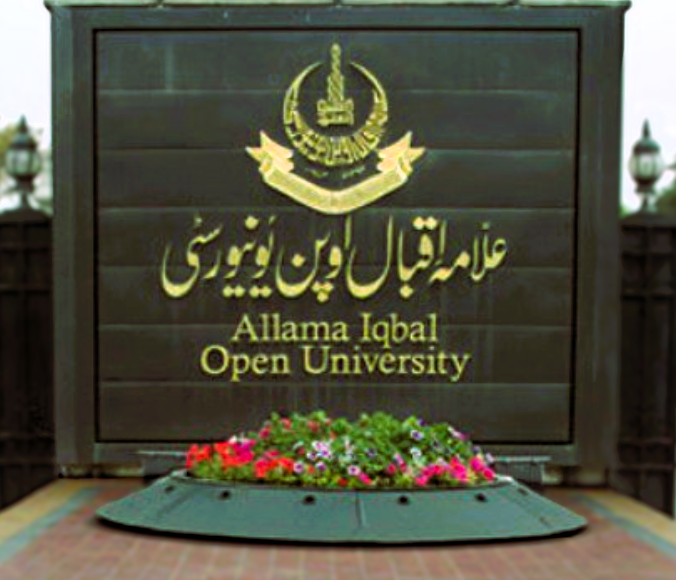
Islamabad: A controversy has emerged over the recruitment process of Allama Iqbal Open University (AIOU) after the Wafaqi Mohtasib declared that the selection process for senior academic positions lacked transparency and directed the university to cancel appointments and repeat the process.

The decision came after a complaint filed by a female complainant, who challenged her exclusion from the shortlist for Professor and Associate Professor positions despite claiming she met the required eligibility criteria.

The Wafaqi Mohtasib, after reviewing documents and hearing both sides, concluded that maladministration was established and stated that serious questions were raised about the transparency of the selection process.

The Ombudsman referred the matter to the Vice Chancellor of AIOU with directions to cancel the appointments and conduct the recruitment process again according to proper procedures.

The controversy relates to faculty recruitment advertisements issued by AIOU for Professor and Associate Professor positions.

According to the findings, AIOU advertised several academic positions on 15 September 2024, and received a large number of applications. Officials informed that 388 applications were received for 25 advertised Professor and Associate Professor positions.

The university introduced an Internal Assessment Framework to shortlist candidates before sending applications for further evaluation.

According to AIOU, the decision was taken because evaluating hundreds of academic files through experts would create major financial and administrative difficulties. Officials estimated that external evaluation of dossiers could cost around Rs26 million.

Under the new system, eligible candidates were assessed through multiple stages including vision statement, leadership assessment, psychological assessment, teaching demonstration and screening interview.

The assessment was conducted out of 50 marks, and 24 candidates were recommended for further selection stages. However, the female complainant was not recommended for any position.

The female complainant challenged the process, arguing that the university changed recruitment procedures after the hiring process had already started.

She claimed that according to the original recruitment rules, eligible candidates were required to appear before the Selection Board and that the introduction of an Internal Assessment as an elimination stage had no legal basis.

She also argued that she was not properly informed about all stages of the assessment process.

The complainant stated that she was informed about teaching demonstration and leadership assessment but was not informed about psychological assessment and screening interview.

The complaint also raised concerns over fair hearing rights, claiming that she was excluded from the final process without written reasons or an opportunity to explain her position.

Another serious issue raised was the timing of the Selection Board meeting. The complainant claimed that the Selection Board meeting took place on 10 April 2026, a public holiday, and that the approval process and appointment letters were completed unusually quickly on the same day. She questioned whether the process was properly transparent.

She argued that recruitment rules and selection criteria should not be changed after the recruitment process has started.

The Ombudsman examined the matter and found that the selection process did not appear transparent.

The findings stated that several questions raised by the complainant required attention and that the recruitment process showed signs of maladministration.

AIOU officials had defended the process, saying the Internal Assessment Framework was approved by the university’s Executive Council and applied to the advertised positions.

They said the system was designed to identify the most competitive candidates while reducing time and financial burden.

The case now requires AIOU to report compliance with the Ombudsman’s decision within the given period.

The controversy has raised broader questions about transparency, fairness and recruitment procedures in public sector universities, where senior academic appointments directly affect the quality of education.

Similar Posts

  • | | | |

    Why Lahore sinks whenever it rains in the city? 

    The rain on July 22 almost sank most parts of Defence Housing Authority. Those low-lying areas of the city were also under water. And this happened as the city was lashed with 343 millimetres of rain for two days, according to the Provincial Disaster Management Authority (PDMA). That spell has gone and when you are reading these lines, the city is undergoing a second rain spell. Pakistan’s Meteorological Department has issued a fresh weather advisory, warning that another active monsoon spell is expected from July 29 to August 5 across much of the country. The department said rain, wind and thundershowers, along with scattered heavy to very heavy rainfall, may trigger urban flooding, flash floods and landslides in vulnerable areas. This will keep the residents of low-lying areas, mainly of Lahore’s south, and DHA on the toe. Reacting to this advisory, environmental activist Rafay Alam explained why cities like Lahore keep flooding every monsoon season, and what is really behind the crisis. He said the Met Department had already notified that rain would continue for two days and people were warned in advance that urban flooding would take place, not just in Lahore, but in several cities across Punjab, including Gujranwala and Sialkot. He then pointed to last year’s floods for comparison. “Those floods were caused by heavy rains in the northern areas of the country, which caused rivers to swell,” he said. On top of that, India had released water from the Pong Dam and Bhakra Dam. He said a gate at the Madhopur headworks also broke, causing water levels in the Ravi river to rise sharply. Alam said the situation today is different. The flooding happening now is not caused by river floods or dam releases. Instead, it is simply due to heavy rainfall occurring within Pakistan itself. He said that if people read the Met Department’s advisory carefully, the heaviest rain in the coming days is expected in the northern areas once again, not directly over Lahore. He advised people to check whether they live in low lying or high lying areas, since this makes a big difference during heavy rain. However, he said that the real issue lies in the sheer intensity of rainfall being recorded now. “Some areas have received around 150 millimetres of rain within just a few hours,” he said. He added that 20 or 30 years ago, when the drainage systems and infrastructure in these areas were built, climate change was never part of the planning. Nobody at that time imagined that such intense rainfall could happen within just a few hours. As a result, the old infrastructure simply cannot handle the kind of rain Pakistan is now experiencing. Dr Farid A Malik, a resident of Defence Phase 5, witnessed the entire flood attack first hand. He said that when he was growing up in the 1950s, 1960s and 1970s, rainwater never used to stand in Lahore. At that time, he said, the city was much smaller and the population was far lower, yet even then, the city did not face standing water after rainfall the way it does today. “Whenever the rain would stop, we children used to go out on our bicycles looking for standing water, just for fun. And there were really only two places where water would collect. One was near Shahdara, and another was near the Do Moriya Pul area close to the railway station. That area of Shahdara was a low lying area,” he said. He recalled that in the 1970s, when Zulfiqar Ali Bhutto’s government came into power, and the People’s Party had a lot of support from that area of Lahore at the time, the government promised that they would install pumps in Shahdara and set up a proper system to drain the water out. And they actually did this. Heavy duty pumps were installed in Shahdara, and they used to successfully drain the water out. Dr Farid said the sewerage system Lahore has today simply cannot handle rainwater, because the amount of water that comes with heavy rain is very large, and the system does not have the capacity to handle that much water. He explained there are two separate problems here. First, the underground sewerage system is not cleaned properly. The pipes, whether four feet wide or six feet wide, have become clogged with scaling inside them over time. So even though a pipe might be four or six feet in diameter, the actual open space left for water to pass through has shrunk down to just one or two feet, meaning the whole system does not flow properly. Second, even if the sewerage system was clean, it still cannot handle rainwater on top of regular sewage. For this reason, Lahore used to have separate storm drains, called nalas in Urdu, which carried rainwater away separately into the Ravi river. Because of this separate system, rainwater never used to accumulate in the city. He said this has changed because storm drains have been blocked, either through neglect or construction on top of them. “An entire market has been built on top of a storm drain along Hall Road,” he said, adding that similar encroachment has happened along the Ravi river itself. Last year, water that should have gone into the river ended up flowing into housing societies instead. Dr Farid also pointed out that when Lahore had open drains instead of an underground sewerage system, the drainage actually worked better. Since the city moved underground, cleaning has become irregular, flow has suffered, and pumping stations work only some of the time. He said Lahore’s expansion added to the problem, since new areas were given sewerage systems but no proper storm drain network for rainwater. DHA, he said, expanded in phases over the years without any master plan covering how sewage and rainwater would both be managed. Speaking about his own neighbourhood, Dr Farid said there is a pumping station near the Sui Gas Society area of Defence that pumps sewage water

  • |

    Delhi pushes electric vehicle drive to tackle worsening air pollution

    Delhi has launched one of India’s boldest electric vehicle plans as authorities step up efforts to reduce dangerous air pollution in the capital. The new policy, introduced on July 1, aims to ensure that most newly registered vehicles in the city are electric by 2027. Officials believe the move will improve air quality and reduce harmful emissions, although experts say its success will depend on expanding charging facilities and strengthening the electricity network. Across several parts of Delhi, electric vehicle charging stations are becoming increasingly busy as more residents switch to battery powered scooters, cars and commercial vehicles. Even so, many drivers say the city still lacks enough charging points to support widespread use. Shyam Singh, who uses an electric scooter for work, said the existing infrastructure is not sufficient, especially for people who travel long distances. He explained that limited battery range and the shortage of charging stations remain major concerns for potential buyers. Under the new policy, existing petrol and diesel vehicles will not be banned, but the government expects their numbers to decline over time as electric vehicles become more common. Buyers will receive financial incentives including subsidies, exemptions from registration fees and some road taxes. People who scrap older fuel powered vehicles will also qualify for additional cash rewards. Authorities estimate the policy will cost around 150 billion rupees and is designed to encourage faster adoption of cleaner transport across the city. The plan focuses heavily on two and three wheelers, which make up nearly 70 percent of vehicles on Delhi’s roads. From 2027, all newly registered three wheelers and small commercial trucks must be electric. The same requirement will apply to newly registered two wheelers from the following year. Larger passenger cars and heavy vehicles running on conventional fuels will still be allowed for now. Electric vehicles currently account for only about five percent of the nearly 8.7 million vehicles registered in Delhi. However, registrations have grown steadily over the past year, with more than 100,000 new electric vehicles added, most of them scooters and auto rickshaws. Experts say the latest policy sends a clear signal that the city is committed to reducing dependence on fossil fuel powered transport. Energy specialists have described Delhi’s strategy as one of the most ambitious electric vehicle policies introduced by any Indian state. Jaideep Saraswat of the Vasudha Foundation said the firm deadlines make it clear that the transition to electric transport is unavoidable. He believes the policy will encourage both manufacturers and consumers to prepare for a future where electric vehicles dominate the market. Delhi has struggled with severe air pollution for years, particularly during winter when smog often reaches hazardous levels. The city regularly experiences school closures, restrictions on construction and emergency health measures because of poor air quality. Vehicles contribute around one quarter of pollution across the National Capital Region, while two and three wheelers alone account for almost half of transport related emissions within the city. Analysts say Delhi has already taken important steps toward cleaner transport in the past, including shifting many public vehicles to compressed natural gas. According to energy experts, electric vehicles represented around 12.7 percent of new vehicle sales in Delhi during the 2026 financial year, compared with the national average of 8.3 percent. They believe the latest policy builds on that progress by linking financial incentives with strict registration deadlines for conventional vehicles. Despite the optimism, several challenges remain. Some residents are still hesitant to switch because they worry about battery life, charging convenience and the effect of seasonal flooding on electric vehicles. Others believe more advanced and affordable models will become available in the coming years, making it worthwhile to delay their purchase. Experts also stress that expanding charging infrastructure is only part of the solution. Delhi must increase the use of renewable energy to power electric vehicles and modernize its electricity grid to handle rising demand. Fast charging stations, battery storage systems and better electricity management will all be necessary to support large scale adoption. Specialists also believe cooperation with neighboring states will be essential to reduce emissions from the wider power network and create a cleaner transport system for the entire region.

  • |

    Private sector gets record Rs1.138 trillion loans in FY2025-26

    Pakistan’s private sector secured bank financing worth Rs1.138 trillion during the fiscal year 2025-26, marking the highest level of private-sector credit in the last four years, according to Adviser to the Finance Minister Khurram Shahzad. In a statement, Shahzad said the sharp increase in lending reflects improving economic conditions, stronger business confidence, and the government’s efforts to encourage investment and industrial growth. He noted that private-sector credit expanded by approximately 15 percent during the fiscal year compared to the previous year. The adviser highlighted that greater access to financing has played a key role in supporting business expansion and productive economic activities across the country. He added that around 89 percent of the newly disbursed loans were directed toward major productive sectors, including manufacturing, wholesale and retail trade, and agriculture. According to Shahzad, the manufacturing sector alone received fresh financing of Rs657 billion, enabling industries to expand production capacity, modernize operations, and meet growing market demand. He said the significant flow of funds into manufacturing demonstrates renewed confidence in Pakistan’s industrial sector. He further stated that increased financial support for the trade and agriculture sectors has contributed to higher production, stronger commercial activity, and improved investment by private businesses. Enhanced credit availability, he said, is helping enterprises expand operations, create employment opportunities, and strengthen overall economic performance. Shahzad described the record lending as a positive indicator of the country’s economic recovery, saying that rising private-sector borrowing reflects improving investor sentiment and greater confidence in Pakistan’s financial system. He added that sustained access to bank financing would remain essential for maintaining economic momentum, boosting productivity, and supporting long-term, sustainable growth.

  • |

    Hyderabad police issue 45 e-challans

    Hyderabad Police have issued 45 e-challans for various traffic violations after introducing the e-challan system in the city. According to a police spokesperson, SSP Hyderabad Shahzeb Chachar directed officers to use modern technology to strengthen traffic law enforcement. Officers issued the challans through a mobile application after recording violations at different locations. DSP Hussainabad Ghulam Akbar, DSP Traffic Latifabad Masood Arain and SO Auto Bhan Faisal Ali supervised the operation. Police are paying particular attention to violations on Auto Bhan Road, including parking in no-parking areas, driving in the wrong direction, one-way violations and signal jumping. SSP Shahzeb Chachar has instructed officers to take action against traffic violators without discrimination and ensure motorists follow traffic rules. Hyderabad Police have also urged citizens to park only in designated areas, follow the correct direction of traffic and obey signals and other road regulations.

  • |

    UET hosts HEC meeting on AI-driven higher educatio…

    LAHORE: The University of Engineering and Technology (UET) Lahore hosted a high-level meeting of vice chancellors from more than 80 universities across Punjab under the auspices of the Higher Education Commission (HEC). HEC Chairman Professor Dr Niaz Ahmad Akhtar chaired the meeting, while UET Lahore Vice Chancellor Professor Dr Shahid Munir hosted the gathering. Punjab University Vice Chancellor Dr Muhammad Ali Shah also attended the meeting and joined the senior academic leadership on stage. The meeting focused on the rapid transformation of higher education in line with the changing demands of technology, industry and the global job market. Participants discussed the federal government’s initiative to modernize university curricula and degree programmes, with a particular emphasis on artificial intelligence and emerging technologies. Dr Niaz Ahmad Akhtar urged universities to take immediate steps to update their curricula, teaching methods and academic programmes. He stressed the need to equip students with modern knowledge and practical skills that can help them compete in an increasingly technology-driven economy. The HEC chairman highlighted the importance of incorporating fields such as artificial intelligence, data science, robotics, cybersecurity and biotechnology into university education. He also called on universities to align their academic programmes with the evolving needs of industry and the employment market so they can produce graduates with relevant and marketable skills. During the meeting, participants exchanged views on the role of artificial intelligence in higher education, research and innovation. They also discussed digital learning, technology-enabled teaching and opportunities to strengthen international collaboration among universities. UET Lahore Vice Chancellor Professor Dr Shahid Munir said the university was ready to share its AI-related curriculum and coursework with other higher education institutions. He emphasized the importance of cooperation among universities to accelerate the adoption of modern technologies and strengthen the quality of higher education across the country. The meeting also highlighted the growing importance of research and digital education in preparing universities for future challenges. Academic leaders discussed ways to promote innovation, improve learning opportunities and create stronger links between higher education institutions and industry. As part of a plantation campaign at UET Lahore, HEC Chairman Professor Dr Niaz Ahmad Akhtar also planted a sapling on the university campus, underscoring the institution’s commitment to environmental sustainability. The meeting concluded with UET Lahore Vice Chancellor Professor Dr Shahid Munir presenting a commemorative shield to the HEC chairman in recognition of his visit and participation in the important academic gathering.

  • | |

    Sherjeel Memon alleges pre-poll rigging ahead of A…

    MIRPUR, July 26: Sindh Information Minister Sharjeel Inam Memon has accused political opponents of attempting to influence the Azad Jammu and Kashmir elections before polling. Speaking to journalists in Mirpur, Memon alleged that buses worth Rs200 million were sent to the region a day before polling as part of an attempt to influence voters. He claimed that the move was aimed at creating an impression among voters and affecting their electoral choices. Memon also criticised the Election Commission of AJK. He alleged that the commission had failed to take timely action against what he described as pre-poll rigging. He said the PPP would oppose any attempt to manipulate the election process. The provincial minister also criticised the Pakistan Muslim League-Nawaz. He accused the party of ignoring what he described as unconstitutional and unethical actions. Memon said the final decision in the AJK elections would be made by the people of Kashmir. He urged federal ministers to focus on their official responsibilities. He also called on them to stay away from activities that could interfere with the electoral process. The Sindh minister alleged that attempts were being made to influence voters through buses and trucks before polling. He questioned whether the people of Kashmir could be persuaded through material incentives. Memon said the people of Mirpur were politically aware. He expressed confidence that voters would not be influenced by such offers. He said PPP leaders had reached Mirpur to monitor the election situation. According to him, the party wanted to prevent alleged attempts to manipulate the electoral process. Memon also called on the Election Commission to examine the activities of federal ministers during the election campaign. He questioned why action had not been taken over alleged violations of the election code of conduct. The minister specifically asked why federal ministers involved in election campaigning had not faced action. Memon also highlighted the PPP’s position on the Kashmir issue. He said the party had consistently raised the issue at international forums. He praised PPP Chairman Bilawal Bhutto Zardari for presenting the Kashmir issue before the international community. Memon said he expected voters to support the PPP in the elections. He claimed that voters would reject what he described as smaller political parties. The minister further said Kashmiri voters could not be bought through financial or material incentives. He said people in Kashmir would reject attempts to influence their decisions through such tactics. Memon also questioned why action had not been taken against Defence Minister Khawaja Asif over alleged election-related violations. His comments came a day before the first phase of the AJK general elections. The polling process is set to begin on July 27 in the Mirpur division. The election campaign has intensified ahead of polling. Political parties are making competing claims about the electoral process, while authorities have warned against actions that could disrupt peaceful and transparent elections.

Leave a Reply

Your email address will not be published. Required fields are marked *