asiangamesopen nagoya glitzy
|

Asian Games open in Nagoya with glitzy ceremony after troubled buildup

NAGOYA, Japan – The 20th Asian Games opened in Nagoya on Saturday, September 19, with a glittering ceremony of dance and fireworks following a buildup marred by operational gaffes and logistical problems.

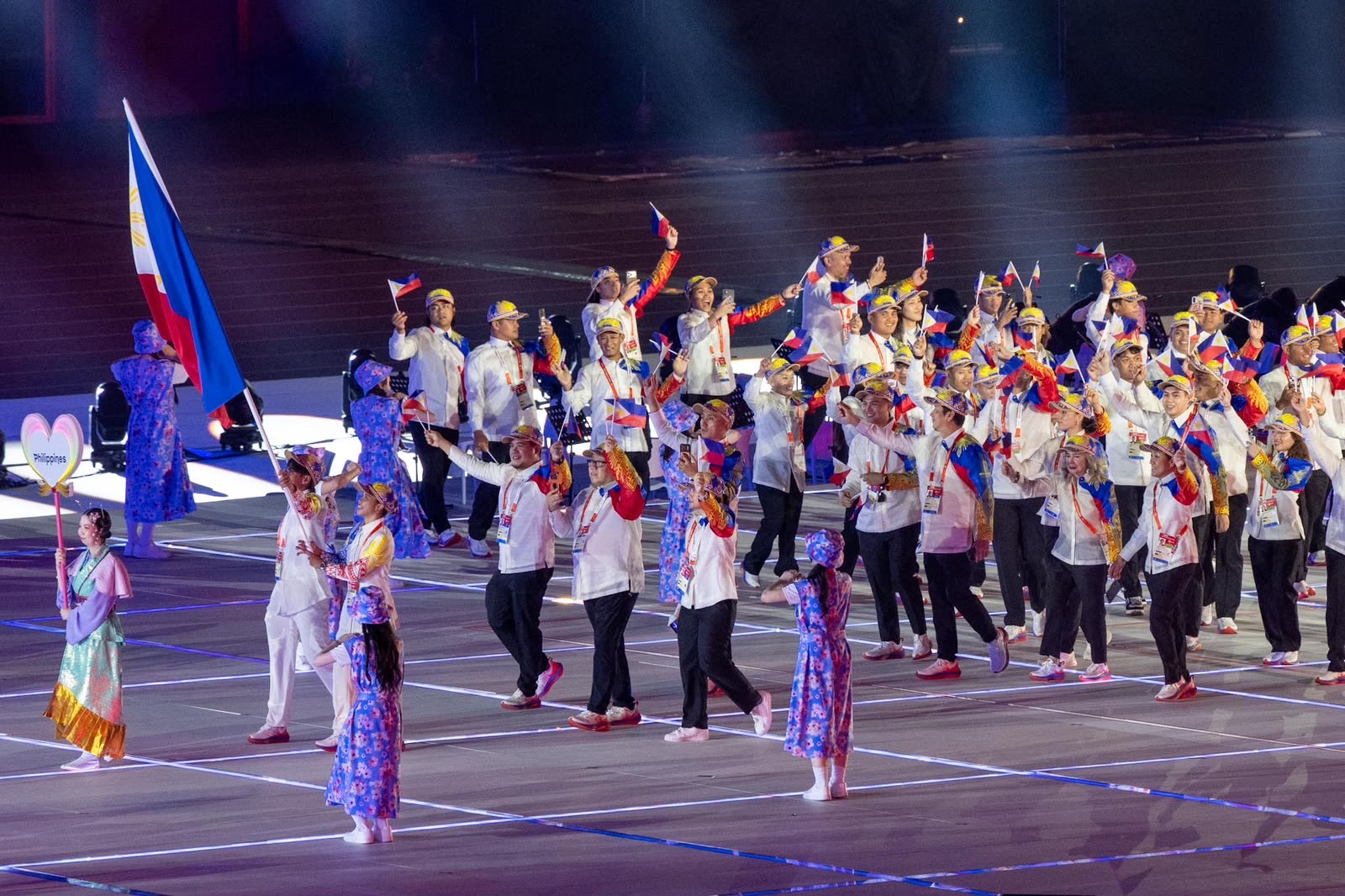
Five years after the Tokyo Olympics played out at empty venues due to COVID-19 restrictions, Japan welcomed fans to the Mizuho Park Athletic Stadium for a curtain-raiser that was initially subdued before bursting into a festival of colour and sound.

Emperor Naruhito declared the Games open after watching the parade of 45 nations and regions at a dignitaries’ table along with International Olympic Committee boss Kirsty Coventry.

Naruhito’s visit with royal family members was accompanied by a heavy security operation. Organizers had said up to 10,000 police would be deployed for the ceremony.

“While the world is too often divided by conflict, they (the Asiad athletes) remind us that sport remains a powerful force for peace, understanding and friendship among nations,” Olympic Council of Asia President Sheikh Joaan bin Hamad Al Thani said in a speech.

Complaints from athletes and officials

Japan’s father-and-son duo of Shigenobu Murofushi and Koji Murofushi, both former Asian Games champions in hammer throw, jointly lit the cauldron after climbing a set of stairs at the end of the torch relay.

Organizers will hope the ceremony can draw a line under a rocky buildup laden with complaints from athletes and officials involving accommodation and transport.

Japan’s reputation for precision and efficiency has been under scrutiny as the nation welcomes more than 11,000 athletes competing for 369 gold medals in a whopping 43-sport program.

Must Read

Team Japan forced to look at alternate accommodation options at home Asian Games


Team Japan forced to look at alternate accommodation options at home Asian Games

Instead of building a dedicated Games village, organizers have housed the athletes and officials in a mix of hotel rooms, temporary wooden containers and a cruise ship docked in the bay as a cost-cutting measure.

Several national team delegations, including hosts Japan, have found the arrangements below par, complaining of mix-ups and double-bookings, while South Korea said the containers at Garden Pier were too cramped for their basketballers.

India’s powerful cricket board took matters into their own hands, arranging for the men’s star-studded cricket team to stay in a separate hotel due to a tight allocation of beds from organizers.

Delegations have also lamented long waits for the athletes registering on arrival and have found buses turning up late or sending their athletes to the wrong venues.

The Olympic Council of Asia, which runs the quadrennial Games, acknowledged the problems on Saturday but played them down as teething difficulties. 

Directed by Yukihiko Tsutsumi, the opening ceremony made a low-key start, with classical music and dance on a heart-shaped stage before the parade of nations which featured a delegation from reclusive North Korea.

The spectacle ramped up later though, with dancers in boiler suits marking Nagoya’s manufacturing tradition and a fireworks display closing the night.

The ceremony’s theme was “Harmonic Heart Beat” — intended to communicate Asian solidarity at an event often riven by geopolitical tension and historic grudges.

However, hopes for a peaceful Games have already been undermined by several incidents.

Taiwan’s delegation temporarily refused to participate in their welcoming ceremony on Friday after sports minister and former Olympic champion Lee Yang was blocked from attending it.

The South Korean men’s hockey team were upset when North Korea’s national anthem was played at the stadium before a match instead of their own.

While competitions for basketball, soccer and other sports have already started, the first gold medal will be won on Sunday, likely in the triathlon.

A high-class swimming competition kicks off in Tokyo on Sunday, with the programme featuring China’s 100 metres freestyle world-record holder Pan Zhanle and 13-year-old sensation Yu Zidi.

Apart from traditional Olympic sports, the Games will stage regional favourites kabaddi and sepak takraw along with quirky, modern events.

Esports will award medals again after making its debut at Hangzhou, while teqball, a mix of table tennis and soccer, and “virtual taekwondo” will make their first appearance at the Games. – Rappler.com
Similar Posts

  • |

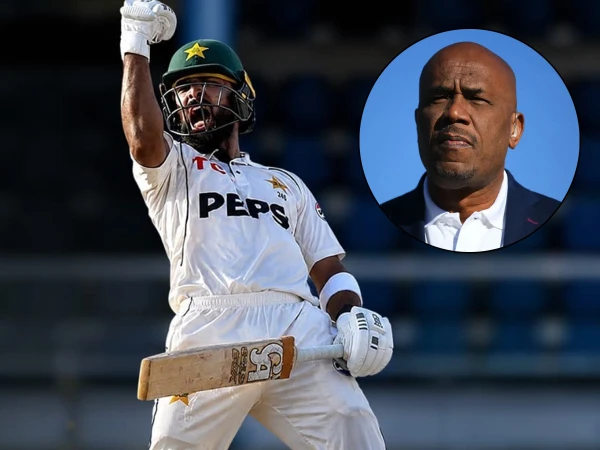
    ‘Can’t wait to watch Abdullah Shafique in England’, says Ian Bishop

    Former West Indies fast bowler and renowned cricket commentator Ian Bishop believes Pakistan opener Abdullah Shafique has the temperament and technique to succeed in English conditions, saying he is eager to watch the young batter during the upcoming Test series against England. Shafique has emerged as one of Pakistan’s most dependable red-ball batters following his remarkable performances against the West Indies, and Bishop feels the 26-year-old has all the qualities needed to handle one of cricket’s toughest challenges. Speaking about the Pakistani opener, Bishop described Shafique as a calm and composed batter who remains patient even in difficult situations. “Abdullah Shafique is a composed batter who knows how to build an innings under pressure,” Bishop said, adding that such qualities are crucial for success in England, where swinging conditions and disciplined bowling regularly test even the world’s best players. The former West Indies pacer acknowledged that English pitches present a unique challenge but noted that Shafique already has valuable experience after representing Yorkshire in county cricket. Although that exposure will help him adapt more quickly, Bishop stressed that delivering consistently in England remains a demanding task for any international batter. Shafique’s confidence has soared after his outstanding performance in the recently concluded Test series against the West Indies. Drafted into Pakistan’s squad after Shan Masood suffered an injury, the right-handed opener seized the opportunity in spectacular fashion. He remained unbeaten on 160, producing one of the finest innings of his career and becoming the first Pakistani batter in 49 years to score 150 or more runs in a Test innings in the West Indies. The memorable knock not only strengthened Pakistan’s batting lineup but also reinforced Shafique’s reputation as one of the country’s brightest Test prospects. With Pakistan set to face England in a highly anticipated Test series, fans and cricket experts alike will be watching closely to see whether Abdullah Shafique can carry his superb form into English conditions and establish himself among the world’s elite opening batters.

  • |

    Shaheen Afridi credits Champions Cup for World Cup preparations

    MULTAN: Pakistan fast bowler Shaheen Shah Afridi believes the National Champions Cup 2026 has played an important role in helping the national selectors assess players ahead of the ICC World Cup 2027. Shaheen, who led Pakistan Gold during the tournament, said the competition provided valuable opportunities to examine the fitness, form and potential of players who could become part of Pakistan’s ODI plans. Pakistan Gold endured a difficult start, losing their opening two matches, but produced a convincing turnaround against Pakistan Whites. Shaheen spearheaded the bowling attack, taking three wickets as Whites were dismissed for 172. Gold then chased down the target comfortably in the 28th over to secure a place in the final on the basis of a superior net run rate. They finished level on two points with Pakistan Blues and Whites but advanced because of their better NRR. Speaking to the Pakistan Cricket Board’s digital platform, Shaheen admitted that his team had struggled initially but said the players responded when qualification was still within reach. “The first two games were not in our favour, but we then sensed an opportunity to qualify,” he said, explaining that the team had decided to bowl first against Whites to maximise their chances. Shaheen praised his teammates for their disciplined display and singled out Fakhar Zaman for his impressive batting during the tournament. He also highlighted the broader importance of the Champions Cup, saying the competition allowed Pakistan to test players in competitive conditions rather than relying solely on domestic performances. “The tournament has been very good,” Shaheen said, noting that several close matches had provided valuable experience. According to the left-arm pacer, the event also helped the team management gauge players’ fitness levels and evaluate the available talent pool. With the 2027 World Cup approaching, Shaheen believes the Champions Cup has therefore served as more than just a domestic competition. It has offered Pakistan an early opportunity to identify reliable options, build depth and prepare a stronger ODI squad for the global event.

  • |

    FIFA’s $20bn plan shakes football power balance

    FIFA’s plan to bring private equity investment into global football is opening a new chapter in its long-running struggle with Europe over the sport’s power, finances and commercial control. The world football governing body, led by President Gianni Infantino, is considering the creation of a subsidiary valued at around $20 billion. The proposed company would manage the World Cup and other major FIFA events. Under the plan, outside investors could acquire stakes of up to 20% in the new entity. The proposal has already triggered strong opposition from European football authorities. UEFA has criticised the idea and accused FIFA of putting the “soul” of football at risk by allowing private investors greater access to the sport’s most valuable competitions. Infantino has defended the proposal as an effort to make football’s financial system more inclusive. He has described the initiative as a form of “democratisation” that could allow more football nations to benefit from the sport’s growing commercial revenues. The plan could also provide financial incentives to FIFA’s 211 member associations. Under the proposal, each association could receive up to $20 million in immediate funding for special projects. Further grants of $20 million or more could be provided during subsequent four-year cycles. Such funding could prove particularly attractive to smaller and emerging football nations that depend heavily on FIFA for financial support. FIFA already generates billions of dollars through broadcasting rights, sponsorships and other commercial agreements. The organisation had set a revenue target of $13 billion for its previous four-year cycle, which included the latest World Cup and the Club World Cup. However, FIFA’s financial strength remains smaller than the overall commercial value of European football. UEFA reported that Europe’s top club competitions generated around €4.4 billion during the 2024-25 season alone. Football competitions across Europe generated more than €40 billion during the same period, according to Deloitte’s annual football finance review. The continent’s five major domestic leagues — the Premier League, Bundesliga, LaLiga, Serie A and Ligue 1 — accounted for more than half of that revenue. FIFA has spent decades trying to reduce Europe’s dominance over the global game. The organisation’s leadership has repeatedly sought to give greater influence to football associations in Africa, Asia and Latin America. Former FIFA president João Havelange was a major figure in that effort. He expanded the World Cup and built political support among smaller football nations, helping shift the balance of influence within FIFA. Successive FIFA presidents continued that approach. Infantino has expanded the World Cup from 32 teams to 48, increasing opportunities for countries outside Europe’s traditional football powers. The FIFA president has also suggested that a 64-team World Cup could be considered for the 2030 centenary tournament. The idea followed calls from South American football’s governing body CONMEBOL for an expanded competition. The proposal has faced criticism from European football officials. LaLiga president Javier Tebas has accused FIFA of damaging the sport. His criticism reflects wider concerns in Europe about the growing number of international competitions and the commercial expansion of FIFA. FIFA has previously attempted to attract external investment into its competitions. A proposed expansion of the Club World Cup backed by a consortium led by SoftBank in 2018 failed to materialise after strong resistance from UEFA. The latest private equity proposal could face a similar challenge. However, Infantino has a major advantage within FIFA’s political structure. The organisation’s decisions are determined by its global membership rather than European football alone. FIFA has 211 member associations, meaning support from Africa, Asia, Latin America and other regions could allow Infantino to advance the plan despite European opposition. Experts believe the financial incentives could make the proposal attractive to developing football nations. Eric Windholz, an associate professor at Monash University’s law faculty, said countries in the Global South could find the plan appealing because their domestic football competitions generate far less commercial income than major European leagues. The regional football authorities have also reacted cautiously

  • | |

    English Football to trial new rule to eliminate go…

    English football will implement a trial this season aimed at eradicating the increasingly common practice of goalkeepers feigning injury to secure tactical timeouts, with teams required to temporarily remove an outfield player if their keeper receives treatment . The Football Association, Premier League, English Football League, National League, and Women’s Super League have agreed on the measure, with permission granted by the International Football Association Board (IFAB) . The first game to feature the trial will be the Carabao Cup preliminary round tie between Tranmere and Rochdale on Saturday . Under the new protocol, if a referee signals for a physio to treat a goalkeeper, the team’s coach will have 10 seconds to nominate an outfield player to leave the pitch for one minute after play restarts, informing the fourth official of their choice . If no player is selected within 10 seconds, the captain must leave the field . The tactic of goalkeepers going down for treatment allowing coaches to deliver instructions to outfield players gathered on the touchline has become increasingly controversial in recent seasons . Leeds United fans regularly booed opposing goalkeepers for such delays last season, and the practice has been used to disrupt momentum when opponents are on top . Pro Ref, led by chief refereeing officer Howard Webb, had been in discussions with the leagues to address the issue . English football opted for this trial because it follows the logic already applied to outfield players, who must leave the field for one minute if the physio comes on . The measure is intended as a proactive deterrent rather than a reactive punishment . There are several exemptions: no player will have to leave if the goalkeeper says they do not need treatment and have not stopped play, if the goalkeeper and an outfield player have collided, if the goalkeeper is fouled and needs immediate treatment, if the goalkeeper is bleeding, or if there is a serious injury requiring substitution or concussion . Match of the Day pundit Danny Murphy had previously suggested this exact solution, saying: “If a keeper goes down injured, instead of him having to go off, one of the outfield players should go off then it’s fair all round. It’s a little change that makes a world of difference.” The Australian A-League will trial a variation where the captain must always leave the field . The results of the trials will be assessed by IFAB throughout the season, potentially leading to a permanent global law change from the 2027-28 season .

  • | | |

    Pakistan clinches central Asian Volleyball champio…

      Pakistan emerged as the champions of the Central Asian Volleyball Championship after defeating Bangladesh in straight sets in the tournament final held in Islamabad. The national team delivered a commanding performance throughout the competition, remaining unbeaten and securing the prestigious title with an impressive display of teamwork and skill. In the championship final, Pakistan outclassed Bangladesh in three consecutive sets to seal a comfortable victory. The final scores were 25-20, 25-16, and 25-20, reflecting Pakistan’s dominance from the start of the match to the final point. The team maintained control in all three sets, displaying strong attacking play, effective blocking, and disciplined defense to prevent Bangladesh from mounting a comeback. The tournament featured six participating teams from the Central Asian region. Pakistan enjoyed an outstanding campaign, winning every match it played and finishing the event with an unbeaten record. Their consistent performances throughout the championship demonstrated the team’s growing strength and highlighted the significant progress made by volleyball in the country. The final attracted enthusiastic support from local fans, who cheered the national team as they secured another major international volleyball title. Pakistan’s players showed remarkable composure under pressure, while their coordination and tactical execution proved too strong for the Bangladeshi side. The victory further strengthened Pakistan’s reputation as one of the leading volleyball nations in the region. In the match for third place, Sri Lanka defeated Uzbekistan to finish the tournament with the bronze medal. Both teams competed fiercely for a place on the podium, but Sri Lanka ultimately emerged victorious with a solid all-round performance. Following Pakistan’s triumph, Prime Minister Shehbaz Sharif congratulated the national volleyball team on winning the Central Asian Volleyball Championship. In an official statement, the Prime Minister praised the outstanding performances of the players, coaches, and team management, acknowledging their dedication and hard work throughout the tournament. He stated that the national team had made the entire nation proud by demonstrating exceptional teamwork, discipline, and determination. According to the Prime Minister, the players’ remarkable achievements reflected the immense talent present among Pakistan’s youth and proved that they have the ability to bring international recognition to the country in every field of sports. The Prime Minister also reaffirmed the government’s commitment to promoting sports across Pakistan and supporting young athletes. He emphasized that the development of sports remains an important priority and assured that the government would continue providing every possible opportunity and encouragement to talented players so they can compete successfully at regional and international levels. Pakistan’s victory in the Central Asian Volleyball Championship is expected to boost the popularity of volleyball in the country and inspire aspiring athletes to pursue the sport. The unbeaten title-winning campaign reflects the dedication of the players, coaching staff, and management, while also highlighting the growing standards of Pakistani volleyball. With this impressive triumph, Pakistan has once again demonstrated its strength in regional volleyball, ending the tournament as deserving champions and giving sports fans across the nation another memorable achievement to celebrate. The success is likely to serve as motivation for the team as it prepares for future international competitions and aims to build on this historic accomplishment.

  • |

    Wasim Akram’s 1992 heroics inspire Rabada ahead of 2027 World Cup

    JOHANNESBURG: South Africa fast bowler Kagiso Rabada has revealed that one of Wasim Akram’s greatest World Cup performances is motivating him as the Proteas prepare for the 2027 ICC Cricket World Cup on home soil. Rabada, speaking at the official World Cup 2027 venue and brand announcement event in Johannesburg, acknowledged that hosting cricket’s biggest tournament brings an added sense of responsibility. However, the experienced pacer said he prefers to view home advantage as an opportunity rather than a burden. “I think there’s a lot more to it at the moment with us hosting it,” Rabada said. Rather than feeling pressured to deliver a title in front of home supporters, the 31-year-old wants South Africa to embrace the occasion and protect what he described as their “fortress”. “For me, it’s about representing the badge,” Rabada said, stressing the pride that comes with playing a World Cup in front of South African fans. The fast bowler also looked back at the 1992 World Cup final, identifying Pakistan great Wasim Akram’s devastating spell against England as one of the tournament moments he remembers most vividly. Akram changed the final with two remarkable deliveries that removed Allan Lamb and Chris Lewis in successive balls, helping Pakistan seize control before eventually lifting the trophy. For Rabada, the performance represented everything he admires about fast bowling: pace, skill, intensity and the ability to rise to the biggest occasion. “He was fast, had so much skill, and just had this presence, this heightened energy about him,” Rabada recalled. The South African pacer hopes his team can create a similarly memorable moment in 2027. South Africa have repeatedly shown the ability to reach the latter stages of major ICC tournaments but have struggled to convert those appearances into a world title. Rabada believes that barrier is no longer psychological. “We’ve shown that we can go and play in finals and in the semi-finals,” he said. The remaining challenge, he added, is taking that final step. With the 2027 World Cup set to be staged across South Africa, Zimbabwe and Namibia, Rabada and his teammates will have a major opportunity to write their own chapter in cricket history. And if Rabada can channel even a little of Akram’s 1992 magic, South African fans may have plenty to celebrate.

Leave a Reply

Your email address will not be published. Required fields are marked *