greenland denmark say
| |

Greenland, Denmark say US deal will not cede sovereignty

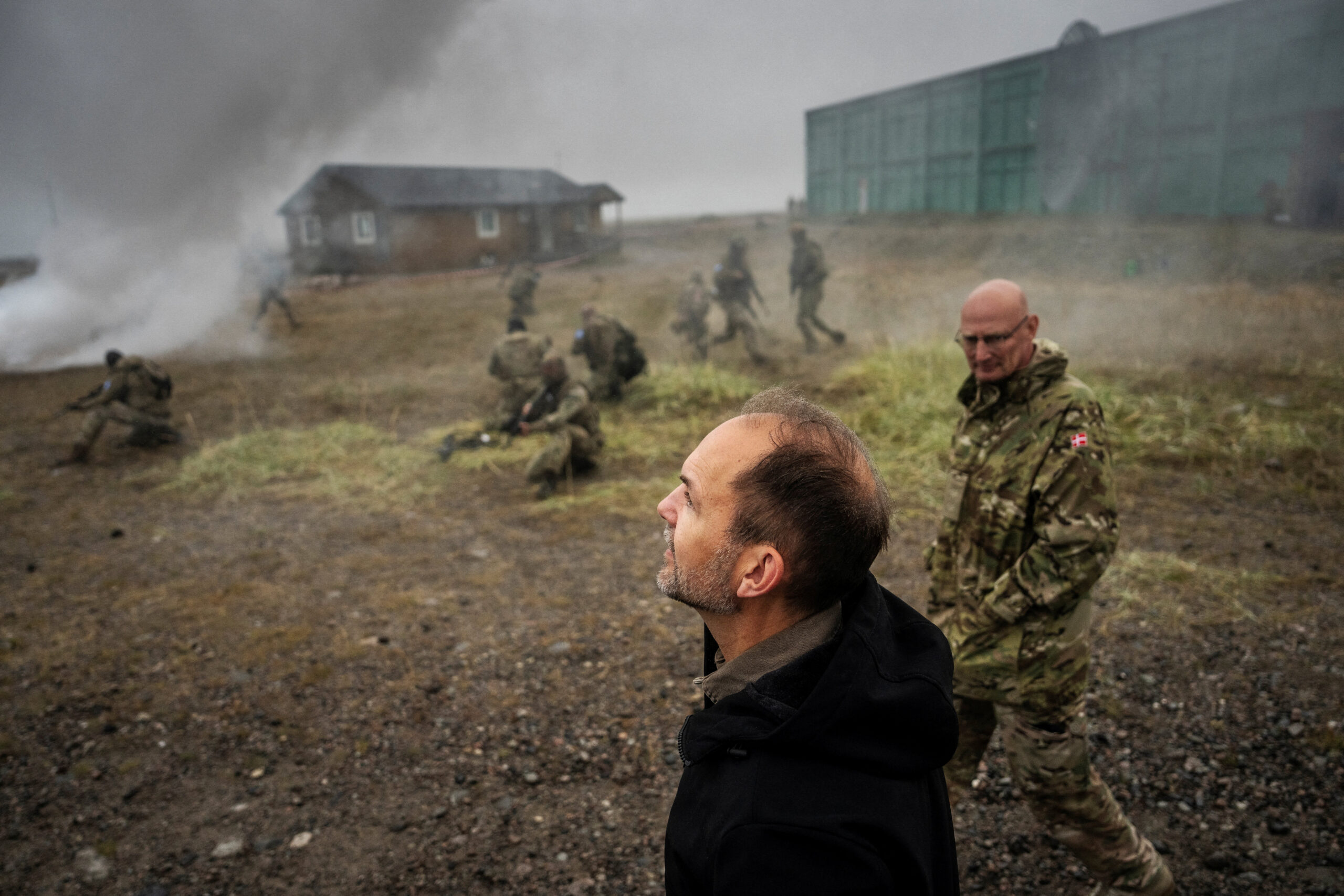
COPENHAGEN, Denmark – Denmark and Greenland on Saturday said any agreement with the United States would not compromise Greenland’s sovereignty, after President Donald Trump said the deal would give Washington “permanent control” over the Arctic island’s security, leaving its precise scope unclear.

The United States, Denmark and Greenland said late on Friday they had entered into an agreement for the US to ‌develop a significant military presence on Greenland, while prohibiting US adversaries from building their own bases on the island.

Key details of the agreement have not been made public, including the degree of US military presence in the self-governed ⁠Danish territory and whether any formal power over foreign policy and resources would be ceded to Washington.

Denmark and Greenland expressed hope that a deal, which is expected to be signed during the UN General Assembly next week, would end months of uncertainty triggered by Trump’s threats to seize control of Greenland.

“Next week could be a good week – for Greenland, Denmark, and the United States,” Denmark’s Foreign Minister Lars Lokke Rasmussen said in a statement posted on Facebook on Saturday.

“A time of uncertainty will hopefully give way to a binding agreement that strengthens security in the Arctic and the North Atlantic, and thereby our shared security within NATO and Europe — while respecting the (Danish) Kingdom’s red lines,” he said.

Denmark and Greenland have repeatedly insisted that Washington respect the sovereignty of the Danish kingdom and accept that Greenland is not for sale.

Trump said on Truth Social late on Friday that under a deal, “the United States will FOREVER have the complete ability to do what is necessary in Greenland in order to secure and defend the security of Greenland, and the United States of America.”

The deal “gives the United States permanent control over security, and all other needs, in Greenland,” Trump said, adding that no adversary would ever be permitted to have a base or military presence in Greenland, or make sensitive investments there, without Washington’s express written approval.

Trump made the announcement after Reuters exclusively reported that the US and Denmark were closing in on a deal.

“I am pleased on Greenland’s behalf that we are nearing the conclusion of an agreement — an agreement that benefits not only our collective security but also the continued development of this country,” Greenland’s Prime Minister Jens-Frederik Nielsen said on Saturday in a post on Facebook.

“The agreement recognizes the sovereignty and territorial integrity of our Kingdom and the right of the Greenlandic people to self-determination,” he added.

Trump’s threats, which peaked in January, triggered a diplomatic crisis that strained relations within NATO and pushed Denmark and Greenland into negotiations aimed at defusing the pressure.

A NATO spokesperson on Saturday said the alliance welcomed the agreement, which would “help advance security, stability and cooperation in this vital region.” – Rappler.com

Similar Posts

  • | |

    Oil prices tumble after US and Iran halt strikes, …

    Oil prices fell sharply on Monday after the United States and Iran paused military strikes over the weekend, ending two weeks of attacks and raising hopes that diplomacy could de escalate the conflict and allow shipping through the Strait of Hormuz to resume. Brent crude futures dropped by around 5.9 percent to just above 91 dollars a barrel, briefly slipping below the closely watched 90 dollar mark earlier in the session. US West Texas Intermediate crude fell roughly 5.4 percent to settle near 84.50 dollars a barrel. Both benchmarks touched their lowest levels in almost a week, reversing three straight weeks of gains driven by the conflict. Brent had climbed as high as 100 dollars a barrel as fighting disrupted oil shipments through the Strait of Hormuz and spread to the Red Sea, complicating exports from Saudi Arabia, the world’s largest oil exporter, through the Bab el Mandeb strait toward Asian markets. US Ambassador to the United Nations Mike Waltz said President Donald Trump had opted to pause American strikes to give diplomatic efforts more room to work, a message he delivered across several US television appearances Sunday. Market analysts remained cautious despite the price drop. PVM analyst John Evans said markets continue to search for encouraging signals from a region that has offered little reassurance so far, and cautioned that a pause in strikes carries no guarantee that oil shipments will resume quickly. He said prices are more likely to keep falling if elevated costs curb demand rather than because of a fragile ceasefire. Shipping data from Kpler showed fewer than ten commodity vessels passed through the Strait of Hormuz per day over the weekend. MST Marquee analyst Saul Kavonic said any recovery in traffic through the strait will likely be gradual and incomplete, since many shipping operators remain cautious and will want stronger safety assurances before sending empty vessels back into the waterway. Traffic through the Bab el Mandeb strait also declined Sunday after Yemen’s Houthi movement struck Saudi oil facilities along the Red Sea coast, though one additional Chinese supertanker managed to exit through the strait. Analysts at Societe Generale estimate that every month the Red Sea situation remains unresolved could add at least 10 dollars to the price of a barrel. Some analysts expect prices to stay supported if supply disruptions continue across the Middle East and in connection with Russia’s war in Ukraine. Analysts at UOB noted that the widening Middle East conflict, combined with Ukrainian drone strikes on Russian ships and refineries, could sustain supply disruptions that keep oil prices elevated and add upward pressure to global inflation. Ukraine said it struck several Russian oil facilities over the weekend as part of that ongoing campaign. The volatility underscores how closely global energy markets remain tied to geopolitical developments in the Middle East, where even temporary pauses in fighting can trigger significant price swings as traders weigh the likelihood of a lasting resolution against the risk of renewed escalation.

  • |

    Karoline Leavitt to leave White House press post

    WASHINGTON: US President Donald Trump has announced that White House Press Secretary Karoline Leavitt will leave her position at the end of August, saying she wants to spend more time with her young children. Trump praised the 28-year-old spokesperson as one of his most trusted aides and said he respected her decision to step away from one of the most demanding roles in the administration. In a social media post, Trump said Leavitt would continue to advise him from outside the White House and would remain an influential voice within the Republican Party. Leavitt confirmed her departure, describing her time as White House press secretary as an “honor and adventure of a lifetime.” She said balancing motherhood with one of the most demanding jobs in Washington had been both rewarding and challenging. After returning from maternity leave following the birth of her second child, Leavitt said she realised she could not give her two young children the time and attention they deserved while continuing to meet the demands of the press secretary’s role. Leavitt and her husband, Nicholas Riccio, welcomed a daughter in May. The couple also have a two-year-old son. She returned to the White House last month after taking maternity leave. Leavitt became White House press secretary last year and made history as the youngest person to hold the position. During her tenure, she became one of the administration’s most recognisable public figures and frequently defended Trump’s policies during tense exchanges with journalists. Her relationship with sections of the US media was often confrontational. Leavitt accused some journalists of political bias, while supporters of the Trump administration praised her for forcefully presenting the president’s position. Her tenure also included changes to the White House press-access system. Her office took greater control over the press pool and temporarily restricted access for the Associated Press after a dispute over the administration’s preferred terminology for the Gulf of Mexico. Before becoming press secretary, Leavitt had already established close ties with Trump. She worked in his first administration as an assistant press secretary and speechwriter. She later served as communications director for Republican Congresswoman Elise Stefanik and launched an unsuccessful campaign for Congress in New Hampshire in 2022. Although she won a competitive Republican primary, she lost the general election to Democratic Representative Chris Pappas. Leavitt subsequently worked as a spokesperson for MAGA Inc, a pro-Trump fundraising organisation, before joining Trump’s 2024 presidential campaign as national press secretary. She became one of the longest-serving press secretaries in Trump’s two administrations, behind former press secretary Sarah Huckabee Sanders. The White House has yet to announce who will succeed Leavitt. During her maternity leave, several senior administration officials, including Vice President JD Vance, Secretary of State Marco Rubio and Interior Secretary Doug Burgum, took turns addressing reporters. White House Deputy Chief of Staff Stephen Miller, who described Leavitt as a close friend and role model, said her departure would not end their professional relationship. He said they would continue working together and expressed confidence that Leavitt’s career would continue to develop beyond her White House role.

  • | |

    Qalibaf accuses Trump of using “Theater Diplomacy” on Iran

      Iranian Parliament Speaker and the country’s chief negotiator, Mohammad Bagher Qalibaf, has accused U.S. President Donald Trump of engaging in what he described as “theater diplomacy,” saying Washington continues to send mixed signals by alternating between military threats and calls for negotiations. In a statement posted on social media platform X, Qalibaf criticized Trump’s recent rhetoric, saying the U.S. administration repeatedly announces the possibility of major military action before stepping back and expressing interest in diplomatic talks. “First they say a major attack is coming, then they say they want negotiations. This cycle of theater diplomacy continues,” Qalibaf wrote. He argued that Washington keeps shifting its position between military pressure and diplomatic engagement, creating uncertainty rather than building trust. According to Qalibaf, the repeated use of threats, broken promises, and what he called “false narratives” has failed to pressure Iran into changing its stance. “The strategy of intimidation has not worked,” he said. “It is time to accept the realities, honor commitments, and replace political theater with serious and responsible diplomacy.” Qalibaf’s remarks came after President Trump claimed that he had canceled plans for a large-scale military strike against Iran. Trump said Iran and several countries in the region had urged the United States to avoid military action, adding that diplomatic progress was within reach. The U.S. president also claimed that ongoing negotiations could lead to a temporary agreement involving the United States, Iran, and Oman. He said such a deal would reopen the Strait of Hormuz without delay and eliminate what he described as the Iranian nuclear threat. The exchange highlights the sharp differences between Tehran and Washington as both sides continue to send conflicting messages about diplomacy and the possibility of easing tensions in the region. While U.S. officials speak of negotiations and a potential agreement, Iranian leaders remain skeptical, arguing that meaningful progress will require the United States to move beyond threats and fulfill its commitments.

  • |

    Thai teen’s shooting sparks school safety review

    Thai police said a 14-year-old boy accused of carrying out a deadly shooting near Bangkok had shown an interest in firearms for up to two years and had watched violent material online. The teenager allegedly killed his grandparents at their home on Friday before shooting six people at his school and taking his own life. More than 20 others suffered injuries in the attack, which became Thailand’s deadliest mass shooting since 2022. Deputy Commissioner of Provincial Police Region 1 Atthapol Anusit told reporters that investigators had questioned 17 witnesses so far. Police also found a knife in the teenager’s school bag, along with a firearm, spent cartridge cases and a personal computer. Investigators examining the computer found social media content involving violence. Police also said the boy had used social media to learn about firearms, although they have not yet found evidence that he regularly practised shooting. A teacher had confiscated a BB gun from the boy at school last year, according to police. The teenager had lived with his grandparents for about 12 years after his parents separated. In response to the tragedy, Thailand’s Ministry of Education said it would introduce new school safety measures within three months. The plan includes mental health screening, referrals for students considered at risk, emergency response drills, stronger anti-bullying measures and tighter checks to prevent weapons and other dangerous items from entering schools. The shooting has renewed calls for stronger firearm controls in Thailand, which has one of the highest rates of civilian gun ownership in Southeast Asia.

  • | |

    FIFA bans Argentina players following World Cup final clash with Spain

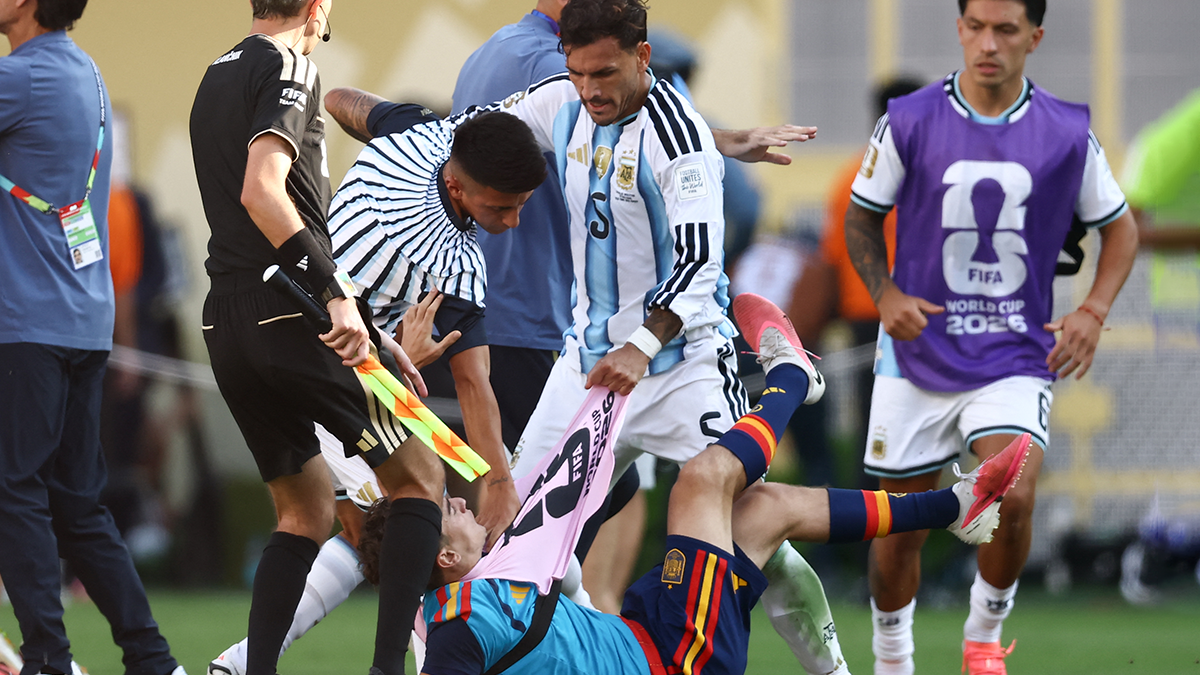
      FIFA has imposed lengthy suspensions and heavy fines on several Argentina players following a heated confrontation with Spain players after the World Cup final, the world football governing body announced on Friday. Argentina have also been ordered to play their next two home international matches behind closed doors. However, FIFA has suspended one of those two matches, meaning the full punishment will only be enforced if the team commits another disciplinary offence during the relevant period. The most severe punishment has been handed to Argentina midfielder Leandro Paredes. The Boca Juniors player has been suspended for 10 international matches and fined $90,000 for his involvement in the post-match altercations. Paredes was accused of grabbing Spain defender Eric Garcia by the throat during the confrontation. He was also involved in an incident with Spain midfielder Gavi, whom he wrestled to the ground while holding the substitute player’s bib. His actions contributed to the escalation of tensions following the final. Spain defeated Argentina 1-0 in the World Cup final at MetLife Stadium in New Jersey on July 19, securing the title after a closely contested encounter. The post-match celebrations, however, were overshadowed by clashes involving members of both teams. Argentina defender Nahuel Molina has also received a significant punishment. He has been banned for seven international matches and fined $90,000 for his role in the incidents. His teammate Thiago Almada received a comparatively lighter sanction, with FIFA suspending him for one international match and imposing a $30,000 fine. Spain midfielder Gavi has also been punished for his involvement in the confrontation and received a similar one-match suspension and financial penalty. The disciplinary action against Argentina extends beyond individual players. The Argentine Football Association (AFA) has been fined approximately $321,000 for several violations of FIFA’s disciplinary regulations. These include using a sporting event to make demonstrations of a non-sporting nature, team misconduct, and discriminatory chants and gestures by supporters. The controversy also relates to an incident during Argentina’s World Cup semi-final against England. After Argentina secured a 2-1 victory in a tense encounter, several players displayed a banner carrying the message, “The Falklands are Argentine.” The gesture referred to the disputed Falkland Islands, known as the Islas Malvinas in Argentina. The Falklands War began in 1982 after Argentine forces invaded the British-controlled territory in the South Atlantic. Then-British Prime Minister Margaret Thatcher ordered a military task force to retake the islands. The 74-day conflict, which lasted from April to June 1982, resulted in the deaths of 655 Argentine and 255 British servicemen, while three islanders were also killed. The AFA has rejected the disciplinary measures and confirmed that it plans to appeal the suspensions and fines imposed by FIFA. The appeal could determine whether the punishments remain unchanged or are reduced following further review.

Leave a Reply

Your email address will not be published. Required fields are marked *