| |

Oil prices tumble after US and Iran halt strikes, …

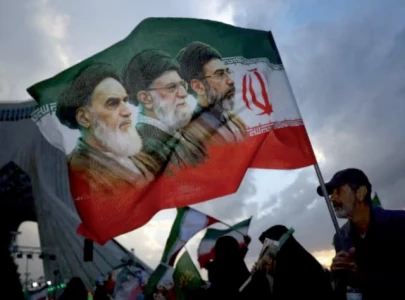
Oil prices fell sharply on Monday after the United States and Iran paused military strikes over the weekend, ending two weeks of attacks and raising hopes that diplomacy could de escalate the conflict and allow shipping through the Strait of Hormuz to resume.

Brent crude futures dropped by around 5.9 percent to just above 91 dollars a barrel, briefly slipping below the closely watched 90 dollar mark earlier in the session. US West Texas Intermediate crude fell roughly 5.4 percent to settle near 84.50 dollars a barrel. Both benchmarks touched their lowest levels in almost a week, reversing three straight weeks of gains driven by the conflict.

Brent had climbed as high as 100 dollars a barrel as fighting disrupted oil shipments through the Strait of Hormuz and spread to the Red Sea, complicating exports from Saudi Arabia, the world’s largest oil exporter, through the Bab el Mandeb strait toward Asian markets.

US Ambassador to the United Nations Mike Waltz said President Donald Trump had opted to pause American strikes to give diplomatic efforts more room to work, a message he delivered across several US television appearances Sunday.

Market analysts remained cautious despite the price drop. PVM analyst John Evans said markets continue to search for encouraging signals from a region that has offered little reassurance so far, and cautioned that a pause in strikes carries no guarantee that oil shipments will resume quickly. He said prices are more likely to keep falling if elevated costs curb demand rather than because of a fragile ceasefire.

Shipping data from Kpler showed fewer than ten commodity vessels passed through the Strait of Hormuz per day over the weekend. MST Marquee analyst Saul Kavonic said any recovery in traffic through the strait will likely be gradual and incomplete, since many shipping operators remain cautious and will want stronger safety assurances before sending empty vessels back into the waterway.

Traffic through the Bab el Mandeb strait also declined Sunday after Yemen’s Houthi movement struck Saudi oil facilities along the Red Sea coast, though one additional Chinese supertanker managed to exit through the strait. Analysts at Societe Generale estimate that every month the Red Sea situation remains unresolved could add at least 10 dollars to the price of a barrel.

Some analysts expect prices to stay supported if supply disruptions continue across the Middle East and in connection with Russia’s war in Ukraine. Analysts at UOB noted that the widening Middle East conflict, combined with Ukrainian drone strikes on Russian ships and refineries, could sustain supply disruptions that keep oil prices elevated and add upward pressure to global inflation. Ukraine said it struck several Russian oil facilities over the weekend as part of that ongoing campaign.

The volatility underscores how closely global energy markets remain tied to geopolitical developments in the Middle East, where even temporary pauses in fighting can trigger significant price swings as traders weigh the likelihood of a lasting resolution against the risk of renewed escalation.

Similar Posts

  • Thailand Cuts Diesel and Gasohol Prices for Songkran

    BANGKOK — Fuel supplies will remain adequate throughout the Songkran holiday period, while retail oil prices were set to fall from Saturday after the Oil Fuel Fund Executive Committee approved cuts to levy rates, Energy Minister Akanat Promphan announced. Refining Margins to Be Lowered, Diesel Set to Drop by 2.14 Baht Speaking on Saturday, Akanat […]

  • | |

    Eight bodies recovered sfter avalanche on broad pe…

      Skardu: Rescue teams have recovered the bodies of eight climbers who went missing after a massive avalanche struck Broad Peak, one of the world’s highest mountains, in northern Pakistan. The tragic incident has shocked the international mountaineering community and prompted an extensive search-and-rescue operation in the Karakoram mountain range. According to officials, four additional bodies were located during the latest phase of the rescue mission, bringing the total number of recovered victims to eight. Earlier in the day, rescue teams had already found four bodies in the avalanche-hit area. Of the four bodies recovered most recently, three have been airlifted by helicopter to Skardu for identification and further legal formalities. Rescue authorities are continuing efforts to locate the remaining two missing climbers, despite extremely challenging weather conditions, difficult terrain, and the constant risk of further avalanches. The search operation remains active on Broad Peak, with rescue personnel working around the clock to find the missing mountaineers. Helicopters, local rescue teams, and experienced high-altitude climbers are taking part in the mission, while authorities continue to monitor weather conditions that could affect ongoing operations. Provincial Minister for Tourism Nek Nam Karim said the government is making every possible effort to locate the remaining climbers. He stated that the Tourism Department is providing full logistical support to rescue teams, including transportation, coordination, and essential equipment required for high-altitude search operations. The group of missing climbers represents several countries, highlighting the international nature of mountaineering expeditions in Pakistan. The team includes climbers from the United States, China, Nepal, Oman, and Pakistani mountaineer Sohail Sakhi, who remains among those unaccounted for. Authorities are maintaining close contact with the embassies of the affected countries and are keeping the families of the climbers informed about developments in the rescue operation. Broad Peak, located in Pakistan’s Gilgit-Baltistan region, is the 12th-highest mountain in the world, standing at ,8047 metres (26,401 feet)above sea level. It lies within the Karakoram mountain range, close to K2, and is regarded as one of the world’s most demanding climbing destinations. Every year, experienced mountaineers from across the globe travel to Pakistan in an attempt to summit the towering peak. However, climbing Broad Peak is extremely hazardous. Mountaineers face unpredictable weather, heavy snowfall, strong winds, crevasses, and the constant threat of avalanches. Even highly skilled climbers can find themselves in life-threatening situations due to rapidly changing mountain conditions. The latest tragedy serves as a painful reminder of the dangers associated with high-altitude mountaineering. Rescue officials have acknowledged that operations at such elevations are exceptionally difficult because of thin air, freezing temperatures, and limited access to the affected areas. As the search for the remaining missing climbers continues, hopes remain that rescue teams may still locate them. At the same time, condolences continue to pour in for the victims and their families. The incident has once again highlighted both the breathtaking beauty and the unforgiving dangers of Pakistan’s towering Karakoram mountains, where adventure and risk often go hand in hand.

  • | |

    Pakistan rejects India’s statements at UN securi…

      ISLAMABAD: Pakistan has strongly rejected India’s remarks at the United Nations Security Council (UNSC) concerning the Indus Waters Treaty (IWT) and allegations of terrorism, describing them as an attempt to misrepresent facts and divert attention from issues raised by Pakistan. The response came after India’s Permanent Representative to the United Nations, Ambassador Harish Parvathaneni, accused Pakistan of supporting cross-border terrorism and suggested that the issue had affected bilateral cooperation under the Indus Waters Treaty. Pakistan dismissed these allegations during the UNSC’s High-Level Open Debate on “Natural Resource Governance: The Foundation of Peace, Security and Prosperity.” Speaking in a right of reply, Pakistan’s First Secretary to the UN, Ansar Shah, said India’s statement was misleading and represented a futile effort to distort the facts surrounding the treaty and regional security issues. He maintained that the Indus Waters Treaty remains legally valid and binding, rejecting India’s claim that the agreement could be placed in abeyance through unilateral action. Shah stated that the treaty contains no provision allowing either party to suspend or set it aside on its own. He referred to the Court of Arbitration’s August 2025 award, which, according to Pakistan, reaffirmed that the treaty continues to remain fully in force along with its dispute resolution mechanisms. He argued that India’s unilateral approach violated the terms of the agreement as well as established principles of international law. Pakistan also accused India of using shared water resources as a political tool. Shah said any attempt to weaponise water for political pressure or to restrict water access would amount to a serious breach of international legal obligations and norms. He added that such actions could undermine regional stability and pose risks to international peace and security, making the issue relevant to discussions at the Security Council. Responding to India’s allegations regarding terrorism, Shah rejected the accusations and instead claimed that India was attempting to conceal its own involvement in activities that Pakistan says have contributed to terrorism within its borders. He alleged that militant groups such as the Tehreek-e-Taliban Pakistan (TTP), the Balochistan Liberation Army (BLA), and the Majeed Brigade had been responsible for attacks that claimed the lives of thousands of Pakistani civilians and security personnel, including women and children. Pakistan reiterated its long-standing allegation that India supports and finances these groups, a claim India has consistently denied. Shah also referred to reports of alleged extraterritorial operations involving India, saying such incidents had raised international concerns. He further argued that India could not portray itself solely as a victim of terrorism while ignoring accusations directed against it. Addressing the situation in Indian Illegally Occupied Jammu and Kashmir, Shah said the people of the region continue to be denied their right to self-determination. He maintained that the territory remains internationally recognised as disputed and asserted that no unilateral measures could alter its legal or historical status. He also urged India to fulfil its obligations under the UN Charter and implement relevant UN Security Council resolutions. Earlier in the debate, Pakistan’s Permanent Representative to the United Nations, Ambassador Asim Iftikhar, reaffirmed that the Indus Waters Treaty remains effective and legally binding. He called on the UN Security Council to remain vigilant against the misuse or weaponisation of natural resources and encouraged greater use of preventive diplomacy, peaceful dispute resolution, monitoring mechanisms, and other international measures to prevent disputes over shared resources from escalating into broader conflicts.

  • | |

    Central Ruet-e-Hilal Committee meets to sight Rabi…

    The meeting of the Central Ruet-e-Hilal Committee to sight the moon of Rabi-ul-Awwal 1448 AH is underway in Islamabad. The meeting is being held at the Ministry of Religious Affairs’ Kohsar Block under the chairmanship of Central Ruet-e-Hilal Committee Chairman Maulana Abdul Khabir Azad. Meanwhile, the Pakistan Space and Upper Atmosphere Research Commission (SUPARCO) has predicted that the Rabi-ul-Awwal moon is unlikely to be sighted today. According to SUPARCO, the chances of sighting the moon are very low as it will be approximately 20 hours and 53 minutes old at sunset. SUPARCO said Rabi-ul-Awwal 1 is likely to fall on Saturday. However, the Central Ruet-e-Hilal Committee is the competent authority to make the final announcement regarding the sighting or non-sighting of the moon.

  • |

    Pakistan, Kazakhstan agree to accelerate trade and agricultural cooperation

    ISLAMABAD: Pakistan and Kazakhstan have agreed to speed up the implementation of previously signed agreements and memorandums of understanding (MoUs), with both sides seeking to convert existing commitments into practical trade, investment and business opportunities. The understanding was reached during a meeting between Federal Minister for National Food Security and Research Rana Tanveer Hussain and Kazakhstan’s Ambassador to Pakistan Yerzhan Kistafin in Islamabad, where the two sides reviewed a broad range of issues related to agriculture, food security, connectivity, farm mechanisation and private-sector cooperation. According to the Ministry of National Food Security and Research, the meeting focused on identifying areas where bilateral cooperation could produce commercially viable projects and contribute to stronger economic relations between the two countries. Rana Tanveer Hussain said agriculture represented one of the most promising areas for expanding Pakistan-Kazakhstan relations, particularly given the potential for increased trade in agricultural commodities, machinery and technology. The minister stressed that bilateral agreements should move beyond formal commitments and result in concrete projects that could benefit businesses and farmers in both countries. He also called for closer coordination among government departments, research institutions, agricultural organisations and the private sector to facilitate investment and technology transfer. Joint agriculture working group to meet in Kazakhstan Pakistan and Kazakhstan also agreed to hold the next meeting of their Joint Working Group on Agriculture in Kazakhstan. The forum is expected to assess progress on previously identified areas of cooperation and explore additional opportunities in agricultural trade, food security, mechanisation and related fields. The proposed meeting is also expected to provide a platform for officials and private-sector representatives to discuss practical barriers to trade and develop proposals aimed at increasing agricultural exchanges between the two countries. Kazakhstan, meanwhile, showed interest in supplying wheat to Pakistan. Pakistani authorities agreed to examine the proposal while taking into account factors including the prevailing price, quality standards and reliability of supply. The development comes as Pakistan continues to explore ways to diversify its sources of food commodities and strengthen trade relationships with Central Asian economies. Pakistan seeks greater access for agricultural exports During the discussions, Pakistan highlighted the export potential of several agricultural products, including mangoes, guava, dates, bananas, potatoes and onions. The Pakistani side expressed interest in securing greater access for these products in Kazakhstan and other Central Asian markets. Improved market access, the officials noted, could create new opportunities for Pakistani growers, exporters and agribusinesses. The two sides also discussed the importance of improving transport and logistics infrastructure to support agricultural trade. Connectivity was identified as a critical factor in expanding commercial relations, particularly through proposed rail and regional transportation routes linking Central Asian countries with Pakistan. Better transport links could reduce freight and transit costs, improve the movement of perishable agricultural goods and provide businesses in both regions with access to new markets. Mechanisation offers new area of cooperation Agricultural mechanisation was also identified as an area with considerable potential for joint ventures and investment. Particular attention was given to affordable tractors and agricultural machinery that could be used by small and medium-sized farmers. Cooperation in this field could help improve farm productivity while creating opportunities for manufacturers and investors from both countries. The Pakistani side also emphasised the importance of exchanging agricultural technology and research expertise, saying stronger institutional links could support innovation and improve agricultural productivity. The minister underscored the need for closer engagement between research organisations, agricultural institutions and business communities so that technical cooperation could be translated into commercially sustainable ventures. Kyrgyzstan supports stronger Pakistan business ties Separately, Pakistan’s private sector has also taken steps to deepen economic engagement with another Central Asian country, Kyrgyzstan. Kyrgyzstan’s Chargé d’Affaires Aibek Tilebaliev held a meeting with Federation of Pakistan Chambers of Commerce and Industry (FPCCI) President Atif Ikram Sheikh, during which the two sides discussed bilateral trade, investment and direct business-to-business contacts. The participants agreed that stronger interaction between companies from Pakistan and Kyrgyzstan would be essential for expanding bilateral commerce and identifying new investment opportunities. Atif Ikram Sheikh welcomed the increasing high-level engagement between the two countries, saying that considerable potential existed to expand trade and investment but that greater efforts were needed to convert this potential into actual business activity. He suggested that a Pakistani business delegation could visit Kyrgyzstan under the FPCCI platform to explore commercial opportunities, establish direct contacts with local companies and develop partnerships in different sectors. Joint Business Council proposed A key outcome of the meeting was agreement to accelerate the establishment of a Joint Business Council between Pakistan and Kyrgyzstan. The proposed council is expected to provide a formal platform for representatives of the two countries’ business communities to discuss trade barriers, investment opportunities, market access and potential joint ventures. Both sides agreed to expedite the necessary steps for setting up the council. Sheikh also highlighted the importance of regional forums, particularly the Shanghai Cooperation Organisation (SCO), in facilitating greater economic integration among member states. He said the platform could be used more effectively to promote trade, investment and business-to-business cooperation across the region. Tilebaliev reaffirmed Kyrgyzstan’s interest in strengthening economic and commercial relations with Pakistan. He stressed that more frequent and direct interaction between business communities would be important for translating political goodwill into tangible economic gains. The parallel initiatives involving Kazakhstan and Kyrgyzstan reflect Pakistan’s broader efforts to deepen economic engagement with Central Asia. Improved connectivity, stronger private-sector links and greater agricultural and industrial cooperation could provide new avenues for Pakistani exporters while opening opportunities for investment and regional trade.

  • | |

    Indian activist Sonam Wangchuk says he remains ali…

    Indian activist Sonam Wangchuk says he has lost 11 kilograms during a 26 day hunger strike but remains alive, as his protest continues to fuel a wider youth movement demanding education reforms in India. Wangchuk, known widely as Sonam sir, has become the central figure in a youth led campaign organized by the Cockroach Janta Party, which is calling for sweeping education reforms and the resignation of Education Minister Dharmendra Pradhan. He was removed from the group’s protest site at Delhi’s Jantar Mantar on Saturday and taken to a hospital, where he has continued his fast. Despite his removal from the demonstration site, thousands of supporters have kept returning to Jantar Mantar, even after a heavy handed police response to a march toward parliament earlier in the week left numerous protesters and police officers injured. That crackdown has intensified public anger and energized opposition parties, creating a growing political challenge for Prime Minister Narendra Modi’s government. Modi has not addressed the protests directly or met with demonstrators, but he issued a statement on social media that many interpreted as an effort to connect with students angered by repeated leaks of exam papers. He wrote that the welfare of the country’s youth matters above all else and said the government would establish fast track courts to deliver swift punishment for those responsible for the leaks. A spokesperson for the Cockroach Janta Party, Ashutosh Ranka, responded that the government’s plan addressed the aftermath rather than the root cause, saying the movement wants to know why the leaks keep happening and who profits from them. He indicated in a video statement that protesters intend to continue their campaign until their demands are met. Even though Wangchuk is no longer physically present at the protest grounds, his fast has become a symbolic centerpiece of the movement, with demonstrators displaying placards and artwork referencing his hunger strike. Before he was hospitalized, he spent 21 days enduring intense summer heat while consuming only salt and water. Medanta Hospital in Gurugram said in a statement that Wangchuk was admitted to intensive care and is being monitored by a team of specialists. The hospital described his condition as stable and said his vital signs remain within normal ranges, adding that all treatment is being given with his consent. On Wednesday, senior figures including Cockroach Janta Party founder Abhijeet Dipke, along with opposition lawmakers, activists and public personalities, again urged Wangchuk to end his fast. Health Minister JP Nadda, who visited the hospital on Tuesday night, said he too had asked the activist to stop and rejoin efforts to guide young people, adding that the government remains willing to discuss the issues he has raised. Wangchuk has so far rejected these appeals. In a video statement recorded from his hospital bed on Wednesday night, he said he wants to end his fast because his work matters to him, but added that he would only do so once the government guarantees no force or retaliation will be used against students. He said he would end the strike immediately if that assurance comes, and would continue if it does not. He also praised the students involved in Monday’s confrontation with police, saying they showed remarkable composure even while being beaten with sticks, and said their restraint under pressure led him to keep going with his fast. Neither Wangchuk’s latest statement nor an earlier letter he sent to government ministers he met on Tuesday mentioned Pradhan’s resignation directly, though the Cockroach Janta Party maintains that the demand has not changed. Dipke told supporters that the protest at Jantar Mantar will continue until Pradhan steps down, and said the movement would not let Wangchuk’s sacrifice or the injuries suffered by students go without result. The standoff reflects a broader pattern seen in past protest movements across South Asia, where a single high profile figure’s personal sacrifice becomes a rallying point that sustains momentum long after the initial spark fades. Hunger strikes in particular have a long history in Indian political life as a tool for applying moral pressure on governments, dating back to independence era activism, and their effectiveness often depends on sustained public attention and the government’s willingness to negotiate before a health crisis forces the issue. As the standoff continues, the government faces mounting pressure to address both the immediate demand for accountability over exam paper leaks and the broader question of how education policy is managed, while doctors continue to monitor Wangchuk’s condition inside the hospital.

Leave a Reply

Your email address will not be published. Required fields are marked *