greenland trump8217s predatory

Greenland: Trump’s predatory mood

US President Donald Trump’s attempt to “grab” Greenland constitutes a neo-colonial effort by a global “sheriff” who clearly does not respect the island’s national sovereignty and fundamental human rights.

Swedish seismographs recorded explosions in the Nord Stream area shortly before the leaks emerged: ‘It’s an act of sabotage’

Thus, demonstrations took place in the capital Nuuk – the largest demonstrations in Greenland’s history – and Copenhagen, with slogans such as “Greenland is not for sale” and “Greenland belongs to the Greenlanders”, and which highlighted the will for self-determination. At the same time, polls show that about 85% of Greenlanders reject the prospect of joining the US. Greenland’s 34-year-old Prime Minister Jens-Frederik Nielsen, moreover, has described the pressure as “disrespectful” and has called for an end to threats and rhetoric about annexation “among friends.”

The Prime Minister of Denmark, Mette Frederiksen, speaking in Parliament on Tuesday, January 20, 2026, stated the following: “This is a dark chapter we are in” and clarified that “Denmark cannot negotiate sovereignty, identity, borders and democracy.”

The subsequent retreat of US President Donald Trump on plans to use military force to occupy Greenland and the cancellation of additional tariffs on eight European NATO member states that opposed his plans to acquire the island is phenomenal because his aggressive, conquering dispositions have not in essence diminished at all, while the “rift” in the Euro-Atlantic axis has become deep, testing the cohesion of the Western world.

But let’s see what Greenland’s data is and why it is so important island. Greenland is the largest island on our planet with an area of ​​2,166,086 square kilometers, since Australia, although larger in area, is considered a continent and not an island. At the same time, it is currently an autonomous island and is a member of the Kingdom of Denmark, which, it should be noted, has been a member of NATO and an ally of the United States, since 1721.

Greenland was a Danish colony until 1953. Since that year, it has been a county of Denmark. It has been self-governing since 1979, and in 2009 it was granted even greater autonomy, with the right to exploit its natural resources, a move that many saw as paving the way for eventual full independence.

The head of state is King Frederick X of Denmark (since 14 January 2024), who is represented by a high commissioner. The head of government is the prime minister, who is elected by Parliament. The cabinet is also elected by Parliament, called Landstinget. The 31 members of Parliament are elected by the system of simple proportionality in multi-member constituencies by the people and their term of office lasts 4 years. Anyone aged 18 or over has the right to vote in elections.

The majority of the population, which amounts to approximately 56,000, are Inuit (Eskimos), who came into mixing with the first European settlers (of Danish and Norwegian origin) and speak Greenlandic and Danish.

This Arctic island is geographically located in North America, while culturally, demographically and politically Greenland is an island linked to Europe. To the southeast of Greenland are the Atlantic Ocean and Iceland, to the east the Greenland Sea, to the north the Arctic Ocean and to the west Baffin Bay and Canada.

Most of the island, i.e. about 80% of Greenland’s surface, which corresponds to 1,700,000 square kilometers, is covered by a huge ice sheet. Only the southwestern and southeastern coastal zones, which correspond to the remaining 20%, are not covered by ice. It is the only free and inhabited area, but bare, with many rocks, fjords and islets. For two months every summer it experiences the “Midnight Sun” with continuous light, while in winter it experiences the “Polar Night” with continuous darkness.

Greenland does not have a developed road network connecting towns and villages. Transportation is mainly by sea and air, with airports and heliports throughout the country. On land, transportation is by snowmobile and sled.

The economy of the island, whose currency is the Danish krone and whose GDP is estimated by the World Bank to be between $3.5 and $4 billion, is based on fishing, which accounts for 95% of Greenland’s exports, and fish processing, which is a major industrial activity. A few residents also engage in limited farming on the southwestern coast, where cattle, sheep and poultry are raised.

Greenland is therefore not rich in the conventional sense and given that its resources are largely underutilized. Its economy is small and in order to “survive” it receives an annual subsidy of 520 million euros from Denmark – that is, about 9,000 euros per inhabitant. This is also why many on the island are hesitant to demand immediate independence from Denmark, which has shown colonial behavior in the past.

Greenland also has deposits of gold, uranium and coal. According to recent research, there are also deposits of oil and natural gas. Its territory also contains large deposits of rare earths. According to reliable data, 25 of the 34 minerals that the European Commission has classified as “critical raw materials” are found on the island.

The US, however, does not see Greenland simply as a repository of raw materials, but as an island with strategic value that ensures access, surveillance, and defense over the North Atlantic and Arctic corridors.

Militarily, the US already maintains the Pituffik Space Base in northwestern Greenland, near the city of Kanak – one of the northernmost cities in the world. The base hosts early warning radars, integrated into the US missile defense network, and operates as an advanced part of the NORAD system to detect ballistic missile launches crossing the Arctic.

Denmark, for its part, is constantly strengthening its presence in the region with new warships, drones and satellite infrastructure.

Putin plans to announce on Friday the annexation of Ukrainian territories that have held referendums

In closing, I would like to emphasize that the only ones competent to decide on the fate and future of the island are the inhabitants of Greenland. It is not possible for our world, the international community, to be allowed to turn into a world where the principles of international law are blatantly violated, turning it into a tattered paper, and in which the law of the jungle, that is, the right of the strong, will prevail. Therefore, every democratically and rationally thinking person cannot help but shout loudly: “Trump, hands off Greenland.”

By Isidoros Karderinis

Similar Posts

  • | |

    Hackers target Wall Street firms in phone-based cy…

    NEW YORK: Hackers seeking ransom have targeted dozens of major US financial institutions and businesses using a surprisingly simple tactic — posing as IT help desk employees and tricking staff into handing over passwords and authentication codes. According to Google and internet intelligence data reviewed by Reuters, the campaign targeted prominent private equity and financial firms, including Blackstone, Bridgewater Associates, Apollo Global Management, Bain Capital, KKR, TPG, CME Group, Clearlake Capital and Moody’s. Google said the cybercriminals operate under several names, including Redact, Pink, Falcon and Helix. The technology giant said some companies targeted during the campaign had paid ransoms, although it did not identify those businesses. Reuters was also unable to determine which companies were successfully compromised. The hackers reportedly created websites designed specifically for individual companies. Employees were then contacted by phone, sometimes through calls that appeared to originate from their organisation’s legitimate IT help desk. The attackers allegedly told employees that they needed to urgently update their passkeys or multifactor authentication credentials. Victims were then directed to malicious websites using names designed to look legitimate, such as those containing phrases like “passkey helpdesk” or “secure passkey”. Once an employee entered their credentials, the hackers could obtain an authentication code in real time, allowing them to take control of the account while remaining on the phone with the victim. Austin Larsen, a principal threat analyst with Google’s Threat Intelligence Group, said the technique was not especially sophisticated but remained highly effective. Cybersecurity experts said the campaign demonstrates that human behaviour remains one of the biggest vulnerabilities for even heavily protected organisations. Lee Clark of the Retail and Hospitality ISAC compared the tactic to persuading a security guard to open a heavily protected gate. Google said the attackers had increasingly focused on private equity firms, law firms and financial ratings agencies because they may hold sensitive information that companies would be willing to protect through ransom payments. Reuters identified 72 malicious websites listed in Google’s report and linked several of them to specific companies using internet intelligence platforms. Google cautioned that while the infrastructure indicated attempted intrusions, not every attack was necessarily successful. The campaign appears to have affected a broader range of industries. Data reviewed by Reuters showed that hackers created digital traps targeting more than 200 companies during a five-week period, including Uber, Zillow and Levi Strauss, along with law firms such as Paul Hastings and Greenberg Traurig. The hacking group’s shifting aliases have also complicated efforts to identify those behind the attacks. Google said the various names appeared connected through shared infrastructure, but acknowledged that important questions about the hackers’ identities and relationships remain unanswered. The latest campaign has heightened concern across Wall Street, highlighting how convincing phone calls and basic social engineering can bypass sophisticated cybersecurity systems and expose highly valuable corporate accounts.

  • | |

    90,000 rubber ducks race through Chicago river in …

    CHICAGO: The Chicago River turned bright yellow on Thursday as around 90,000 rubber ducks were released into the water for the annual Chicago Ducky Derby, a colorful charity event that draws thousands of spectators and raises funds for Special Olympics Illinois. The unusual race began when the huge collection of rubber ducks was dropped into the river from one side of a partially opened bridge. Within moments, the water was covered with thousands of small yellow ducks, creating a striking spectacle for people gathered along both sides of the river. The ducks remained in the water for roughly 15 minutes as they floated and moved with the river’s current. Organizers then retrieved the ducks from the water to determine the winning entries and ensure that the river was cleared of the race participants. Thousands of people attended the event, turning the annual derby into a lively festival. Spectators gathered along the riverbanks to watch the race, take photographs and support the charitable cause. Many participants and visitors also wore colorful T-shirts featuring rubber duck designs. The Ducky Derby is organized to support Special Olympics Illinois, helping raise thousands of dollars for programs and activities for athletes with intellectual disabilities. One of the highlights of this year’s event came when 13-year-old Special Olympics athlete and Ducky Derby ambassador Becky Cavanaugh selected the winning duck. Her announcement was met with cheers from enthusiastic crowds gathered along the river. Cavanaugh said one of the things she values most about being involved with the Special Olympics is the opportunity to meet and build friendships with other people. The Chicago Ducky Derby has become a popular annual tradition, combining entertainment, community participation and fundraising. The event gives spectators a memorable experience while contributing to programs designed to support Special Olympics athletes across Illinois.

  • | |

    Dr Summaiya flags 14 flaws in Mir Raza Ali post-mo…

    KARACHI: Police Surgeon Dr Summaiya Syed has identified 14 serious deficiencies in the post-mortem examination of Mir Raza Ali and formally raised concerns with the police, calling for a thorough review of the forensic findings. In a letter addressed to the Senior Superintendent of Police (SSP) District East, Dr Summaiya questioned the quality and completeness of the autopsy report prepared by Dr Osama Sheikh. She highlighted several procedural and forensic shortcomings that, according to her, could affect the accuracy and credibility of the investigation. According to the letter, no X-rays were conducted on the body before or during the post-mortem examination. Dr Summaiya stated that such imaging is a standard forensic requirement and can help identify bullet trajectories, fractures and other internal injuries that may not be visible during a routine examination. She further pointed out that no chemical analysis was carried out to determine the presence of gunpowder residue around the entry wound. The absence of such testing, she noted, limits the ability to determine the firing distance and other important forensic details. The police surgeon also stated that the internal examination of the skull and neck was not performed. She said these examinations are essential in cases involving firearm injuries, particularly when determining the exact cause of death and the path of the bullet. Dr Samia’s letter also criticised the documentation process followed during the autopsy. She said no measurement scale was used while recording the injuries, making it difficult to accurately assess the size of the wounds. She added that photographs of the injuries were not taken in accordance with accepted forensic standards. She further observed that the report did not adequately explain the bone characteristics associated with the entry and exit wounds, making the injury assessment incomplete. The letter also highlighted that the nature and stage of decomposition of the body had not been clearly described in the report. According to Dr Summaiya, documenting decomposition is important in estimating the time of death and assessing the condition of the body. Another major concern raised was the reported size of the wounds. The post-mortem report recorded the entry wound as significantly larger than the exit wound, a finding Dr Summaiya described as unusual and requiring immediate re-examination and verification. She also questioned the identification process, stating that although the face of the deceased was reportedly unrecognisable, no DNA sample was collected to scientifically confirm the identity of the body. Dr Summaiya urged the investigating authorities to carefully review the post-mortem findings and address the identified shortcomings to ensure that the forensic investigation meets professional standards and supports a fair and transparent legal process.

  • | |

    Bodies of Nirmal Purja, three teammates recovered …

    SKARDU: Rescue teams have recovered the bodies of celebrated British-Nepali mountaineer Nirmal Purja and three members of his expedition from Broad Peak after a difficult recovery mission, the Alpine Club of Pakistan (ACP) confirmed. The recovery operation was carried out in extremely challenging weather and terrain. The bodies of Purja, Chinese climber Zhong Wang, and Nepali climbers Nima Sherpa and Kilu Sherpa were successfully brought to Broad Peak Base Camp. The tragic incident occurred on July 30, when an avalanche struck the 10-member international expedition while climbing Broad Peak, one of the world’s highest mountains. Contact with the team was lost immediately after the avalanche. Purja’s company later confirmed that there were no survivors from the expedition. Despite the successful recovery of four bodies, three climbers remain missing. The Alpine Club of Pakistan said search efforts would continue whenever weather and mountain conditions permit. The organization reaffirmed its commitment to locating the remaining climbers so their families can receive closure. Earlier, the bodies of three other expedition members—an American woman, an Omani woman and a Nepali climber—were airlifted from the mountain to Skardu. However, the bodies of two Nepali nationals and one Pakistani climber have yet to be recovered. The deaths have deeply affected the global mountaineering community. Fellow climbers and mountaineering organizations have paid tribute to the victims, describing the loss as a major blow to high-altitude climbing. The Alpine Club of Pakistan said arrangements are being made to return the recovered bodies to their families. The organization expressed hope that the recovery would provide some comfort to the bereaved families and allow the climbers to be laid to rest with dignity.

  • | | |

    LPG becomes costlier from August

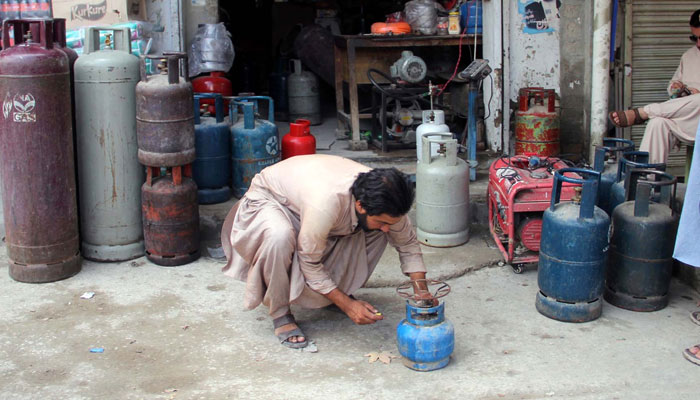
    The Oil and Gas Regulatory Authority (Ogra) has increased the price of liquefied petroleum gas (LPG) for August, raising the cost for both domestic and commercial consumers across Pakistan. According to an official notification issued by Ogra, the price of LPG has been increased by Rs12.89 per kilogram, taking the new official rate to Rs254.32 per kg for the month of August. The regulator also revised the price of the standard 11.8-kilogram domestic LPG cylinder, which will now cost Rs3,000.92 following the latest increase. The revised prices will come into effect for the entire month of August under Ogra’s monthly pricing mechanism. The increase is expected to place an additional financial burden on households that rely on LPG for cooking and heating, particularly in areas without access to natural gas. Commercial users, including restaurants, hotels and small businesses that depend on LPG, are also likely to face higher operating costs. Ogra reviews LPG prices every month based on prevailing market conditions and other relevant pricing factors before issuing revised rates through official notifications. Consumers are expected to pay the updated prices from the beginning of August unless further revisions are announced by the regulator.

  • | | |

    Pakistan seeks early refinancing of $1.3 billion C…

    ISLAMABAD: Pakistan has formally requested China to speed up the refinancing of a $1.3 billion commercial loan as Islamabad seeks to strengthen its foreign exchange reserves and ease pressure on its external financing position. According to sources, Pakistani authorities are currently holding discussions with their Chinese counterparts to complete the refinancing process at the earliest. The two sides are working to finalize the required terms, conditions, and procedural requirements. Officials expect the refinancing arrangements to conclude soon, with the funds likely to reach Pakistan within the current month if the remaining formalities are completed on schedule. Sources within the Ministry of Finance said the government expects the timely arrival of the funds to provide much-needed support to the country’s foreign exchange reserves. The refinancing would also help Pakistan manage its external debt obligations without placing additional pressure on its existing reserve position. Pakistan made external payments of around $2.2 billion in July, including the repayment of approximately $1.3 billion in Chinese commercial financing. The government now seeks to refinance the repaid amount to maintain liquidity and strengthen its financial position. The move comes as Pakistan continues to manage its external financing requirements and maintain adequate foreign exchange reserves to meet upcoming debt repayments and other international payment obligations. The successful completion of the refinancing deal with China would offer temporary relief to the country’s external account and support overall financial stability.

Leave a Reply

Your email address will not be published. Required fields are marked *