before map new

Before We Map New Provinces: Replacing Colonial Bu…

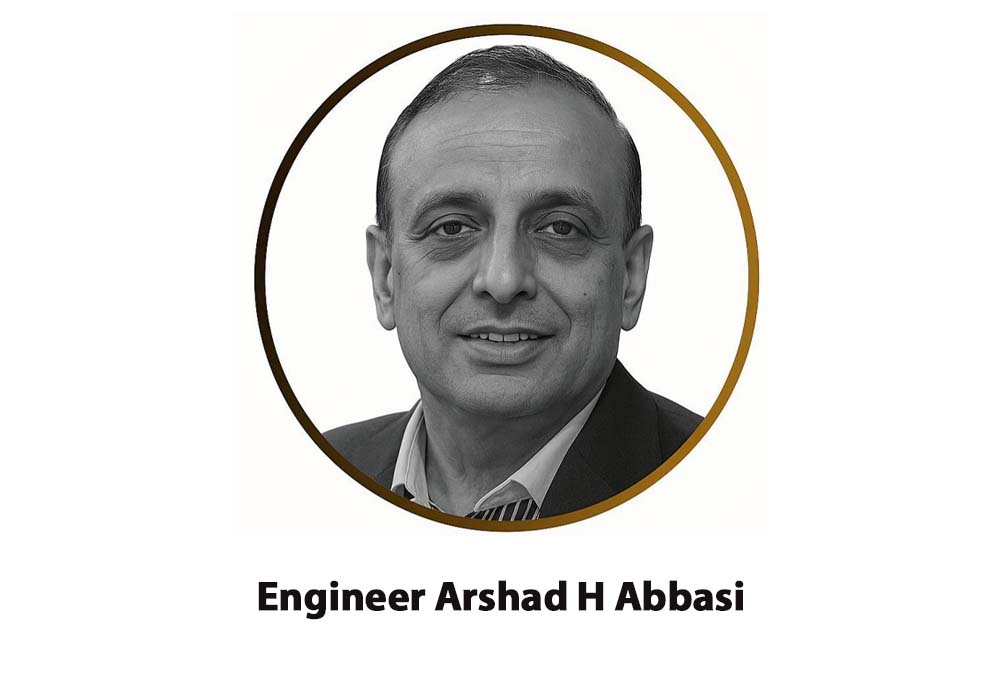
For eighteen years, I have made a quiet, sometimes lonely case: that technology, not more paperwork and more offices, is the only honest path to good governance in Pakistan. I did not arrive at this conviction from a textbook. I arrived at it from a desk inside the Planning Commission, watching a system that was designed — on paper — to deliver development, and instead delivered delay, opacity, and grievance.

Anyone who has sat through the sanctioning of a Public Sector Development Program (PSDP) project knows the ritual. The feasibility study is glowing. The PC-1 is approved with confident projections. Committees nod. Funds are released. And then the project disappears into the machinery of provincial implementation, where oversight thins out and accountability evaporates. What was promised on paper and what is delivered on the ground are, more often than not, two entirely different stories. I watched this happen again and again, and each time the gap between sanction and delivery was not explained by a shortage of money or expertise. It was explained by bureaucracy — a system built not to serve citizens but to preserve itself.

This is not an abstract observation. It is the root of a very real and very dangerous problem. A significant part of the unrest we see in Balochistan, in Azad Jammu and Kashmir, and in Khyber Pakhtunkhwa is not simply about resources or geography. It is about the absence of transparency and the absence of governance that people can see, question, and trust. When a citizen cannot find out where a development fund went, when a project sanctioned in Islamabad never materializes as promised in a district headquarters, when the only visible authority is a bureaucrat with a stamp and a discretionary signature, resentment grows. People do not rebel against distance from the capital. They rebel against being governed by a system that treats them as subjects to be managed rather than citizens to be served.

And here is the tragedy that too few are willing to name plainly: the bureaucratic architecture we still operate under was never designed to serve the governed. It was designed by the British Raj to control a colonized population — to extract revenue, maintain order, and ensure that authority always flowed downward from a distant center, never upward from the people. Files, layers of clearance, and the personal discretion of an officer were features of a colonial control system, not instruments of democratic accountability. We inherited that machinery at independence and, astonishingly, kept it largely intact. The tool built to pacify a colony has been repurposed, with barely a redesign, to govern a republic. It should trouble us deeply that a structure engineered to keep a colonized people in check is now one of the principal reasons that Pakistan’s most marginalized regions distrust their own government.

So when the conversation turns, as it periodically does, to creating new administrative units — carving out new divisions, new districts, new tiers of provincial machinery — as the answer to Balochistan’s or KPK’s grievances, I feel obligated to push back, loudly. Before we draw a single new administrative boundary, we must confront the core disease, not multiply its symptoms. New units will not dilute bureaucratic power; they will replicate it. Every new administrative tier is another office, another set of discretionary signatures, another opportunity for the same colonial-era logic of gatekeeping to entrench itself further. For the aggrieved citizen in Turbat or Muzaffarabad or Bannu, a new secretariat is not relief. It is simply a new address for the same unaccountable authority. We would be handing the bureaucracy — an institution that has shown a consistent instinct for self-preservation — more territory to govern, not less power to abuse. Real relief requires shrinking the space in which discretion operates unchecked, not expanding the number of desks where it can be exercised.

This is precisely why the moment for AI-enabled local governance has arrived, and why Pakistan can no longer afford to treat it as a distant aspiration. Around the world, and notably across India, urban local bodies and municipalities are moving beyond basic digitization toward what might be called algorithms of accountability — systems purpose-built to increase transparency, limit human discretion where it invites abuse, and protect citizen data. These frameworks generally rest on a few consistent pillars: ensuring that automated public decisions on things like welfare disbursement or tax assessment can be audited and challenged rather than buried in a file; protecting citizen data through clear legal safeguards; requiring any private vendor supplying government technology to disclose how its systems work; and actively checking automated tools for bias against marginalized communities.

The Indian experience offers concrete, transferable lessons. Municipal bodies in cities like Delhi and Bengaluru now use satellite imagery and mapping systems to flag unauthorized construction and property tax discrepancies — but critically, they pair this with a human-verification step, so an algorithm’s flag is only ever an advisory alert, not a final punishment, creating a documented trail a citizen can actually contest. States such as Telangana and Maharashtra have deployed multilingual citizen chatbots to handle civic complaints, built with data-masking safeguards that strip personal information before it ever touches a broader system. Smart-city command centers in Surat and Pune operate under strict data retention rules, so surveillance footage is automatically deleted unless tied to an active investigation, preventing the machinery from becoming a permanent surveillance state. And where facial-recognition attendance systems have been used to track municipal staff, unions pushed successfully for dispute mechanisms so that a technical glitch never costs a worker their wages.

None of these systems eliminate human judgment. What they eliminate is unaccountable, invisible, discretionary human judgment — the exact currency the colonial bureaucracy was built to trade in. That is the reform Pakistan needs at the local government level: not another administrative layer, but a transparent, auditable, citizen-facing system that makes it structurally difficult for a project to vanish between sanction and delivery, and structurally easy for a citizen in the most neglected corners of this country to see, in real time, where the money went and why.

Eighteen years ago I believed this was a matter of efficiency. Today I believe it is a matter of national survival. We cannot keep asking why the periphery feels alienated from the state while refusing to dismantle the very colonial machinery that manufactures that alienation. The choice before us is not between more bureaucracy and less. It is between a system engineered to control people and one engineered to serve them. Technology, honestly deployed, is how we finally choose the latter.

Enough delay. Enough committees. Enough files that travel for months and decisions that arrive too late to matter. Pakistan does not need more ink on more forms — it needs transparency, it needs accountability, it needs delivery the citizen can actually see, and it needs it now.

A Direct Message to the Prime Minister of Pakistan

Mr. Prime Minister, hear this plainly: carving new provinces out of old grievances, while leaving the same unreformed bureaucracy in charge of them, will not be reform. It will be a disaster — a slower-motion repeat of the same betrayal, multiplied across more offices, more secretariats, more discretionary stamps. A new province built on the old colonial machinery is not liberation for the people of Balochistan, AJK, or Khyber Pakhtunkhwa. It is the same cage, repainted, and handed a new name.

So here is the test of real courage and real intent. If the ambition is to bring the state closer to its people, then go further than anyone has dared: create not five new provinces, not ten — create a hundred, if that is what devolution demands. But build every single one of them on a foundation of AI-driven governance, radical transparency, and algorithmic accountability, not on the discretionary power of a bureaucrat’s signature. Let every rupee of every PSDP project be trackable by the citizen it was meant to serve. Let every grievance be logged, timestamped, and answered — not buried. Let no officer’s personal discretion ever again stand between a promise made in Islamabad and a result delivered in a village.

This — and only this — is what the people of Pakistan actually want. Not new maps. Not new masters. They want to see where the money went. They want a government that answers to them, not one that manages them. Mr. Prime Minister, the technology exists. The models exist. The political will is the only variable still missing. History will not remember how many provinces were drawn on your watch. It will remember whether you finally broke the bureaucracy’s century-old grip on this country’s trust — or whether you handed it more territory to rule. Choose transparency. Choose accountability. Choose the people. Choose now.

Similar Posts

  • Xi Jinping’s vision for stronger party governanc…

    Since the 18th National Congress of the Communist Party of China (CPC), the CPC Central Committee with General Secretary Xi Jinping at its core has put forward a series of new ideas, new thinking and new strategies centered on the major issue of the era—what kind of long-term governing Marxist party to build and how to build it—giving rise to Xi Jinping Thought on Party Building. As an important component of Xi Jinping Thought on Socialism with Chinese Characteristics for a New Era, Xi Jinping Thought on Party Building carries significant practical relevance and far-reaching guiding significance for strengthening the Party and the nation. It explicitly sets forth the “14 commitments”, namely: adhering leadership by the CPC as the defining feature of socialism with Chinese characteristics; upholding the centralized, unified leadership of the Party Central Committee; exercising full and rigorous Party self-governance; staying true to the Party’s original aspiration and founding mission; taking strengthening the Party politically as the overarching principle; building cohesion and inner strength with the Party’s latest theory; forging strong Party spirit; improving the organizational system to ensure vertical coherence and effective implementation; cultivating high-caliber officials capable of shouldering the mission of national rejuvenation; making sustained and effective efforts to improve conduct; governing the whole Party with strict discipline; taking integrated steps to ensure that officials do not have the audacity, opportunity or desire to conduct corruption; governing the Party through systems and regulations, and ensuring that the political responsibility for Party self-governance is fulfilled. The “14 commitments” represent a concentrated summary of General Secretary Xi Jinping’s landmark, guiding new ideas and strategies on party building in the new era. They serve as the fundamental guideline for the CPC in strengthening party building, as well as a Chinese approach for political parties around the world to enhance self-improvement and state governance. China and Pakistan are ironclad friends and all-weather strategic cooperative partners. We are ready to deepen exchanges and mutual learning with Pakistan on party building and governance, work together to improve people’s well-being and promote prosperity and development, and accelerate the building of an even closer China-Pakistan community with a shared future in the new era. We must put people first and ensure that China-Pakistan cooperation delivers greater benefits to the two peoples. The CPC has always upheld building the Party for the public good and exercising state power for the people. Xi Jinping Thought on Party Building explicitly stresses “remaining true to the original aspiration and founding mission”, namely to seek happiness for the Chinese people and rejuvenation for the Chinese nation. Back in 2012, General Secretary Xi Jinping pointed out that our Party is dedicated to serving the people wholeheartedly; the people’s desire for a better life is the goal we strive to work for. Guided by this profound devotion to the people, in the well-known poverty elimination campaign in China, General Secretary Xi Jinping set a shining example through personal commitment. He conducted more than 50 field research visits on poverty alleviation, covering all 14 contiguous poor regions across China. Based on thorough investigations, he put forward and applied the concept of targeted poverty alleviation, setting a brilliant example of integrating the power of truth with moral integrity. Under his leadership, China won the poverty alleviation campaign, built a moderately prosperous society in all respects, and embarked on a new journey of advancing national rejuvenation and building a great modern socialist country through Chinese modernization. Practice since the 18th National Congress of the Communist Party of China (CPC) has fully demonstrated that the historic achievements and transformative changes in the cause of the Party and the country are fundamentally attributable to the steady guidance of General Secretary Xi Jinping as the core of the CPC Central Committee and of the Party as a whole, and to the scientific guidance of Xi Jinping Thought on Socialism with Chinese Characteristics for a New Era. Under the strong leadership of General Secretary Xi Jinping and the Party Central Committee, over 3 million first secretaries of CPC village committees and village-based officials, together with nearly 2 million township officials and millions of village officials, fought in unison to eliminate absolute poverty. This fully demonstrates the CPC’s capacity to mobilize resources to accomplish major undertakings, and embodies two core principles highlighted in Xi Jinping Thought on Party Building, which is “adhering to the leadership by the CPC as the defining feature of socialism with Chinese characteristics” and “upholding the centralized, unified leadership of the Party Central Committee. It is precisely because the CPC always puts people first and regards delivering people’s wellbeing as its paramount achievement that it enjoys enduring popular support and stands as the most reliable backbone for the Chinese people. Beyond seeking happiness for the Chinese people and rejuvenation for the Chinese nation, the CPC also strives for progress for humanity and the common good for the world. As General Secretary Xi Jinping noted, we Chinese not only aspire for good living for ourselves, but also hope people in other parts of the world lead a decent life. This is fully reflected in the development of China Pakistan relations in the new era. General Secretary Xi Jinping has always been concerned about and supported Pakistan’s national development and the improvement of people’s livelihoods. He and Pakistani leaders established the all-weather strategic cooperative partnership between the two countries and reached important consensus on building an even closer China-Pakistan community with a shared future in the new era. General Secretary Xi Jinping has stressed that China’s friendly policy toward Pakistan is always oriented toward all Pakistani people, the planning and layout of the China-Pakistan Economic Corridor (CPEC) should take into account all regions of Pakistan, so that the fruits of development can benefit all the Pakistani people. To date, CPEC has brought in over 25.9 billion US dollars in direct investment, created more than 260,000 jobs, added over 8,000 MW of power generation capacity, built 510 kilometers of highways and 886 kilometers of core national power

  • Fundamental Right No. 11: Prohibition of Slavery, …

    By Muhammad Imran, Staff Member, SAHSOL-LUMS and Sadia Hammad, Advocate & Internship Coordinator at AGHS, Lahore and Muhammad Abdullah, Law Student, SAHSOL-LUMS Introduction: Article 11 of the Constitution of the Islamic Republic of Pakistan, 1973, enshrines one of the most fundamental guarantees of human dignity by unequivocally prohibiting slavery, forced labour, human trafficking, and the exploitation of children. It declares that slavery is non-existent and forever prohibited within Pakistan while simultaneously outlawing all forms of forced labour and trafficking in human beings. The constitutional prohibition reflects not merely a legal norm but a profound moral and civilizational commitment to safeguarding human freedom, dignity, and equality. It embodies the universal principle that no individual may be treated as the property of another or compelled to labour against his or her free will. In contemporary constitutional democracies and under international human rights law, slavery has been universally condemned as one of the gravest violations of human rights. Accordingly, the Constitution places Article 11 within the Chapter on Fundamental Rights, thereby elevating freedom from slavery and forced labour to the status of an inviolable constitutional guarantee. Islamic Foundations of Article 11: The constitutional prohibition is deeply rooted in Islamic jurisprudence. Islam fundamentally transformed the institution of slavery by encouraging emancipation, prohibiting oppression and exploitation, and affirming the equality of all human beings before Allah. The Holy Qur’an and the Sunnah of the Prophet Muhammad (peace be upon him) consistently emphasize justice, compassion, and the liberation of human beings from servitude. Since Article 227 of the Constitution mandates that no law shall be enacted which is repugnant to the injunctions of Islam, Article 11 represents not merely a constitutional guarantee but also the constitutional manifestation of Islamic principles concerning liberty, equality, and human dignity. Scope and Constitutional Character of Article 11: Article 11 prohibits slavery, forced labour, and trafficking in human beings. Although the Constitution does not expressly define “forced labour,” it generally includes work extracted against a person’s free will through coercion, intimidation, abuse of authority, economic compulsion, or without adequate remuneration. Judicial developments have also recognized that persistent non-payment or unreasonable delay in wages may, in appropriate circumstances, amount to forced labour because it creates conditions of economic dependency. Clause (1) employs categorical constitutional language by declaring slavery to be non-existent and prohibiting all forms of forced labour and trafficking. The emphatic wording demonstrates the framers’ intention to leave no room for legislative or executive action that legitimizes involuntary servitude. Consequently, Article 11 possesses a near-absolute constitutional character. Constitutional Obligations of the State: Article 11 imposes both negative and positive obligations upon the State. Negatively, the State itself is prohibited from authorizing, encouraging, or tolerating slavery and forced labour. Positively, it must protect individuals from exploitation by private employers, industrial enterprises, landlords, traffickers, and other non-state actors. This dual obligation requires the enactment of effective legislation, robust enforcement mechanisms, and meaningful judicial remedies to eradicate all forms of involuntary labour and human exploitation. Judicial Interpretation: The Supreme Court of Pakistan significantly expanded the scope of Article 11 in Darshan Masih v. The State (PLD 1990 SC 513). Acting upon a telegram received from bonded labourers employed at brick kilns, the Court exercised its constitutional jurisdiction to investigate widespread bonded labour practices. Recognizing bonded labour as a direct violation of Articles 9, 11, and 14 of the Constitution, the Court adopted a purposive approach by issuing comprehensive directions for the eradication of bonded labour and the protection of vulnerable workers. The judgment remains a landmark example of public interest litigation and constitutional activism in Pakistan. Comparative Constitutional Perspective: Comparative constitutional jurisprudence reveals a similar constitutional commitment in the United States. The Thirteenth Amendment abolished slavery and involuntary servitude following the American Civil War. Section 1 prohibits slavery and involuntary servitude, except as punishment following lawful conviction, while Section 2 empowers Congress to enforce the Amendment through appropriate legislation. This constitutional framework enabled the enactment of extensive federal laws against slavery, peonage, human trafficking, and forced labour. Honorable Justice Fazal Karim (late), in his Access to Justice in Pakistan: A Sine Qua Non for district judiciary practice,  and Opus Magnum Judicial Review of Public Action, has quoted legal scholar Moyle, who aptly describes slavery as “a condition of absolute rightlessness,” emphasizing that slavery deprives an individual of legal personality and fundamental rights. This understanding stands in sharp contrast to the notorious decision in Dred Scott v. Sandford (1857), where the United States Supreme Court denied citizenship to persons of African descent. The ratification of the Thirteenth Amendment in 1865 decisively repudiated that reasoning and firmly established the constitutional principle of human liberty. Provincial Legislation after the Eighteenth Amendment: Following the Eighteenth Amendment, labour became a provincial subject predominantly, enabling the provinces to enact legislation implementing Article 11. Punjab enacted the Punjab Restriction on Employment of Children Act, 2016, together with other labour welfare statutes. Sindh enacted the Sindh Bonded Labour System (Abolition) Act and comprehensive child labour legislation. Khyber Pakhtunkhwa introduced the Khyber Pakhtunkhwa Prohibition of Employment of Children Act, 2015, while Balochistan enacted legislation regulating and prohibiting child employment in hazardous occupations alongside other labour laws. Notwithstanding provincial legislative competence, bonded labour continues to be principally governed by the Bonded Labour System (Abolition) Act, 1992, a federal statute enacted before the Eighteenth Amendment. Following constitutional devolution, responsibility for its implementation largely rests with the provincial governments, which are obligated to establish Vigilance Committees, enforce labour laws, prosecute offenders, rescue bonded labourers, and ensure their rehabilitation. Protection of Children: Article 11 also provides special constitutional protection for children by prohibiting the employment of children below fourteen years of age in factories, mines, and other hazardous occupations. When read together with Article 25A, which guarantees free and compulsory education for children between the ages of five and sixteen years, the Constitution clearly envisages education rather than labour as the primary occupation of every child. Effective implementation of Article 25A would substantially reduce child labour and promote children’s physical, intellectual, and social development. Constitutional Exception:

  • Guardians of Mind in the digital deluge

    A meticulous examination of human civilization reveals a fundamental, unrelenting truth: the ultimate destiny, rise, and moral endurance of nations are never dictated solely by the expansion of their treasuries, the volume of their industrial output, or the brute dominance of their military might. Rather, they hinge upon their intellectual sovereignty, their engagement with the zeitgeist, and the preservation of their scholarly legacy. Knowledge constitutes the living soul of any dignified society—an indispensable force that enables a people to safeguard their intellectual frontiers, foster collective evolution, and claim a distinguished standing in the global council of minds. The sturdiest, most ancient, and most sacred citadel dedicated to preserving this intellectual momentum, organizing it within modern scientific frameworks, and transmitting it across generations remains the library. Yet, it is a poignant and deeply troubling irony that our prevailing socio-educational attitudes routinely reduce the library to a sterile edifice of stone and mortar—a mere repository of silent shelves and dust-laden volumes. Through this narrow, utilitarian lens, the profession of the librarian is similarly diminished, cast as little more than a routine counter clerk or a custodian issuing loans. Such apathy betrays a profound collective negligence toward the very architects of our intellectual heritage and the true sentinels of wisdom. In an era ensnared by algorithmic echo chambers, sensationalist digital flows, and an unrelenting deluge of Artificial Intelligence—where the sheer abundance of information has blurred the boundaries between verified truth and superficial noise—the librarian’s vocation has acquired a heightened, almost sacred imperative. The modern librarian is no longer a passive guardian of books; they serve as an authoritative, discerning Information Navigator amidst a tempestuous ocean of data. They erect the scientific and critical filters that protect researchers, scholars, and students from sinking into the quagmires of misinformation. Ensuring the equitable, uninterrupted, and rigorous transmission of knowledge is the ultimate guarantee of a society’s intellectual sovereignty, and the librarian stands as the quiet architect fortifying that foundation behind the scenes. Throughout the subcontinent’s intellectual history, libraries served as the vital organs of the body politic—its heart and mind. In tracing the evolutionary arc of library science across South Asia, August 12 emerges as a watershed moment. This date marks the birth anniversary of Professor Dr. S.R. Ranganathan (1892–1972), the towering polymath and founding father of modern library science in the region. Ranganathan revolutionized traditional custodial practices, elevating library management into a structured, universally recognized scientific discipline. His seminal Five Laws of Library Science remain the universal constitution of bibliothecal organization. He catalyzed an epistemological shift by asserting that books are not meant to be locked away in archival isolation but are living tools for active inquiry; bridging the gap between every reader and their required text lies at the very core of a library’s purpose. Celebrating August 12 as Librarians’ Day across South Asia is, therefore, a public tribute to this intellectual legacy and an unequivocal affirmation of the nobility of the profession. It was against this rich historical backdrop that the Quaid-e-Azam Central Library at the University of Gujrat recently hosted a distinguished academic symposium to commemorate Librarians’ Day. Chaired by the Chief Librarian, A.R. Sheikh, the gathering transcended routine ceremonial formality. It served as a rigorous reaffirmation of the historical contributions of libraries in South Asia and an exploration of the evolving mandates of librarianship within contemporary higher education and research. The professional staff of the Quaid-e-Azam Central Library used the occasion not merely to celebrate history, but to renew their solemn pledge: to reignite the culture of deep reading and to transform the library into the region’s most dynamic, responsive, and technologically adept sanctuary for scholarly inquiry. The panel discussion opened with compelling insights from Senior Librarian Mrs. Rameeza Mushtaq, who underscored that no institution of higher learning can claim completeness without a fully realized library—the true intellectual heart of any university. Senior Librarian Mr. Liaquat Ali emphasized that while the digital age and e-books have fundamentally reshaped reading habits, the enduring value of physical texts and historical archival materials remains absolute; librarians serve as the indispensable bridge sustaining the bond between students, faculty, and authentic scholarship. Expanding on the technological horizon, Librarian Mrs. Khadija Munawar highlighted how modern information technology has expanded the librarian’s scope, transforming them into high-level information navigators capable of guiding researchers through vast digital landscapes. The capstone of the symposium was the presidential address delivered by Chief Librarian A.R. Sheikh—a masterclass in scholarly vision and professional reflection. In his keynote address, A.R. Sheikh articulated a powerful thesis: > “A library is not merely an inert structure built of brick and mortar, nor is it a quiet sanctuary of passive bookshelves; it is the ultimate fountainhead of a nation’s intellectual and ideological sovereignty. The true academic stature of any university or nation resides in its capacity for original research and the rigorous processing of information. In this era of chaotic digital overabundance, discerning signal from noise and quality from triviality is the defining professional test of the modern librarian. August 12 reminds us that safeguarding knowledge and ensuring its unimpeded flow is a sacred trust.” > This presidential manifesto resonates as a clarion call for our broader educational landscape. A close institutional assessment of the Quaid-e-Azam Central Library at the University of Gujrat demonstrates how a modern library can effectively anchor the research and pedagogical needs of a region. Beyond housing an extensive collection of print literature and rare manuscripts, the library’s staff has actively integrated state-of-the-art digital infrastructure. Through seamless access to the HEC Digital Library, international peer-reviewed journals, Online Public Access Catalogs (OPAC), specialized research bays for MPhil and PhD scholars, and robust plagiarism detection frameworks, the library stands as a vibrant, operational engine of advanced inquiry. Yet, while acknowledging such institutional achievements, we must confront a starker, systemic reality across our broader society: the guardians of books—our librarians and library staff—remain deeply underappreciated despite their quiet, indispensable contributions. This pervasive social blind spot reflects a broader intellectual stagnation. The time has come to

  • Shocks and Aftershocks

    In the autumn of 2005, the earth rose in wrath against the ancient hills of Kashmir. On the eighth day of October, a violent convulsion of 7.6 magnitude tore through the region, its epicentre lying a mere 19 kms northeast of Muzaffarabad. The tremor was felt far beyond Pakistan’s borders, reverberating through Afghanistan and Tajikistan, across the valleys of India, and even into the remote expanses of Xinjiang. It proved one of the deadliest natural disasters of that decade, claiming thousands of lives and reducing entire villages to rubble. For months the ground refused to rest; careful records later counted no fewer than 497 aftershocks between October and the following March. During such uncertainty a sobering lesson emerged; buildings erected with care and strength stood firm against the repeated tremors, while those raised hastily or without conscience crumbled into dust and despair. A parallel drama of sudden upheaval and lingering aftershocks has unfolded more recently, though this time the forces at work have been those of human conflict rather than nature’s blind fury. Late in February 2026, long-simmering tensions between Iran and USA erupted into open warfare, with Israel joining the fray in decisive fashion. Large-scale aerial and missile assaults struck hundreds of targets across Iran, homing in upon military bases, nuclear facilities, and centres of leadership. The loss of Iran’s Supreme Leader, Ayatollah Ali Khamenei, in the opening strikes sent shockwaves through the region and beyond. Tehran responded with barrages of missiles and swarms of drones that lit the night skies and struck at targets across several countries. For several weeks in March and April the fighting intensified, leaving thousands dead—most of them in Iran and Lebanon—and threatening to engulf wider circles of involvement involving Hezbollah and other actors. Shipping in the Strait of Hormuz, that vital artery of global energy, faced grave peril, and the world watched anxiously as oil supplies trembled on the edge of disruption. A measure of relief arrived around the middle of June when a MOU was concluded between the United States and Iran. The accord promised a halt to major combat operations, the reopening of the strait to peaceful navigation, and the beginning of serious negotiations concerning Iran’s nuclear program. For a brief season hope flickered that reason might yet prevail. Yet by the seventh and eighth of July the ceasefire had fractured. Iranian forces struck at merchant vessels in the Hormuz passage; the United States answered with fresh waves of airstrikes and the reimposition of a naval blockade. Iran, in turn, launched retaliatory attacks upon American and coalition positions in Bahrain, Kuwait, Jordan, and elsewhere. As July draws toward its close, the pattern of nocturnal American strikes and Iranian counterblows continues, holding the Gulf in a state of restless tension. Though the principal theatre of war lies distant from our frontiers, its aftershocks have travelled with merciless swiftness to the streets and bazaars of Pakistan. The initial convulsion in global oil markets followed hard upon the early phase of hostilities. Petrol prices in Pakistan surged to an unprecedented four hundred and fifty-eight rupees and forty-one paise per litre on the third of April—a record born of disrupted supplies and fevered speculation. Diesel climbed still higher, touching five hundred and twenty rupees and thirty-five paise. The consequences touched every corner of national life; transporters raised their fares, farmers faced higher costs for machinery and transport, and ordinary households tightened their belts as inflation rippled outward. For a time, as diplomatic channels—including Pakistan’s own quiet mediation efforts—bore fruit and the strait began to function once more, prices eased and a measure of stability returned. Yet the renewed outbreak of fighting in July has shattered that fragile calm. Oil prices have again become uncontrollable, climbing under the pressure of uncertainty and fresh speculation. The government, its options narrowed by heavy reliance on international loans and a vulnerable economy, has found itself compelled to adjust domestic fuel rates almost daily, basing decisions as much upon forecasts of future trouble as upon present realities. Thus, the nation has endured a great initial shock followed by persistent aftershocks, much like the Kashmir earthquake two decades earlier. Each fresh tremor in the Gulf sends another wave through our foreign exchange reserves, our transport sector, and the fragile purchasing power of the common citizen. Industries dependent upon steady fuel supplies have curtailed operations; the cost of everyday commodities has risen in sympathy; and the burden has fallen most heavily upon those least able to bear it. Pakistan’s economy, long accustomed to navigating external storms while standing upon borrowed foundations, feels these disturbances with particular acuity. Even in these challenging times, the dry wit of everyday Pakistanis remains unshaken. One recalls an incident from the days when the Daily Pakistan newspaper was under the ownership of Akbar Bhatti. A reporter rushed into the newsroom one afternoon declaring that Bhatti Sahib’s car had met with an accident. Before concern could fully form, another veteran journalist remarked with a knowing smile that this surely meant salaries would not arrive on time that month. The quip, though light, spoke volumes about the precariousness of life and livelihood when those at the helm encounter misfortune. Pakistan has passed through many such seasons of trial—political upheavals, economic tempests, and natural calamities alike. Each time the nation has gathered its scattered strength, mended what could be mended, and pressed onward. The present difficulties arising from the conflict in the Gulf, with their daily toll upon fuel prices and economic confidence, constitute yet another test of our collective endurance. The strong institutions and resilient spirit of the people have served as anchors in the past; they remain our surest hope today. God willing, this too shall pass, and Pakistan shall emerge from these aftershocks steadier and more united, its foundations reinforced by hardship and its future secured by the unyielding will of its citizens.

  • Beyond Public Finance: Towards  Constitutional Po…

    The fourth part of this series argued that reforms fail when their design ignores the constitutional rules, institutional incentives and political interests that determine implementation. Pakistan’s problem, however, goes deeper than the capture of individual tax measures. The state itself has gradually become accustomed to obtaining resources through rents rather than creating the conditions for sustained production. A rent is an economic benefit obtained through control over a privilege, resource, regulation or strategic position rather than through corresponding productive activity. Rent-seeking begins when individuals, institutions and organised groups devote their energies to obtaining such benefits from the state instead of producing goods, improving services, developing technology or competing in open markets. Pakistan’s political economy has long rewarded access more generously than enterprise. Access to state land, subsidised credit, protected markets, statutory exemptions, import licences, public contracts, regulatory concessions, tax amnesties, administered prices and preferential treatment has frequently generated returns exceeding those available from productive investment. The result is an economy in which political connections can matter more than innovation, and proximity to authority can be more valuable than efficiency. This system is sustained at two interconnected levels. Domestically, privileged groups compete for benefits distributed through state power. Externally, the state repeatedly seeks resources by converting Pakistan’s strategic location and security relevance into financial assistance, debt rollovers, deposits, concessional oil arrangements and diplomatic support. The interaction between these two levels is central to understanding Pakistan’s continued dependence. External financing is not inherently harmful. Developing countries require foreign capital, technology and access to markets. Borrowing can finance infrastructure and productive capacity that generate future income sufficient to service the debt. Strategic partnerships can provide security and economic opportunities. The problem arises when external inflows substitute for domestic transformation. Pakistan has repeatedly treated foreign exchange availability as proof of economic recovery. Reserves rise after an IMF disbursement, bilateral deposit, commercial loan or rollover. The immediate threat of default recedes. The exchange rate stabilises and the government declares that confidence has returned. The underlying productive structure, however, may remain unchanged. The IMF completed the third review of Pakistan’s Extended Fund Facility in May 2026, permitting immediate disbursements of approximately US$1.1 billion under the EFF and US$220 million under the Resilience and Sustainability Facility.  Total disbursements under the two arrangements consequently reached about US$4.8 billion. The Fund also reported progress in rebuilding reserves and achieving the agreed primary surplus. These developments provide necessary breathing space. They do not constitute economic independence. Recent events offer an unusually clear illustration. Pakistan reportedly requested a US$10 billion exchange-stabilisation facility from the United States after playing a diplomatic role in the Middle Eastern conflict. Economists quoted by Reuters questioned whether fresh financing would address the reforms Islamabad had repeatedly avoided. One analyst described the proposed support as “geopolitical rent”. Pakistan had earlier repaid US$3.5 billion to the United Arab Emirates and obtained a US$3 billion Saudi backstop to help fill the resulting gap.  The episode is not remarkable because Pakistan sought assistance during a difficult external shock. Responsible governments must protect reserves and manage emergencies. Its significance lies in the familiar institutional response: once again, strategic usefulness is expected to generate the liquidity required to postpone a deeper restructuring of the economy. However, fresh liquidity can purchase time. It cannot manufacture productivity. Pakistan’s external relationships have repeatedly followed this pattern. During the Cold War, the country received assistance because of its strategic position. The Afghan war transformed Pakistan into a frontline state and brought large flows of military and economic support. The post-2001 “war on terror” renewed the same bargain under different circumstances. Regional conflicts, security alliances and diplomatic mediation continue to create opportunities for financial support. Each inflow temporarily relaxes the pressure for reform. It also strengthens those institutions capable of negotiating and managing the strategic bargain. The constitutional consequence is profound. A state financed substantially through its citizens must negotiate with them. It requires a productive economy capable of generating taxable income and a political order capable of securing broad consent. A state able to obtain resources externally can delay that negotiation. This is one reason why taxation and representation cannot be separated. Dependence upon external rents weakens the fiscal relationship between citizen and state. Governments remain less accountable to taxpayers when foreign creditors, strategic partners and captive domestic sectors provide the resources necessary for survival.  The burden of adjustment is then transferred to those lacking political protection. Salaried persons face deduction before receiving their income. Documented businesses encounter withholding taxes, minimum taxes, advance taxes and delayed refunds.  Consumers pay indirect taxes and levies through electricity, fuel, telecommunications and ordinary purchases.  Powerful sectors negotiate exemptions, reduced rates, amnesties or deferred enforcement. External rents and domestic privileges are therefore not separate distortions. They reinforce each other. The article, “The age of implosion: exhaustion and the hollow core”, recently published in Business Recorder, offers a useful metaphor for this condition. It argues that financial movement can create the appearance of vitality while the productive foundations of the economy continue to weaken. Loans, deposits and other inflows may keep institutions operating outwardly even when their inner capacity is being exhausted.  The metaphor requires institutional precision. Pakistan has not ceased functioning. Taxes are collected, budgets are passed, debt is serviced, imports continue and administrative structures remain active. The state survives through a combination of borrowing, external support, remittances, taxation of captive sectors and periodic transfer of costs to future generations. This should not be mistaken for resilience. It is deferred adjustment.  The official Pakistan Economic Survey 2025–26 continues to organise the country’s performance through conventional categories of growth, investment, trade, fiscal development, public debt and social indicators. These measurements are necessary, but they do not fully capture the political mechanisms determining why available resources flow towards consumption, protection and rent extraction rather than productivity, human development and technological advancement.  A rent-based economy also shapes the behaviour of the private sector. Businesses rationally adapt to the incentives created by the state. Where profits depend upon tariff protection, regulatory discretion, government contracts,

  • When Rivers Run Thin: Why Shared Water Is Becoming…

    In August 2022, satellite images showed the Indus River in Pakistan swelling to more than ten times its normal width, submerging a third of the country. Less than two years later, in early 2024, the same river system was running far below its seasonal average in its upper reaches, triggering emergency irrigation cuts in Punjab. Flood and drought extremes that once defined different eras are now defining the same decade. For the nearly 40 percent of humanity that lives in river basins shared by two or more countries, this volatility is turning a development issue into a security issue.   Water has always been political, but climate change is making it less predictable and less abundant at the moments when it is most needed. Three basins the Indus, the Nile, and the Mekong illustrate how historical treaties, new infrastructure, and a warming climate are converging to test whether water can be managed as a shared resource or will become a source of sustained confrontation.   The Indus: A Treaty Under Strain   The Indus Waters Treaty, signed in 1960 and brokered by the World Bank, is often cited as one of the most durable water-sharing agreements in the world. It survived two wars and multiple crises between India and Pakistan. Under its terms, the three eastern rivers Ravi, Beas, and Sutlej were allocated to India, and the three western rivers Indus, Jhelum, and Chenab to Pakistan, with limited rights for India to develop run-of-the-river hydropower upstream.   The treaty was designed for a different hydrological and political reality. It divides water volumes based on historical flows, with no explicit mechanism for climate adaptation. It also established a complex dispute resolution process involving a Neutral Expert and a Court of Arbitration.   Tensions have centered on India’s hydropower projects in Jammu and Kashmir, such as Kishenganga and Ratle. Pakistan argues that the design of these projects particularly pondage capacity and spillway gates violates treaty restrictions and could give India control over the timing of flows that are critical for Pakistani agriculture, which supports more than 80 percent of the country’s irrigated agriculture and employs a large portion of its workforce. India argues that the projects are within treaty allowances, are necessary for its own energy security and development, and that it has never interfered with Pakistan’s share.   Both governments have sought recourse through the treaty’s mechanisms simultaneously in recent years, leading to parallel proceedings that have raised questions about the treaty’s procedural resilience. Experts note that the underlying driver is not just engineering, but scarcity: glacier retreat in the Hindu Kush-Himalaya, altered monsoon patterns, and rising demand from growing populations on both sides are reducing the margin for error that allowed the treaty to function for six decades.   The Nile: Sovereignty Versus Survival   No river illustrates the clash between national development and downstream vulnerability more starkly than the Nile.   Ethiopia, where about 85 percent of the Nile’s water reaching Egypt originates from the Blue Nile, began construction of the Grand Ethiopian Renaissance Dam, GERD, in 2011. With a capacity of over 5,000 megawatts, the dam is central to Ethiopia’s plan to expand electricity access still below 50 percent in rural areas at the start of construction and to become a regional power exporter. For Addis Ababa, the dam is a matter of sovereignty and economic transformation, financed domestically and built without external funding.   For Egypt, which depends on the Nile for approximately 90 percent of its freshwater, the dam is viewed as an existential risk. A reduction in flow during the multi-year filling period, or during future droughts if filling and operating rules are not agreed, could directly affect agriculture in the Nile Delta and drinking water for over 100 million people. Egypt has therefore insisted on a legally binding agreement on filling and long-term operation, including drought mitigation mechanisms.   Sudan sits between the two, potentially benefiting from regulated flows and cheap electricity, but also concerned about dam safety and its own water needs.   More than a decade of negotiations mediated by the African Union, the United States, and others have failed to produce a binding deal. Ethiopia has proceeded with filling the reservoir, arguing that this is a natural consequence of exercising its right to develop resources within its borders under the principle of equitable and reasonable utilization. Egypt has argued for the principle of no significant harm and historical rights. International water law, primarily the 1997 UN Watercourses Convention, contains both principles, but leaves their balancing to negotiation.   The dispute has remained diplomatic rather than military, despite inflammatory rhetoric at times, and has spurred renewed discussion about benefit-sharing for example, linking power trade to water security rather than zero-sum volume allocation.   The Mekong: Upstream Control   In Southeast Asia, the Mekong River supports the food security of more than 60 million people. Its annual flood pulse drives one of the world’s most productive inland fisheries in the Tonle Sap lake in Cambodia and sustains rice cultivation in Vietnam’s Mekong Delta, which produces roughly half of Vietnam’s rice.   The construction of eleven large hydropower dams on the mainstream of the upper Mekong in China where the river is called Lancang and more than 100 tributary dams downstream, principally in Laos, has fundamentally altered that pulse. Data from the Mekong River Commission, an intergovernmental body of Cambodia, Laos, Thailand, and Vietnam, shows changes in seasonal water levels, sediment transport, and fisheries.   China, which is not a full member of the Commission but a dialogue partner, argues that its dams provide flood control and dry-season flow augmentation, and are essential for its clean energy transition. Data sharing has improved in recent years, with Beijing providing year-round water level and rainfall data.   Downstream countries offer a different perspective. Thailand and Cambodia have raised concerns about unpredictable releases affecting navigation and farming. Vietnam is particularly vulnerable: reduced sediment flow scientists estimate that dams have trapped more than half of the sediment

Leave a Reply

Your email address will not be published. Required fields are marked *