بلاگز

  • Poor condition of roads in Dasht

    I want to draw the attention of the concerned authorities to the poor condition of roads in Dasht. Many roads are broken and full of potholes. During the rainy season, they become muddy and difficult to use. The damaged roads cause traffic problems and accidents. Students, patients, farmers, and other people face great difficulties while travelling. Sometimes vehicles are also damaged because of the bad roads. I request the concerned authorities to take immediate action and repair the roads in Dasht. Good roads are necessary for the safety and development of the area. I hope that the authorities will pay attention to this serious problem.

  • Lack of dustbin in Chahsar

    Through the columns of your newspaper, I would like to highlight the lack of proper waste-disposal facilities in Chahsar, Turbat. There are very few large dustbins placed along the roads where residents can dispose of household garbage and in many areas people have no nearby option at all. At present, only a few such dustbins can be found in the locality which is insufficient for a large and growing population. Dustbins should be placed at reasonable intervals, perhaps around every 40 metres in populated areas, so that residents can keep their surroundings clean and the waste can be collected regularly by municipal trucks. If there is no designated place to dispose of household waste people are left with very limited choices, and garbage inevitably ends up on roadsides or vacant plots. The concerned authorities are requested to increase the number of dustbins in Chahsar and ensure their regular collection. Clean surroundings require not only public responsibility but also proper municipal facilities.

  • Increasing Road Accidents

    Through the pages of your newspaper, I would like to draw attention to the increasing number of road accidents in our area. Road accidents have become a serious problem, causing injuries, deaths and suffering for many families. Overspeeding, careless driving, dangerous overtaking and ignoring traffic rules are some of the major causes of these accidents. Poor road conditions and the lack of proper traffic control make the situation even worse. The authorities should take strict action against those who violate traffic rules. Speed limits should be enforced, roads should be repaired, and traffic awareness campaigns should be organized in schools and communities. Every life is precious. Drivers must understand that a few minutes saved through reckless driving are never worth risking a human life. I hope the concerned authorities will take immediate steps to reduce road accidents and make our roads safer

  • Closer of petrol pump in badar

    I want to draw the attention of the concerned authorities to the closure of the petrol pump in Badar. The people of the area are facing many difficulties because of its closure. Badar is an important place where many people stop to get fuel for their vehicles. Due to the closure of the petrol pump, drivers have to travel a long distance to buy petrol or diesel. This causes inconvenience and wastes both time and money. I request the concerned authorities to take immediate action and reopen the petrol pump. This will greatly help the local people and travellers. I hope the authorities will solve this problem as soon as possible.

  • The Cost of Carelessness

    Through the columns of your newspaper, I would like to draw attention to the growing problem of carelessness in our society. Many accidents and difficulties could be prevented if people and authorities took their responsibilities seriously. Careless driving, ignoring traffic rules, poor road conditions, and negligence by concerned departments are putting innocent lives at risk. People often drive at high speed, use mobile phones while driving, or ignore traffic signals. At the same time, damaged roads and a lack of proper safety measures make the situation worse. The cost of such carelessness is very high. Families lose their loved ones, people suffer injuries, and society faces unnecessary financial and emotional burdens. These problems cannot be solved unless everyone understands their responsibility. I urge the authorities to strictly enforce traffic rules, improve road conditions, and take action against negligence. Citizens should also follow safety rules and act responsibly.

  • Electricity Crisis: A Burden on the People

    Through the pages of your newspaper, I would like to draw attention to the serious electricity crisis in our area. Frequent and prolonged power outages have made daily life extremely difficut for students, workers shopkeepers and ordinary families. The lack of electricity affects education, businesses, hospitals and household activities. During hot weather the situation becomes even more difficult especially for children and elderly people. The authorities should take immediate steps to reduce unnecessary load-shedding, improve the power supply system and repair faulty infrastructure. A proper and fair schedule should also be followed so that people can plan their daily activities. Electricity is not a luxury it is an essential need in modern life. The concerned authorities must take effective action to provide a reliable electricity supply to the public

  • Unemployment

    Through the columns of your newspaper, I want to draw the attention of the concerned authorities towards the growing problem of unemployment in our country. Unemployment is a serious problem, especially among educated young people. Many students complete their education but cannot find suitable jobs. Due to unemployment, people face poverty, frustration, and many social problems. It also slows down the progress of the country. The government should create more job opportunities and encourage industries and small businesses. Technical and vocational education should also be promoted so that young people can learn useful skills and earn a living. I hope the concerned authorities will take immediate steps to control unemployment and provide better opportunities for our youth.

  • | |

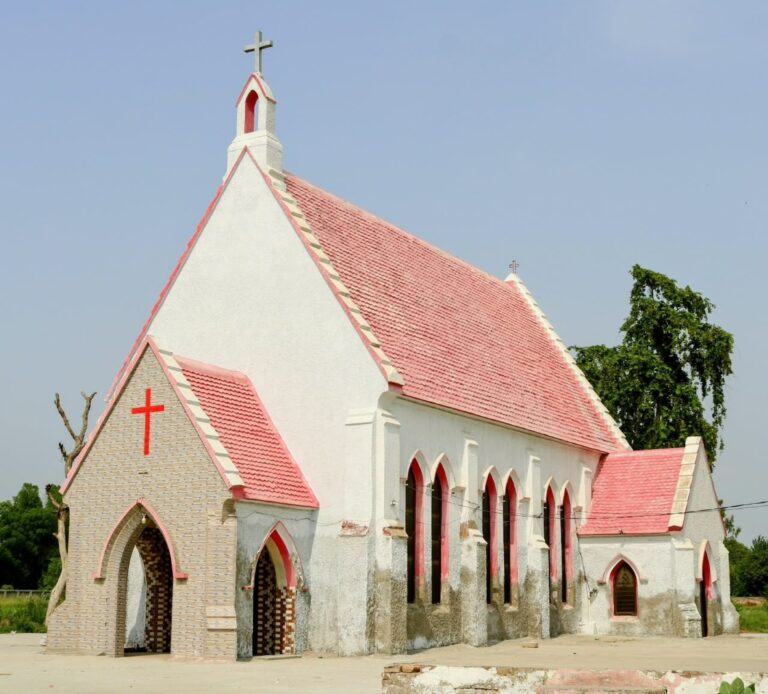
    DI Khan church still guards colonial memories

    There are some places we pass every day without realising how much history they hold. They remain untapped until some visitors put their eyes on them. During summer vacations, I travelled to Dera Ismail Khan, a district situated in southern Khyber Pakhtunkhwa. It takes six hours from Lahore to arrive in this historic city. During my stay there, I came across one such place that immediately captured my attention, and I thought to write about it. It was St Thomas Church, sacred place of worship for Christian community. A large cross standing at the entrance, old rusty walls, and an ambience of spiritualism. But the Church showcased more than that. Its walls contain historical accounts of colonial past, the military campaigns led by British soldiers in this area and a grave of one Lieutenant Governor of Punjab.   St Thomas Church was built in 1856 during British rule in the Indian subcontinent. It is one of the oldest churches in present-day Pakistan. It has survived political changes, the Partition of 1947, and the passing of time. Even today it stands as a symbol of the rich and diverse heritage of Dera Ismail Khan. The church is not only a place of worship but also a reminder that different faiths and communities have long been part of the history of this region. As we walked inside, we met the old priest and caretaker of the church named Chand. He welcomed us warmly and narrated the remarkable history of this place. There are memorials of British soldiers who lost their lives in this region during military campaigns. The priest stood in front of each tablet inscribed on the church wall and briefed about it. One memorial narrates the names, ranks and units of one hundred and 69 British military officers and other ranks who were killed or died due to injuries or disease in Waziristan military campaigns launched between 1919 to 1921.     Another memorial lists details of sixty-eight officers and other ranks who met a similar fate during the 1936-1938 Waziristan military campaigns. Similarly, one tablet erected by friends and fellow officers mourns the death of Herbert Walter Gee, ICS, deputy commissioner of Dera Ismail Khan, who died in 1901. There are other memorials as well, erected by colleagues in memory of the fallen officers. I thought that these names contain historical accounts year by year about what happened in this part of the world at that time. Every sentence of the Priest carried a new story, such as how the church has witnessed a lot of happenings through generations and that it still serves the small Christian community living in Dera Ismail Khan. As we stepped outside, believing our visit had come to an end, the priest said, “Wait. I have to show you one more thing.” He took me to the back of the building, where I saw a large white grave standing quietly among the dusty bushes. Here rests Lieutenant General Sir Henry Marion Durand (1812-1871). Durdand – a quite familiar name for the people of Pakistan and Afghanistan. Sir Durand was a career British military officer, diplomat, and administrator. He served in the East India Company Army, took part in several military campaigns, and later became the Lieutenant Governor of Punjab from 1870 to 1871. His son Sir Mortimer Durand is the one who drew the contours of the border between British India and Afghanistan in 1893. A man who once held such an important position now lies in silence behind an old church, while many people living nearby are unaware that his grave even exists. Henry Marion Durand died in 1871 at the age of 58 from a tragic accident. He was visiting Nawab of Tank Shahnawaz Khan along with his daughter when he fell from an elephant. The elephant was passing through the gateway by the town of Tank with the Nawab on the same elephant and an official (Chaprassy). The gate was too low to cross an elephant with howdah. The howdah struck the walls of crossing and the elephant got frightened resulting in the fall of Durand. He remained unconscious for a few days and never recovered. He was buried beside St. Thomas’ Church in Dera Ismail Khan. The British suspected some conspiracy into this incident. One of descendent of Nawab Shahnawaz Khan says that The British launched an enquiry into it. But the daughter of Durand gave testimony in favour of the Nawab that it was just an accident and there was no fault on his part. However, as a punishment, the British authorities stripped the powers of Nawab Shahnawaz Khan in 1875 and sent him to Lahore under strict watch. He passed away in 1881 while under surveillance. Standing beside the grave of Sir Henry Durand, I felt as if I had stepped into a forgotten chapter of history. The name engraved on the stone reminded me that many important events and personalities of the past remain connected to places that we often overlook. How easily history can fade from people’s memories, even when it is standing right in front of us. As I left St Thomas Church, I felt that I had walked through a chapter of history that few people ever get to read. Sir Henry Durand ruled Punjab from this soil, and his son later sat across a table in Kabul and drew the line that still separates Afghanistan and Pakistan today. That line appears in newspapers and political debates all the time. Yet the grave of the man whose name it carries lies quietly behind a church in Dera Ismail Khan.

  • Lack of Sports Facilities in Dasht Schools

    Through the columns of your esteemed newspaper, I would like to highlight the serious issue of lack of sports facilities in Dasht schools. Sports are essential for physical fitness, mental health and discipline. But in Dasht sub- division of Turbat, Balochistan there are no proper sports facilities in schools. Students do not have access to basic sports gear, kits and indoor activities items.   Moreover sports funds often fail to reach rural schools. Authorities mostly ignore sports because communities struggle with fundamental needs like classroom, clean water and teachers. As a result the physical and social skills are that taught through teams sports are being lost. The government and authorities should take action to provide sports facilities in Dasht schools.

  • Tomato for fresh and glowing skin

    Tomatoes are a common ingredient in the kitchen but they are also used in many home skincare routines.  They contain vitamin C and antioxidants which may help make the skin look brighter and fresher.  Some people also use tomato based remedies to help reduce the appearance of spots and breakouts. Tomato and yogurt face mask A simple tomato mask can be used to refresh dull looking skin.  Mash one tomato and mix it with a small amount of yogurt. Apply the mixture to your face and leave it on for about 20 minutes. Then rinse with clean water. This mask may help the skin feel fresh especially after spending time in the sun. Tomato and lemon for tanned skin Tomato and lemon are sometimes used as a home remedy for sun tanned skin.  Cut a few pieces of tomato and add some lemon juice. Apply the mixture gently to the affected areas. After a short time lightly massage the skin with a little water and rinse it off. However lemon can irritate the skin so people with sensitive skin should avoid this remedy. Tomato and Multani Mitti for blackheads Tomato juice can be mixed with Multani Mitti to make a simple face paste.  Apply it to the face and leave it for around 15 minutes. Add a little water gently massage the skin and then wash your face with lukewarm water. Tomato and sugar scrub Tomato and sugar can be used as a gentle homemade scrub.  Cut a tomato in half and add about one teaspoon of sugar. Once the sugar becomes slightly wet gently move the tomato over the skin without rubbing too hard.  This may help remove dead skin cells and leave the face feeling cleaner. Tomato and lemon for fine lines Some people also use a mixture of tomato and lemon juice as a home remedy for fine lines. Mix two teaspoons of tomato juice with two teaspoons of lemon juice. Apply a small amount with cotton and leave it on for about 15 minutes before washing your face. Be careful with home remedies Not every natural ingredient is suitable for every skin type.  Before applying any homemade skincare remedy to your face, test a small amount on a limited area of skin first. If you experience burning itching redness or irritation wash it off immediately.  People with sensitive skin should be especially careful with acidic ingredients such as lemon juice.