International

  • |

    Talks accelerate to fully reopen Strait of Hormuz 

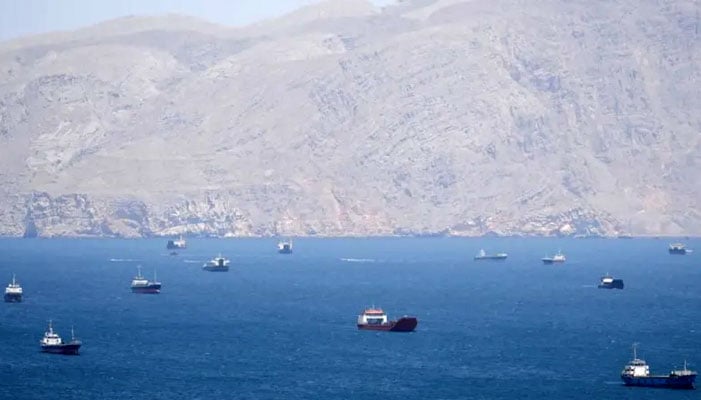
      Efforts to fully reopen the Strait of Hormuz, one of the world’s most strategically important maritime trade routes, are gaining momentum as diplomatic contacts between the United States and Iran continue to show encouraging progress. According to reports preparations are underway to restore unrestricted commercial navigation through the vital waterway, with an official announcement expected within the next few hours or by Wednesday. The Strait of Hormuz serves as a critical shipping corridor connecting the Persian Gulf to international waters, carrying a significant share of the world’s crude oil, liquefied natural gas, refined petroleum products, and other essential commodities. Any disruption in traffic through the strait has immediate consequences for global energy markets and international trade. Arab television channels have claimed that discussions aimed at fully reopening the waterway have advanced considerably. The reports suggest that diplomatic negotiations have entered their final stages and that an agreement could soon be announced, allowing commercial vessels to resume normal operations after a period of uncertainty. Earlier, U.S. Treasury Secretary Scott Bessent also expressed optimism regarding the ongoing negotiations. Speaking to media in Washington , he said there was a strong possibility that an agreement to reopen the Strait of Hormuz could be reached by Tuesday or Wednesday.Talks between Washington and Tehran are focused on ensuring the uninterrupted movement of commercial ships through the strategic passage while restoring stability to the region. During the interview, the Treasury Secretary noted that negotiations are continuing with the aim of normalizing the security situation in the Strait of Hormuz and guaranteeing safe passage for international shipping. He emphasized that both sides are engaged in discussions designed to reduce tensions and facilitate the free flow of maritime commerce. When asked whether Iran would be permitted to collect toll fees from vessels passing through the Strait of Hormuz, Bessent dismissed the possibility. He clarified that the proposed arrangement is based on the principle of complete freedom of navigation for all commercial vessels. According to him, the agreement is intended to ensure that ships from every nation can transit the waterway without facing additional charges or restrictions. If finalized, the agreement is expected to have far-reaching economic benefits. In addition to restoring the uninterrupted export of crude oil from Gulf producers, it would also enable the smooth transportation of fertilizers, refined petroleum products, industrial gases, and numerous other essential commodities. Industry experts believe that the reopening of the strait would significantly improve global supply chains that have been disrupted by regional tensions. Another major benefit of the proposed agreement would be the release of hundreds of commercial vessels currently delayed or stranded in the Persian Gulf due to security concerns. Allowing these ships to resume their voyages would ease congestion, reduce shipping costs, and improve delivery schedules for international trade. Economists suggest that a full reopening of the Strait of Hormuz could also help stabilize global energy markets. Increased supplies of crude oil and petroleum products would likely ease concerns over shortages, potentially leading to lower international oil prices. Reduced transportation costs could further contribute to price relief across several sectors, including manufacturing, agriculture, and consumer goods. While optimism surrounding the negotiations has grown, officials have yet to announce a formal agreement. Diplomatic efforts remain ongoing, and both governments are expected to continue discussions until a final framework is approved. Observers around the world are closely monitoring developments, as the outcome of these talks could have a significant impact on global trade, energy security, and regional stability. If the anticipated agreement is reached, it would mark an important diplomatic breakthrough, restoring confidence in one of the world’s busiest maritime corridors and helping normalize commercial activity throughout the Gulf region.

  • |

    Kyiv rocked by massive Russian missile and drone assault

    More than 30 explosions shook Ukraine’s capital, Kyiv, during a fresh wave of Russian missile and drone attacks, according to Russian media reports. The strikes triggered large fires in several parts of the city, with thick smoke rising over parts of the capital as emergency crews rushed to contain the damage. Initial reports confirmed that at least one person lost their life, while five others suffered injuries. Authorities also activated air raid sirens across Kyiv and its surrounding suburbs, warning residents to seek shelter as the attacks continued. The latest assault caused significant disruption across the city and raised concerns about damage to civilian infrastructure. Emergency responders remained on the ground to extinguish fires, assist the injured, and assess the full extent of the destruction. Russian media claimed that Moscow’s forces used advanced precision-guided missiles and drones during the operation. The reports also stated that Ukraine’s air defense systems failed to intercept several of the incoming weapons, allowing multiple strikes to reach their intended targets. Ukrainian authorities have not immediately commented on those claims. The attack marks another escalation in the ongoing conflict, as both sides continue to exchange long-range strikes while fighting persists on several fronts.

  • | |

    Iran says it is ready for war again

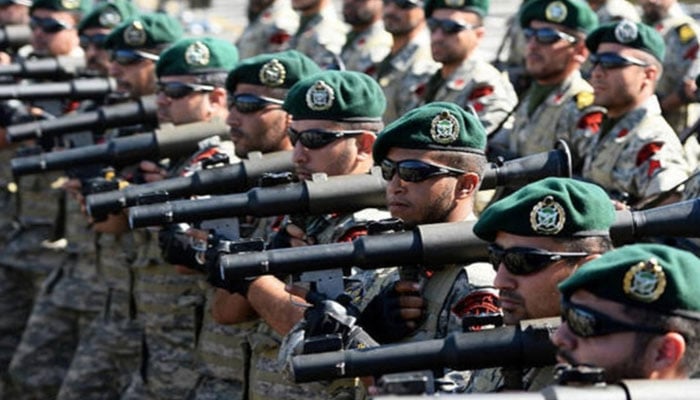
    Iran has claimed that it has significantly strengthened its military and defense capabilities during the ceasefire with the United States, warning that its armed forces are fully prepared if diplomacy fails and hostilities resume. Speaking to Iranian state television, a military spokesperson said the armed forces used every moment of the ceasefire to reinforce the country’s defenses. According to the spokesperson, Iran upgraded existing weapons, developed new air defense systems, restored facilities damaged during the conflict, and accelerated work on advanced military technologies. The spokesperson also revealed that Iran deployed a new generation of drones during the recent conflict. While officials did not disclose technical details, they said more information about the drones will be released at a later stage. According to Arab media reports, Iran’s acting defense minister said missile and drone production continued without interruption throughout the ceasefire. He claimed that drone manufacturing has increased to nearly three times its pre-war level, reflecting Tehran’s efforts to rapidly rebuild and expand its military capabilities. The acting defense minister also stated that the Iranian armed forces maintained their command structure despite the deaths of several senior military commanders. He added that revised battlefield strategies enabled Iranian forces to surprise their opponents during the conflict. Meanwhile, a spokesperson for the Islamic Revolutionary Guard Corps (IRGC) said Iran improved both the production speed and accuracy of its missile program during the ceasefire. However, officials declined to reveal the size of the country’s remaining weapons stockpiles or provide details about military losses suffered during the fighting. Several U.S. media outlets have also reported that Iran still possesses roughly 70 percent of its pre-war missile inventory and about 40 percent of its drone arsenal. Analysts believe those remaining capabilities could allow Tehran to sustain a prolonged campaign of asymmetric warfare if tensions escalate again. Arab media further reported that Iran could soon receive around 400 shoulder-fired air defense missile systems manufactured in China. However, both China and Pakistan have rejected those reports, while Iranian authorities have not issued any official comment on the claim. A former Iranian military commander also argued that thousands of U.S. and Israeli strikes failed to eliminate Iran’s military capabilities. He said the country continues to improve the range, precision, and destructive power of its domestically produced missiles while bringing newly developed weapons from underground missile and drone facilities into operational service. The latest statements highlight Iran’s determination to strengthen its military readiness despite international pressure, while also signaling that Tehran remains prepared for another confrontation if diplomatic efforts with Washington fail.

  • |

    China rejects reports of Saindak project shutdown

    Islamabad:China has dismissed reports claiming that it has suspended operations or withdrawn investment from the Saindak Copper-Gold Project in Balochistan, reaffirming its commitment to the long-running mining venture. According to a spokesperson for Pakistan’s Ministry of Planning, the Chinese company operating the project continues its activities without interruption. The spokesperson said reports suggesting that China had halted work or decided to pull out of the project are false and do not reflect the actual situation. The ministry also revealed that a Chinese company recently visited Pakistan to assess investment opportunities for another major project. The delegation completed its feasibility study, highlighting China’s continued interest in expanding economic cooperation and investment in Pakistan. The Saindak Copper-Gold Project remains under the management of China Resource Development Limited, a subsidiary of the state-owned Metallurgical Corporation of China (MCC). The company renewed its lease for the project in 2022 and has continued mining and development work since then. Officials stressed that operations at the Saindak mine are proceeding as planned and rejected speculation about the project’s closure. They added that the project remains an important symbol of Pakistan-China economic cooperation and continues to contribute to the country’s mining sector and regional development.

  • |

    Houthis claim strike on Saudi oil tanker

    Yemen’s Houthi movement, Ansar Allah, has claimed responsibility for a missile attack on a Saudi oil tanker in the Red Sea, marking another escalation in regional maritime tensions. Houthi military spokesperson Yahya Saree said the group targeted the tanker with ballistic missiles near the Saudi coastal city of Yanbu. However, he did not specify the exact time of the attack or provide details about the extent of the damage or any casualties. Saree also claimed that Houthi forces have attacked eight vessels accused of violating the Saudi naval blockade imposed on July 22. According to him, the operations forced 29 other ships to alter their routes to avoid Houthi-controlled waters. The spokesperson vowed that the group would continue enforcing what it described as a naval blockade against Saudi Arabia, warning that vessels breaching the restrictions could face further attacks. The latest claim comes as security concerns continue to grow in the Red Sea, a vital international shipping route that has witnessed repeated attacks on commercial and energy-related vessels in recent months. Independent verification of the Houthi claims was not immediately available.

  • |

    Over 800,000 Lebanese return home amid ongoing border tensions

    More than 800,000 people displaced by the war in Lebanon have started returning to their hometowns and villages as security conditions improve in parts of the country. However, the humanitarian situation remains severe, with hundreds of thousands still unable to go back because of widespread destruction and ongoing instability. According to the United Nations, more than 360,000 people remain displaced across Lebanon. Around 26,000 of them continue to live in government-run shelters, while many others stay with relatives or in temporary accommodation as they wait for conditions to improve. The UN’s humanitarian agency says the conflict has devastated essential infrastructure, particularly in southern Lebanon. Damage to water supply systems and electricity networks has left more than 700,000 people without reliable access to clean drinking water, raising concerns about public health and increasing the need for humanitarian assistance. The war has taken a heavy human toll. Israeli military operations have killed more than 4,300 people and forced over one million residents to flee their homes since the conflict escalated. Entire neighborhoods and villages in southern Lebanon have suffered extensive destruction, making it difficult for many returning families to rebuild their lives. Large areas in southern Lebanon remain under Israeli military control, and residents in several border communities continue to face uncertainty despite the gradual return of displaced families. Meanwhile, diplomatic efforts to reduce tensions have resumed. A new round of US-led talks between Lebanese and Israeli officials began in Rome yesterday and will continue through tomorrow. Negotiators hope the discussions will help strengthen the ceasefire, address security concerns along the border, and create conditions for a broader and more lasting peace.

  • |

    Police arrest suspect in the murder of British woman

      Authorities in Greece have detained a suspect in connection with the brutal murder of 38-year-old British national Elizabeth Jane Ross, whose body was discovered inside a suitcase in Athens. The case has attracted significant public attention due to the disturbing circumstances surrounding the crime and the victim’s humanitarian work. According to police, Elizabeth Jane Ross had been visiting Greece for several years and was well known for her involvement with organizations that supported refugees and other vulnerable communities. Through her humanitarian efforts, she worked with various charities and non-governmental organizations dedicated to assisting people in need. Friends and colleagues described her as a compassionate and caring individual who devoted much of her time to helping disadvantaged groups. The investigation began after a homeless man discovered a suspicious suitcase in a car park in the Kypseli district of Athens on 18 July. After noticing the abandoned luggage, he alerted the authorities, who responded to the scene and opened the suitcase. Police were shocked to find the body of a woman inside. The victim was later identified as Elizabeth Jane Ross through official procedures. Following the discovery, Greek police launched an extensive investigation involving forensic experts, detectives, and crime scene specialists. Investigators collected evidence from the suitcase and surrounding area in an effort to determine the identity of the perpetrator and reconstruct the events leading up to the murder. According to reprts, the suspect is a 26-year-old Afghan national who was taken into custody in central Athens. Police believe he may have been directly involved in the killing of Elizabeth Jane Ross. During the initial stages of