iran says ready
| |

Iran says it is ready for war again

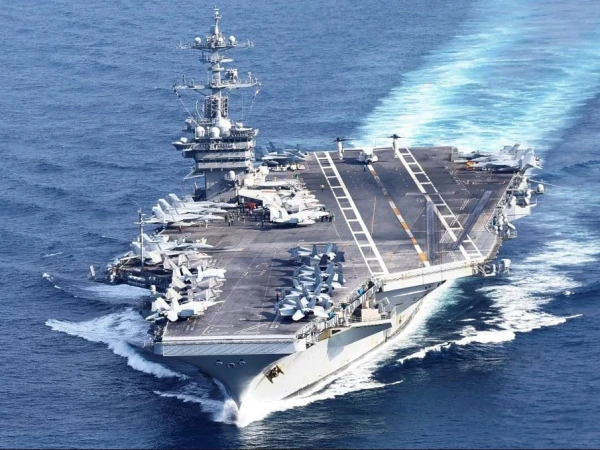
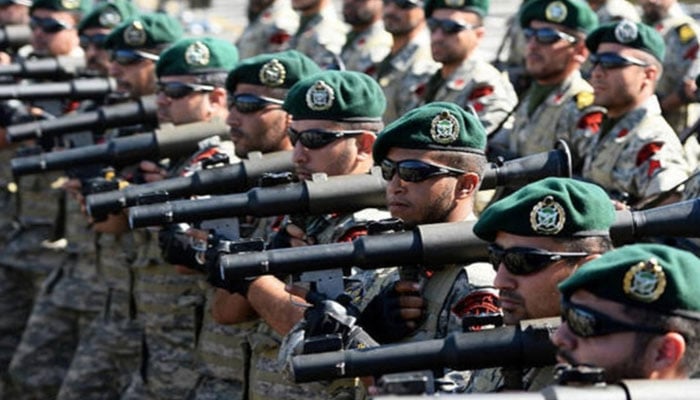
Iran has claimed that it has significantly strengthened its military and defense capabilities during the ceasefire with the United States, warning that its armed forces are fully prepared if diplomacy fails and hostilities resume.

Speaking to Iranian state television, a military spokesperson said the armed forces used every moment of the ceasefire to reinforce the country’s defenses. According to the spokesperson, Iran upgraded existing weapons, developed new air defense systems, restored facilities damaged during the conflict, and accelerated work on advanced military technologies.

The spokesperson also revealed that Iran deployed a new generation of drones during the recent conflict. While officials did not disclose technical details, they said more information about the drones will be released at a later stage.

According to Arab media reports, Iran’s acting defense minister said missile and drone production continued without interruption throughout the ceasefire. He claimed that drone manufacturing has increased to nearly three times its pre-war level, reflecting Tehran’s efforts to rapidly rebuild and expand its military capabilities.

The acting defense minister also stated that the Iranian armed forces maintained their command structure despite the deaths of several senior military commanders. He added that revised battlefield strategies enabled Iranian forces to surprise their opponents during the conflict.

Meanwhile, a spokesperson for the Islamic Revolutionary Guard Corps (IRGC) said Iran improved both the production speed and accuracy of its missile program during the ceasefire. However, officials declined to reveal the size of the country’s remaining weapons stockpiles or provide details about military losses suffered during the fighting.

Several U.S. media outlets have also reported that Iran still possesses roughly 70 percent of its pre-war missile inventory and about 40 percent of its drone arsenal. Analysts believe those remaining capabilities could allow Tehran to sustain a prolonged campaign of asymmetric warfare if tensions escalate again.

Arab media further reported that Iran could soon receive around 400 shoulder-fired air defense missile systems manufactured in China. However, both China and Pakistan have rejected those reports, while Iranian authorities have not issued any official comment on the claim.

A former Iranian military commander also argued that thousands of U.S. and Israeli strikes failed to eliminate Iran’s military capabilities. He said the country continues to improve the range, precision, and destructive power of its domestically produced missiles while bringing newly developed weapons from underground missile and drone facilities into operational service.

The latest statements highlight Iran’s determination to strengthen its military readiness despite international pressure, while also signaling that Tehran remains prepared for another confrontation if diplomatic efforts with Washington fail.

Similar Posts

  • | | |

    Indian cargo ship sinks after suspected attack nea…

    An Indian cargo ship sank in the Red Sea after suffering severe damage in a suspected maritime attack near Yemen’s western coast. The incident, which reportedly involved an explosive-laden boat or unidentified projectile, caused a powerful explosion and fire aboard the vessel before it eventually went down despite rescue efforts. According to international media reports, the cargo ship sustained extensive damage following the blast. Several crew members were injured during the incident, but no fatalities have been reported. The crew immediately initiated emergency procedures and alerted nearby maritime authorities, who responded with rescue operations. Authorities attempted to secure and tow the damaged vessel to a safe location. However, the ship’s condition deteriorated, and it eventually sank in the Red Sea. Medical assistance was provided to injured crew members, while rescue teams ensured the safe evacuation of everyone on board. India’s Ministry of External Affairs stated that the vessel was struck by an unidentified projectile, confirming that the cargo ship later sank. The ministry added that all crew members were safely rescued and no loss of life occurred. As of now, no group has officially claimed responsibility for the attack. However, the incident comes amid heightened security concerns in the Red Sea, where commercial shipping has faced repeated threats in recent months. Several previous attacks on merchant vessels in the region have been claimed by the Iran-backed Houthi movement, although no evidence has yet linked this specific incident to any particular group. The Red Sea has become one of the world’s most sensitive maritime routes due to ongoing regional tensions. Commercial vessels transiting the area have encountered increased security risks, prompting many shipping companies to strengthen safety measures or alter their routes. Recent months have also seen warnings and threats against ships passing through the Bab el-Mandeb Strait, a strategic waterway connecting the Red Sea with the Gulf of Aden. Disruptions in this corridor can have significant consequences for global trade, particularly the transportation of oil, gas, and other essential commodities. The Red Sea and Bab el-Mandeb Strait rank among the world’s busiest shipping lanes, serving as critical links between Europe, Asia, and the Middle East. Any disruption in these waters can affect international supply chains, increase shipping costs, and impact global energy markets. Investigations into the cause of the attack are expected to continue as maritime authorities gather evidence. Meanwhile, shipping companies and governments are closely monitoring the security situation in the region to ensure the safety of commercial vessels and international trade routes.

  • |

    China’s Chongqing East becomes world’s largest railway station

    Almost everyone has travelled by train at some point and has seen railway stations. But do you know which country is home to the world’s largest railway station? If you do not, here is the answer: the world’s largest railway station is located in China and is nothing short of an architectural marvel. China is already known for numerous engineering wonders ranging from remarkable bridges to the world’s largest high-speed railway network. Chongqing East Railway Station Chongqing East Railway Station located in southwestern China is the world’s largest railway station in terms of area. It was opened to the public in June 2025. The railway station covers an area of approximately 13 million square feet equivalent to around 170 football fields. It is also about five times larger than New York’s Grand Central Terminal. The station has 15 platforms and 29 railway tracks and during peak hours, it can accommodate around 16,000 passengers per hour. Around 16,500 tonnes of steel were used for its roof. However, the most remarkable feature of the station is the speed at which it was constructed and it was built on top of a mountain. The Chongqing region is mountainous which has traditionally made the development of transportation infrastructure particularly challenging. The station was constructed in just 38 months with the help of around 40,000 workers and a fleet of robotic machinery. Although 38 months may seem like a long period, in many countries, simply obtaining approval for projects of this scale can take longer than that.

  • |

    India alarmed by Pakistan-Saudi-Türkiye alliance

    The defence agreement between Pakistan, Saudi Arabia and Türkiye has emerged as a major strategic concern for India. The three countries signed the Makkah Joint Defence Agreement on August 7. Under the pact, an armed attack against any one of the three countries would be treated as an attack against all three. The agreement has attracted significant attention in New Delhi. Indian analysts are assessing its possible impact on the regional balance of power. An Indian media analysis recalled comments made by Indian Army Deputy Chief Lieutenant General Rahul R Singh in 2025. He had said that during the military confrontation between India and Pakistan in May, India faced several forms of support for Pakistan. The analysis claimed that Pakistan was directly involved in the conflict. It also alleged that China provided satellite information to Pakistan. Türkiye was accused of providing military assistance to Pakistan. The assistance reportedly included drones and other defence equipment. Saudi Arabia’s participation has now added another dimension to India’s concerns. Indian analysts fear that Riyadh could support Pakistan if another armed conflict breaks out between India and Pakistan. The concern comes despite India’s strong relations with Saudi Arabia. The two countries have extensive economic and strategic ties. India and Saudi Arabia cooperate in oil, trade, investment, security and cultural affairs. Their bilateral trade is estimated at around $43 billion. Saudi Arabia also remains an important supplier of crude oil to India. It reportedly meets around 14% of India’s crude oil requirements. Pakistan and Saudi Arabia also have a long history of defence cooperation. Pakistan has provided military training to Saudi forces. Pakistani military personnel have also been deployed in Saudi Arabia at different times. The Indian analysis claimed that Pakistan sent around 8,000 military personnel and 16 JF-17 fighter jets to Saudi Arabia during 2026. It also referred to reports about possible Pakistani drone support and Chinese-made air defence systems. These developments were reportedly linked to Saudi Arabia’s security concerns and attacks involving drones. The relationship between Pakistan and Türkiye has also expanded significantly in recent years. The two countries have increased cooperation in defence technology and military production. Pakistan has acquired Turkish-made warships and other defence equipment. Türkiye has also supported the modernisation of Pakistan’s naval capabilities. The two countries are also cooperating in the field of unmanned aerial systems. Pakistan has acquired Turkish Bayraktar Akıncı drones. Both sides have discussed and worked on expanding cooperation in drone technology. Türkiye’s KAAN stealth fighter has also attracted interest from Pakistan. However, no final purchase agreement for the aircraft has been confirmed.

  • |

    South Korea heatwave death toll rises to 16

    South Korea is facing an intense heatwave that has claimed at least 16 lives so far this year, as soaring temperatures continue to put millions of people at risk. According to data released by the South Korean Ministry of the Interior and Safety, 2,025 people suffered from heat-related illnesses between May 15 and August 2. Of those affected, 16 people died from complications linked to the extreme heat. The country has experienced a sharp rise in temperatures over the past week, with daily heat records broken three times. On Sunday, the city of Yangsan recorded a temperature of 42.5 degrees Celsius, marking the highest temperature ever recorded in South Korea. Authorities have also issued a severe heatwave warning for the capital, Seoul, where temperatures are expected to climb close to 40 degrees Celsius again. Officials have urged residents to take precautions, particularly during the hottest hours of the day, and to stay hydrated while limiting outdoor activities. The extreme weather has raised concerns for vulnerable groups, including older adults and people with disabilities. To protect those most at risk, medical workers are monitoring the health of around 63,000 highly vulnerable individuals across the country. Officials are encouraging citizens to avoid prolonged exposure to the sun, drink plenty of water and seek medical assistance if they experience symptoms such as dizziness, weakness, confusion or unusually high body temperature. The latest figures highlight the growing impact of the prolonged heatwave, with authorities continuing to closely monitor conditions and take measures to reduce the risks associated with extreme temperatures.

  • |

    Does your native language control how you think?

    With over 7,000 distinct human languages spoken across the globe today, humanity communicates through fascinating sentence structures. A compelling debate has captivated thinkers for decades. Does the language you grow up speaking dictate the limits of what your mind can comprehend? This captivating idea lies at the heart of the Sapir-Whorf hypothesis. A theory that continues to provoke vibrant discussions across linguistics, philosophy, and cognitive science. The Power of Vocabulary and Perception The hypothesis was formulated in the early 20th century by linguists Edward Sapir and Benjamin Lee Whorf. It’s often referred to as linguistic relativity or linguistic determinism. They propose that the structure of a native language fundamentally shapes its speakers’ worldview and cognitive capacity. If a concept or object lacks a dedicated word in a person’s language, that person cannot truly perceive, categorize or conceptualize it. Consider how different cultures classify colors. Some languages possess dozens of specific terms for distinct shades. Whereas,  others operate with only a couple of basic terms distinguishing between light and dark tones. According to strong linguistic determinism, a speaker whose native tongue lacks a dedicated word for green would struggle to perceive a green leaf as distinct from yellow. Similarly, emotional vocabularies vary widely across cultures. German famously uses the word Schadenfreude to describe taking pleasure in someone else’s misfortune. According to Sapir-Whorf theory, an English speaker whose language lacks an exact single-word equivalent would supposedly find it difficult to recognize or isolate that specific emotional state within themselves. Why the Concept Fascinates Us? It is easy to see why the Sapir-Whorf hypothesis captured public imagination. The notion that our mother tongue acts as a unique way through which we view reality is deeply romantic. Philosophically, the theory suggests that the world contains thousands of distinct cognitive universes. If language entirely dictated thought, cross-cultural understanding would face profound barriers. It is so as the speakers of different languages would operate inside fundamentally incompatible mental frameworks. In semantic studies, labeling objects and experiences allows humans to organize chaotic sensory input efficiently. Giving a name to a precise group such as distinguishing toddlers, teenagers and senior citizens helps us categorize society into recognizable stages. The hypothesis demonstrated that naming things provides cognitive shortcuts. Such a naming method makes specific distinctions far easier to reference and discuss in daily life. Why Modern Science Rejects Strong Determinism Despite its initial popularity, modern linguistics and cognitive scientists reject strong linguistic determinism. The fundamental flaw in the hypothesis rests on a misunderstanding of the relationship between mind and speech. Language does not produce thought. Rather, human thought drives the creation and evolution of language. When people encounter new experiences, foods or technologies, they do not remain silent simply because they lack pre-existing terminology. Instead, humans spontaneously create new phrases. They adapt existing terms or borrow words from other cultures to describe what they have experienced. An English speaker can easily understand and feel pleasure at a rival’s failure without ever having heard the German word Schadenfreude. While English uses blue for both dark and light shades. Whereas Italian maintains separate primary words (blu and azzurro). English speakers are fully capable of seeing the difference between a midday sky and the deep ocean. Human cognition precedes language. Speech serves as a flexible tool designed to communicate human experiences, not a rigid cage that imprisons cognitive ability. The Lasting Value of Sapir-Whorf   The Sapir-Whorf hypothesis retains great value even if its most radical claim has been disproven. It paved the way for weak linguistic relativity. The claim further explores how language subtly influences cognition, memory and visual attention without imposing hard limits on intellect. Ultimately, Sapir and Whorf inspired generations of researchers to explore the mysterious connection between human culture, language and the mind.

  • |

    Moroccan businessman’s death reignites Italy migration debate

    BOLOGNA: The death of a Moroccan businessman during a police restraint in the Italian city of Bologna has reignited Europe’s heated debate over migration, policing and the treatment of immigrants, with the case exposing the deeply personal human stories often overshadowed by political rhetoric. The incident comes as European governments face mounting pressure over migration policies. Just days after thousands of migrants crossed from Morocco into Spain’s North African enclave of Ceuta, Italian Prime Minister Giorgia Meloni announced plans to suspend a free-movement agreement with Spain, reinforcing her government’s tough stance on immigration. Amid the political storm, the death of Abderrahim Fakir, a 42-year-old Moroccan-born entrepreneur who had spent most of his life in Italy, has become a symbol of the broader tensions surrounding migration and law enforcement. Videos recorded by local residents on July 19 showed police officers restraining Fakir face down on the ground for several minutes after responding to reports of a distressed man behaving erratically in a residential area. The footage, which quickly spread across social media, sparked widespread public outrage and renewed scrutiny of police conduct. Authorities said officers were responding to emergency calls about a man shouting, kicking garage doors and striking a vehicle. An autopsy and official investigations into the officers’ actions remain ongoing, while four Red Cross volunteers who were present are also under review. The tragedy triggered thousands of peaceful protesters to gather in Bologna, demanding accountability and justice for Fakir’s family. However, demonstrations later turned violent when a small group clashed with police, leaving dozens of officers injured and further intensifying political divisions. Friends, relatives and lawyers describe Fakir as far more than the image portrayed in political debates. Having arrived in Italy from Morocco at the age of six, he built a successful life, eventually owning a small metalworking company after years of hard work. Behind that success, however, he had been battling severe anxiety. According to his lawyer, Fakir feared deportation after complications involving his residency permit, despite living in Italy for nearly four decades. He had also been struggling financially as his business declined, forcing him to lay off several employees. Family members said he concealed his emotional pain, insisting everything was fine even as he sought psychiatric assistance weeks before his death. Sociologists argue that Fakir’s story highlights the dangers of reducing migration to political slogans while ignoring the human lives behind the headlines. As Italy awaits the outcome of official investigations, his family says they continue to trust the country’s justice system and hope the full truth surrounding his final moments will emerge.

Leave a Reply

Your email address will not be published. Required fields are marked *