mqmp rivals move
| |

MQM-P rivals move toward reconciliation 

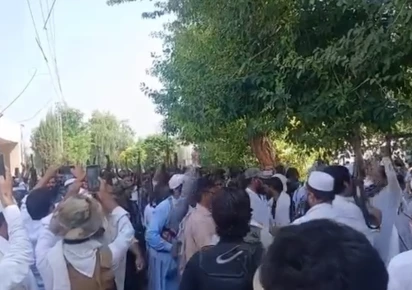
KARACHI: Signs of reconciliation have begun to emerge within the Muttahida Qaumi Movement-Pakistan (MQM-P) after a violent confrontation at the party’s Bahadurabad headquarters, with senior leaders initiating behind-the-scenes contacts to ease tensions and restore unity.

Two days after the clash, senior party figures, including Federal Health Minister Syed Mustafa Kamal and Anees Qaimkhani, visited the party’s central office to discuss organizational affairs. Speaking to reporters, Mustafa Kamal rejected speculation of an internal power struggle, insisting that the party remained united despite recent events.

According to sources, communication has been established between the two rival camps—one led by Mustafa Kamal and the other by Khalid Maqbool Siddiqui—in an effort to defuse tensions. A joint press conference is reportedly being considered as part of efforts to present a united front, although party leaders have neither confirmed nor denied the possibility. Notably, close associates of Siddiqui, who also serves as the party’s convener, did not attend the meeting at the headquarters.

Despite the passage of two days since the confrontation, which reportedly involved a physical altercation and aerial firing, police have yet to register a First Information Report (FIR). Officials said no faction of the party has formally approached law enforcement to lodge a complaint. If neither side files a case, authorities are expected to register one on behalf of the state.

Police sources said a draft FIR has already been prepared and is awaiting approval from senior officials before being formally registered.

Meanwhile, law enforcement agencies have carried out raids and detained several MQM-P office-bearers and workers suspected of involvement in the violence. Officials said those currently in custody could face formal arrest once the FIR is registered, as investigations into the incident continue.

Similar Posts

  • | |

    Pakistan standing tall: realising Jinnah’s visio…

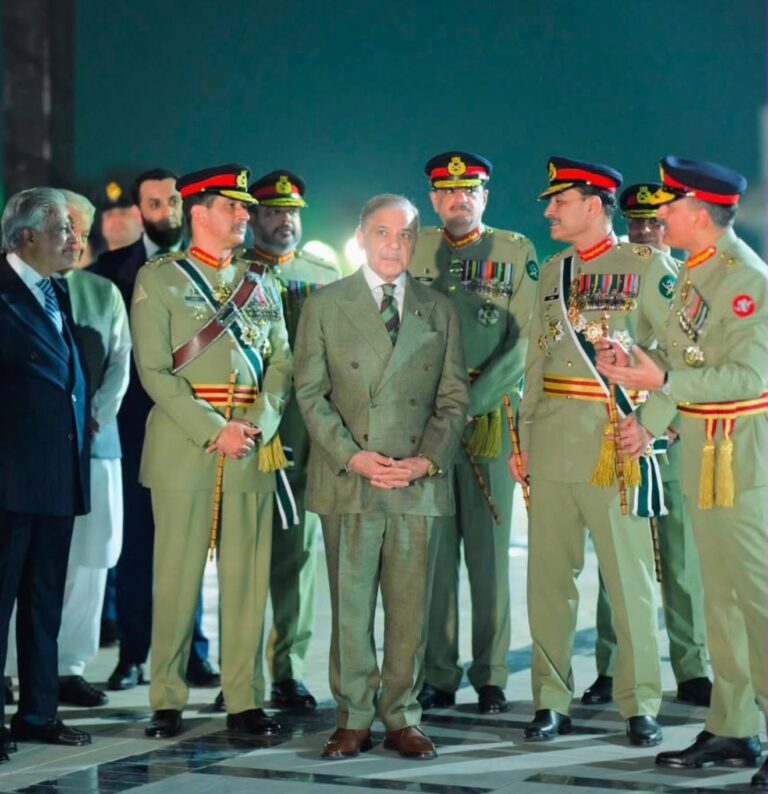
    Shehbaz Sharif and Asim Munir: Advancing the Vision of Quaid-e-Azam As Pakistan celebrates its 79th Independence Day, there is a growing sense that the country is witnessing a moment that would have deeply pleased its founding father, Quaid-e-Azam Muhammad Ali Jinnah. For decades, Pakistanis have carried Jinnah’s vision of a strong, sovereign and respected Pakistan in their hearts. Today, as Pakistan’s diplomatic and strategic importance continues to grow, that vision appears increasingly visible on the international stage. Prime Minister Muhammad Shehbaz Sharif and Field Marshal Syed Asim Munir are working together to translate that vision into reality. Their close coordination has provided Pakistan with a sense of direction, unity and confidence at a time when the world itself is undergoing profound geopolitical change. The Pakistan of today is increasingly being recognised as a country whose voice matters. Jinnah envisaged a Pakistan that would not merely exist on the world map, but would stand with dignity, sovereignty and confidence among the nations of the world. His vision was of a country capable of determining its own destiny and making a meaningful contribution to international affairs. There is a powerful resonance between that vision and the Pakistan we are witnessing today. Jinnah once spoke of a future in which the world’s decisions would be influenced by Pakistan. For many years, that aspiration seemed distant. But recent developments suggest that Pakistan is moving closer to that position. From facilitating dialogue between major powers to strengthening strategic partnerships with Türkiye, Saudi Arabia and China, Pakistan is demonstrating that it can engage with countries across different geopolitical blocs while protecting its own national interests. The country’s ability to host US-Iran talks is particularly significant. In an increasingly polarised world, being trusted to provide a platform for dialogue is itself an indication of diplomatic relevance. Pakistan’s relationship with China remains a cornerstone of its foreign policy, while ties with Türkiye and Saudi Arabia continue to deepen. At the same time, engagement with the United States has entered a phase in which Washington is once again recognising Pakistan’s strategic importance. The positive remarks by US President Donald Trump about Prime Minister Shehbaz Sharif and Field Marshal Asim Munir have also attracted international attention. Perhaps most importantly, Pakistan is projecting itself with greater confidence. The scenes in Islamabad surrounding the inauguration of Yadgar-e-Fateh, commemorating the sacrifices and achievements associated with Operation Bunyan-un-Marsoos, captured this changing mood. Political and military leaders standing together alongside the families of martyrs and veterans conveyed a powerful message that Pakistan’s strength lies in unity. As an overseas Pakistani who has lived in the West for more than two decades, this transformation is particularly striking. I have witnessed different phases of Pakistan’s image abroad. There were years when Pakistan was frequently discussed through the prism of instability, terrorism and political uncertainty. Today, the conversation is different. Pakistan is increasingly being discussed in terms of its strategic importance, diplomatic role, defence capabilities, regional influence and economic potential. This should make every Pakistani proud—but it should also make us more responsible. International recognition alone cannot build a prosperous Pakistan. The next challenge is to convert diplomatic and strategic gains into economic prosperity, stronger institutions, better education, employment opportunities and an improved quality of life for ordinary Pakistanis. That is where Jinnah’s vision must ultimately lead. At 79, Pakistan has every reason to celebrate. The country is standing taller on the world stage, and the partnership between Prime Minister Shehbaz Sharif and Field Marshal Asim Munir has helped project a message of unity and national purpose. But this is not the end of the journey. It is the beginning of a new chapter. Jinnah gave Pakistan a dream. The responsibility of this generation is to turn that dream into a lasting reality. Pakistan Zindabad.

  • | |

    NCLEX programme under fire: only 7 nurses pass out…

    Islamabad: A Government backed programme designed to help Pakistani nurses qualify for international jobs came under strong questioning in the National Assembly after lawmakers raised concerns over the transparency, student selection and results of the NCLEX Nursing Training Programme. The National Assembly Standing Committee on Federal Education and Professional Training questioned how a Rs 150 million programme selected its training partner and why only seven nurses had cleared the NCLEX exam out of 500 trainees so far. The committee supported opportunities for Pakistani nurses to work abroad but demanded complete transparency regarding the programme’s planning, the selection of the implementing partner, and the use of public money. The issue was discussed during the 25th meeting of the committee, where members reviewed the performance and implementation of the NCLEX Nursing Training Programme launched by the National Vocational and Technical Training Commission (NAVTTC). NAVTTC Executive Director Muhammad Amir Jan informed the committee that before this initiative, Pakistani nurses had to travel to countries such as Dubai, Bahrain, Turkey and Thailand to appear in the NCLEX examination. He said that with support from SIFC, NAVTTC was given responsibility to bring the examination system to Pakistan for the first time through Pearson VUE during 2024 and 2025. Officials informed the committee that the programme was designed to train 500 nurses. The training phase has been completed, 182 nurses have applied for the NCLEX examination and seven nurses have successfully cleared the test. However, members questioned the low success rate and asked whether the programme was producing the expected results. One committee member pointed out that seven successful candidates out of 500 trainees represented a very small percentage and questioned whether the programme needed improvements before more public funds were spent. NAVTTC officials defended the programme, saying that NCLEX is a difficult international examination and nurses who pass the test still require additional time before moving abroad for employment. Officials said nurses might need eight to eighteen months after passing the exam before they can travel for work opportunities. The committee also raised questions about the selection of the implementing partner, the Institute of Contemporary Studies. Members questioned whether a public advertisement was issued before selecting the organisation or if other institutions were given an opportunity to compete. They said programmes funded through public money must follow transparent procedures to maintain public confidence. NAVTTC officials explained that the programme was developed under an industry led model and was based on a proposal received from the Pakistan Nursing and Midwifery Council. They said such programmes do not always follow open advertisement procedures because they are based on specific industry requirements. However, members questioned whether a government body could recommend a specific private organisation without a competitive process. The committee also raised concerns about the role of the Pakistan Nursing and Midwifery Council. Members noted that in previous discussions, representatives of the council had stated they were not fully aware of the nurse selection process and training arrangements. NAVTTC officials responded that the council had formally approached NAVTTC for the project and that decisions taken by government bodies should be accepted by all stakeholders involved. Financial matters also came under discussion. NAVTTC informed the committee that the total project cost was Rs 150 million and that Rs 87 million had been released so far. Officials clarified that the remaining funds would be released only after achieving agreed results under a performance-based payment system. They said a bank guarantee was also available to protect government funds. The committee also questioned the quality and locations of the training centres. MNA Dr Shazia Sobia Aslam Soomro raised concerns about some training locations, including Matta in Swat, and asked how proper facilities and monitoring were ensured in those areas. NAVTTC officials responded that Khyber Medical University conducted training in Matta and promised to provide complete details of nurses trained there. Questions were also raised about trainer qualifications. Members asked how individuals with nursing degrees could provide NCLEX preparation training. Officials explained that trainers must themselves be NCLEX qualified according to programme requirements. The committee further discussed the selection of nurses for training. NAVTTC officials said their role was to set eligibility criteria, not directly select candidates. They explained that under the pay for success model, the training provider selects participants because the provider is responsible for results. At the conclusion of the meeting, the committee decided to invite the Pakistan Nursing and Midwifery Council in the next session to clarify the selection process of nurses and the appointment of the training partner. Chairperson Mahtab Akbar Rashdi said that every concern must be properly addressed because public funds were involved and the programme was created to provide international opportunities for Pakistani nurses.

  • |

    Busy Philipps reveals rare brain tumour diagnosis and surgeries

    Busy Philipps has opened up about one of the most frightening periods of her life, revealing that she was diagnosed with a rare malignant brain tumour earlier this year and underwent two surgeries during what she described as the “weirdest six months” of her life. The 47-year-old actress, best known for her work in Dawson’s Creek, Freaks and Geeks, Cougar Town and Girls5eva, shared details of her health battle in an emotional interview with People. Philipps said she is now grateful to be alive after doctors discovered a tumour in the frontal lobe of her brain despite her having no obvious warning signs. The tumour was found after Philipps underwent a full-body Prenuvo scan in February. She had initially considered cancelling the appointment, but her ex-husband, Marc Silverstein, encouraged her to go ahead with it. The timing was particularly emotional because her former Dawson’s Creek co-star James Van Der Beek had died shortly before the scan following his battle with cancer. Philipps recalled that she did not have typical symptoms associated with a brain tumour, such as seizures. She simply felt that something was telling her to get the scan. The examination eventually revealed a mass measuring around 2.6 centimetres in her brain. Doctors diagnosed her with a grade 2 oligodendroglioma, a rare and slow-growing type of brain tumour. Although the tumour is classified as malignant because of its potential to return over time, her medical team explained that this type has one of the more favourable prognoses among malignant gliomas. Early detection also allowed doctors to act before the condition became more serious. Following the diagnosis, Philipps underwent a major operation on March 2 to remove the tumour. She later faced another serious setback when a staphylococcus infection developed at the surgical site. The complication required a second operation to treat the infection and clean the affected area. The actress has described the entire experience as physically and emotionally overwhelming. During her initial conversation with her doctor, Philipps even managed to bring some humour into the frightening situation. She asked how quickly she could return to work after surgery and jokingly wondered whether her doctor could perform a brow lift while removing the mass from her frontal lobe. Despite everything she went through, Philipps was able to return to work after her recovery. She is continuing to undergo regular medical scans so doctors can monitor her condition and check for any possible recurrence. At present, she does not need chemotherapy or radiation treatment. Philipps has also spoken about the importance of listening to one’s instincts and being willing to seek medical answers even when something does not appear obviously wrong. Her decision to proceed with the scan ultimately led to the discovery of a tumour she did not know was there. For fans of Philipps and Van Der Beek, their connection goes back to Dawson’s Creek, the popular teen drama that aired from 1998 to 2003. Philipps joined the series in its later seasons as Audrey Liddell, while Van Der Beek played the title character, Dawson Leery. The two remained connected with their former co-stars even after the series ended. Looking ahead, Philipps is continuing her acting career. She is set to appear in Cupertino, a new CBS drama, while her other upcoming work includes the horror-comedy Horrified, featuring Julie Benz and Ron Perlman. After surviving such a difficult chapter, Philipps is now focusing on her recovery, her family and returning to work. Her story has also highlighted how unexpected medical discoveries can sometimes come from taking action even when there are no clear symptoms. By sharing her experience publicly, Philipps hopes to encourage people to pay attention to their bodies, ask questions and seek medical advice when something does not feel right. Her journey from an unexpected diagnosis to recovery has been difficult, but she says she is ultimately grateful for the chance to move forward.

  • | |

    Bannu police revolt over seven officials’ transf…

    Police personnel in Bannu staged a protest on Tuesday against the transfer of seven Khyber-Pakhtunkhwa police officials to other districts, with the dispute disrupting policing and traffic management in parts of the district. The protest was organised after the Police Peace Committee called on affected personnel to gather at the police lines and suspend their duties. Similar calls were reportedly made by peace committees in Lakki Marwat and Tank. The protesters are demanding that the transfer orders be reviewed or withdrawn. They have warned that the protest could be expanded if their demands are not addressed. Head of the Bannu Peace Committee Hazratullah said the boycott would continue until the transfer orders were cancelled. He said members of the peace committees had worked alongside police to maintain security and restore peace in Bannu, Lakki Marwat and Tank. The boycott reportedly affected security arrangements at several important government and sensitive locations. The absence of traffic personnel also caused congestion at various points in Bannu and Lakki Marwat, leaving commuters facing delays. The transfer orders were issued by the Peshawar Central Police Office on the directions of the Additional Inspector General. Seven personnel were moved to different districts and units. Under the orders, Head Constable Nisar Ali was transferred from Police Lines Lower Dir to PTS Swat. Constable Ghulam Abbas Khan was moved from Elite Force Peshawar to Haripur, while Constable Muhammad Arif was transferred from Elite Force Peshawar to Dera Ismail Khan. Constable Shafiullah was transferred from Investigation Bannu to Swat. Constable Muhammad Atif Khan was moved from Elite Force Bannu to Upper Chitral. Meanwhile, Constable Samiullah was transferred from Lakki Marwat to the Counter Terrorism Department in Peshawar, while Constable Khalid Rahman was moved from District Traffic Mobile Lakki Marwat to Shangla. Police personnel have argued that sudden transfers to distant districts could create difficulties for the affected officials and their families. They have called for the orders to be reconsidered. Authorities have so far not issued a detailed official response to the reported boycott or confirmed whether disciplinary action will be taken against personnel who stopped performing their duties. IGP transfer also under review The protest comes amid uncertainty over the appointment of a new K-P inspector general of police. The proposed transfer of IGP Zulfikar Hameed was put on hold a day earlier as the federal government sought further consultations over the candidates proposed for the post. Provincial government sources said the list of three senior police officers submitted for consideration could be revised. One name may be removed, while another officer could potentially be added before the appointment process resumes. A senior police official said the transfer of the current IGP was not being actively pursued for the moment because of the worsening security situation in the southern districts. The official said the provincial police chief was therefore likely to remain in his position temporarily while consultations between the federal and provincial governments continued.

  • | | |

    Pakistan approves 1m tonnes wheat imports

    Pakistan’s strategic wheat reserves have fallen to critically low levels, with the stocks held by the Pakistan Agricultural Storage and Services Corporation (PASSCO) reportedly almost exhausted. The shortage has emerged despite the International Monetary Fund (IMF) allowing the government to procure wheat. Federal and provincial authorities, however, were unable to secure sufficient quantities, resulting in a sharp decline in PASSCO’s strategic reserves. The situation has raised concerns about maintaining adequate wheat supplies and meeting future requirements. PASSCO plays an important role in maintaining strategic stocks that can be used to support food security during periods of shortage. In response to the declining reserves, the Economic Coordination Committee (ECC) has approved the import of one million tonnes of wheat. The government has also formed a steering committee to oversee the process and ensure that all necessary requirements are completed before the imported wheat is brought into the country. Officials said the import process will be subject to several conditions. These include pre-shipment inspection to verify the quality and quantity of wheat before it leaves the exporting country. Another major condition requires provincial governments to arrange and provide the funds needed to meet their respective wheat requirements. The latest decision comes as authorities seek to strengthen wheat availability and prevent a potential supply gap. The import plan is expected to help rebuild stocks after the depletion of PASSCO’s strategic reserves. The steering committee will monitor the required procedures and coordinate with the relevant federal and provincial authorities. Its role will include ensuring that the conditions attached to the wheat import decision are fulfilled. The development highlights the importance of timely wheat procurement and strategic stock management. Any delay in rebuilding reserves could create additional pressure on the country’s food supply system, particularly if domestic availability remains insufficient.

  • | | |

    DPM Dar boosts Pakistan-ADB partnership

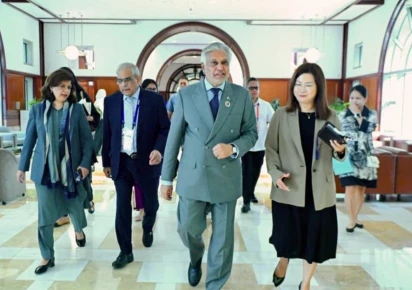
    Deputy Prime Minister and Foreign Minister Ishaq Dar visited the headquarters of the Asian Development Bank (ADB) in Manila on Wednesday to review the bank’s partnership with Pakistan and discuss ways to strengthen future cooperation. The visit took place on the sidelines of the 33rd ASEAN Regional Forum Ministerial Meeting, where Pakistan is participating in a series of high-level diplomatic engagements with regional and international partners. Upon his arrival at the ADB headquarters, Dar was welcomed by senior officials of the bank. He signed the visitors’ book before holding discussions on the institution’s evolving development agenda and its ongoing collaboration with Pakistan. The meeting focused on expanding cooperation in several important sectors, including infrastructure, energy, climate resilience, education, economic reforms and sustainable development. Both sides also discussed future opportunities to support Pakistan’s economic growth and development priorities. Dar later attended a working luncheon hosted by Pakistan’s Executive Director to the ADB, Nashita Mohsin. The event was attended by Pakistani professionals serving in senior leadership positions across different departments of the bank. During the interaction, Dar appreciated the contributions of Pakistani professionals working at the ADB. He said their expertise and leadership have strengthened the institution’s work while enhancing Pakistan’s image at the international level. He also congratulated Nashita Mohsin on assuming her responsibilities as Pakistan’s Executive Director to the Asian Development Bank and expressed confidence that she would further strengthen Pakistan’s engagement with the institution. On the sidelines of the ASEAN forum, Dar also met Bangladesh’s Foreign Minister Khalilur Rehman. The two leaders reviewed the positive momentum in bilateral relations and discussed ways to expand cooperation between the two countries. Both sides welcomed the steady improvement in diplomatic ties and appreciated the growing engagement in trade, communication and people-to-people contacts. They noted that the launch of direct flights earlier this year has further improved connectivity and created new opportunities for cooperation. The two ministers reaffirmed their commitment to maintaining the positive momentum in bilateral relations and agreed to continue close engagement in areas of mutual interest. Dar and Rehman also exchanged views on regional and international developments, including issues affecting South Asia and broader global challenges. They emphasized the importance of dialogue and cooperation in promoting regional peace, stability and economic development. Earlier, Dar arrived in Manila with a Pakistani delegation to participate in the 33rd ASEAN Regional Forum Ministerial Meeting. During the visit, he is expected to attend the forum’s plenary session and hold several bilateral meetings with foreign ministers from participating countries. The ASEAN Regional Forum brings together foreign ministers and senior diplomats from ASEAN member states and major global powers to discuss regional security, economic cooperation, energy security, food security, geopolitical developments and other international issues. Representatives from the United States, China, Japan, India, Australia, South Korea, Russia, the United Kingdom and the European Union are also participating in the meeting.

Leave a Reply

Your email address will not be published. Required fields are marked *