two firefighting helicopters
|

Two firefighting helicopters collide as Greece battles wildfires near Athens

Two firefighting helicopters collided mid-air west of Athens while tackling a major wildfire, killing a Greek and a Danish pilot aboard one of the aircraft.

The two crew members on the second helicopter survived and were rescued, while the destroyed aircraft had been leased from Australia’s McDermott Aviation to support Greek operations. The tragic crash occurred as high winds whipped up severe blazes across the region, destroying more than 100 homes overnight in the coastal village of Porto Germeno.

More than 500 firefighters remain deployed to combat the active flames despite extreme weather conditions hampering aerial firefighting efforts.

Similar Posts

  • | |

    Govt increases fuel prices as international oil ra…

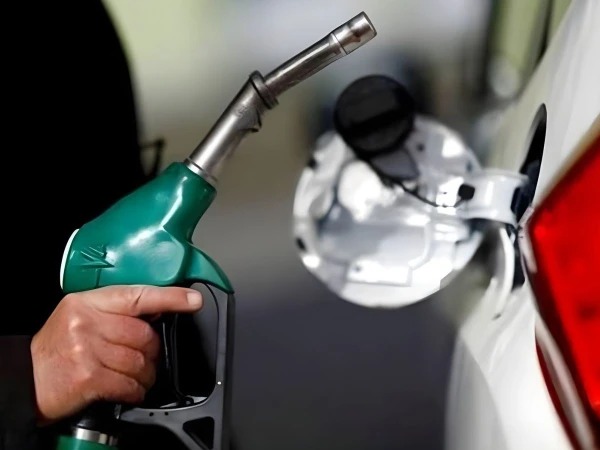
    The Government of Pakistan has announced a fresh increase in petroleum prices, raising the price of petrol by Rs. 1.63 per litre and high-speed diesel (HSD) by Rs. 1.55 per litre. The revised prices will come into effect from July 29, according to a notification issued by the Petroleum Division. Following the latest revision, petrol will now cost Rs. 335.81 per litre, while high-speed diesel will be available at Rs. 388.38 per litre. Officials said the increase reflects fluctuations in international crude oil prices caused by renewed tensions in the Persian Gulf, which have affected global energy markets. The government continues to collect substantial taxes and duties on petroleum products. Consumers currently pay around Rs110 per litre in taxes and levies on petrol, while diesel carries approximately Rs96 per litre in taxes and duties. Fuel prices have remained volatile throughout the year. Diesel had previously reached a record Rs520.35 per litre in early April after rising sharply from Rs281 per litre during the escalation of the US-Iran conflict. Similarly, petrol climbed to a peak of Rs458.41 per litre after increasing from Rs266 per litre in early March. Petroleum Minister Ali Pervaiz Malik recently announced that fuel prices would now be reviewed daily instead of weekly. The decision aims to ensure domestic fuel prices better reflect international market trends, especially during periods of global uncertainty. Under the new policy, the Oil and Gas Regulatory Authority (Ogra) will determine daily fuel prices based on changes in international oil markets. However, the move has faced criticism from the All Pakistan Dealers Association, which has warned that it may launch protests against the daily pricing mechanism. Petrol is primarily used by private vehicle owners, motorcycles, rickshaws, and small transport operators. As a result, any increase directly impacts middle- and lower-income households. High-speed diesel is widely used in heavy transport, agriculture, power generation, and industrial sectors, meaning price hikes can also increase transportation and production costs, contributing to inflation. With monthly sales of 700,000 to 800,000 tonnes, petrol and diesel remain Pakistan’s largest petroleum products by consumption and are significant contributors to government revenue. As global oil prices continue to fluctuate, consumers should expect further adjustments in domestic fuel prices in the coming weeks.

  • | |

    Israel rejects Trump’s 15-point Gaza plan

    Israeli Prime Minister Benjamin Netanyahu has rejected US President Donald Trump’s proposed 15-point plan for Gaza, insisting that Israel will not withdraw its forces until Hamas is fully and genuinely disarmed. Netanyahu made the statement during a cabinet meeting on Sunday. He said Israel would not accept any arrangement that allows Hamas to retain its weapons while Israeli troops are required to leave Gaza. “Israel rejects the 15-point document,” Netanyahu said, adding that the Israeli military would continue operating against threats to its forces and citizens. The dispute has created another obstacle for Trump’s efforts to establish a lasting ceasefire and political settlement in Gaza. Trump’s Board of Peace had previously announced that an agreement had been reached on the complete disarmament of Hamas and other armed groups operating in the territory. Hamas, however, has linked the handover of its heavy weapons to wider conditions. The group has demanded an end to Israeli military operations and a withdrawal of Israeli forces from Gaza. Netanyahu said disarmament must take place before any Israeli military withdrawal. He rejected the possibility of what he described as a symbolic or “fictitious” disarmament process. The Israeli premier said his government was discussing the next steps with US officials. He indicated that some American proposals were acceptable to Israel, while others remained unacceptable. “We know how to stand our ground on these matters,” Netanyahu said. The disagreement represents a major challenge for Trump’s Gaza initiative, which was presented as a framework for ending the conflict and creating conditions for reconstruction. The proposed plan includes the disarmament of Hamas, a phased Israeli military withdrawal and the rebuilding of Gaza. It also envisages the creation of an international Board of Peace to oversee implementation of the agreement. Hamas had previously signalled support for aspects of the disarmament framework. However, the group has maintained that weapons cannot simply be surrendered while Israeli forces remain in Gaza and military operations continue. Israel, meanwhile, has continued military strikes in Gaza despite the initial ceasefire agreement reached last October. Netanyahu is also facing political pressure at home. His far-right coalition partners have strongly opposed concessions that could allow Hamas to remain armed or secure a significant Israeli withdrawal. National Security Minister Itamar Ben Gvir has rejected the proposed framework and called it unacceptable. With Israeli elections approaching, Netanyahu faces pressure from both domestic allies and international partners. Any major concession on Gaza could create tensions within his governing coalition. The latest rejection therefore puts Trump’s peace initiative under renewed pressure. The central disagreement remains over the sequence of events: Hamas wants Israeli forces to withdraw and military action to end before completing disarmament, while Israel insists that Hamas must first surrender its weapons.

  • | |

    Karachi hospitals face fire safety gaps after PIMS…

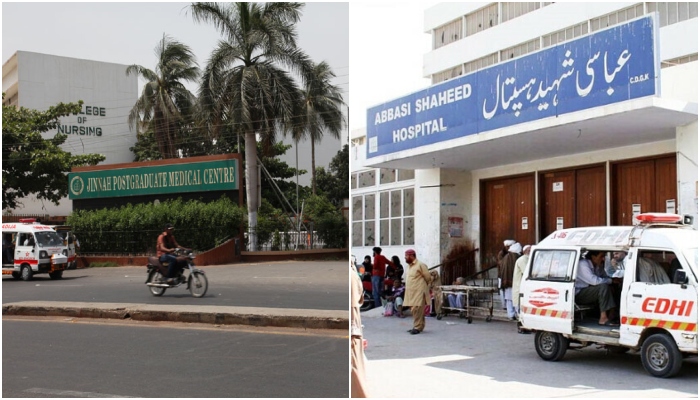
    KARACHI: Serious shortcomings in fire safety arrangements have been reported at major government hospitals in Karachi following the deadly fire at the Pakistan Institute of Medical Sciences (PIMS) in Islamabad, where newborns lost their lives. Hospital sources said several major public healthcare facilities in Karachi lack functional fire alarm systems and adequate emergency preparedness, raising concerns about the safety of thousands of patients and healthcare workers. At Abbasi Shaheed Hospital, operated by the Karachi Metropolitan Corporation (KMC), only 13 fire extinguishers are reportedly available across the facility. Sources said hospital staff have also not received regular fire safety training or participated in proper fire drills. The hospital reportedly does not have a fire alarm system or a designated emergency exit route. The situation is particularly concerning because hundreds of patients visit the emergency department every day, while more than 1,000 patients reportedly attend the outpatient department (OPD). Abbasi Shaheed Hospital has two generators, with one reportedly kept as a backup power source. The hospital’s Medical Superintendent said authorities were taking further steps to improve the fire safety system and address existing shortcomings. At Jinnah Postgraduate Medical Centre (JPMC), fire extinguishers are available in the wards, but hospital sources said several of them are not functional. Sources further said the last fire drill at the hospital was conducted in 2017. The hospital also reportedly lacks an installed fire alarm system. JPMC’s Joint Executive Director said a dedicated firefighting team needs to be established at the hospital. He said each ward has a fire extinguisher, while further training for staff is also required. He added that the hospital administration would write to the Sindh government seeking additional fire safety training for employees. Meanwhile, Civil Hospital Karachi has around 180 fire extinguishers distributed among its wards. However, sources said the overall fire safety arrangements at the hospital also fall short of ideal standards. The revelations have raised concerns about the preparedness of major public hospitals in Karachi to deal with fires and other emergencies. Large government hospitals handle thousands of patients, attendants and healthcare workers every day. In the event of a fire, the absence of functional alarms, clearly marked emergency exits, regular drills and trained response teams could make evacuation difficult and increase the risk to human lives. The situation has come under renewed scrutiny after the PIMS tragedy in Islamabad, prompting calls for immediate inspections of fire safety systems at hospitals across the country. Experts and hospital officials have stressed the need for regular fire drills, functioning extinguishers, alarm systems, emergency exits and trained firefighting teams.

  • | |

    Court issues arrest warrants for KP CM

    An Islamabad court has issued non-bailable arrest warrants for Khyber Pakhtunkhwa Chief Minister Sohail Afridi after he repeatedly failed to appear in a case related to alleged misleading statements and defamatory remarks against state institutions. The court observed that the chief minister neither appeared personally nor sent legal counsel despite being summoned on multiple occasions. After noting his continued absence, the judge ordered law enforcement authorities to ensure his appearance at the next hearing. The court also warned that if Afridi fails to appear again on the next hearing, scheduled for September 3, legal proceedings could be initiated to declare him a proclaimed offender under the relevant provisions of law. The case was registered by the National Cyber Crime Investigation Agency (NCCIA) under the Prevention of Electronic Crimes Act (PECA). Investigators allege that the chief minister used electronic media to make misleading statements and defamatory remarks targeting state institutions. In another significant legal development, former senator and senior Pakistan Tehreek-e-Insaf (PTI) leader Ejaz Ahmed Chaudhry has approached the Supreme Court after the Lahore High Court refused to suspend the sentence handed down to him by an anti-terrorism court. Chaudhry is currently serving his sentence at Lahore’s Kot Lakhpat Jail. He was convicted over his alleged involvement in meetings held before the violent incidents that followed the events of May 9, 2023. In his petition, Chaudhry argued that the conviction was based on weak and disputed evidence. He maintained that he was not originally nominated in the FIR and that his name was added later through supplementary statements. The petition also stated that no weapons, electronic devices, or other incriminating evidence were recovered from him. The petition further argued that police witnesses failed to present independent evidence linking him to the alleged conspiracy. It asked the Supreme Court to suspend his sentence and grant him bail until his appeal is decided. Meanwhile, Aleema Khan, sister of PTI founder Imran Khan, alleged that her brother was being denied his basic rights in prison. Speaking to journalists outside Adiala Jail, she claimed he was facing mistreatment and said public support would be crucial for securing his release. Aleema said supporters from across the country were expected to participate in the PTI’s planned protest movement. She added that she was not concerned about possible legal action against herself and would continue campaigning for her brother’s release. Another sister of the former prime minister, Noreen Niazi, also criticised the judicial system and expressed hope that Imran Khan would soon be released.

  • | |

    Hackers target US FEC system, disrupting campaign finance disclosures days before midterms

    The outage prevents organizations from filing the Federal Election Commission’s 24-hour and 48-hour spending reports, which show how much political groups and others are spending on specific races

  • | | | |

    Pezeshkian says ‘now is the best time’ for Ira…

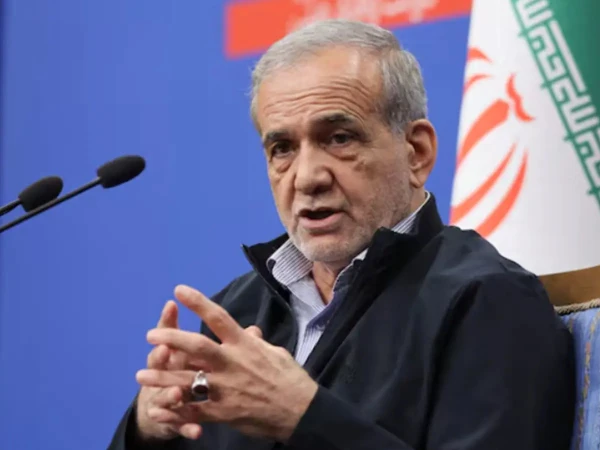
    TEHRAN: Iranian President Masoud Pezeshkian has described the current moment as the “best time” for reaching an agreement with the United States, while making clear that Tehran’s broader policy toward Washington has not changed. Speaking to media representatives in Tehran on Sunday, Pezeshkian said the United States had been pushed toward negotiations and reconciliation with Iran, describing the development as a success for Tehran’s diplomacy. His comments come amid heightened tensions between Iran and the United States and growing international efforts to find a diplomatic way out of the crisis. Pezeshkian suggested that the present circumstances could provide an opportunity to move toward an agreement if Washington was prepared to meet its commitments. The Iranian president accused the United States of failing to implement understandings reflected in an Islamabad memorandum and points jointly prepared by Iran and Oman. According to Pezeshkian, Washington’s failure to follow through on those commitments forced Tehran to respond. He said Iran had established a special team to deal with the crisis and that the group was continuing its work. “We are hopeful that Iran will move forward with dignity, determination and pride,” Pezeshkian said, stressing that Tehran would continue to protect what it considers its national interests. Despite signaling openness to negotiations, Pezeshkian adopted a tough tone toward Washington. He described the United States as a “criminal” and “colonial” power and insisted that Iran’s policy toward Washington remained unchanged. The president also warned against what he portrayed as attempts by the United States and Israel to weaken Iran from within. According to Pezeshkian, military pressure and war had failed to force Tehran into submission. He argued that Washington and Israel could now seek to exploit divisions within Iranian society by encouraging internal disputes. Pezeshkian urged Iranians to remain alert to what he described as such efforts, emphasizing that national unity was particularly important at the current stage. He called on the Iranian public to stand together to safeguard the country’s security and defence capabilities. The remarks underline the delicate balance in Tehran’s position: Iran appears willing to explore diplomacy while simultaneously maintaining its longstanding opposition to Washington’s policies. Pezeshkian’s comments could therefore signal a possible opening for renewed diplomatic engagement, but any breakthrough is likely to depend on whether Iran and the United States can overcome deep mistrust and resolve disagreements over previous commitments. For now, Tehran’s message is clear: the door to negotiations may be open, but Iran says it will enter those talks from a position of dignity, national unity and strength.

Leave a Reply

Your email address will not be published. Required fields are marked *