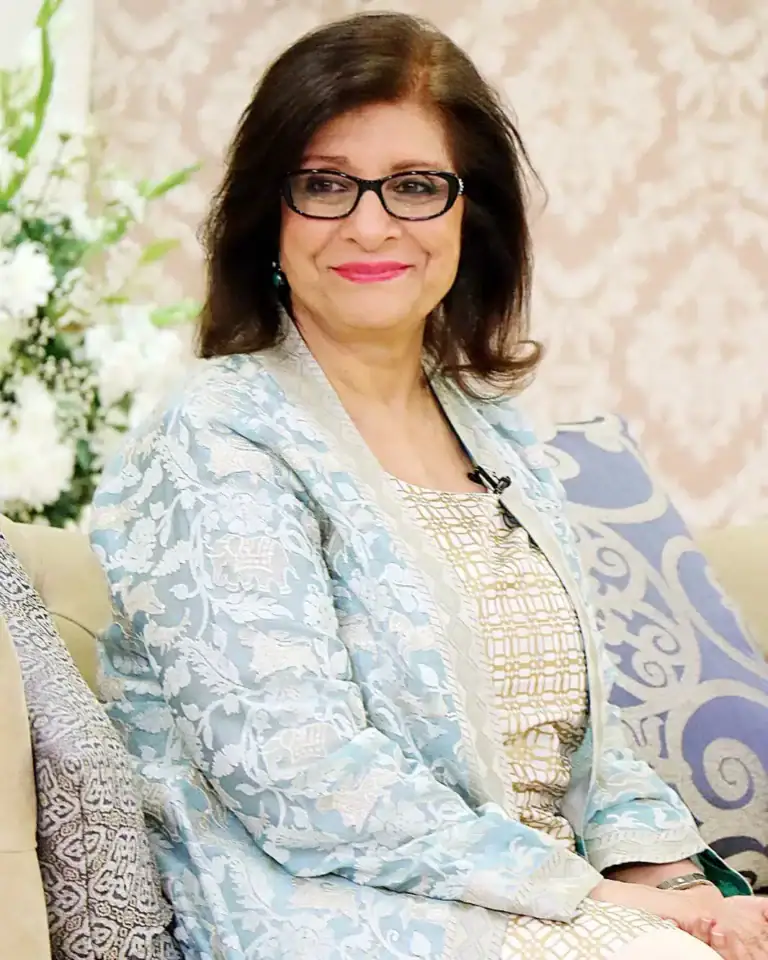
Sultana Siddiqui reveals women empowerment approach
Sultana Siddiqui, the founder of HUM Network and one of Pakistan’s most influential television producers, has spoken about her long-held belief in empowering women by giving them meaningful leadership roles. During a recent podcast appearance, she reflected on how she entrusted her daughters-in-law with running production houses, saying she has always believed women should be encouraged to take responsibility and shape the future of the entertainment industry. Sharing her journey, Siddiqui explained that she never considered it wrong to empower women, especially within her own family. She revealed that when her elder daughter-in-law, Moomal, got married, she established Moomal Entertainment and handed over its management to her. Later, after Momina joined the family, Siddiqui launched MD Productions and entrusted the company to her as well. According to Siddiqui, Momina had completed a degree in business and initially had no plans to work in television. However, after observing the creative atmosphere around her, she gradually became interested in the industry and accepted the challenge of contributing to meaningful storytelling. Recalling their conversations, Siddiqui said Momina told her that she wanted to educate audiences through television content rather than simply produce entertainment. That vision, she said, inspired the production of several memorable dramas that combined strong storytelling with social messages. The veteran producer highlighted that Pakistani television was going through a difficult period at the time. She remembered that audiences were increasingly drawn to Indian television serials, making it challenging for local productions to compete. Even attracting sponsors for new dramas was a major hurdle, as confidence in the local industry had declined. Despite these obstacles, Siddiqui said her team remained determined to revive Pakistani dramas by focusing on quality scripts and emotionally engaging stories. She credited the dedication of her production houses and creative teams for helping restore viewers’ interest in local television. Reflecting on that era, she pointed to critically acclaimed projects such as Dastaan as examples of the kind of meaningful content that helped bring audiences back to Pakistani dramas. She said productions like these played an important role in rebuilding the industry’s reputation and proving that locally produced stories could resonate with viewers. Siddiqui also recalled how the revival of Pakistani dramas required patience and persistence. She noted that the industry had to overcome financial challenges, limited sponsorship opportunities, and tough competition before eventually regaining its strong position in the entertainment landscape. Throughout the discussion, Siddiqui emphasized that empowering women has always been one of her core values. Rather than limiting opportunities, she believes women should be trusted with leadership positions and given the freedom to make important decisions. Her remarks offered a glimpse into the philosophy that has shaped both her family and professional life. By placing confidence in the abilities of her daughters-in-law and encouraging them to lead successful production houses, Siddiqui said she hoped to create an environment where women could thrive, innovate, and make a lasting impact on Pakistan’s television industry.