Life & Style

  • |

    Ranbir Kapoor’s ‘Ramayana’ trailer is here and the internet has thoughts

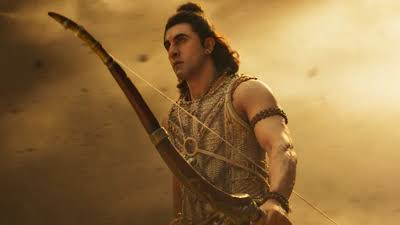
    Nitesh Tiwari’s Ramayana finally gave fans what they were waiting for. The trailer dropped today at 4:15 am, timed deliberately with the Brahma Muhurat. It offered the clearest glimpse yet of the mythological epic, and reactions began pouring in within minutes. The cast includes Ranbir Kapoor as Lord Rama, Sai Pallavi as Sita, Ravi Dubey as Lakshman, and Yash as Ravana. The trailer begins with Ravana making a forceful entrance at a palace. He is met with resistance but responds with sheer power, announcing the start of his rule. As fear spreads across the realms, Lord Vishnu is reborn as Prince Ram, son of King Dasharatha, played by Arun Govil. The story then moves through Ram’s battles with demons alongside his brother Lakshman. It builds toward the pivotal moment when Queen Kaikeyi, played by Lara Dutta, forces Dasharatha to keep an old vow. This leads to Ram being exiled for fourteen years. Sita refuses to remain behind and insists on joining him. Compared to the earlier teaser, this trailer puts more emphasis on the scale of Ayodhya and Lanka. It relies less on fantastical creatures and focuses more on emotional depth. One notable absence is Hanuman, who does not appear even briefly, suggesting his big entrance is being saved for part two. Reactions online were loud and divided. Several viewers praised the visuals, music, and overall production value, with some calling it a landmark moment for Indian cinema. Others pushed back, especially given the film’s reported Rs 4,000 crore budget, arguing that certain shots still look unfinished or overly digital. Ranbir’s take on Rama became a major point of discussion too. Some fans appreciated his calm, restrained energy, saying it fit the character’s traditional image. Others were unconvinced, feeling his performance leaned too casual for the role. Yash, meanwhile, seemed to win over almost everyone. Fans repeatedly praised his screen presence as Ravana, calling it one of the standout aspects of the trailer. A few viewers also flagged Hanuman’s absence, while others felt the design of Kumbhkaran looked slightly cartoonish. The film’s score comes from A.R. Rahman and Hans Zimmer, with VFX handled by DNEG. Music rights for both parts have reportedly been secured by T-Series in a Rs 75 crore deal. Ramayana’s part one releases globally on November 8, coinciding with Diwali, with part two expected in 2027.
  • | |

    Arooba Mirza shares alleged chats linked to MPA Saqib Chadhar

    Pakistani actress Arooba Mirza has shared alleged screenshots of Instagram messages linked to Member of the Provincial Assembly (MPA) Saqib Chadhar, claiming he repeatedly tried to contact her through social media. The actress posted the screenshots on her Instagram Stories, alleging they showed repeated attempts to start a conversation and requests to continue chatting on Snapchat. Alongside the images, Arooba wrote, “Momina Iqbal, Syeda Tuba, and now me,” suggesting that she was the latest person to make such allegations. Her claims surfaced while Saqib Chadhar is already facing controversy over separate allegations involving actress and television host Syeda Tuba, who claimed she was offered an iPhone as a gift. Meanwhile, actress Momina Iqbal has also initiated legal proceedings against the lawmaker. According to her complaint, she has accused the MPA of cyberstalking, harassment, blackmail and issuing threats after she allegedly rejected a marriage proposal. The case has been registered under the Prevention of Electronic Crimes Act (PECA) and is being investigated by the National Cyber Crime Investigation Agency (NCCIA). Momina Iqbal has repeatedly stated that she is seeking justice and has denied reports suggesting an out-of-court settlement. She has maintained that forensic evidence has strengthened the investigation, while the case remains pending before the court. Following Arooba Mirza’s latest social media posts, public debate over the controversy has intensified. However, the allegations made by Arooba Mirza, Momina Iqbal and Syeda Tuba remain subject to ongoing legal and judicial proceedings, and no court has reached a final verdict on the claims.

  • | |

    Usher jokes about viral fan rejection during concert

    BIRMINGHAM: American R&B star Usher has addressed the viral on-stage moment from his Nashville concert, making a lighthearted remark during his latest performance in Birmingham, Alabama. While interacting with fans, the singer joked that anyone who was not willing to participate should avoid coming on stage, a comment widely seen as a playful reference to the Nashville incident that sparked widespread discussion on social media. The earlier moment went viral after Usher ended a signature audience interaction when a fan appeared uncomfortable during the performance. The fan, later identified as Gabrielle Cheyenne, later explained that she had not rejected Usher personally. Instead, she had hoped to be invited on stage by fellow performer Chris Brown after unexpectedly receiving a VIP seat upgrade. During the Birmingham concert, Usher invited another audience member on stage, and the interaction was met with enthusiasm, drawing cheers from the crowd and helping put the previous controversy behind him. The Nashville incident generated millions of views online, with fans debating the misunderstanding. However, the singer’s humorous response during his latest show signalled that he had moved on from the viral moment. Usher and Chris Brown are currently touring together across the United States, with their joint R&B tour continuing through the summer and attracting large audiences at every stop.

  • | |

    Fans urge Faysal Quraishi to stop weight loss procedures

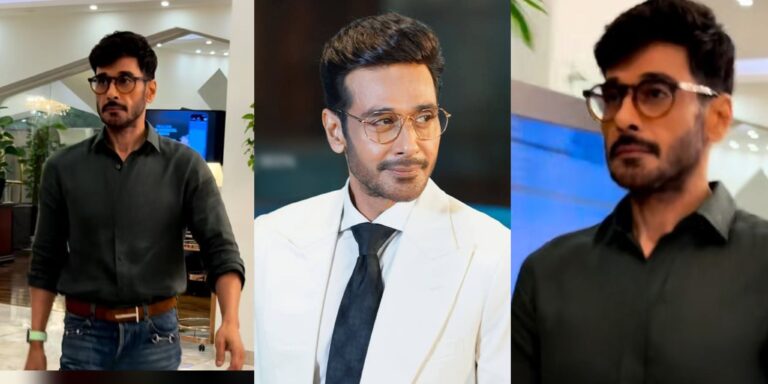
    Faysal Quraishi has been one of Pakistani television’s most recognisable faces for decades. His body of work includes acclaimed performances in dramas such as Meri Zaat Zarra-e-Benishan, Main Abdul Qadir Hoon, Bashar Momin, Muqaddar, Khaie, Haiwaan, Farq, Hook, Behroopia, Bheegi Palkain and Fitoor, and he most recently earned widespread praise for his outstanding portrayal of Kamran in Case No. 9. In recent weeks, however, it is not his acting that has been generating conversation online. It is his dramatically altered physical appearance. Quraishi has been visibly losing weight over an extended period, and what initially drew admiration as a fitness transformation has now become a source of genuine worry among fans. In a recent clip that spread across social media, the actor appeared noticeably leaner than before, with deeply sunken cheeks and a physique that many of his followers found alarming rather than impressive. The reaction in the comments was immediate and concerned. One fan wrote, “What has he done to himself, look at him how thin he has become.” Another was more direct in their appeal, writing, “Faysal Quraishi should immediately stop all the weight loss procedures that he is taking.” A Turkish fan reached out with a message that combined admiration with worry, writing, “Faysal sir why are you looking so thin, I hope you are not sick.” Others expressed a simple preference for how he looked before, with one commenter writing, “He used to look handsome when he was chubby.” Some fans went further, speculating about the methods behind the transformation. Several commenters raised the possibility that Quraishi had been using Ozempic, the weight loss injection that has been widely discussed in both medical and celebrity circles in recent years. Quraishi himself has not responded publicly to the concern or addressed the speculation about how he has been achieving his weight loss. He has not commented on Ozempic or any other weight loss method, and no statement has been issued by his representatives. The situation reflects a broader shift in how Pakistani audiences engage with celebrity health and appearance. While weight loss is often celebrated, the speed and visibility of certain transformations have increasingly prompted followers to raise questions about sustainability, health and the procedures that might be involved. The reaction to Quraishi’s appearance suggests that for many fans, concern for a beloved figure can override the usual tendency to simply praise visible physical change. Faysal Quraishi remains one of the most celebrated and consistently working actors in Pakistani television. His fans clearly remain deeply invested in his wellbeing, and the volume and tone of the comments surrounding his recent appearance reflect exactly that investment. Whether he chooses to address the concern publicly or simply continue on his current path remains to be seen.

  • | |

    Salman Shahid claims seniors also annoy youngsters

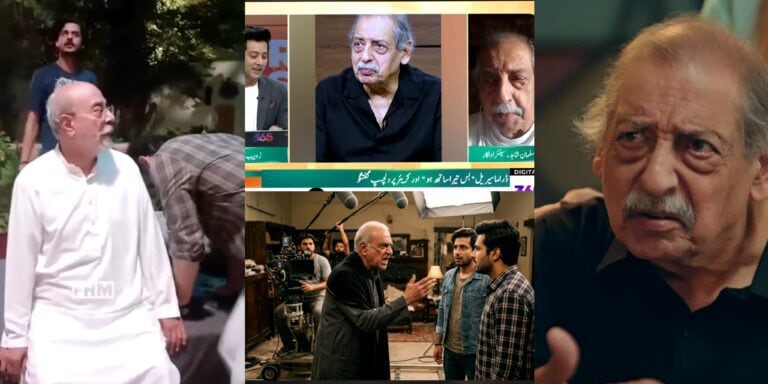
    The conversation sparked by Muhammad Ahmed’s recent remarks about the behaviour of junior actors on set has drawn a thoughtful and balanced response from veteran Pakistani actor Salman Shahid, who offered a perspective that many in the industry may have been thinking but had not yet said out loud. Shahid, who built his reputation through beloved comedy productions including Such Gup, Teen Bata Teen and Family Front before going on to appear in acclaimed dramas such as Seerhian, Aseer Zadi, Khuda Aur Mohabbat, Main Manto Nahi Hoon and Sher, appeared on Rise and Shine, hosted by Zohaib Hassan, where the conversation turned to Muhammad Ahmed’s complaints about junior actors on set. His response was measured, fair and grounded in his own experience of what set dynamics actually look like from the inside. “Listen, if juniors misbehave with seniors, there are also seniors who become unreasonable and behave the same way with younger actors,” he said. “It depends on a person’s nature. Sometimes, seniors also annoy juniors because they want to show their authority. They say things like, ‘You’re young, what do you know about acting? We’ve been doing this for so many years. You’re doing it wrong.’ So, this issue exists on both sides.” The point Shahid was making was not that Muhammad Ahmed’s concerns were invalid. It was that the problem is not generational but personal. Difficult behaviour on set is not exclusively a junior actor problem. It can come from anyone, regardless of how many years they have spent in the industry or how much respect they command. What made his remarks feel credible rather than defensive was the contrast he drew with his own approach to working life. He spoke with evident warmth about the aspects of set culture that he actively enjoys. “Personally, I love socialising,” he said. “I enjoy tea breaks and interacting with my co-stars on set. I really love it. It’s part of my social life, no matter what age my colleagues are. The image he painted was of someone who genuinely takes pleasure in the shared environment of a drama production, for whom the time between scenes is as much a part of the experience as the work itself. It was a reminder that sets are workplaces where people spend long hours together, and that the atmosphere on them is shaped by everyone present, senior and junior alike. Shahid is currently earning praise for his performance in the ongoing drama Bas Tera Saath Hu, which has resonated strongly with audiences. He is the son of legendary actress Begum Khursheed Shahid, is married to Tahira Ali, and has been a consistent and respected presence in Pakistani television for decades. His contribution to the current conversation about generational dynamics in the industry is characteristically grounded. He did not take sides. He simply told the truth.

  • | |

    Why did BTS reject Grammy race this year?

    South Korean global music sensation BTS has decided not to submit its music for consideration at the 69th Grammy Awards in 2027, raising fresh debate over the Recording Academy’s newly introduced Best Asian Pop Music Performance category. The seven-member group announced the decision through individual posts on Instagram, saying it wanted music to be appreciated for its artistic value rather than being separated by region or language. “We hope music can be heard and loved for what it is, rather than being divided by region or language,” the group said while confirming it would not participate in the upcoming Grammy submission process. This marks the first time BTS has stepped away from the Grammy competition, despite being one of the most influential global acts and a major force behind the worldwide rise of K-pop. The controversy began after the Recording Academy introduced the Best Asian Pop Music Performance category, which will debut at the 69th Grammy Awards scheduled for February 2027. The category aims to recognise outstanding pop performances from Asian markets, including K-pop, J-pop and C-pop, featuring Asian languages. However, BTS’ decision highlighted concerns among some artists and fans that creating region-based categories could create divisions within global music rather than promoting equal recognition. Responding to the group’s announcement, Recording Academy CEO Harvey Mason Jr. said he was disappointed but respected BTS’ choice. Mason explained that the new category was created to celebrate the diversity, growth and creativity of Asian artists, not to separate them from other musicians. He said the purpose of the award was to provide more opportunities for artists to receive recognition from Grammy voters and emphasized that artists nominated in genre categories could still compete for major awards, including Record of the Year, Album of the Year and Song of the Year. “The category was created to shine a spotlight on important artists and expand recognition,” Mason said, adding that genre categories and major Grammy fields remain open to all eligible musicians. BTS’ decision comes after a major comeback year for the group. The band released its album “ARIRANG” in March 2026 after completing mandatory military service commitments. The album achieved major international success, spending two weeks at the top of the Billboard 200 chart and setting a new milestone for a K-pop act. Over the past decade, BTS has become one of the biggest names in global entertainment, breaking language barriers and helping Korean music gain mainstream acceptance worldwide. The group, consisting of RM, Jin, Suga, J-Hope, Jimin, V and Jungkook, has previously received multiple Grammy nominations and has repeatedly pushed for greater recognition of K-pop within the academy’s major award categories.

  • | |

    Rajab Butt’s mother reveals his relationship status details and age

    Rajab Butt’s mother has broken her silence on one of the most discussed personal sagas in Pakistani vlogging, appearing on Dr Ruby Malik’s podcast for The Digitalline.pk to share details about her son’s age, his marriage and the possibility of a reconciliation with his wife Emaan. Rajab Butt is one of Pakistan’s most followed digital influencers, with around 9 million YouTube subscribers, nearly 3 million Instagram followers and a massive audience on TikTok Live. In recent months, his personal life has attracted as much attention as his content, following reports of a separation from Emaan shortly after the birth of their son Kivan, a formal divorce notice, and subsequent reconciliation speculation. His mother addressed the situation directly, beginning with a revelation about how the marriage came to be in the first place. “Rajab Ali is 30 years old now, Alhamdulillah,” she said. “I arranged his marriage entirely on my own. It was my choice because Rajab wasn’t ready to get married. His priority was to build our house and get Ghazal married first, as we didn’t even have our own home. We sold the house that I had received as my share of the family property, and I invested all of that money into Rajab’s business. Alhamdulillah, he fulfilled both responsibilities, and then I insisted that he get married. I found the proposal myself, and I love Kivan more than anyone.” The account was unexpectedly candid. It revealed not only how the marriage came about but also the financial sacrifices the family made to support Rajab’s career, including the sale of property that was her own personal inheritance. It painted a picture of a mother who invested enormously in her son’s future and then took it upon herself to find him a wife when she felt the time was right. When asked directly about the possibility of Rajab and Emaan reconciling, she declined to speculate. “I don’t know whether Emaan and Rajab will patch up because it is their personal matter,” she said, drawing a clear line around a question she clearly felt was not hers to answer. She was equally measured when asked whether she was already searching for a new marriage proposal for her son. “I have no idea who his future wife will be because I won’t be searching for a proposal this time,” she said, before closing with a prayer: “May Allah make it easy for both of them.” The interview offered a rare maternal perspective on a story that has played out almost entirely through the couple’s own social media accounts and through speculation from their online audiences. Whatever happens next between Rajab and Emaan, his mother’s message was clear: she loves her grandson, she arranged the marriage in good faith, and the rest is in Allah’s hands.

  • | |

    Noah Kahan slams White House over unauthorised song use.

    Noah Kahan has become the latest musician to publicly push back against the Trump administration after the White House used his music without permission, joining a growing list of artists who have objected to their songs being used in administration social media content. The dispute began when the White House posted photographs and video to both Instagram and TikTok showing President Trump touring General Motors’ Milford Proving Ground in Michigan. The posts were set to Kahan’s song American Cars, taken from his chart-topping album The Great Divide. The pairing was clearly intended to evoke a sense of American pride and manufacturing strength, but the artist whose voice and music gave the posts their soundtrack had not been consulted and had not given his approval. Fans were quick to notice and quickly alerted Kahan by tagging him in the comments. His response was direct and unambiguous. “Would never approve of my music being used in support of you or this administration,” he wrote beneath the post. The comment rapidly accumulated tens of thousands of likes, suggesting the sentiment resonated well beyond Kahan’s own fanbase. His frequent collaborator and co-writer on the track, guitarist Noah Levine, also left a response of his own beneath the White House post. His comment was reportedly more direct in its language than Kahan’s, though it was subsequently removed. At the time of publication, the song itself remained attached to the White House’s video despite both objections. The White House did not respond to requests for comment on Kahan’s objection. The incident is part of a pattern that has become increasingly familiar during the Trump administration’s social media operations. Just days before Kahan spoke out, Katy Perry criticised the White House for using her 2010 hit Firework in a TikTok post featuring footage of military strikes. “I’m deeply appalled and angry,” she wrote, adding that she had not approved its use and had not even been asked. Ariana Grande raised similar concerns in June after a version of her song Bye appeared in a White House TikTok post depicting ICE arrests. The list of artists who have previously objected to the administration’s use of their music is extensive. Sabrina Carpenter, Olivia Rodrigo, Celine Dion, Neil Young and the Rolling Stones have all at various points voiced comparable complaints, reflecting a consistent tension between an administration that appears to deploy popular music as a tool of political imagery and the musicians whose work is being used without their knowledge or consent. For Kahan, the issue was clearly not simply procedural but personal. His response made clear that the objection was not only about the absence of permission but about the specific association itself, one he said he would never willingly choose.

  • | |

    Javed Jabbar urges stronger support for NAPA

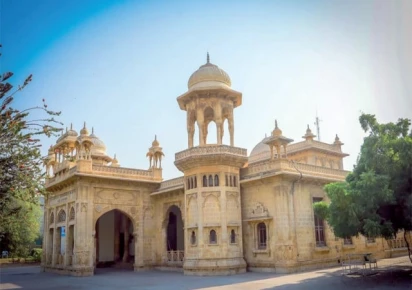
    Former senator and ex-federal minister Javed Jabbar has called on both the government and the private sector to strengthen their support for the National Academy of Performing Arts, arguing that the institution has reached a point in its evolution where it can meaningfully expand its contribution to Pakistan’s cultural life, but only if it receives the backing it deserves. Speaking to media in his capacity as a member of NAPA’s Board of Directors, Jabbar acknowledged the progress the academy had made over the past two decades while warning that future growth would not happen on its own. “What we have achieved over the past twenty years can now be expanded on a much broader scale,” he said, adding that while continued government support remained necessary, greater private sector participation was equally important to the academy’s sustainability. His remarks carried a particular weight given the sustained neglect Pakistan’s performing arts sector has historically faced from commercial institutions. Jabbar drew a direct parallel with other sectors that have benefited from private philanthropy. Pakistan has a strong tradition of charitable giving in healthcare and education, he noted, and he argued that the performing arts deserved the same recognition and financial investment. Patronage, he said, should go beyond purchasing tickets and attending events. It should translate into structural, sustained support for institutions doing the long-term work of building a creative culture. He also addressed the need for NAPA itself to remain current and adaptable. With rapid technological changes reshaping the media and entertainment industries, he stressed that the academy would need to regularly update its faculty and curriculum to ensure students graduate with skills relevant to the world they are entering. The performing arts landscape of today is not the one of twenty years ago, and the training institutions responsible for the next generation of artists and practitioners must reflect that reality. At the same time, Jabbar made clear that responsibility did not rest with institutions alone. Students, he said, must bring the same commitment to the opportunities NAPA provides. They should not take those opportunities for granted and must maintain the discipline the performing arts require. NAPA was established in 2005 at the request of then-President Pervez Musharraf and was founded by the legendary Zia Mohyeddin, who was trained at the Royal Academy of Dramatic Art in London and had dedicated his life to theatre, film and television across both local and international productions. The academy offers programmes in theatre arts and music, with students taught by practicing musicians, musicologists and visiting maestros. Students also receive practical training in performance and are given the opportunity to present their work to live audiences. Javed Jabbar himself is one of Pakistan’s most distinguished public intellectuals, with a career spanning advertising, documentary filmmaking, politics and writing. He has authored 19 books, directed over 300 commercials, and produced landmark documentary and cinematic works including the 1972 documentary Moenjodaro: The City That Must Not Die, which won the Silver Prize at the Asian Film Festival. He has also served as Minister of State for Information and as a member of the Senate Forum for Policy Research. His advocacy for NAPA reflects a longstanding commitment to the role of culture and the arts in Pakistan’s national life.

  • |

    Faysal Quraishi says Fahad Sheikh backlash has crossed a line

    Actor Faysal Quraishi believes it is time to move past the controversy surrounding Fahad Sheikh, who publicly apologized on Wednesday after being accused of disrespecting veteran actor Mohammed Ahmed on set. In a reel shared on his Instagram account, Quraishi explained why he initially spoke up. As a member of the Actors Collective of Pakistan and part of its executive committee, he said supporting fellow actors during difficult moments is part of what the association stands for. He wanted to make sure Ahmed did not feel alone after the incident came to light. Quraishi admitted he had not known who was involved when the video first surfaced, but felt strongly that such matters are usually best settled between colleagues. He pointed out that sets often involve joking around and lighthearted banter, and that most issues get resolved internally rather than spilling into public view. In this case, though, things had already escalated before the industry could address it privately. He acknowledged that Sheikh choosing to admit fault and apologize publicly took courage. At the same time, he felt the public reaction had gone far beyond what was reasonable. According to Quraishi, criticism is understandable when someone makes a mistake, but attacking a person’s family or children crosses a line that should never be acceptable. He maintained that the issue was ultimately between Ahmed and Sheikh, and urged everyone else to let the situation settle down. Filmmaker Shamoon Abbasi echoed a similar message in a video posted on Facebook, calling for patience and forgiveness now that Sheikh had apologized. He noted that owning up to the mistake within a day of the controversy breaking was a positive step, and warned that continued backlash risked becoming unfair. Abbasi said he found it strange that people began targeting young actors broadly, even without knowing who was actually responsible. Based on his own experience working with several of them, he described most as respectful professionals who value their seniors. He also mentioned that accounts of what happened on set varied, with some suggesting Ahmed had taken part in the joking too, while others close to the set said Ahmed remained upset the next day. Drawing a comparison, Abbasi referenced how actress Meera handled an uncomfortable interview earlier this year, where she was asked inappropriate questions by a journalist. Instead of reacting harshly, she calmly redirected the conversation and left with composure, which Abbasi said earned her public admiration. He concluded that Sheikh had already apologized, and it was time for everyone to move forward.