fake hiring teachers
| |

Fake hiring of 6 teachers uncovered in Mirpurkhas

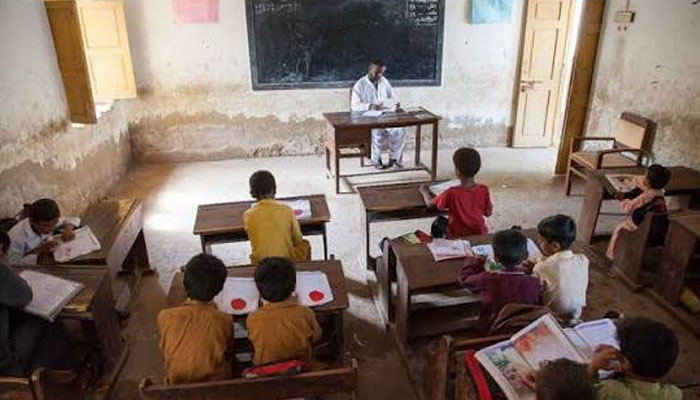
MIRPURKHAS: Authorities in Mirpurkhas have uncovered the alleged fraudulent recruitment of six secondary school teachers, prompting action by the Sindh Education Department.

District Education Officer Mir Fazal Talpur said a formal request had been sent to the District Accounts Officer to suspend the salaries of the six individuals. The department has also approached the IT Data Center to remove their biometric records from the system.

A departmental inquiry has been launched against the Director of Education, the district education officer and two taluka education officers to determine how the alleged irregular appointments were processed.

Talpur said he had never met or even seen the individuals involved and alleged that his signature and official seal, along with those of other education officials, had been forged to facilitate their appointments.

The DEO said the department acted promptly after receiving a complaint from taluka officials. The salaries were stopped and the officials concerned were directed to submit their responses before the inquiry committee.

The investigation is expected to establish how the fraudulent appointments were made and identify those responsible for the alleged forgery and irregular recruitment.

Similar Posts

  • | |

    FCC issues written verdict in 50-year-old land dis…

    Pakistan’s Federal Constitutional Court has issued a detailed written judgment in a land dispute that has remained unresolved for nearly five decades. The ruling addresses a long-standing legal conflict over land ownership and tenancy rights, overturning previous decisions and restoring the legal status of the land as it existed before 1996. The court declared the 2008 judgment of the Lahore High Court null and void. It also set aside the orders issued by the Federal Land Commissioner in 1996, ruling that those decisions were not legally sustainable. The verdict marks a significant development in one of the country’s oldest land-related legal disputes. Chief Justice Aminuddin Khan authored the 25-page judgment, outlining the legal reasoning behind the court’s decision. The ruling carefully reviewed the history of the case, the relevant land laws, and the constitutional principles governing property rights and administrative authority. According to the judgment, the legal status of the disputed land has been restored to what it was before the Federal Land Commissioner’s 1996 orders. The court held that the rights of tenant farmers, commonly referred to as muzareen, must remain protected in accordance with the Land Regulations of 1972. These regulations were introduced to safeguard the lawful rights of tenants and regulate land that had been taken into government custody. The court emphasized that once land disputes have been finally decided through due legal process, they cannot be reopened or reconsidered without a valid legal basis. The judgment stated that the principle of finality in judicial decisions is essential for maintaining certainty and stability in the legal system. The ruling explained that under the 1972 Land Regulations, various pieces of land had been taken into government possession. Decisions regarding those acquisitions had already attained final legal status after being decided by the competent authorities and courts. However, in 1996, approximately twenty years after those decisions had become final, the Federal Land Commissioner declared the earlier government acquisition orders invalid. The Constitutional Court held that the commissioner lacked the legal authority to reopen and overturn matters that had already reached finality under the law. The judgment also noted that the Lahore High Court, in its 2008 decision, had upheld the Federal Land Commissioner’s orders. After reviewing the legal record, the Constitutional Court concluded that the High Court’s decision was based on an incorrect interpretation of the law and therefore could not be allowed to stand. By restoring the pre-1996 legal position, the court reaffirmed the protection of tenant farmers’ rights under the 1972 regulations while reinforcing the importance of respecting final judicial and administrative decisions. Legal experts believe the ruling could influence the resolution of similar land disputes involving historical claims and government-acquired property. The case was heard by the Federal Constitutional Court following the enactment of the 27th Constitutional Amendment, under which the matter came within the jurisdiction of the newly established court. The judgment is expected to serve as an important legal precedent for future constitutional and land-related cases, particularly those involving administrative powers, property rights, and the principle that finalized legal disputes should not be reopened without lawful justification.

  • | |

    Govt withdraws controversial telecom amendment bil…

    ISLAMABAD: The government on Thursday withdrew the Pakistan Telecommunication (Re-organization) (Amendment) Bill, 2026, from the Senate amid concerns raised by opposition lawmakers and stakeholders in the telecom sector. The withdrawal motion was moved on the Senate floor by Minister of State for Interior Talal Chaudhry on behalf of the Minister for Information Technology and Telecommunication. The proposed legislation sought to introduce amendments to the existing legal and regulatory framework governing Pakistan’s telecommunications sector. However, the bill had faced criticism in recent weeks, with opposition members and industry representatives expressing reservations over several of its provisions. No specific reason for withdrawing the bill was disclosed during the Senate proceedings. However, government sources indicated that the legislation could be brought back before Parliament after further consultations with relevant stakeholders and consideration of their concerns. The Pakistan Telecommunication (Re-organization) Act provides the legal framework for the structure, licensing and regulation of the country’s telecom sector. With the bill withdrawn, the existing telecom regulatory framework will remain unchanged for the time being.

  • |

    Kendall Jenner fuels Jacob Elordi romance rumors with poetry

    Kendall Jenner has sparked fresh speculation about her relationship with actor Jacob Elordi after sharing an emotional piece of love poetry on social media. The model and entrepreneur took to Instagram on August 11, just two days after celebrating the 29th birthday of her younger sister, Kylie Jenner. Instead of sharing another glimpse into her family celebrations, Kendall posted a meaningful poem that appeared to explore love, vulnerability and the complicated emotions that can emerge in relationships. The poem, titled For Grace, After a Party, was written by acclaimed American poet Frank O’Hara. It focuses on the intimate feelings of someone deeply in love and the contrast between private emotions and the chaos of social situations. The poem begins with the line, “You do not always know what I am feeling,” setting an emotional and reflective tone. It then describes how the speaker’s feelings for his loved one can become overwhelming, even in a room filled with people. The writing continues to explore the idea of expressing intense emotions indirectly. The speaker recalls being surrounded by strangers while realizing that his strongest feelings were connected to the person he loved. The poem presents love as something powerful enough to transform anger, loneliness and ordinary moments into deeply personal experiences. Later, the poem shifts toward a quieter scene between two people who share an intimate relationship. The speaker describes waking after a night out and finding comfort in the presence of his loved one. Even an ordinary moment, such as being asked how they would like their eggs prepared, becomes meaningful because of the emotional connection between the couple. Kendall’s decision to share the poem has prompted fans to wonder whether it could have a connection to her own romantic life. She has reportedly been linked to Jacob Elordi, with speculation surrounding the pair growing after they were seen spending time together on several occasions. The two have reportedly grown closer since the beginning of the year and have been spotted enjoying time together during the summer. Their relationship has attracted considerable public attention, particularly because both Kendall and Jacob have generally kept their personal lives away from the spotlight. While Kendall did not provide any explanation for sharing the poem, its romantic and vulnerable themes quickly led fans to interpret the post as a possible message connected to her relationship. However, there is no confirmation that the poem was intended for Jacob or that it reflects the current state of their romance. Kendall may simply have connected with O’Hara’s words and wanted to share them with her followers. For now, the Instagram post remains open to interpretation, leaving fans to speculate about whether Kendall was expressing her feelings or simply appreciating a powerful piece of poetry.

  • |

    Germany’s delayed lignite review fuels debate over coal exit

    BERLIN: Germany’s decision to postpone an interim assessment of its planned lignite phase-out in North Rhine-Westphalia has raised speculation that some coal-fired power plants could remain available for longer than originally scheduled to protect the country’s electricity supply. The German government had been expected to publish an interim report by August 15 examining the consequences of the planned early shutdown of lignite-fired generation in the country’s largest state. However, the economy ministry has delayed the assessment while it awaits the outcome of tenders for new gas-fired power plants being conducted this year. The development has attracted attention because the report is expected to play an important role in determining whether Germany can maintain electricity security while moving ahead with its ambitious coal-exit strategy. Agreement with RWE Under an agreement reached in 2022 between the German government and energy company RWE, lignite-fired electricity generation in North Rhine-Westphalia is scheduled to end by March 2030. The timetable brought forward the shutdown of several lignite plants by eight years compared with Germany’s broader national coal phase-out target. Lignite, commonly known as brown coal, is among the most carbon-intensive fossil fuels and has long been a major target of Germany’s efforts to reduce greenhouse-gas emissions. The government nevertheless retained the possibility of reassessing the situation by 2026. If the review finds that electricity supplies could be threatened, some RWE facilities could potentially remain available until 2033. Delay raises market expectations The postponement of the interim report has prompted speculation in energy markets that Berlin may eventually use the security provisions included in the agreement. Market expectations have centred on around 3.6 gigawatts (GW) of RWE’s lignite-fired capacity potentially being placed into a so-called security standby arrangement. Under such a mechanism, plants could remain available to operate if the electricity system faces supply shortages, potentially extending their role through the end of 2033. The government, however, has not announced any decision to extend the operating life of the plants. RWE Chief Executive Markus Krebber said on Thursday that the company had not been informed of any change to the agreed 2030 shutdown date. He also indicated that the government had not approached RWE about extending the plants’ operations. Gas power becomes increasingly important The delay comes as Germany seeks to strengthen its electricity system with additional gas-fired generation. Germany has approximately 266 GW of installed electricity-generation capacity, but a substantial portion comes from solar and wind power. While renewable energy has expanded rapidly, both technologies are weather-dependent and cannot independently guarantee continuous electricity production around the clock. That has intensified concerns about how the country will maintain reliable power supplies as coal-fired generation is gradually removed from the system. Gas-fired plants are increasingly being considered as a flexible source of electricity that can support the grid when renewable generation is insufficient. The government’s current tenders for new gas capacity are therefore closely linked to the broader debate over how quickly Germany can retire coal-fired plants without creating supply risks. Security of supply remains a key concern Germany’s energy transition has faced a difficult balancing act between climate objectives and electricity reliability. The country wants to expand renewable generation while reducing its reliance on fossil fuels, but the retirement of conventional power plants removes generation capacity that can be dispatched when required. The issue became particularly sensitive following the country’s decision to phase out nuclear power, leaving policymakers with fewer sources of low-carbon, dispatchable electricity. Supporters of a rapid coal exit argue that expanding renewable generation, electricity storage, grid infrastructure and flexible gas capacity can compensate for the closure of coal plants. Critics maintain that Germany could face periods of tight supply unless sufficient backup generation is available. AfD presses for reversal The issue has also become politically contentious. The far-right Alternative for Germany (AfD), currently the country’s largest opposition party and leading nationwide opinion polls, has strongly opposed Germany’s coal and nuclear phase-out policies. The party has called for a reversal of the energy-exit strategy, arguing that the closure of conventional power stations could increase the risk of electricity shortages and potentially lead to blackouts. The government, meanwhile, faces the challenge of ensuring that its climate commitments do not undermine electricity security.

  • |

    FPCCI seeks industry consultation before revision of incremental power package

    ISLAMABAD: The Federation of Pakistan Chambers of Commerce and Industry (FPCCI) has called on the National Electric Power Regulatory Authority (Nepra) to consult industry representatives before making any changes to the Incremental Package for industrial electricity consumers. The business community has warned that revising the package without taking major industrial stakeholders into confidence could create market distortions, undermine the intended benefits of the scheme and potentially transfer additional costs to industries that do not qualify for incremental consumption incentives. In post-hearing comments submitted to Nepra on August 12, 2026, FPCCI said the regulator had already directed that the proposed changes to the Incremental Package should first be presented to and discussed with industry representatives before being brought back for approval. The federation welcomed the direction, describing meaningful stakeholder participation as essential for developing a workable electricity pricing mechanism for industrial consumers. FPCCI highlights delayed review FPCCI also raised concerns over the failure to conduct the package’s scheduled quarterly review. According to the federation, the Incremental Package was specifically designed to undergo a review every three months. However, no review had been conducted for approximately eight months. The federation said the prolonged delay had created uncertainty for industrial consumers and prevented the timely identification and correction of issues within the package. FPCCI urged Nepra to immediately carry out the overdue review and ensure that the quarterly review mechanism is followed consistently in the future. The federation argued that regular reviews were particularly important because industrial electricity consumption, production conditions and operating costs can change significantly over time. Major industry bodies seek participation FPCCI requested Nepra to formally engage leading industry organisations before the next hearing on the proposed revision. The organisations named by the federation include the Karachi Chamber of Commerce and Industry (KCCI), Korangi Association of Trade and Industry (KATI), All Pakistan Textile Mills Association (APTMA), as well as other major chambers and industrial associations. FPCCI said the participation of these organisations would allow the regulator to understand the practical challenges faced by different categories of industrial consumers. It stressed that the revised package should be based on actual industrial requirements and should not discriminate against existing consumers who are unable to qualify as incremental users. Warning against cost shifting The federation expressed concern that changes to the package could result in an unintended transfer of costs to non-incremental industrial units. FPCCI said any revised mechanism should ensure that incentives provided to additional electricity consumption do not create a financial burden for other consumers. It also called for clear safeguards to ensure that only genuine incremental electricity consumers receive the benefits of the package. According to the federation, the regulator should introduce mechanisms capable of preventing existing consumption from being presented as new or incremental demand merely to obtain preferential electricity rates. FPCCI maintained that a transparent verification system would be necessary to protect the integrity of the package and prevent potential misuse. Requests submitted to Nepra In its submission, FPCCI made a series of requests to the power regulator. The federation asked Nepra to formally consult FPCCI, KCCI, KATI, APTMA and other major industry bodies before the next hearing. It also requested the authority to provide sufficient advance notice of the date and time of any consultation, along with an online meeting link, so that FPCCI could coordinate participation by relevant chambers, associations and industrial representatives. The federation further sought a formal opportunity to present detailed recommendations on the proposed redesign of the Incremental Package. It called for safeguards restricting benefits to genuine incremental units and urged Nepra to immediately conduct the quarterly review that has remained pending for the past eight months. FPCCI also proposed making consultation with major industrial chambers and associations mandatory before any future revision or review of the Incremental Package or similar electricity pricing schemes. Invitation to power-sector institutions In a further effort to promote direct dialogue, FPCCI invited Nepra, the Power Planning and Monitoring Company (PPMC) and the Central Power Purchasing Agency-Guaranteed (CPPA-G) to visit its head office in Karachi. The federation proposed holding detailed discussions with the relevant institutions in the presence of industry representatives. FPCCI said direct engagement would provide an opportunity for all stakeholders to examine the existing mechanism, identify practical shortcomings and develop solutions based on actual operating conditions in the industrial sector. It maintained that consultation could help bridge the gap between regulatory objectives and the realities faced by industrial consumers. Industry seeks predictable power policy The dispute over the Incremental Package comes amid continued concerns among industrial consumers over electricity costs, competitiveness and the predictability of power-sector policies. For export-oriented and energy-intensive industries, electricity pricing is a major component of production costs. Business representatives have therefore repeatedly called for stable and transparent tariff mechanisms that allow companies to plan production and investment decisions. FPCCI said any changes to the Incremental Package should balance the objective of increasing electricity consumption with the need to maintain fairness among different categories of industrial consumers. The federation believes that a properly designed package, supported by regular reviews and meaningful industry consultation, could encourage additional industrial electricity consumption without imposing unintended costs on existing consumers.

  • | |

    President Erdoğan arrives in Saudi Arabia for tri…

    President of Türkiye Recep Tayyip Erdoğan has arrived in Saudi Arabia to participate in the high-level trilateral summit. President Erdoğan received a warm welcome upon his arrival at Jeddah Airport, with ceremonial scenes reflecting the significance of the visit. The summit is expected to focus on strengthening regional cooperation, enhancing diplomatic engagement, and advancing shared strategic interests amid evolving geopolitical developments in the Middle East. Earlier, Prime Minister Muhammad Shehbaz Sharif was received by Saudi Crown Prince and Prime Minister Prince Mohammed bin Salman bin Abdulaziz Al Saud at Al-Safa Palace in Makkah on Friday, where the two leaders commenced high-level bilateral talks aimed at further strengthening Pakistan-Saudi Arabia strategic ties. The Prime Minister is accompanied by Deputy Prime Minister and Foreign Minister Senator Mohammad Ishaq Dar, Field Marshal Syed Asim Munir, Chief of Army Staff and Chief of Defence Forces, and Defence Minister Khawaja Muhammad Asif.

Leave a Reply

Your email address will not be published. Required fields are marked *