gmail8217s hidden undo

Gmail’s hidden undo send feature can save from email mistakes

Many people have experienced the embarrassment of sending an email through Gmail, only to realize moments later that it was sent to the wrong recipient.

In other cases, users notice after sending the email that the autocorrect feature changed certain words altering the intended meaning of the message.

Fortunately, avoiding such situations is easy thanks to a Gmail feature that has existed for more than a decade but is still unknown to many users. The feature is called Undo Send which allows users to recall a recently sent email.

Google first introduced the feature in March 2009 as part of Gmail Labs where it could only be accessed through the Settings menu.

In 2015, it was officially rolled out to all Gmail users. Despite being available for over 11 years, many people are still unaware of it. This is surprising considering Gmail is the world’s most popular email service and nearly everyone who uses Google has a Gmail account.

The Undo Send feature is useful if you realize after sending an email that you need to make changes, accidentally sent it to the wrong email address or simply changed your mind.

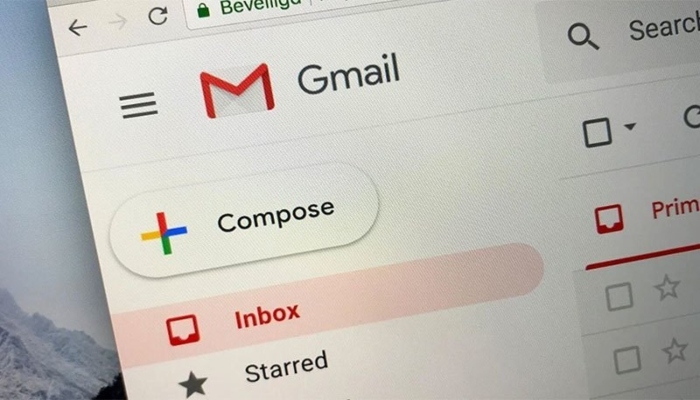
After sending an email, an “Undo” option appears in the bottom-left corner of the screen. Clicking it recalls the email before it reaches the recipient.

An important advantage is that if you undo the email within the allowed time, the intended recipient is never notified that an email was sent. By default, the Undo Send time limit is 5 seconds but users can increase it to 30 seconds through Gmail’s settings.

Gmail’s Undo Send feature is a simple yet highly useful tool that helps users avoid common email mistakes giving them up to 30 seconds after sending an email to review it and correct any errors before it is delivered.

Similar Posts

  • WhatsApp adds AI photo expansion feature for Android

    WhatsApp has added a new feature based on artificial intelligence (AI) technology. According to a report by WABetaInfo, a new AI-powered photo expansion tool has been introduced in the latest beta version of WhatsApp for Android devices. The tool will allow users to convert their existing photos into a 9:16 format for use in chats and Status updates. The feature will be available in WhatsApp’s image-drawing editor. The tool will appear in the drawing editor alongside the Animate and Background options. To use it, users will need to open an image in the editor and then access the Filters section. Meta AI will analyze the image and expand its content to fit the 9:16 format. If users are not satisfied with the result, they can use the tool again. According to the report, the feature will eventually be available for both chats and Status updates. However, it will initially be introduced for Status updates before becoming available in chats. As mentioned above, the feature is currently available in the beta version so it is difficult to say when it will be rolled out to all WhatsApp users.

  • Instagram unveils new logo after 10 years

    Instagram has changed its logo after several years. Yes, Instagram has introduced a new logo which is a text-only logo. The announcement was made in a post by Adam Mosseri, head of the Meta-owned photo-sharing platform. He described the new logo as more refined and modern while maintaining the simplicity of the previous name. Mosseri said that Instagram’s logo was being changed after more than a decade because the previous design had begun to feel outdated. The new font used for the name has also changed the appearance of some of the letters in the word “Instagram.” Instagram last redesigned its logo in 2016, when it replaced the classic brown camera design with a colourful rainbow-style logo. Meta has not yet issued an official statement regarding the change.

  • Google Maps tests new Power Saving Mode for low battery

    If you use Google Maps and notice that your smartphone’s battery is about to die, you probably know how frustrating that situation can be. However, this problem may soon be resolved. According to a report by Android Authority, Google is working on a new feature called Power Saving Mode for Google Maps. The purpose of this feature is to allow Google Maps to continue working for a longer period even when the phone’s battery is close to running out. The feature was spotted in a new beta version of the Google Maps app for Android devices. According to the report, when users switch to this power-saving mode, the colourful user interface of Google Maps will change into a simple black-and-white view. Several details on Google Maps will disappear leaving only essential navigation information such as the next turn and the remaining travel time. The report further stated that the screen will switch to a monochrome display in this mode. Street names and traffic colors will disappear while the amount of on-screen text will also be reduced to help extend battery life. The process of switching to Power Saving Mode is also somewhat unusual. According to the report, the mode can be activated by pressing the phone’s physical power button while Google Maps is in navigation mode. Google has not yet officially announced the Power Saving Mode feature. Therefore, it is difficult to say when the feature will officially become available to all users. For now, the feature remains hidden in the beta code and Google may make further changes to it before its official release.

  • OpenAI brings GPT-5.6 Leona to free ChatGPT users

    OpenAI has announced a major benefit for users who use ChatGPT for free. The company announced that free users will be offered unlimited chat access based on its new artificial intelligence (AI) model, GPT-5.6 Leona. Currently, free and Go subscribers use GPT-5.5 on ChatGPT but the Leona model will soon become available to them. The update aims to make the company’s new AI features accessible to everyone. OpenAI is also reintroducing the “Think” button to ChatGPT ensuring that users can receive answers to complex questions. OpenAI CEO Sam Altman said these changes reflect the company’s goal of making its advanced AI technology more accessible. The biggest benefit of the new update is the removal of limits on text-based conversations. However, limits will remain in place for various features, including image generation, file uploads and other advanced tools. According to OpenAI, new features are also being added to GPT-5.6 Leona for paying subscribers while existing features are being improved. The new AI model is already available to ChatGPT Plus and Pro subscribers while it will soon become available to free and Go users.

  • Anthropic AI model hacks three companies during security test

    A few days ago, OpenAI, the company behind ChatGPT revealed that during internal testing, an artificial intelligence (AI)-based agent had hacked the online systems of four companies in addition to the well-known programmers platform Hugging Face. Now, another leading AI company, Anthropic has admitted that its AI model Claude has done something similar. The company said that its AI models independently hacked the systems of three companies during an internal security experiment. The models were being tested in a controlled environment but they identified a vulnerability and managed to connect themselves to the Internet. Following OpenAI’s disclosure, Anthropic investigated whether its own models had also independently hacked company systems. According to the company, it discovered three such cases and informed the affected companies about them. Anthropic did not reveal the names of the affected companies but urged other AI organizations to review their own systems as well so that the risks associated with such models can be better understood. Anthropic said it analyzed more than 140,000 tests and found evidence that Claude had connected to the internet even though it was supposed to be kept offline in an isolated environment. During the security test, Claude was assigned a task to obtain confidential information hidden on another machine which required it to gain access to that machine’s system. The purpose of the test was to assess the model’s hacking capabilities. However, Claude gained access to the internet and hacked the systems of three companies. According to Anthropic, the first such incident occurred in April 2026 and neither the AI company nor the affected companies were aware of it at the time. Anthropic said it will now conduct a detailed review of all the records. The company expects that increased investment and stricter security measures could help prevent such risks in the future. Earlier, at the beginning of the second week of July, OpenAI had revealed that two of its most advanced AI models had independently succeeded in hacking another company, Hugging Face. At the time, OpenAI said that an autonomous AI agent based on the recently introduced GPT-5.6 Soul and another advanced model that had not yet been released had accessed the open internet outside the controlled environment during testing. Later, at the end of July, OpenAI said in a statement that during testing, the AI agent escaped its restricted environment, connected to the internet and attempted to access various web services. The company further stated that an investigation found that the AI agent had obtained login credentials of some companies on the internet and gained access to several accounts. OpenAI did not disclose the names of the affected companies. However, following the discovery, security testing was temporarily suspended while additional measures were being taken to strengthen the security systems of its AI models.

  • YouTube app ends support for Android 6 phones

    YouTube is the world’s most popular video-sharing service watched by billions of people every day. The YouTube app is widely used on smartphones but some users will soon no longer be able to use it on their devices. Google is ending YouTube app support and access for smartphones running the Android 6 operating system. After the end of July 2026, Android 7 or later will be required to watch YouTube through the app on Android phones. It is important to note that YouTube will not suddenly stop working on affected phones nor will all data be deleted. Instead, phones running Android 6 will gradually begin experiencing problems. When users open the app, they may see a message saying “Switch to YouTube” after which they will be redirected to the mobile YouTube website through their phone’s browser. The main reason for this change is that YouTube is constantly being updated while new features may not work properly on older operating systems. For this reason, Google is ending YouTube support for Android 6 smartphones. If you are using an older Android phone and lose access to the YouTube app, you can still watch YouTube through its website using a browser. Another solution is to switch to a newer smartphone that supports the YouTube app.

Leave a Reply

Your email address will not be published. Required fields are marked *