
china intimidated united

How China Intimidated the United States of America


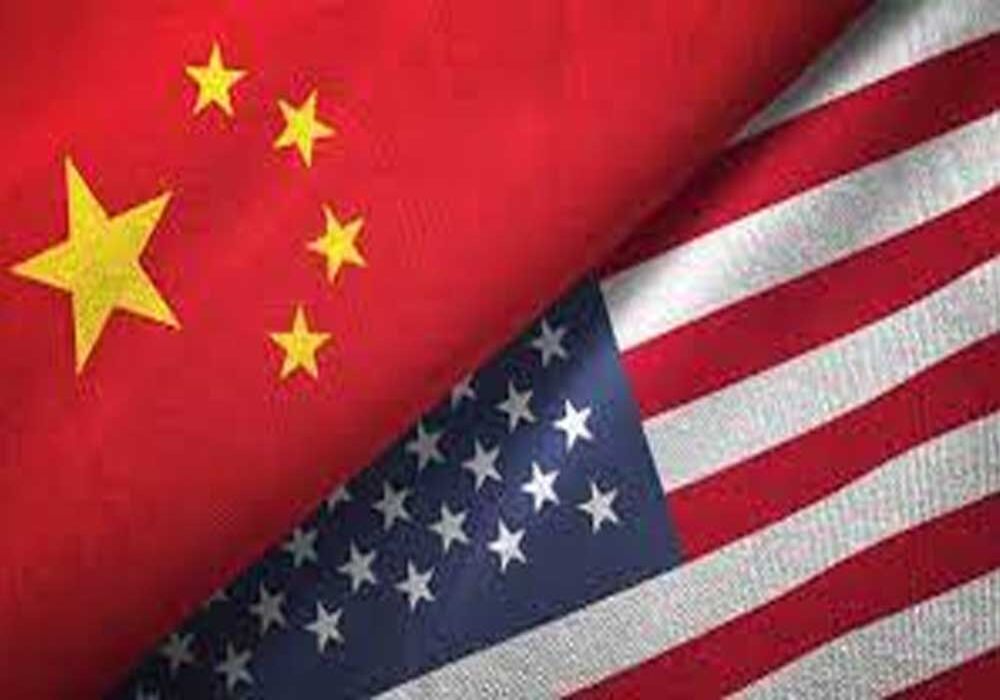
 For as long as the world can recall, the United States have controllably preserved their seat as the strongest one in the council of global superpowers- defeating the Nazis, USSR and setting their currency as the medium of trade and exchange. However, in recent events this strong hold seems to have become weakened as on the other side of the world a new power emerges, a power that the United States considers the biggest threat to their existence- the new super power China.


Ironically, China was still developing and submerged in poverty a few decades ago holding up its communist views and rejecting the new capitalist western world. Though they were not completely cut off on giving this new ideology a try, opening their first economic zone in Shenzhen in 1980 to pursue foreign investments and market based economic trade. Soon enough they realized the potential it had and once they started, they were quite impossible to stop.


It was in the 2010s that China had found numerous ways to include itself in the exporting and manufacturing industry. Every household was filled with items labeled “made in China”, however they were referred to as a low quality item hence cheaper. China nevertheless learnt, and they were fast learners. They knew that in a world dominated and feared by the United States they would have to have a friendlier approach. They started helping countries including Pakistan and many African nations with infrastructure projects in exchange for leverage and usage of their resources.


On the outside it seemed like a friendly deal, a helpful one even, but China knew that this was their way into achieving ultimate domination. The US was watching this very closely knowing very well what kind of abomination was taking place in front of their eyes, yet they could only spread propaganda about it, calling it “Debt trap Diplomacy” and “Predatory Lending”. The world did not give much thought since theyfinally had someone helping them without any threats and sanctions which they had experienced harshly in the past with the United States .


Uptil now, the USA still had the upper hand on oil and currency domination which was soon to get shaken up as well. Bill Clinton had put a ban on trading Iranian oil in his regime and so was done to Russia after they invaded Ukraine, meaning almost the whole world trading in US dollars could not buy Russian and Iranian oil.  Few of the other powerful currencies that could trade without the US dollar are euro, Japanese yen and Chinese yuan. Thus only China had the willingness to buy the sanctioned oil in their currency under different company names, trade routes which the US would find it difficult to identify and stop.


The United States has had  a history of having these geographical threats against major countries in order to secure their position. The same goes with China, with them using the strait of Malacca in southeast Asia as a passage they could close which would disrupt 80% of China’s oil trade. Chinese leaders have called this the “Malacca Dilemma” in the past.


Since the Iran war, it has come to light that China has once again found a path out of this misery and showed the world silently that this dilemma is far gone. When the whole world was panicking due to the Strait of Harmoz shutting down, China with no hurdles dropped their oil imports by 50% and started using their oil reserves which were more than double than usa. This was a direct showcase to the USA that even if they block straight out of Malacca- China will survive and wont go into an economic shutdown.


Now it is very evident that China has secured its position as an export leader, having significant oil reserves, defenses as well as the support of major countries through mutual diplomacy, and the US is forced down on its knees- especially after the Trump and Biden administration. The US has no options but to comply with China which was seen when Trump and his billionaire delegation visited China- which they were deemed to be intimidated by.

Similar Posts

  • Ebola Outbreak-The deadly Epidemic

     The Ebola outbreak in DRC is not getting the required traction from the world despite being categorized as the fastest growing infection so far recorded by the World Health Organization (WHO). Before diving deep into the threats posed by this disease, it is imperative to provide the readers with an overview of this viral infection. An Overview of Ebola Outbreak The Bundibugyo virus, one of the Orthoebolavirus species is responsible for causing severe Ebola disease known as Bundibugyo virus disease (BVD). It is a zoonotic disease, with fruit bats suspected to be the natural reservoir.  With the close contact of a human to the blood or secretions of infected wildlife (including bats or non-human primates), the human gets the infection. Consequently, the infection spreads from one human to other through direct contact with the blood, bodily secretions, and organs of the infected ones. The viral infection can also spread through close contact with the surfaces and materials contaminated with the bodily secretions of the infected individuals. Very similar to the Corona virus, the spread of this infection is particularly high in health-care settings having inadequate sterilization measures in place. Moreover, a direct contact with the infected deceased individuals during their burial can contribute to its spread as well. Incubation period and Clinical symptoms The incubation period for BVD ranges from 2 to 21 days, and infected individuals are not infectious until symptom onset. Fever, fatigue, muscle pain, headache, and sore throat may represent as the early symptoms of this disease. But the non-specific nature of these symptoms often makes the diagnosis difficult resulting in delayed detection. Without early detection, the symptoms of this disease aggravate leading to gastrointestinal symptoms and organ dysfunction. In some cases, haemorrhagic manifestations may also occur in the infected individuals. Diagnosis and Treatment In the absence of confirmatory tests such as Polymerase Chain Reaction (PCR) or antigen- or antibody-based assays in the laboratory, it becomes a challenge for the health care professionals to differentiate BVD from other endemic febrile illnesses such as malaria. Outbreak control depends on early detection, isolation and care, contact tracing, safe burials and strong community engagement. Since there are no approved vaccines or specific treatments available for BVD, the current mortality rate of 44% to 46% for this disease poses a great threat to the affected communities. Current situation of Ebola outbreak Ebola, which spreads through contact with bodily fluids and causes a hemorrhagic fever, has killed more than 15,000 people in Africa over the past 50 years. As per the reports of international media outlets, the Ebola outbreak in DR Congo has spread to sixth province as death toll passes 2,100 with 4665 confirmed Ebola cases. The World Health Organization has already warned about its pace- the Ebola epidemic, already the deadliest in the country’s history, is spreading faster than any previous Ebola outbreak. Until now, five Congolese provinces had recorded cases: Ituri, which borders Uganda and South Sudan, North Kivu and South Kivu, Haut-Uélé and Tshopo. The risk of cross-border spread of this infection primarily to Uganda and South Sudan is very high. To make things worse, the response to contain this virus in the DRC is hampered by stretched health services, insufficient clean water and safe toilets. Some of the provinces where Ebola is present are densely populated and have only a weak government presence and largely lacking health infrastructure. North Kivu and South Kivu are also split by the front lines between the Congolese army and the anti-government armed group M23, backed by Rwanda, which has seized vast swathes of territory. This makes the conflict-ridden territory extremely prone to viral spread. Should we be worried? According to WHO official statement, the organization hopes to reverse the spread of this deadly virus in DRC within a span of three months with proper medical intervention. However, the pace with which it is spreading within DRC and bordering areas, it is quintessential to take some preventive measures. Since the globalization of the world was primarily responsible for Covid-19 pandemic, it is essential to have preparedness in advance. The healthcare authorities should establish proper communication channel with their counterparts in DRC to have real time data in hand. Similarly, a stock of screening kits should be maintained in the repository. In our airports and seaports, no preventive measures are in place for the screening of any such disease. To put things into perspective, our agencies working in the airports handle body search of persons and their belongings with no protective gears. They do not even wear any mask while dealing with international flights. Most of the time, those passengers who present with clinical symptoms of disease like coughing, flu or fever tend to wear no mask. This puts the fellow passengers and the airport authorities at risk of many diseases. Therefore, the government should take proper measures in this regard. The seaport and airport personnel should be trained to wear masks and protective gear while handling the flights coming from DRC directly or indirectly. Proper screening booths should be installed having health care professionals equipped with medical kits and personal protective gear. There should be proper sanitization within the airports and seaports vicinities. All these measures will put us in a better position to prevent many contagious diseases beforehand. Prevention should be the top most priority of our health care system only then we can envisage a healthy future. In the end, let us hope the viral infection in DRC subsides before getting out of control.

  • World Day Against Trafficking in Persons 2026: Hum…

    The World Day against Trafficking in Persons is observed every year on 30 July, to eradicate one of the gravest violations of human dignity. Human trafficking is a criminal offence and it is a profound violation of human rights that deprives millions of women, men, and children of their freedom, dignity, and security. Recognizing the growing global threat, the United Nations General Assembly adopted Resolution in December 2013, designating 30 July as the World Day against Trafficking in Persons. The Resolution aims to raise awareness of the plight of victims, promote and protect their rights, strengthen international cooperation, and encourage the effective implementation of international legal instruments against trafficking. Human trafficking is often described as modern slavery, but legally it encompasses a much broader range of criminal conduct. The internationally accepted definition is contained in the Protocol to Prevent, Suppress and Punish Trafficking in Persons, Especially Women and Children (commonly known as the Palermo Protocol), which supplements the United Nations Convention against Transnational Organized Crime (UNTOC), entered into force in 2003. The Palermo Protocol defines trafficking as the recruitment, transportation, transfer, harbouring, or receipt of persons through means such as force, coercion, abduction, fraud, deception, abuse of power, or abuse of a position of vulnerability for the purpose of exploitation. It obliges States Parties to criminalize trafficking, protect and assist victims while respecting their human rights, prevent trafficking through coordinated national measures, and strengthen international cooperation in investigation, prosecution, and law enforcement. By establishing a comprehensive framework based on prevention, protection, prosecution, and international partnership, the Palermo Protocol remains the cornerstone of the global legal response to human trafficking. One of the most visible global initiatives against trafficking is the UNODC Blue Heart Campaign. The Blue Heart symbolizes solidarity with victims while simultaneously representing the cold-heartedness of traffickers who buy and sell human beings for profit. Through awareness campaigns, educational activities, partnerships and public engagement, the initiative encourages governments, businesses and citizens to become active participants in preventing trafficking. The campaign also supports the United Nations Voluntary Trust Fund for Victims of Human Trafficking, which provides direct assistance to victims through specialized organizations across the world. The Blue Heart has become an internationally recognized symbol reminding us that behind every trafficking statistic is a human life requiring protection and justice. For many years, discussions on trafficking largely focused on sexual exploitation and forced labour. While these remain widespread, trafficking has evolved dramatically with technological advancement and globalization. Recruitment increasingly occurs through social media platforms, online advertisements, messaging applications, dating websites and fraudulent recruitment agencies. Criminal organizations use digital technologies to identify vulnerable individuals, establish trust, arrange transportation, monitor victims, launder criminal proceeds and evade law enforcement. The United Nations has therefore selected ‘Trapped Behind the Scam’ as the theme for the 2026 World Day against Trafficking in Persons, drawing attention to one of the fastest-growing forms of trafficking: the exploitation of victims within online scam compounds. Across several regions, particularly in East and South-East Asia, individuals are deceived through fake overseas employment opportunities. Upon arrival, their passports are confiscated, movement is restricted, and they are forced to conduct online financial fraud, cryptocurrency scams, romance scams and other cyber-enabled offences under threats of violence and debt bondage. Victims themselves become instruments of organized crime while remaining victims under international law. Two publications issued by UNODC in 2024 provide a comprehensive understanding of the contemporary trafficking landscape. While the UNODC Convergence Report 2024 examines how human trafficking has become increasingly intertwined with cybercrime, financial fraud, money laundering, and other forms of transnational organized crime, the UNODC Global Report on Trafficking in Persons 2024 presents the latest global trends, patterns, and statistics on trafficking in persons. The UNODC Convergence Report 2024 marks an important shift in understanding organized crime. Rather than viewing trafficking, cybercrime, drug trafficking, corruption, financial fraud and money laundering as separate criminal activities, the report demonstrates that they increasingly converge and reinforce one another. Human trafficking now forms part of broader criminal ecosystems. Organized criminal groups simultaneously engage in trafficking, cyber-enabled fraud, money laundering, corruption, document forgery, identity theft and financial crime. Criminal profits are rapidly transferred across jurisdictions through sophisticated laundering mechanisms, while digital technologies enable offenders to recruit victims, communicate securely and conceal illicit proceeds. According to the UNODC Global Report on Trafficking in Persons 2024, human trafficking remains a pervasive global crime affecting every region of the world. Between 2020 and 2023, authorities detected 202,478 victims across 156 countries, of whom 38% were children (22% girls and 16% boys) and 62% were adults (39% women and 23% men). Forced labour emerged as the most prevalent form of exploitation, accounting for 42% of detected victims, followed by sexual exploitation (36%), while forced criminality (8%), mixed forms of exploitation (8%), other forms of exploitation (4%), forced begging (1%), and forced marriage (1%) constituted the remaining cases. The report further reveals that 70% of convicted traffickers are men, 28% are women, and 74% of traffickers operate within business-like or governance-type organized criminal groups, underscoring that trafficking in persons is predominantly driven by sophisticated organized crime networks rather than isolated offenders. Recent UNODC assessments indicate that trafficking patterns continue to evolve. Organized criminal groups are responsible for a substantial majority of detected trafficking cases. Victims originate from an increasingly diverse range of countries and are trafficked across multiple regions. Online recruitment has become commonplace, while forced criminality, including cyber-enabled fraud, is emerging as a rapidly expanding form of exploitation. Pakistan has strengthened its legal and institutional response to human trafficking through the Prevention of Trafficking in Persons Act, 2018, enacted in line with the United Nations Convention against Transnational Organized Crime (UNTOC) and the Palermo Protocol. The Prevention of Trafficking in Persons Rules, 2020 further require the National Police Bureau to establish and maintain a centralized national database on trafficking in persons. In pursuance of this mandate, the Bureau has established the National Database on Trafficking in Persons Management Unit to develop an integrated system for nationwide data collection, analysis,

  • Tashkent, My Second Home: How Shavkat Mirziyoyev R…

    I have a confession to make before I make an argument: I am not a neutral observer of Uzbekistan, and I have never pretended to be. My grandmother was born in Bukhara, and something of that inheritance has stayed with me my whole life, quietly, the way a language half-learned in childhood never fully leaves you. When I finally visited Uzbekistan as an adult, I did not feel like a foreign visitor taking in unfamiliar streets. I felt something closer to what my grandmother must have felt looking at me — an unearned, uncomplicated warmth that asked nothing in return. I have come to understand that feeling as the quiet, private secret of belonging to a place through blood rather than through a passport. Tashkent is, in every way that matters to me, my second home. It was in that spirit, long before he held the office he holds today, that I once had the chance to meet and listen to Shavkat Mirziyoyev. He was not yet President of Uzbekistan when I encountered him, and I remember being struck less by any title he carried than by the scale of what he was already thinking about out loud: an economic vision that did not stop at Uzbekistan’s borders, a water and energy strategy built for the whole of Central Asia, and a sense — unusual in a region that had spent decades looking inward — that Uzbekistan’s future was inseparable from the future of its neighbors, and ultimately from the future of Asia itself. I did not know, at the time, that I was listening to a future head of state. I knew only that I was listening to someone thinking at a scale most officials never attempt. That background should not surprise anyone who looks closely at his biography. Mirziyoyev is, by training, an irrigation engineer. He graduated in 1981 from the Tashkent Institute of Irrigation and Melioration with a degree in mechanical engineering, and went on to earn a doctorate in technical sciences — a foundation in water management and applied engineering, not in the abstractions of political theory. I find something quietly reassuring in that. A leader who has spent his formative years thinking about the physical realities of water — how it moves, where it is wasted, how a system either functions or fails on the ground — tends to bring a different discipline to the running of a country than one who has only ever studied power itself. When he took the presidential oath on 14 December 2016, he inherited a country that had spent decades in careful, deliberate isolation under his predecessor, Islam Karimov. What he has built since is, by any honest measure, one of the most consequential transformations Central Asia has seen in a generation. Mirziyoyev dismantled that isolation almost immediately. Borders that had been tense and heavily restricted with Kyrgyzstan and Tajikistan were resolved through negotiation rather than standoff. Trade and cross-border travel, once treated with suspicion, were opened. And rather than settling for improved bilateral relations, he proposed something more ambitious still: formalizing the informal annual summits among Central Asian leaders into a standing “Community of Central Asia,” with a rotating presidency and a permanent secretariat, built around shared trade, water management, transport infrastructure, and coordinated engagement with Afghanistan. It is the kind of regional architecture Central Asia lacked for the entire post-Soviet period, and it is very hard to picture it emerging under any of his predecessors. The economic numbers now validate what, in that early conversation, still sounded like ambition rather than achievement. Uzbekistan implemented $43.1 billion in foreign investment in its most recent reporting period, of which $38.2 billion arrived as foreign direct investment — a 24 % surge over the prior year, and enough to make Uzbekistan the largest recipient of accumulated FDI stock in Central Asia, ahead of Kazakhstan. FDI absorption climbed from $19.5 billion in 2023 to $31.9 billion in 2024 before reaching this year’s historic peak, with a single record quarter bringing in $1.7 billion in net balance-of-payments inflows. China remains the leading investor at $17.1 billion, followed by Russia at $4.8 billion, with Turkey, Saudi Arabia, Germany, the UAE, and the United Kingdom all expanding their footprints. The capital is not concentrated in one sector either: energy and renewables lead at $7.1 billion, including ACWA Power’s $2.4 billion wind installation in Karakalpakstan, alongside major investment in agriculture, construction, and mining. The country’s foreign reserves stood at roughly $63.75 billion as of June 2026, after peaking above $77 billion earlier in the year, while real GDP grew 7.7 % in 2025 and is projected to hold near 6.8 % through 2026. None of this happened by accident. Uzbekistan built nearly a thousand Free Economic Zones offering genuine tax relief and simplified customs. It collapsed business registration into a single electronic government portal, cutting the cost of starting a company to roughly $27. It fully liberalized its currency and removed the foreign exchange barriers that once made profit repatriation a genuine deterrent to investors. This is not a country hoping investors will come. It is a country that examined, line by line, every friction that had historically kept them away, and removed it. But the achievement I find most remarkable is geographic, because geography is the one obstacle policy alone usually cannot solve. Uzbekistan is one of only two doubly landlocked countries on Earth — a nation whose neighbors are themselves landlocked, placing it about as far from open water as any country can be. For most of its history, that was treated as a permanent constraint. Mirziyoyev has instead treated it as an engineering problem to be solved, which is precisely how an irrigation engineer would see it. The Trans-Afghan Railway, first proposed by Uzbekistan in 2018 and finally formalized in a trilateral framework agreement signed with Afghanistan and Pakistan in July 2025, will run roughly 650 kilometres from Termez on the Uzbek border through Mazar-i-Sharif, Kabul, and Logar, crossing into Pakistan

  • Young People Are Not the Future, They Are the Pres…

    The United Nations General Assembly settled 12 August as International Youth Day in 1999, following a recommendation of the World Conference of Ministers Responsible for Youth. The first International Youth Day was observed in 2000. Since then, every year on 12 August, the world observes International Youth Day. This day recognizes the contribution of young people and brings the challenges they face into public and policy discussions. Young people must have meaningful opportunities to participate in decisions that affect their education, employment, communities and future. The United Nations defines youth, for statistical purposes, as persons between 15 and 24 years of age. There are around 1.2 billion young people in this age group worldwide, representing approximately 16 percent of the global population. By 2030, their number is projected to reach nearly 1.3 billion. These figures tell an important story. The success of our development policies will depend significantly on whether this generation has access to quality education, decent employment, skills, justice, equality and meaningful participation. Young people are entering adulthood at a time of extraordinary change. Artificial intelligence and digital technologies are transforming education and employment. Climate change is reshaping economies and communities. Conflicts and displacement continue to affect millions. At the same time, young people themselves are developing new ideas, businesses, technologies and social movements to respond to these challenges. The question is not what governments can do for youth, but what governments and institutions can achieve with youth. The international approach towards youth has gradually evolved. Participation, development and peace have been central themes of the UN’s work on youth for decades. In 2015, the UN Security Council unanimously adopted Resolution 2250 on Youth, Peace and Security, recognizing the important role young people can play in preventing violence and building peace. This recognition is significant because youth participation should go beyond inviting young people to conferences, consultations or ceremonial events. Meaningful participation means providing them with a genuine opportunity to influence policies and institutions. One of the strongest messages emerging from recent International Youth Day discussions is the importance of local youth action. The UN’s 2025 theme, “Local Youth Actions for the SDGs and Beyond,” emphasized that global development commitments ultimately have to produce results in communities. The UN noted that more than 65 percent of Sustainable Development Goal targets are linked to local governance, making youth participation at the local level particularly important. The Sustainable Development Goals may be global, but many of the problems they address are experienced locally. A young person experiences unemployment in a household, not in an international conference. A girl experiences barriers to education in her community. Climate change may appear in the form of floods, drought, extreme heat or disappearing livelihoods. Discrimination, violence and exclusion are similarly experienced in everyday life. This is why youth participation must reach local government, educational institutions, community organizations and development programmes. Young people should have opportunities not only to identify problems but also to help design and implement solutions. The theme of International Youth Day 2026 is “Different Contexts, Common Aspirations,”. The theme explains that though young people live in very different social, economic, and geographic circumstances, they share common hopes for dignity, quality education, decent work, meaningful participation, equal opportunity, and a sustainable future. These aspirations are particularly important for youth in Least Developed Countries, Landlocked Developing Countries, and Small Island Developing States, where poverty, climate change, geographic isolation, digital inequality, and limited opportunities often create additional barriers. Yet young people are not simply recipients of development; they are leaders, innovators, and co-creators of change. Equipping them with future-ready skills can enable them to turn shared challenges into shared solutions. Education systems therefore cannot remain focused only on degrees and examinations. Young people need critical thinking, communication, creativity, digital literacy, problem-solving and the ability to continuously learn. At the same time, access must remain central. Opportunities created by technology mean little if large numbers of young people lack quality education, internet access, training or pathways into decent employment. Young people’s role is equally important in strengthening justice and peaceful societies. When young people feel excluded from institutions and decision-making, the distance between citizens and the State can increase. Conversely, meaningful civic participation can strengthen trust, social cohesion and accountability. Young people should therefore have space in discussions about the rule of law, access to justice, gender equality, climate justice, human rights and peacebuilding. Their participation should extend from community initiatives to national policymaking. The scale of Pakistan’s youth population makes these challenges even more significant. The 2023 census recorded 67 percent of Pakistan’s population as below the age of 30, while around 63 million people, or 26 percent of the population, were between 15 and 29. Yet demographic strength contrasts sharply with socioeconomic reality: around 27 percent of young people are illiterate, while World Bank estimates indicate that 37 percent of those aged 15-24 are not in employment, education or training. At the same time, this is an increasingly connected generation that uses digital technology and social media to express its opinions, aspirations and frustrations. Young Pakistanis want to be heard and to have a meaningful role in policymaking, but many perceive traditional political structures as disconnected from their concerns. Their disengagement from conventional politics should therefore not necessarily be interpreted as political apathy; it may instead reflect disillusionment with institutions that they believe do not adequately represent them. A particularly serious challenge is the growing sense of frustration among Pakistan’s young people. When young people see limited space for participation in political decision-making, few opportunities for economic advancement, and an education system that does not sufficiently encourage critical and independent thinking, frustration can gradually turn into hopelessness. 829,000 Pakistanis registered for employment abroad in 2022 as an indication of the desire to seek opportunities elsewhere. The larger lesson is that Pakistan cannot treat its youth merely as a population statistic; young people need meaningful inclusion in political, economic and intellectual life. International Youth Day should encourage governments, universities, civil society, development organizations

  • Pakistan: Facts, Challenges and a Positive Perspec…

    By Waqar Malik The foundation of independent, responsible, and impartial journalism is balance, honesty, and fairness. Criticism is an essential part of journalism; however, a true understanding of any country’s situation requires a comprehensive view of its historical, political, economic, regional, and security circumstances. A one-sided analysis may highlight certain realities, but it cannot represent the complete picture. The German newspaper DW has raised several concerns and critical observations regarding Pakistan’s political, economic, and security situation. No country should be considered beyond criticism, and accountability is an important element of democracy. However, criticism must also be accompanied by balance, context, and a comparative perspective. If the challenges of a country are discussed, its sacrifices, achievements, and ground realities should also be presented with equal fairness. Pakistan is often portrayed as a country facing political instability, economic difficulties, and security challenges. However, an important question remains: is there any country in today’s world that is completely free from such challenges? Inflation, unemployment, political disagreements, social issues, and governance challenges are not unique to Pakistan. They are global realities affecting nations across the world. Germany, one of the world’s leading economies, is facing economic pressures, including rising energy costs, challenges within its industrial sector, concerns regarding employment, and economic uncertainty. Similarly, countries such as the United Kingdom, France, and the United States continue to experience inflation, political divisions, public protests, and social challenges. Therefore, highlighting the problems of one country while ignoring similar difficulties faced by others cannot be considered a complete and balanced analysis. Every nation must be understood within the context of its own history, geography, political environment, and security needs. Freedom of Expression: Is Pakistan Being Judged by a Different Standard? Pakistan is frequently criticised regarding freedom of expression, democratic values, and human rights. Such discussions are necessary in every democratic society. However, an important question must also be asked: is Pakistan being judged by the same standards applied to other countries? In Pakistan, political leaders, opposition representatives, journalists, lawyers, and members of civil society openly express their views on governments, state institutions, and national affairs. Political debates, speeches, and different opinions are widely discussed through media platforms. On various occasions, statements from detained political figures have also been reported prominently in the media. This raises an important comparative question: do individuals in custody in countries such as the United States, the United Kingdom, France, or Germany receive exactly the same level of media access and opportunity to express their political views? In many democratic countries, detention laws are strictly implemented, and access to media is regulated according to legal procedures. Therefore, discussions about Pakistan’s freedom of expression should also consider international comparisons and broader realities. The right to peaceful protest is a fundamental democratic right, and Pakistan’s Constitution recognises this principle. However, every right comes with responsibilities. Pakistan has witnessed political protests that have continued for weeks and, in some cases, months. On certain occasions, major roads were blocked, public life was disrupted, and damage to public and private property was reported. Despite these challenges, governments have often chosen dialogue, patience, and political engagement instead of excessive use of force. In every democracy around the world, the right to protest exists within the framework of law. No democratic society allows violence, vandalism, threats, or the disruption of public order under the name of political expression. Pakistan should neither seek exceptional treatment nor be judged by different standards. The Role of Pakistan’s Armed Forces and National Defence Some analysts describe Pakistan’s political system as a hybrid system. However, another important perspective also deserves consideration. Pakistan’s armed forces have made significant sacrifices for national defence, security, and the fight against terrorism. Thousands of soldiers and officers have lost their lives while protecting the country’s sovereignty, stability, and security. Pakistan’s geographical position places it in a complex security environment. Located at the crossroads of South Asia, Central Asia, and the Middle East, Pakistan faces unique regional and international challenges. There is also criticism that Pakistan’s armed forces are involved in business and commercial activities. However, this matter can also be viewed from another perspective. Pakistan’s defence requirements are extensive, and investments in various institutions and projects are aimed at supporting defence needs, welfare activities, and reducing unnecessary pressure on national resources. Many countries around the world allow their military institutions to participate in research, technology, industry, development projects, and humanitarian activities. The United States and other developed nations have similar examples where defence-related organisations contribute to national development and innovation. Therefore, such policies should be assessed on the basis of national interest, transparency, effectiveness, and contribution to society rather than through criticism alone. For more than four decades, Pakistan has paid a heavy price due to regional conflicts and global security challenges. The consequences of the war in Afghanistan, participation in the international fight against terrorism, hosting millions of refugees, and the loss of thousands of precious lives have deeply affected the country. Pakistan has made enormous sacrifices in combating terrorism and has achieved significant successes in restoring security and stability. Despite these challenges, Pakistan continues to contribute towards regional peace and international cooperation. The Kashmir dispute remains one of the longest unresolved conflicts in South Asia. Pakistan supports the right of the Kashmiri people to self-determination in accordance with relevant United Nations resolutions and continues to advocate a peaceful and diplomatic solution. Pakistan’s stated position has consistently been based on dialogue, diplomacy, and peaceful engagement. Sustainable peace in South Asia can only be achieved through mutual respect, understanding, and peaceful resolution of disputes. The Situation in Azad Kashmir and the Government’s Approach The situation in Azad Kashmir demonstrates the importance of dialogue and political engagement during times of tension. A responsible state must ensure law and order, protect the lives and property of citizens, and seek constitutional and democratic solutions to public concerns. The right to protest is a democratic right, but it cannot justify violence, firing, destruction of property, threats against state institutions, or taking the law into

  • The Gen-Zs and the Cockroach Party (CJP)

    The moment started with a comment of a supreme court judge calling the unemployed Genz’s as “cockroach” when they were demanding to address the weakness of the system where there were almost 2 million students who are going to make an attempt to pass through the examination to prequalify, as the doctors. but the worst is what happened. Finally, despite that the Indians government paid an attention on their education system, they simply call that Genz’s as a cockroach. Historically, they need to understand that a cockroach can survive in the worst environment. Coming back to the topic, what happened in Indian education system, was a leakage of the NEET exam in the shape of a guess paper. Which was based on the fake pillars where for 2024 all that important papers were leaking with the advanced version of so-called guesses paper. 135 questions out of total 185 questions were exactly based on the same guess paper which was drafted by the person who exactly formatted the questionnaire of this NEET exam. Vice President Pakistan- China Joint Chamber Total democratic system of India which is ruthlessly dealing with the sentiments of Genz’s who lost their lives by committing suicide. India so-called, the largest democracy of the world, is even not being able to control its most acknowledgeable area, the medical studies. India claims that they are producing the most doctors globally. But how not we supposed to check their systems? Is that they are coming through the proper channels? Out of 2 million students who attempt this NEET exam every year, almost 120000 students can be qualified as doctor. But the leakage of this questionnaire globally, who will rely at the doctor degree of this community? It has come to our attention that their entire educational structure has already collapsed and been terminated internally. The matter cannot be settled with the resignation of their Education Minister Dharmendra Pradhan who is only a part of that culprit syndicate which was operating among the Indian society form decades. The matter not only for the medical students, is that their system like the engineers, lawyers and other technical areas that have already been destroyed but the system. How India can claim that they are the global technical man power supplier? This have exposed India with its education system globally, who is going to trust that the fake degrees to the favorable students have been provided, is that the degrees really have the global value where every one sure that the leaders of BJP were also directly involved in this scam. Even the local media of India have identified that who are the culprits and beneficiaries for this scam. What I want to emphasize, the weakness of the system where everything is being unjustified and the privilege class at the basis of castism are the biggest beneficiaries. This have exposed a so-called system who is the beneficiary of this castism, and keeping that majority suppressed for the centuries. Even the democratic system of India is based on hollow cast. Where there is no space for the lower cast but still their claim to be the biggest democracy in the world is questionable. Where the majority is being ruled but the minority from centuries. Dalits under the savage rule of Indian castism are suffering with the disaster. They are Still being called untouchable with the dominance of the castism which is consistently trying to to promote its so-called elite class. Is that the India is willing to release the data for its sectorial, religious, a. nd scheduled cast who are under a constant pressure in all his century as a lower-class citizens? How this Modi government is going to make denial for that paper which was leaked on the first week of May? and was going to be as a facilitating tool for the students, with a money in their pocket. It have also been published that how his paper was properly scanned and was sent against money to the people who were already in a position to manipulate the system. That means the so-called upper class, the privilege class have their ways to dominate the system. But i will come back to my topic is that all that education system of India was already manipulated from decades, this is something have shown up recently? But how about the past? India who was claiming to produce most CEOs in the worl, have totally been failed. How about the Sundar Pachai degree, is there any certification that his degree was not formulated? It is not only a question mark on an education system rather than a system which was manipulating globally. This paper leak have a very viable question to the world. Not only for the doctors, engineers, pilots, IT experts under this system got a very big question mark. The level of corruption where these students were demonstrating was not only on a partial side to be an anti-BJP. But they were accusing a system adopted but the Phanatic ideology of RSS, where there is no space for the minorities and schedule cast. The acceptance of the resignation of India’s Education Minister, Dharmendra Pradhan, by Prime Minister Narendra Modi is being viewed by many as holding him accountable not only for jeopardizing the future of countless students but also for the student suicides allegedly linked to the examination controversy. Is that Indian judicial system is enough powerful to go for a revenge? By confirming the resignation of their education minister, Indian Prime Minister have clearly shown his weakness. this is a crack in an ideology created by the Indian elite in last one and a half decade.

Leave a Reply

Your email address will not be published. Required fields are marked *