icc convicts central
|

ICC convicts Central African militia leader of crimes against humanity

THE HAGUE, Netherlands – Judges at the International Criminal Court convicted on Wednesday, September 23, a former Seleka militia leader from the Central African Republic of crimes against humanity including torture.

Prosecutors accused Mahamat Said Abdel Kani of running a prison where suspected supporters of then-president Francois Bozize were beaten and tortured. He denied all charges.

Presiding judge Miatta Maria Samba said that Said and others oversaw beatings and torture of prisoners as part of a plan to target perceived Bozize supporters in the capital Bangui.

He was found guilty on four counts of crimes against humanity including persecution and torture.

The judges dismissed several war crimes charges, finding that at the time the alleged crimes were committed the armed conflict had already ended.

The predominantly Muslim rebels known as Seleka, or “alliance” in the Sango language, seized power in 2013 as part of the Central African Republic’s long-running civil war, ousting Bozize. Their rule gave rise to opposing “anti-Balaka” Christian-dominated militias.

The ICC has been investigating the violence in the Central African Republic since 2014. It has convicted two “anti-Balaka” leaders, but Said is the first Seleka member to be convicted.

Said, dressed in jeans and a blue sweatshirt, gave no reaction as the verdict was read out on Wednesday.

A separate hearing will determine his sentence.

There was no immediate reaction to Said’s conviction from the Central African Republic’s government.

Nelly Azoukateme, who believes her son and brother had been abducted by the militia, called the verdict “a small victory.”

“The fact that he was found guilty brings me some peace of mind, and the same is true for many other victims. However, the fact that the court dismissed several charges will most certainly result in a lighter sentence,” she told Reuters. – Reuters.com

Similar Posts

  • |

    Cockroach Janta Party Instagram account suspended, restored hours later

    The official Instagram account of India’s Cockroach Janta Party (CJP) was temporarily suspended on Sunday. The account was restored several hours later. CJP founder Abhijit Dipke claimed that Instagram had suspended the party’s official account. He shared a screenshot on X showing that the account was unavailable. Dipke criticised Instagram over the suspension. He questioned the platform’s decision and drew attention to the account becoming inaccessible. The account was later restored. The party regained access to its official Instagram profile after several hours. CJP also confirmed the development in a statement posted on X. The party said its Instagram account had been suspended in the morning. It added that the account was successfully restored later in the day. The temporary suspension triggered reactions on social media. Several users discussed the incident and questioned why the account had been taken down. Some social media users linked the incident to youth-led protest movements in India. They also accused the government of attempting to silence political opponents. These claims were made by users on social media and were not independently established. Other users criticised India’s ruling Bharatiya Janata Party (BJP). Some called for an explanation from Instagram over the suspension. The party did not provide details about the reason given by Instagram for the action. It also did not say whether any specific post or activity had led to the suspension. The restoration means the party can once again access and use its official Instagram account

  • |

    Iran shoots down enemy Kamikaze drone over East Azerbaijan Province

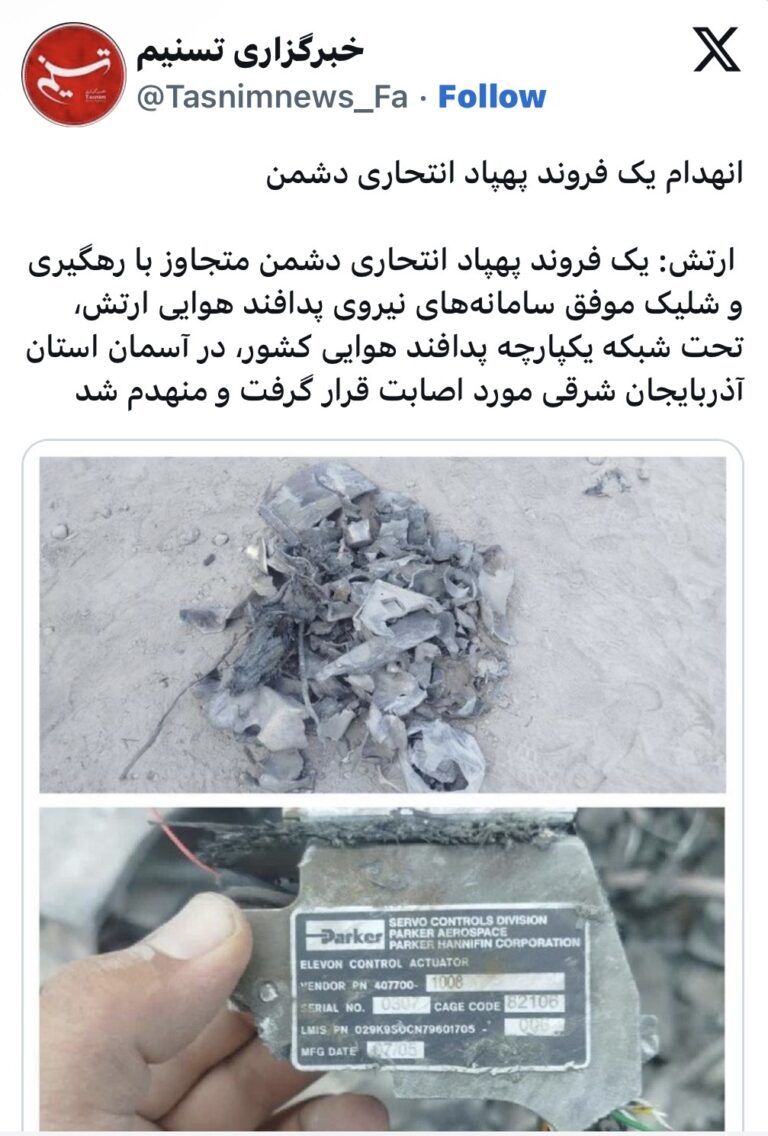
    Iran’s integrated air defence network has shot down an enemy one-way attack drone over the country’s East Azerbaijan province, according to the Tasnim news agency. The report, citing the Iranian army, stated that the drone was intercepted and destroyed by air defence systems operating under the country’s unified air defence network. The announcement comes amid escalating tensions in the region, with the US and Iran locked in a dangerous standoff following the collapse of the ceasefire. Both sides have traded military strikes in recent weeks, with Iran launching attacks on US allies in the Gulf region and the US conducting strikes on Iranian targets. The downing of the drone is the latest in a series of incidents that have heightened fears of a wider conflict. The Iranian army did not specify the origin of the drone, but the use of kamikaze drones has been a hallmark of recent attacks in the region. Iran has previously accused the US and Israel of using such drones to target its infrastructure and military sites. The downing of the drone demonstrates Iran’s air defence capabilities and its readiness to protect its territory against what it perceives as aggression. The incident also highlights the growing threat of drone warfare in the region, with both state and non-state actors increasingly using unmanned aerial vehicles for reconnaissance and attack purposes. Iran has developed a robust drone programme and has supplied such systems to its allies, including the Houthis in Yemen and Hezbollah in Lebanon. The international community has urged restraint, but the situation remains volatile. The US has enforced a naval blockade in the Strait of Hormuz, while Iran has targeted vessels that violate its rules on navigating the vital waterway. The downing of the drone is likely to further inflame tensions, with Iran warning that it will respond forcefully to any aggression. As the conflict continues, the risk of further escalations and unintended consequences remains high. The downing of the kamikaze drone serves as a reminder of the volatile security environment in the Middle East and the potential for miscalculation to spark a wider war. The coming days will be critical in determining whether diplomacy can prevail or whether the region will slide further into chaos.

  • |

    US says it will deepen security role in Asia

    The United States has rejected suggestions that it is reducing its involvement in Asia. A senior Pentagon official said Washington plans to strengthen its position in the Indo-Pacific and maintain what it considers a favourable balance of power in the region. US Undersecretary of Defense for Policy Elbridge Colby made the remarks during a speech in Manila on Monday. He said the United States was not leaving Asia. Instead, Washington was increasing its focus on the region. Colby also called on US allies and partners to take greater responsibility for their own defence. He said Washington wanted stronger partnerships rather than relationships based on dependence. According to Colby, the United States expects its regional allies to increase defence spending and strengthen their own military capabilities. He said greater responsibility from partner countries should not be interpreted as a sign that Washington is abandoning the region. Colby argued that stronger allies would contribute to stronger deterrence and help maintain regional stability. The Pentagon official said the US strategy includes maintaining a credible military presence along the First Island Chain. The strategic area stretches from Japan through Taiwan and the Philippines toward Borneo. It is considered important to US efforts to deter potential military threats in the Indo-Pacific. Colby said the United States was committed to maintaining a balance of power in the region. He also emphasised the need for allies to contribute more to regional security. His comments come amid continuing questions about the long-term US security commitment to Asia. Some regional governments and analysts have expressed concerns about whether Washington will remain as deeply involved in the Indo-Pacific as it has been in previous years. Colby sought to address those concerns by stressing that the United States intends to remain engaged. The Philippines is the first stop on Colby’s Southeast Asian tour. He is also scheduled to visit Indonesia, Thailand and Cambodia. The Philippines is a longstanding US treaty ally and has strengthened defence cooperation with Washington in recent years. The Pentagon official’s remarks are likely to be closely watched by US partners across the region. Washington is seeking to strengthen cooperation with allies while encouraging them to invest more heavily in their own defence. The approach reflects a broader US strategy of sharing the security burden with regional partners while maintaining a strong American military presence. Colby said the goal was to build capable partners rather than create countries that depend entirely on US protection. He maintained that stronger regional partners would make the overall US deterrence strategy more effective.

  • | |

    France wildfires force 150,000 to evacuate amid he…

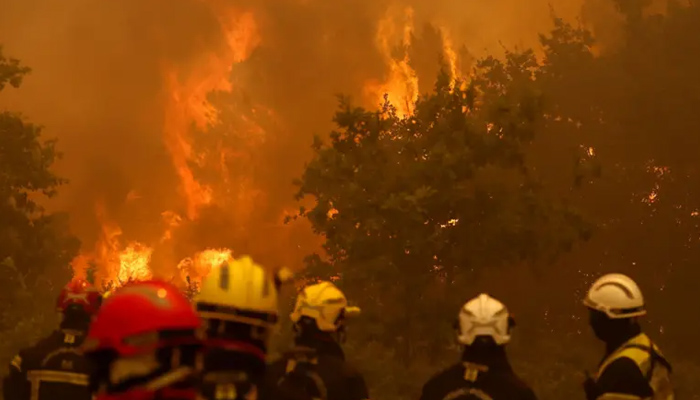
    A relentless heatwave has triggered massive wildfires across southwestern France, forcing around 150,000 people to evacuate as flames swept through forests and threatened homes in one of the country’s most popular tourist destinations. French authorities ordered the complete evacuation of Cap Ferret, a renowned coastal resort, after fast-moving fires engulfed nearly 47,000 acres of forest. Officials said more than 100 homes had been damaged as firefighters continued battling the blaze under extreme weather conditions. The rapidly spreading fire has prompted an extensive emergency response, with President Emmanuel Macron directing the French military to assist firefighting teams in containing the flames and protecting nearby communities. The crisis has also spread beyond France. In neighboring Spain, authorities declared the country’s first-ever national emergency over a wildfire near Madrid, highlighting the growing impact of the ongoing heatwave across southern Europe. According to media reports, the Spanish wildfire has destroyed more than 43 homes, while approximately 19,000 residents living in mountainous areas west of Madrid were ordered to evacuate. More than 2,000 emergency personnel, supported by 10 firefighting aircraft, have been deployed to contain the flames. Officials warned that soaring temperatures, dry vegetation and strong winds have created ideal conditions for wildfires, making firefighting operations increasingly difficult. The latest disaster comes only weeks after France experienced one of its deadliest heatwaves in recent years. According to the country’s national public health agency, 21,674 deaths were recorded between June 17 and July 2, compared with an expected 15,910 deaths under normal conditions. The agency said the period saw 5,764 excess deaths—an increase of 36% above normal mortality levels—underscoring the severe health impact of prolonged extreme heat. Climate experts have repeatedly warned that rising global temperatures are increasing the frequency and intensity of heatwaves and wildfires across Europe. As emergency crews continue to battle the blazes in France and Spain, authorities remain on high alert, warning residents that worsening weather conditions could fuel further fires in the coming days.

  • | |

    Search teams recover body of American climber following fatal avalanche on Broad Peak

    Search and rescue teams in northern Pakistan have recovered the body of 39-year-old American mountaineer Mallory Geis following a massive avalanche on Broad Peak, the world’s 12th-highest mountain. The disaster struck a 10-member international expedition led by renowned British-Nepali climber Nirmal “Nims Dai” Purja at an altitude of approximately 7,000 metres in the Karakoram range. Pakistani military helicopters and ground units deployed to the site have secured the remains of three victims so far, including Geis, Omani climber Nadhira Ahmed Abdullah Al Harthy, and Nepali guide Pur Bahadur Gurung. The Alpine Club of Pakistan confirmed that bad weather and hazardous high-altitude conditions have severely complicated ongoing search efforts for the remaining missing team members. Aerial drone footage spotted several other expedition members swept nearly 1,000 metres downhill by the slide, though ground teams have yet to reach them due to the extreme terrain. Local authorities in Gilgit-Baltistan stated that recovered victims were transported to regional medical facilities for official identification procedures, while military helicopters remain on standby for further retrieval operations as weather permits.

  • | |

    Italy’s fourth summer heat wave peaks as rec…

    Italy’s fourth heat wave of the summer reached its most intense point on Monday, with a record 25 cities placed under red heat alerts as temperatures climbed above 40 degrees Celsius in parts of the country, according to local media reports. Italy’s Health Ministry raised the number of cities under its highest heat risk warning from 23 on Sunday to 25 on Monday, marking the highest total recorded so far this summer. Only Reggio Calabria and Messina avoided the red alert designation, though both remained under yellow level warnings. The Po Valley and central regions of the country are experiencing the harshest conditions, while inland areas and Sardinia could also see temperatures exceed 40 degrees Celsius. In parts of central and northern Italy, overnight temperatures are expected to stay above 25 degrees Celsius, a pattern meteorologists have described as super tropical nights. The central province of Terni recorded a temperature of 41 degrees Celsius on Sunday. Experts have linked the extreme heat to a persistent African anticyclone combined with continued warming of the Mediterranean Sea, where surface temperatures have reached or surpassed 30 degrees Celsius across much of the basin. Meteorologist Lorenzo Tedici of iLMeteo.it said the accumulated heat is expected to fuel atmospheric instability, warning of strong afternoon thunderstorms forming over the Alps and Apennines. Italy’s Civil Protection Department has issued yellow alerts for heavy rainfall along the Apennine mountain range stretching from Umbria to Calabria, as well as in inland areas of Sicily. Tedici said a genuine shift away from the hottest phase of summer 2026 is unlikely before at least mid August. Authorities have also flagged an elevated risk of wildfires, placing Sicily and Emilia Romagna under orange alerts as the heat wave continues to grip the country. The extreme temperatures fit a broader pattern of intensifying summer heat across southern Europe in recent years, as scientists have repeatedly linked rising Mediterranean sea temperatures and more frequent heat waves to long term climate trends affecting the region’s weather systems.

Leave a Reply

Your email address will not be published. Required fields are marked *